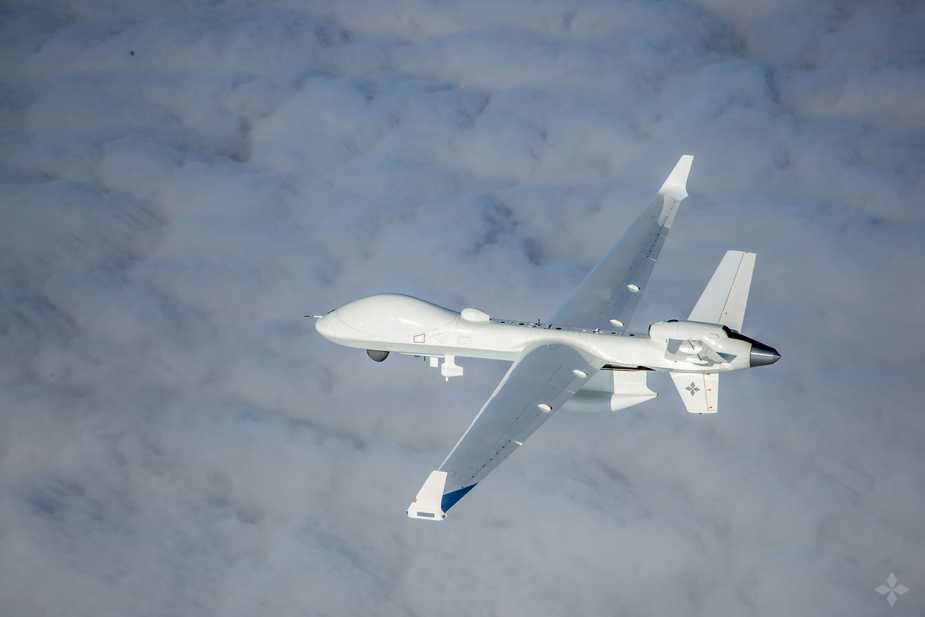
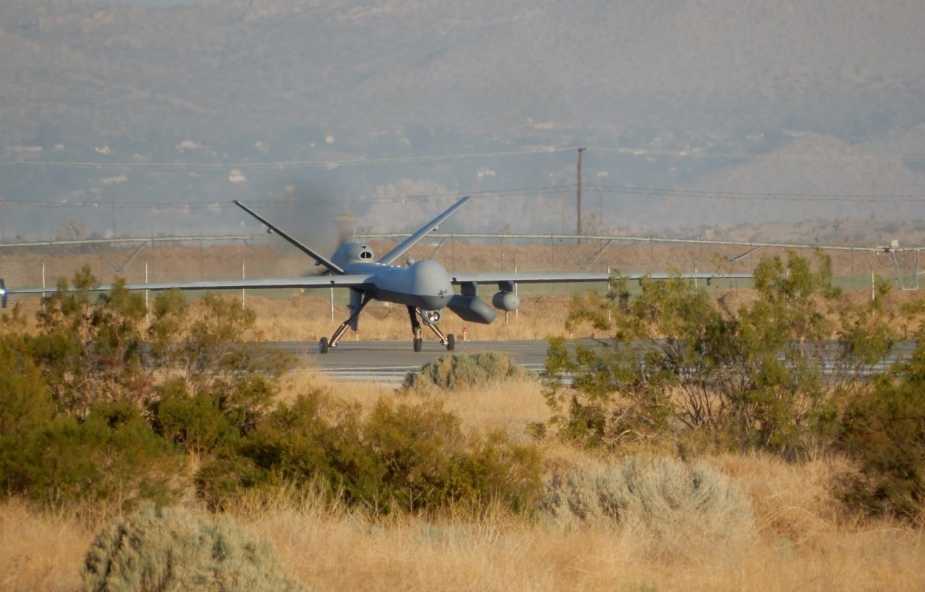
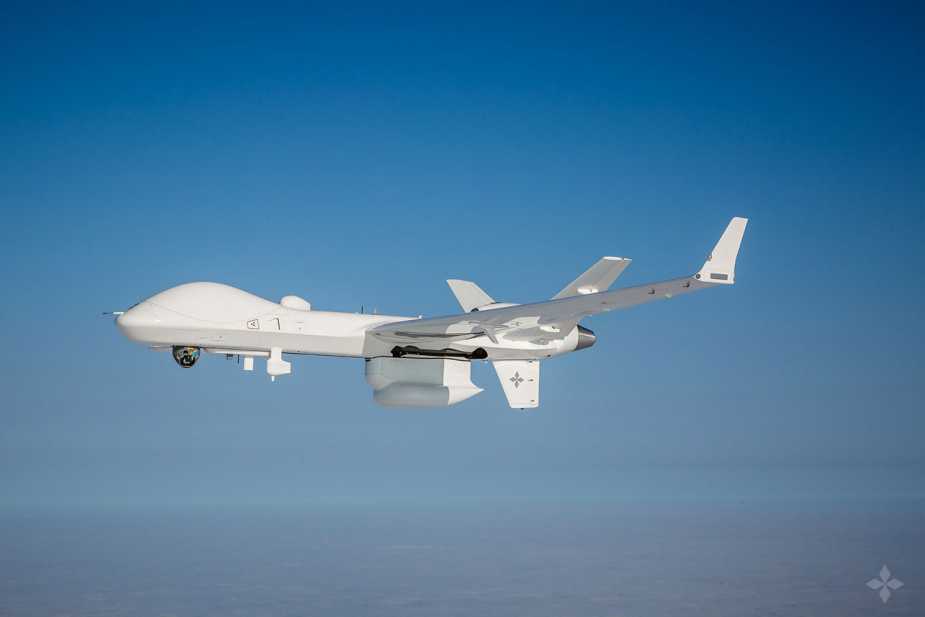
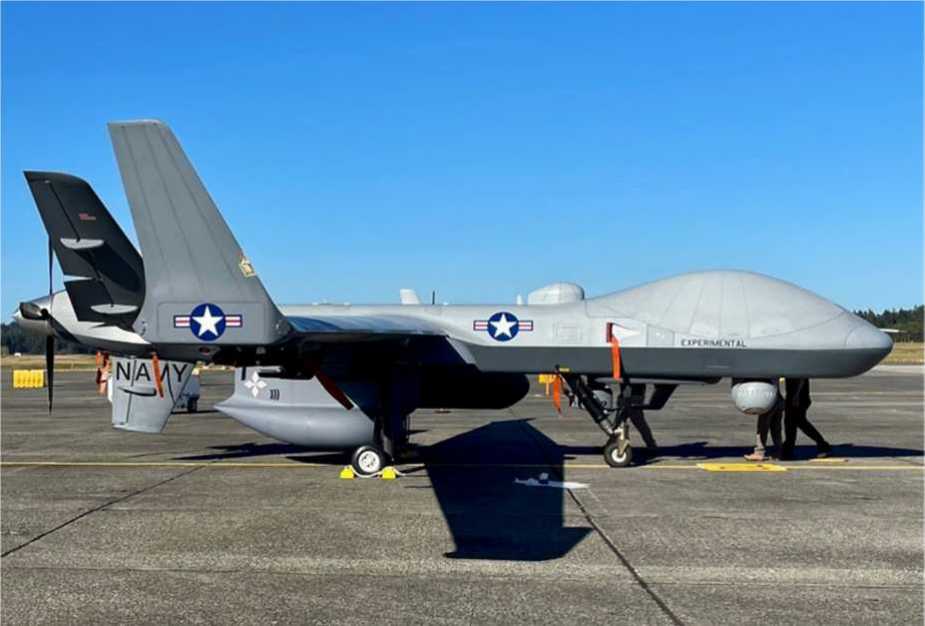
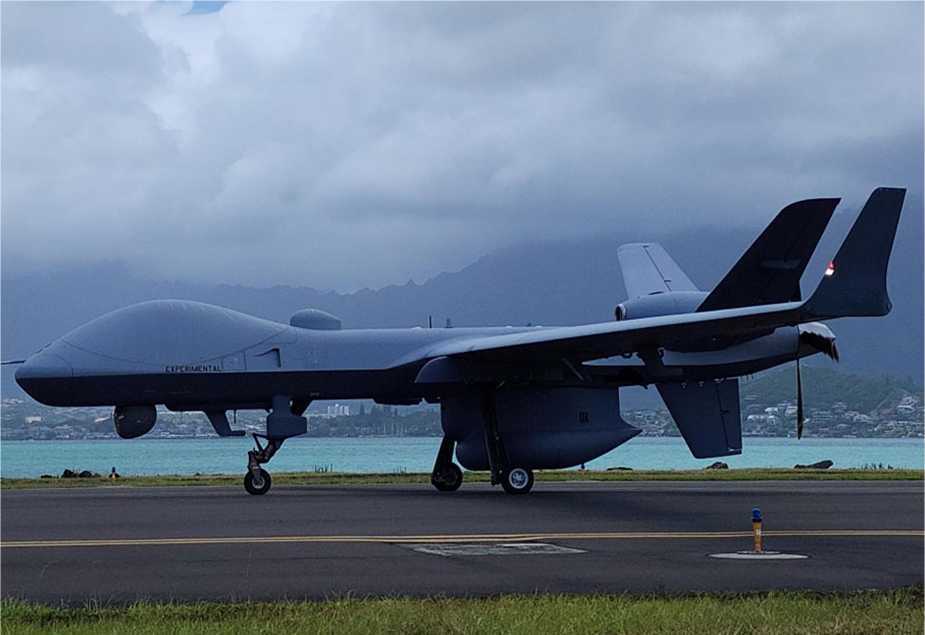
The MQ-9B SeaGuardian is the maritime variant of the MQ-9B remotely piloted aircraft system developed by General Atomics Aeronautical Systems, Inc. (GA-ASI) in the United States. It combines the SkyGuardian airframe with maritime sensors for long-endurance patrol, intelligence, surveillance and reconnaissance. Military and civil agencies can use it to monitor shipping, search for vessels in distress and assess conditions after a disaster. An optional acoustic payload extends its surveillance role below the surface.
Country users:
Japan
The Japan Coast Guard began SeaGuardian flight operations in October 2022 and announced that it had brought its fourth and fifth aircraft into operation in March 2026. The Japan Maritime Self-Defense Force began trials in May 2023 and selected SeaGuardian for its long-endurance surveillance program in 2024. Japan’s FY2026 budget identifies funding for four aircraft and associated ground equipment. A JMSDF spokesperson identified FY2028 as the target for initial deliveries to the service.
India
The Indian Navy began using two contractor-operated SeaGuardians under lease in 2020. India’s October 2024 purchase of 31 MQ-9Bs includes 15 SeaGuardians for the Navy and 16 SkyGuardians for the Army and Air Force. The Ministry of Defense signed a separate 30-month lease for two SeaGuardians in August 2026. Deliveries under the 2024 purchase were still pending as of November 2026.
United States
The U.S. Navy uses SeaGuardian flight services under a company-owned, company-operated contract with GA-ASI. In September 2026, GA-ASI reported that the arrangement supported an ongoing Seventh Fleet capability assessment. The aircraft involved are contractor assets.
Taiwan
Taiwan ordered four maritime-surveillance MQ-9Bs. The 2020 U.S. sale notification and some defense reporting identify the package as SeaGuardian, while the 2023 U.S. contract award and Taiwan’s Ministry of National Defense use SkyGuardian. Taiwan confirmed the handover of the first two aircraft in March 2026. The aircraft arrived in Taiwan in June, and local flight testing was reported in September. The remaining two were scheduled for 2027. Formal entry into operational service and the delivered sensor fit remain publicly unconfirmed.
Key Tactical Insights:
• MQ-9B SeaGuardian Main Roles and Missions: MQ-9B SeaGuardian is a maritime-optimized medium-altitude, long-endurance remotely piloted aircraft developed by General Atomics Aeronautical Systems (GA-ASI) for persistent maritime domain awareness, anti-submarine warfare (ASW), anti-surface warfare, airborne mine countermeasures, and search and rescue, depending on mission configuration.
• MQ-9B SeaGuardian Firepower: Nine external hardpoints (eight wing stations and one centerline station) carry up to 4,750 lb (2,155 kg) of mission stores alongside an 800 lb (363 kg) internal bay. Depending on customer integration, the platform can deploy Mk 54 lightweight torpedoes, AGM-114 Hellfire missiles, precision-guided bombs, and up to four Sonobuoy Dispensing System pods carrying 40 A-size or 80 G-size sonobuoys.
• MQ-9B SeaGuardian Sensors and Survivability: A centerline 360-degree maritime surface-search radar (such as the Leonardo Seaspray 7500E V2 or Raytheon SeaVue), high-definition electro-optical/infrared sensors, Automatic Identification System (AIS) receivers, and electronic support measures provide wide-area above- and below-surface tracking. Lightning protection, de-icing systems, and a Detect and Avoid radar enable all-weather operations in civil and NATO airspace.
• MQ-9B SeaGuardian Digital Architecture: Beyond-line-of-sight satellite communications, Link 16 tactical datalink integration, automatic takeoff and landing, and an onboard Sonobuoy Monitoring and Control System allow real-time teaming with crewed maritime patrol aircraft like the P-8A Poseidon and naval surface combatants.
• MQ-9B SeaGuardian Key Technical Specifications: Uncrewed single-turboprop configuration | Propulsion: Honeywell TPE331-10 turboprop | Maximum speed: 210 KTAS (389 km/h) | Service ceiling: 40,000+ ft (12,200+ m) | Endurance: 30+ hours | Range: 5,000+ nmi | Max takeoff weight: 13,500 lb (6,124 kg) | Wingspan: 24.0 m | Length: 11.7 m.







Key Technical Specifications
-
Design
The MQ-9B SeaGuardian is a runway-operated, fixed-wing aircraft with a long-span wing, a V-tail and a rear-mounted pusher propeller. It has a wingspan of 24 m and an overall length of 11.7 m. GA-ASI lists a maximum gross take-off weight of 5,670 kg (12,500 lb) and a design service life of 40,000 flight hours for the fatigue- and damage-tolerant airframe. The aircraft has eight wing hardpoints and one centreline hardpoint. In GA-ASI’s reference configuration, the centreline position carries the wide-area maritime radar, while the wing stations can carry optional mission pods. GA-ASI lists payload capacities of up to 2,155 kg (4,750 lb) externally and 363 kg (800 lb) internally. The fuel and payload that can be carried together depend on the approved configuration and take-off weight.
-
Mission Payload
The MQ-9B SeaGuardian is configured for maritime surveillance with a multimode surface-search radar, an Automatic Identification System (AIS) receiver and an electro-optical/infrared (EO/IR) turret in the reference fit. The radar searches wide areas and maintains vessel tracks, AIS supplies information broadcast by equipped vessels, and the EO/IR turret provides daylight and infrared imagery. GA-ASI says the Japan Coast Guard configuration includes an inverse synthetic aperture radar imaging mode that helps operators distinguish vessel types. The manufacturer also lists its Lynx multimode radar for radar imaging and moving-object detection. Sensor fits vary by customer. An optional anti-submarine warfare package combines sonobuoy dispenser pods with an onboard system that receives and processes acoustic data for operator review. GA-ASI also offers electronic support measures, signals intelligence, airborne early warning and communications relay options.
-
Armament
The MQ-9B SeaGuardian is not equipped with standard armament. The U.S. notification for India’s proposed 2024 MQ-9B sale listed AGM-114R Hellfire missiles for the wider tri-service procurement. The allocation of those missiles and the weapons fit of the Indian Navy’s 15 SeaGuardians remain publicly unconfirmed.
-
Engine and Flight Performances
The MQ-9B SeaGuardian is powered by a single Honeywell TPE331-10 turboprop driving a rear-mounted pusher propeller. GA-ASI lists a maximum fuel capacity of 2,721 kg (6,000 lb), a maximum airspeed of 210 knots true airspeed (389 km/h), and an altitude of 40,000 ft or more (about 12,200 m). The manufacturer publishes endurance of more than 30 hours and range of 5,000 nautical miles or more (9,260 km or more), depending on configuration. The SeaGuardian datasheet gives no representative cruise speed or standard patrol radius. An automatic take-off and landing system supports runway operations, while airframe ice and lightning protection support operations in a wider range of weather conditions.
-
Avionics and Onboard Equipment
The MQ-9B SeaGuardian is equipped with redundant navigation and flight computers and dual VHF/UHF radios for voice communications. GA-ASI lists line-of-sight data links and dual satellite communications for beyond-line-of-sight command and control. The ground control station gives the remote crew access to flight controls and mission-system displays. Link 16 availability depends on the selected configuration. GA-ASI offers a detect-and-avoid suite that includes a Due Regard Radar, the Traffic Alert and Collision Avoidance System (TCAS), and Automatic Dependent Surveillance–Broadcast (ADS-B). These systems help crews monitor surrounding traffic, and the radar can detect aircraft that do not broadcast their position. GA-ASI describes the MQ-9B as designed to meet NATO STANAG 4671 airworthiness requirements. Access to civil airspace remains subject to approval by the relevant authorities. The open mission-management system lets operators select sensors and communications equipment for their requirements. For the Japanese programme, GA-ASI says its Optix+ maritime surveillance software combines SeaGuardian sensor information with other data sources in a common display.


Photo Gallery