Unmanned aerial vehicles.
Bayraktar TB3.

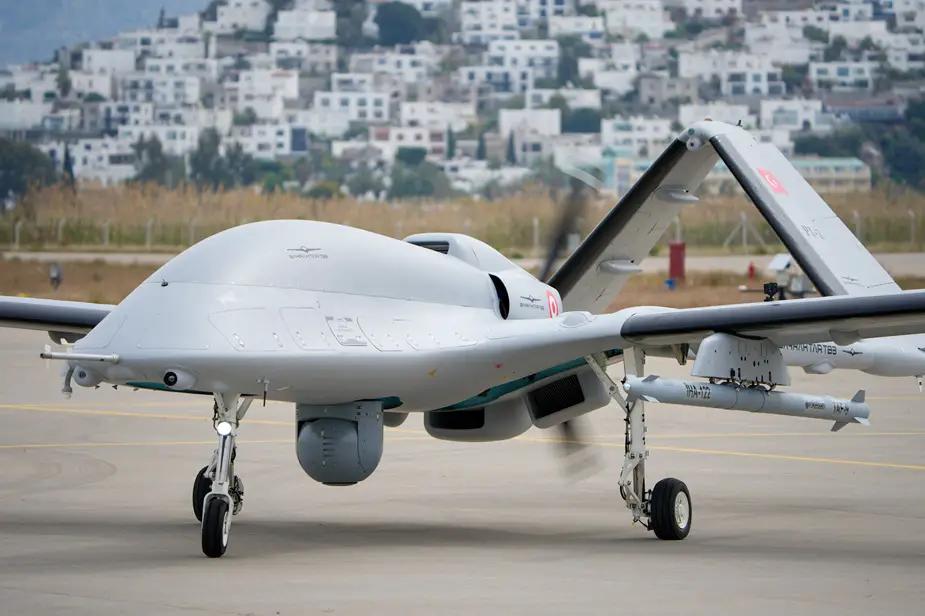
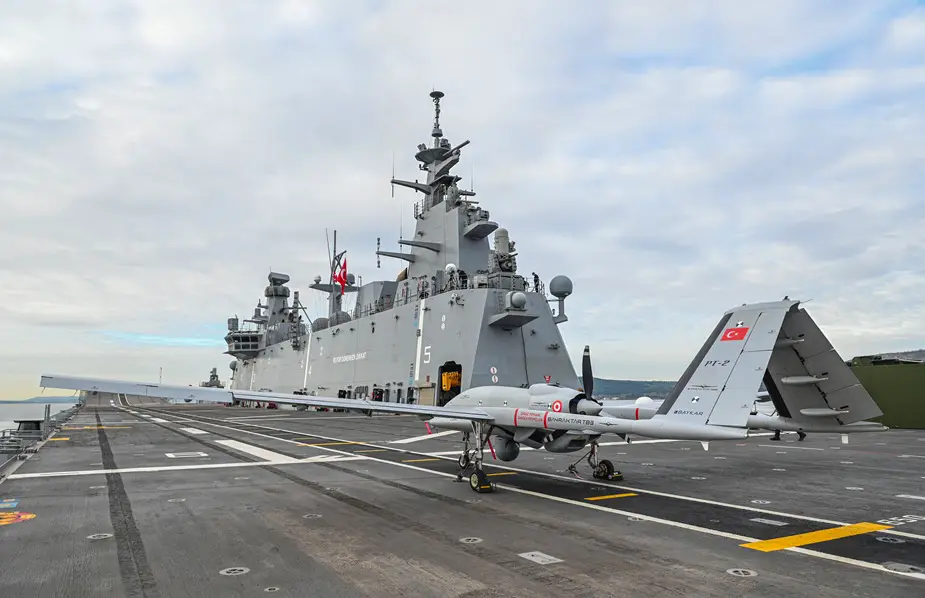
Bayraktar TB3 is a Turkish medium-altitude, long-endurance armed unmanned aerial vehicle developed by Baykar for land-based and shipborne intelligence, surveillance, reconnaissance and precision-strike missions. Distinguished by its folding-wing configuration and autonomous short-runway takeoff and landing capability, the TB3 is designed to operate from aviation-capable ships such as the Turkish Navy's TCG Anadolu while retaining conventional land-based operations. Baykar publishes a maximum take-off weight of 1,600 kg, payload capacity of 280 kg, endurance of more than 24 hours, LOS and BLOS communications, an operational altitude of 20,000 ft and a service ceiling of 25,000 ft.
Country users : Türkiye

Description
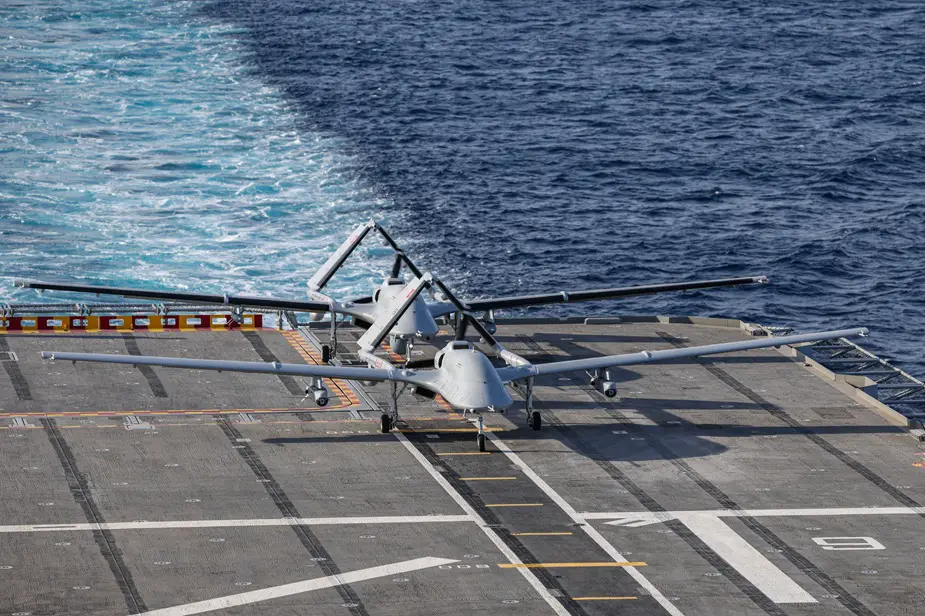
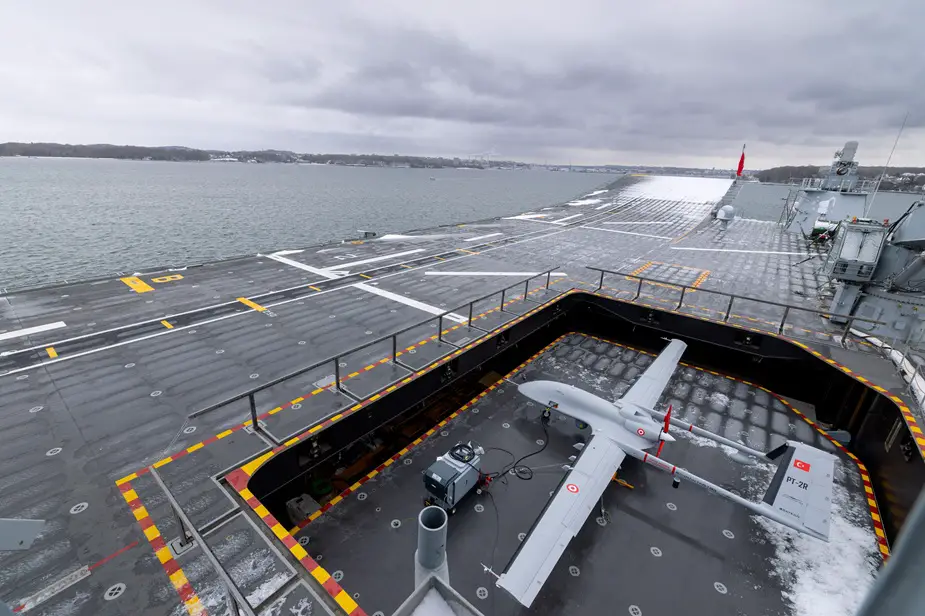
Bayraktar TB3 is an armed unmanned aircraft system developed by Turkish manufacturer Baykar around a long-endurance airframe optimized for both conventional land operations and maritime deployment. Its defining structural characteristic is a folding-wing arrangement intended to minimize the footprint required for storage aboard ships. The aircraft measures 8.35 m in length, 14 m in wingspan and 2.6 m in height, with a published maximum take-off weight of 1,600 kg and payload capacity of 280 kg. Baykar officially lists both Land and Marine versions and notes that maximum take-off weight may vary for the naval configuration.
Bayraktar TB3 is configured to conduct intelligence, surveillance and reconnaissance, electronic-intelligence and precision-strike missions while operating at extended distances through line-of-sight and beyond-line-of-sight communications. The manufacturer's published ISR payload categories include ELINT, simultaneous electro-optical/infrared/laser-designation systems and surveillance radar. The original manufacturer technical display additionally specifies SATCOM BLOS connectivity, a dual-redundant LOS link system and an optional missile data link. The aircraft's ability to combine sensors, communications and precision weapons is intended to support both independent missions and networked operations.
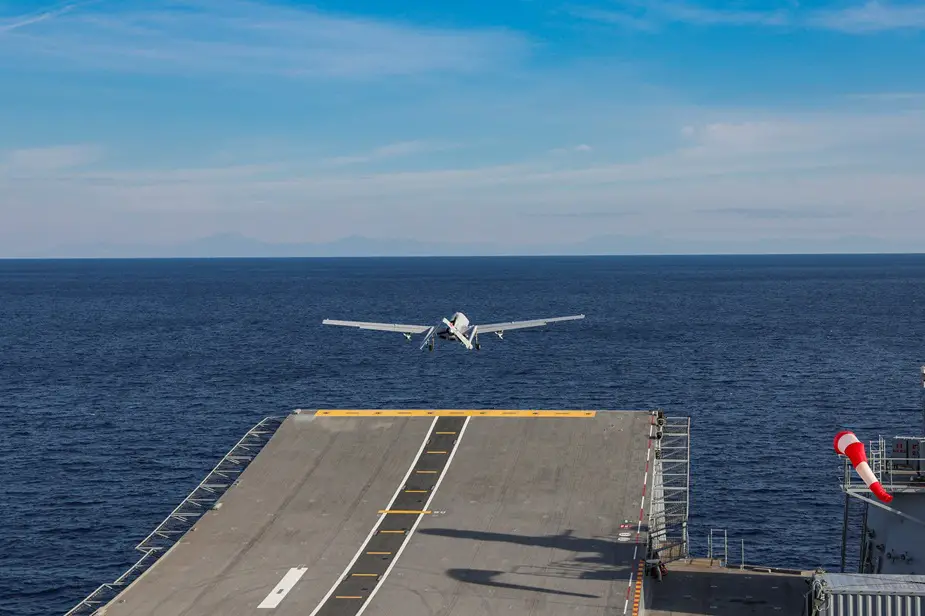
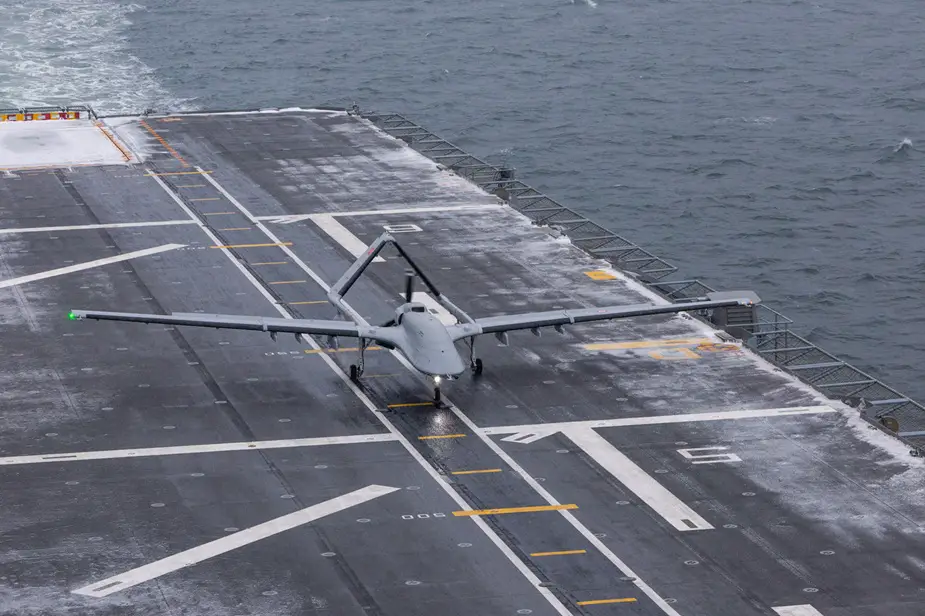
Bayraktar TB3 has demonstrated its maritime operating concept extensively aboard the Turkish Navy's TCG Anadolu. Following its maiden flight on 27 October 2023 and ski-jump trials from a 12-degree ramp in June 2024, the aircraft completed its first takeoff and landing from TCG Anadolu on 19 November 2024 without landing-support equipment. By June 2025, Baykar reported 101 shipborne sorties and more than 1,167 hours of accumulated test flight time. The platform subsequently conducted repeated autonomous launch-and-recovery operations, live-fire exercises and multi-aircraft missions from the ship. During NATO's Steadfast Dart 2026 in the Baltic Sea, TB3 aircraft performed reconnaissance and live-fire missions from TCG Anadolu, including MAM-L strikes and autonomous recovery in demanding winter conditions.
Bayraktar TB3 has progressively expanded its weapons, sensor and networked-mission capabilities. Demonstrated weapons include the Roketsan MAM-T and MAM-L precision-guided munitions, the IHA-122/UAV-122 supersonic missile and Baykar's KEMANKEŞ-1 AI-based mini cruise missile. ASELFLIR-500 and ASELSAN CATS electro-optical reconnaissance and targeting systems have also been demonstrated on the aircraft. In December 2025, a TB3 operating from TCG Anadolu additionally used its airborne data link to remotely control an ASELSAN Albatros-S unmanned surface vehicle during a maritime engagement, demonstrating the platform's potential as an airborne command-and-control node for collaborative unmanned operations.
Bayraktar TB3 variants:
- Bayraktar TB3 Land configuration: The land-based configuration is intended for operation from conventional runways and ground installations while retaining the TB3's long-endurance ISR and strike capabilities. Baykar officially lists "Land" as one of the platform's two versions.
- Bayraktar TB3 Marine/Naval configuration: The maritime configuration incorporates features optimized for deployment aboard short-runway vessels, most notably the folding-wing arrangement and autonomous shipboard takeoff and landing capability. The configuration has been extensively demonstrated aboard TCG Anadolu. Baykar notes that maximum take-off weight may vary for the naval version.
- Export/localized configurations: Indonesia's cooperation agreement with Baykar and Republikorp covers local production of up to 60 TB3 systems, potentially allowing customer-specific production, support and integration. Italy is separately pursuing a TB3-based capability through the Baykar–Leonardo partnership, although such configurations should be treated as customer or industrial derivatives rather than formally named Baykar TB3 variants unless officially designated as such.
Technical Data
-
Design and Architecture
Bayraktar TB3 uses a single-engine, fixed-wing configuration optimized for long endurance, payload flexibility and operation from both land bases and short-runway vessels. The aircraft measures 8.35 m in length, 14 m in wingspan and 2.6 m in height, with a maximum take-off weight of 1,600 kg and a useful payload capacity of 280 kg. Its folding wings reduce the storage footprint aboard ships, while retractable landing gear supports repeated land- and ship-based operations. The supplied manufacturer technical display describes autonomous taxi, takeoff, cruise and landing; a fully autonomous flight-control architecture; triple-redundant autopilot; fault-tolerant triple-redundant sensor fusion; and precision automatic shipboard takeoff and landing. Baykar has since demonstrated vision-based and AI-assisted autonomous carrier operations, including visual line tracking, vessel and runway identification and landing-angle estimation from onboard imagery.
-
Armament and Payloads
Bayraktar TB3 has a published payload capacity of 280 kg and is designed to carry both mission sensors and precision-guided weapons. Baykar lists laser-guided munitions, INS/GPS-guided munitions, infrared-guided munitions and mini cruise missiles among its weapon categories, while ISR payload options include ELINT, simultaneous EO/IR/laser-designation equipment and surveillance radar. Confirmed live-fire integrations include the Roketsan MAM-T and MAM-L smart munitions and the IHA-122/UAV-122 supersonic missile, which struck a maritime target at a distance exceeding 50 km during a March 2025 trial. KEMANKEŞ-1 AI-based mini cruise missiles were subsequently employed from TB3 aircraft during a December 2025 maritime demonstration. ASELFLIR-500 and ASELSAN CATS electro-optical systems have also supported live-fire TB3 missions.
-
Propulsion and Flight Performance
Bayraktar TB3 uses the Turkish-developed TEI-PD200 turbodiesel aviation engine in its latest publicly documented propulsion configuration, succeeding the TEI-PD170 used on earlier prototypes and flight-test aircraft. Developed from the PD170 family and optimized for maritime operations, the PD200 is rated by TEI at 197 hp (±2) maximum power and 172 hp (±2) maximum continuous power, while Baykar's latest 2026 TB3 technical data lists a 195 hp turbodiesel engine, a figure consistent with the PD200's published maximum-output range. The 2.1-liter, four-cylinder engine incorporates common-rail fuel injection, two-stage turbocharging, water cooling and redundant FADEC control, and is compatible with JP-8, Jet A-1, JP-5 and EN 590 fuels. Its maritime adaptation is intended to improve reliability and durability in shipborne and saline operating environments. Baykar publishes an endurance of more than 24 hours, a 110 KTAS cruise speed, 130 KTAS maximum speed, 20,000 ft operational altitude and 25,000 ft service ceiling for the TB3. An earlier PD170-powered test aircraft reached 36,310 ft on 25 June 2024, demonstrating high-altitude performance well above the published service ceiling; however, this figure represents a demonstrated test altitude and should not be interpreted as the aircraft's normal operational ceiling.
-
Avionics, Autonomy and Onboard Systems
Bayraktar TB3 incorporates a high degree of autonomous flight control and a communications suite supporting both LOS and BLOS operation. According to Baykar, takeoff, landing, cruise and taxi functions can be performed autonomously, while shipborne trials have demonstrated vision-based, AI-assisted automatic launch and recovery from TCG Anadolu. The supplied manufacturer display additionally identifies a triple-redundant autopilot system, semi-autonomous flight modes, dual-redundant LOS links, SATCOM BLOS connectivity, triple-redundant sensor fusion and GNSS-independent navigation through sensor fusion. Mission systems can include EO/IR/laser-designation payloads, ELINT equipment and surveillance radar. ASELFLIR-500 and CATS have been demonstrated in live-fire operations, and TB3 data links have also been used experimentally to control an ASELSAN Albatros-S unmanned surface vehicle, illustrating the platform's potential role in networked and manned-unmanned maritime operations.
Specifications
-
Manufacturer
Baykar Technologies
-
Designer Country
Türkiye
-
Type
Medium-altitude, long-endurance armed unmanned aerial vehicle / unmanned combat aerial vehicle (MALE UAV/UCAV), optimized for land and short-runway shipborne operations
-
Development status
In service with elements of the Turkish Armed Forces while continued naval, payload and weapons integration remains underway. Baykar's product page still describes the TB3 as being under development, while Turkish Ministry of National Defence reporting confirms that multiple aircraft have completed acceptance and entered the Turkish Land Forces inventory.
-
Propulsion
1 × TEI-PD170 / TEI-PD200 turbodiesel piston engine driving a propeller. Early TB3 prototypes and test aircraft used the PD170, while the newer maritime-optimized TEI-PD200 has been developed specifically for shipborne operations and is associated by TEI with the Bayraktar TB3. The PD200 delivers 197 hp (±2) maximum takeoff power and 172 hp (±2) maximum continuous power.
-
Maximum speed
130 KTAS, approximately 241 km/h.
-
Cruise speed
110 KTAS, approximately 204 km/h.
-
Endurance
More than 24 hours.
-
Autonomous functions
Autonomous taxi, takeoff, cruise and landing; autonomous short-runway shipboard takeoff and landing; AI/vision-assisted automatic recovery; semi-autonomous flight modes; sensor-fusion-assisted navigation; GNSS-independent navigation capability according to the supplied manufacturer technical display.
-
Armament
Manufacturer-listed categories include laser-guided munitions, INS/GPS-guided munitions, infrared-guided munitions and mini cruise missiles.
-
Demonstrated weapon integrations
Roketsan MAM-T, Roketsan MAM-L, Roketsan UAV-122/IHA-122 supersonic missile, and Baykar KEMANKEŞ-1 mini intelligent cruise missile.
-
Payload capacity
280 kg
-
ISR/Sensor payload
ELINT; simultaneous EO/IR/laser designation; surveillance radar; demonstrated electro-optical systems include ASELFLIR-500 and ASELSAN CATS.
-
Operational altitude
20,000 ft / approximately 6,096 m.
-
Service ceiling
25,000 ft / approximately 7,620 m according to the published specification. A high-altitude test reached 36,310 ft in June 2024.
-
Maximum take-off weight
1,600 kg; Baykar notes that MTOW may vary for the naval version.
-
Carrier capability
Designed for autonomous takeoff and landing from short-runway aircraft-carrying vessels. Successfully operated repeatedly from TCG Anadolu, including more than 100 shipborne sorties by June 2025 and subsequent operational exercises. Folding wings reduce onboard storage requirements.
-
Dimensions
Length 8.35 m; wingspan 14 m; height 2.6 m.