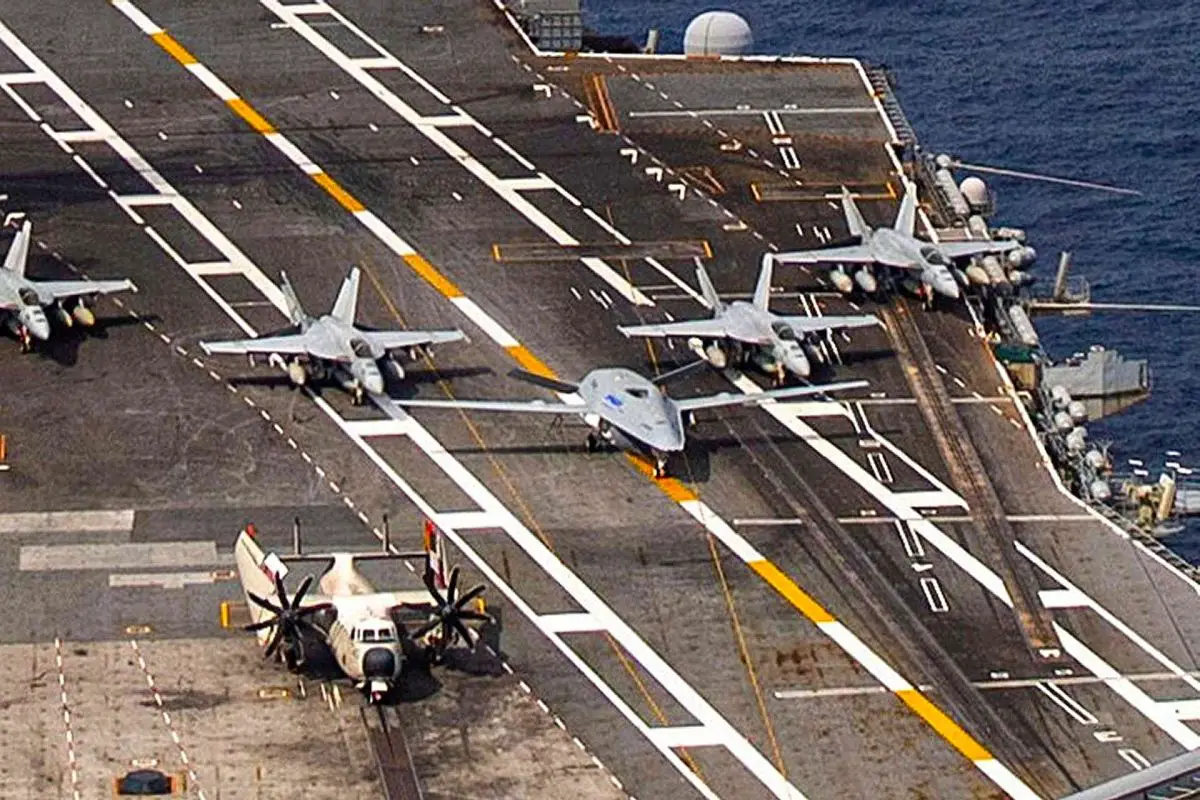
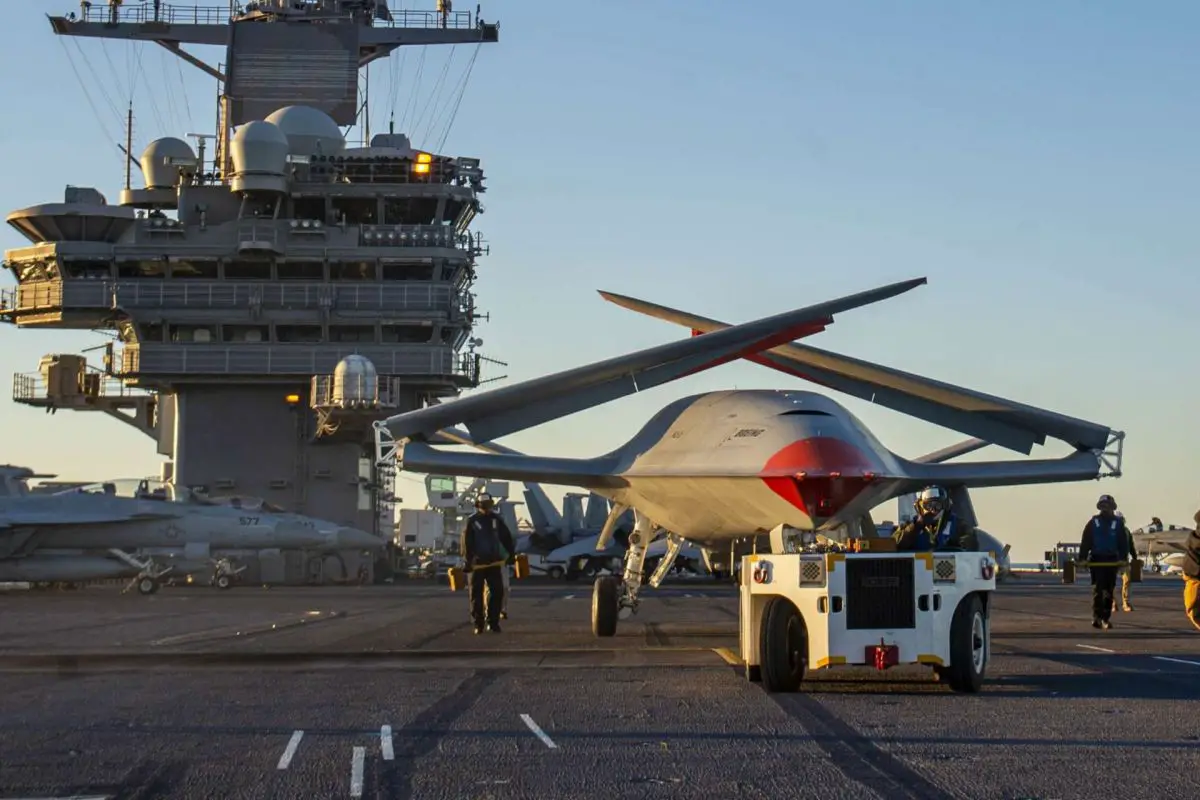
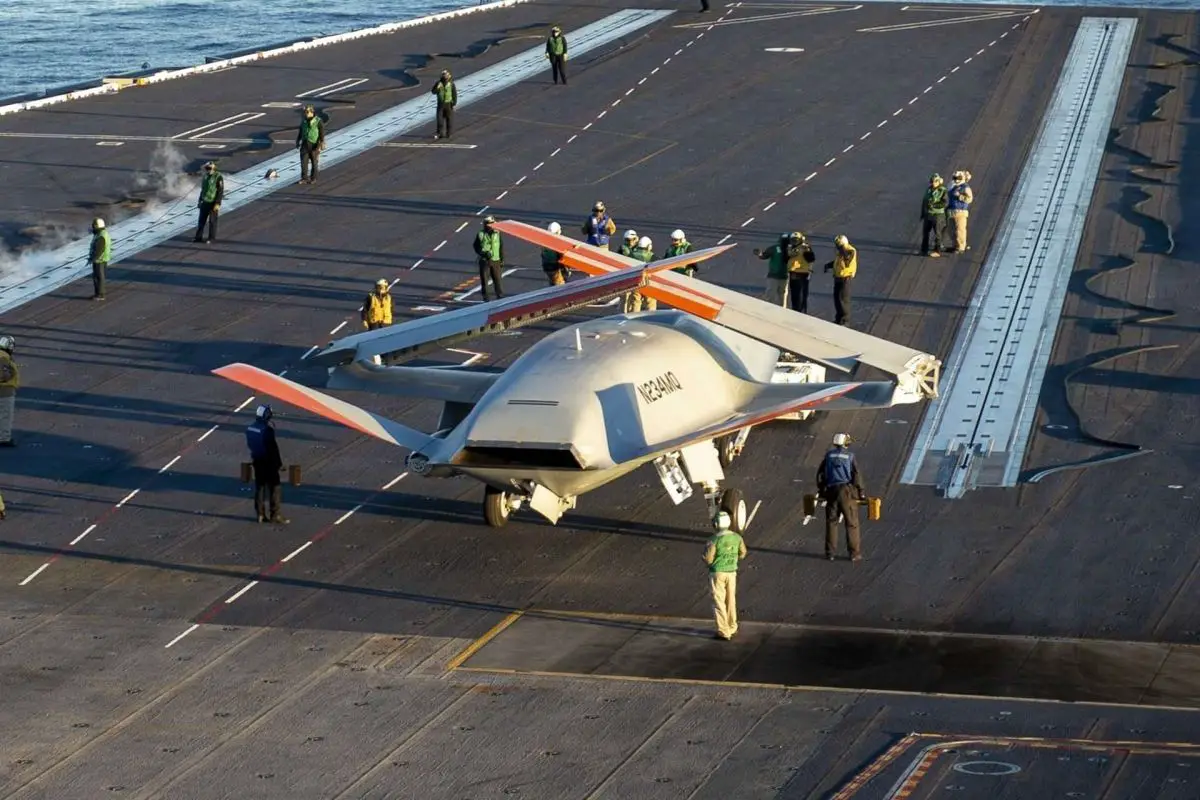
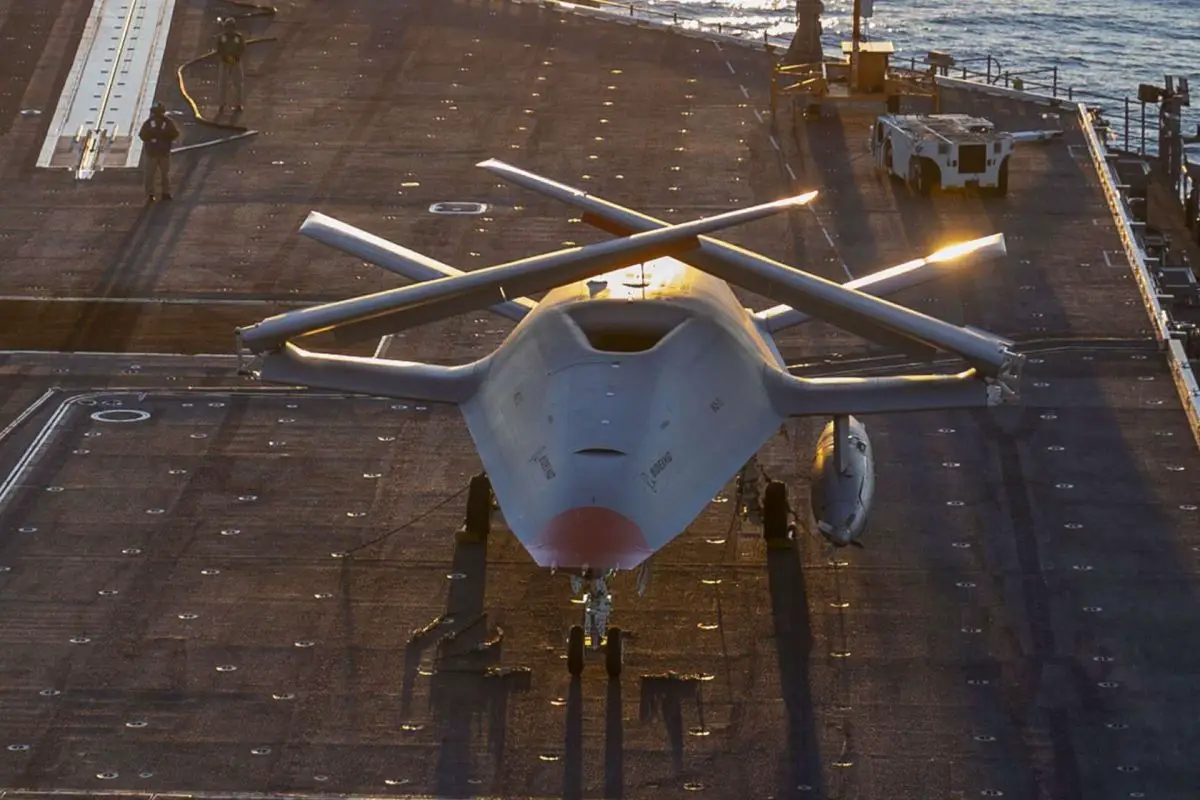
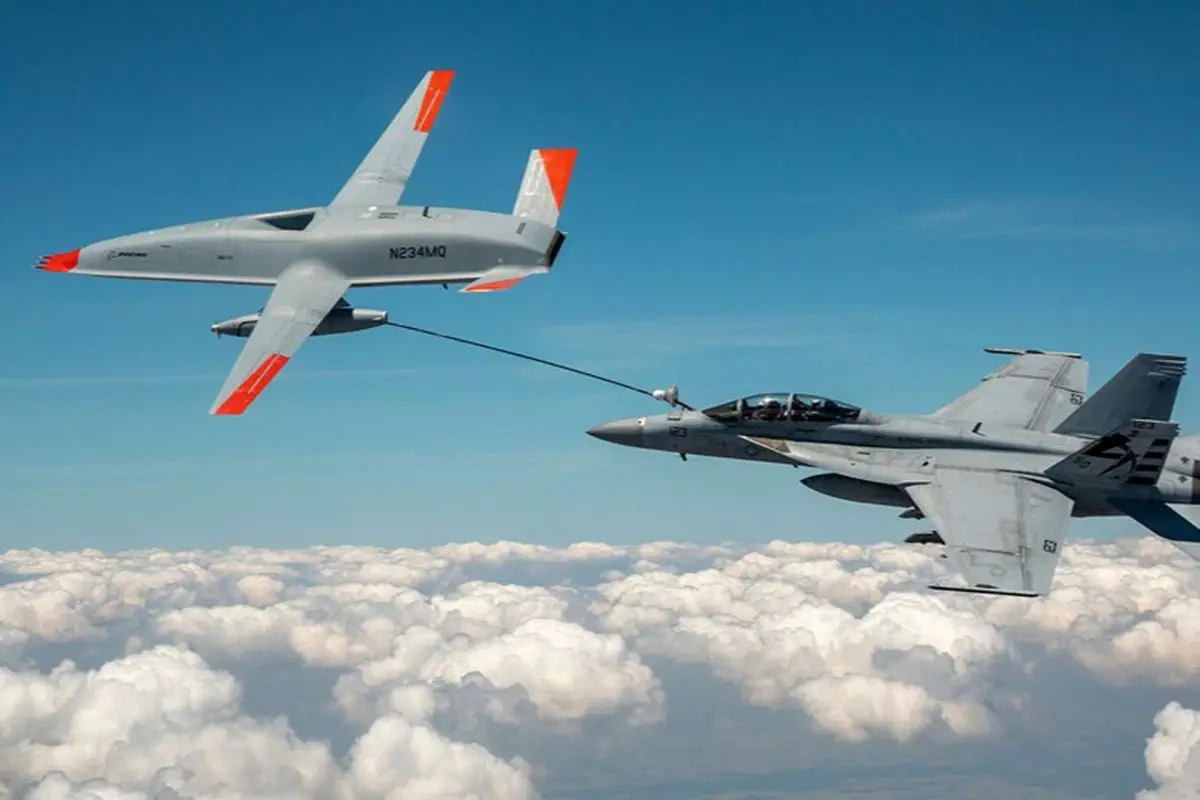
The Boeing MQ-25A Stingray is a U.S. Navy carrier-based unmanned aerial system developed primarily to provide organic aerial refueling for the Carrier Air Wing (CVW), with intelligence, surveillance and reconnaissance (ISR) retained as an additional mission capability. Designed specifically for integration into the demanding aircraft-carrier environment, the MQ-25A combines folding-wing deck compatibility, autonomous flight-management functions, probe-and-drogue aerial refueling equipment and the Navy-controlled Unmanned Carrier Aviation Mission Control System (UMCS). By assuming a substantial portion of the tanker mission currently performed by F/A-18E/F Super Hornets, the Stingray is intended to increase the effective reach of embarked combat aircraft while returning additional Super Hornets to their primary strike and fleet-defense roles. The program received Milestone C approval on 19 May 2026, authorizing transition toward Low-Rate Initial Production (LRIP).
Country users : United States







Technical Data
-
Design and Architecture
The MQ-25A is a single-engine, carrier-compatible unmanned fixed-wing aircraft whose configuration is optimized around fuel carriage, aerodynamic efficiency, carrier-deck compatibility and the structural requirements associated with naval aviation. Boeing specifies a length of 51 ft (15.5 m) and an extended wingspan of 75 ft (22.9 m). When the outer wing panels are folded, span decreases to approximately 31.3 ft (9.5 m), substantially reducing the aircraft's deck and hangar footprint. Unlike a converted land-based UAV, the Stingray is designed around the operational restrictions of the carrier from the beginning, including confined spotting areas, deck movement, launch positioning and eventual catapult-launch and arrested-recovery operations.
The MQ-25A features a broad, highly swept wing that provides substantial internal volume and aerodynamic efficiency appropriate to a tanker mission in which transferable fuel, rather than weapon load or extreme maneuver performance, is the principal design driver. Elimination of a cockpit, ejection seat and associated crew-accommodation systems permits the fuselage architecture to be arranged around fuel, propulsion, mission equipment, flight-control electronics and carrier-compatible subsystems. The pronounced folding-wing arrangement is particularly important because aircraft-carrier effectiveness depends not only on airborne performance but also on how efficiently aircraft can be moved, parked, maintained and cycled across elevators and the flight deck. Boeing has not publicly released detailed structural-material specifications, internal fuel-cell geometry, design load factors or comprehensive aerodynamic data.
The MQ-25A architecture extends beyond the air vehicle itself. Navy documentation treats the aircraft, its control network and carrier infrastructure as an integrated unmanned aviation system. The Unmanned Carrier Aviation Mission Control System, together with shipboard and shore-based MD-5 control stations, supplies mission planning, command-and-control and communications functions required to operate the aircraft. This architecture is strategically important because the Navy is developing UMCS as a control framework with potential applicability beyond the Stingray, making MQ-25 an enabling program for subsequent generations of carrier-based unmanned aircraft rather than an isolated tanker procurement.
-
Armament and Payloads
The MQ-25A is not publicly identified as an armed unmanned combat aerial vehicle, and no operational integration of air-to-air missiles, air-to-surface missiles, guided bombs or cannon systems has been demonstrated. Its principal mission load is transferable aviation fuel for other aircraft. The U.S. Navy's published objective requires the MQ-25A to deliver at least 14,000 lb and up to approximately 16,000 lb (6,350-7,257 kg) of fuel at 500 nautical miles (926 km) from the aircraft carrier. Aerial refueling uses the Navy's established probe-and-drogue method, with developmental T1 flights demonstrating fuel transfer to the F/A-18 Super Hornet, E-2D Advanced Hawkeye and F-35C Lightning II. These trials also enabled evaluation of receiver-specific wake effects, formation characteristics, drogue behavior and guidance-and-control performance.
The MQ-25A evolved from earlier U.S. Navy concepts that placed greater emphasis on unmanned surveillance and strike missions, but the production aircraft is centered on carrier-based aerial refueling and ISR support. No operational weapons package has been publicly established for the aircraft. Boeing nevertheless designed the platform with sufficient architectural adaptability to support future technologies and additional mission requirements, including more advanced autonomy, artificial intelligence and machine-learning functions. These growth provisions indicate potential for mission expansion but do not constitute confirmation of a future armed MQ-25A variant.
-
Propulsion and Flight Performance
The MQ-25 is powered by a single Rolls-Royce AE 3007N two-shaft turbofan, a specialized derivative of the AE 3007 family manufactured in the United States. Rolls-Royce states that the MQ-25-specific AE 3007N produces approximately 10,200 lbf of thrust, about 50 percent more than the earliest members of the AE 3007 family. The basic engine architecture employs an approximately 5:1 bypass ratio, a characteristic advantageous to the Stingray because comparatively low specific fuel consumption directly supports long-duration tanker operations and maximizes the proportion of onboard fuel available for transfer rather than aircraft propulsion.
The MQ-25 propulsion choice also builds on extensive experience with unmanned long-endurance aircraft. The AE 3007 family powers the U.S. Air Force RQ-4 Global Hawk and U.S. Navy MQ-4C Triton, giving Rolls-Royce substantial experience with propulsion systems operating in unmanned mission profiles. For the MQ-25A, the AE 3007N has been adapted to meet the propulsion and onboard power requirements of a large carrier-based unmanned aircraft. Rolls-Royce specifically identifies increased electrical-power capability among the characteristics incorporated into the AE 3007N for the Stingray program, supporting the aircraft's flight-control, mission-system and unmanned-system requirements.
The MQ-25 has no publicly released authoritative figures for maximum speed, normal cruise speed, service ceiling, maximum take-off weight, unrefueled endurance or conventional combat radius. The most firmly established performance benchmark remains the requirement to deliver 14,000-16,000 lb of fuel at 500 nmi from the carrier. Flight-envelope expansion is continuing following the April and July 2026 test flights, and additional verified performance data may become available as the development and qualification program progresses.
-
Avionics, Autonomy and Onboard Systems
The MQ-25A employs a supervised autonomous flight architecture rather than the conventional continuous manual control associated with earlier remotely piloted aircraft. During the production-representative flight-test campaign, Navy and Boeing Air Vehicle Pilots transmitted commands through the MD-5 Unmanned Carrier Aviation Mission Control System while the aircraft managed major onboard functions required to execute the mission. Boeing's July 2026 account of the second flight specifically states that the aircraft autonomously managed propulsion, onboard subsystems, guidance and flight controls for the landing-gear-up and landing-gear-down phases of the programmed flight. This distinction is important: the aircraft possesses substantial onboard autonomy, but Air Vehicle Pilots remain within the command-and-supervision architecture.
The control segment centers on UMCS and the MD-5 family of ground control stations. The shipboard Unmanned Air Warfare Center installed aboard USS George H.W. Bush incorporates the operational control equipment required for future MQ-25 missions, including Lockheed Martin-developed software components. Congressional documentation describes UMCS as encompassing consoles, software, networks, mission-planning functions and beyond-line-of-sight connectivity. Separating much of the command-and-control architecture from the aircraft manufacturer also provides the Navy with a government-controlled foundation that can potentially support additional unmanned platforms and future crewed-uncrewed teaming concepts.
Public Navy documentation retains ISR capability as part of the MQ-25 mission set, while Boeing states that the aircraft was designed to accommodate evolving technologies, including artificial intelligence and machine learning. Precise operational sensor designations, radar fit, electro-optical/infrared equipment, electronic-support measures, datalink frequencies, encryption architecture and defensive electronic-warfare equipment have not been publicly specified for the production aircraft. Consequently, these systems should be described functionally rather than assigned unverified commercial or military designations.


Photo Gallery