Unmanned aerial vehicles.

Bayraktar Akinci.

Bayraktar AKINCI strategic UCAV drone Baykar Türkiye specifications technical review data fact sheet armament sensors payload pictures video

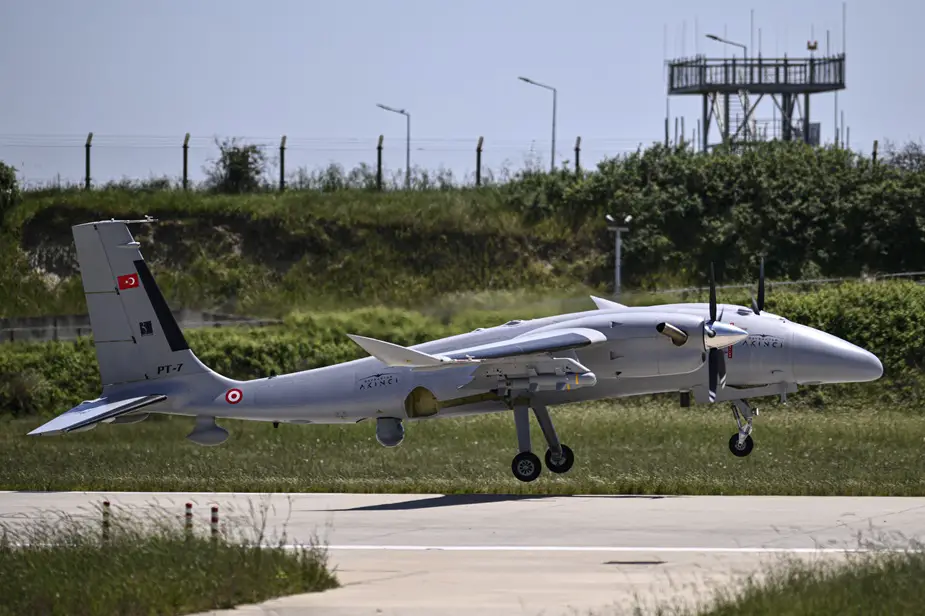
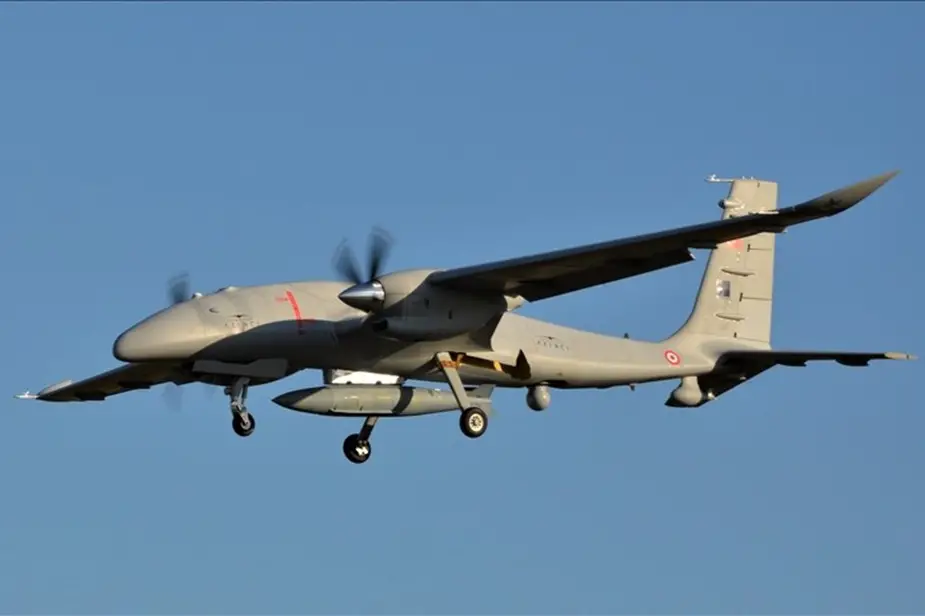
The Bayraktar AKINCI is a Turkish strategic, twin-engine unmanned combat aerial vehicle designed for long-endurance intelligence, surveillance, target acquisition and reconnaissance (ISTAR), precision strike, air-to-air engagement and maritime-security missions. The platform combines a 6,000 kg maximum take-off weight, 1,500 kg payload capacity, more than 24 hours of endurance, LOS/BLOS communications, advanced autonomous-flight functions and a modular mission architecture supporting electro-optical, radar, signals-intelligence, electronic-warfare and guided-weapons payloads.

Country users : Türkiye, Azerbaijan, Burkina Faso, Ethiopia, Kyrgyzstan, Libya, Mali, Morocco, Pakistan, Somalia, Sudan, United Arab Emirates


Description

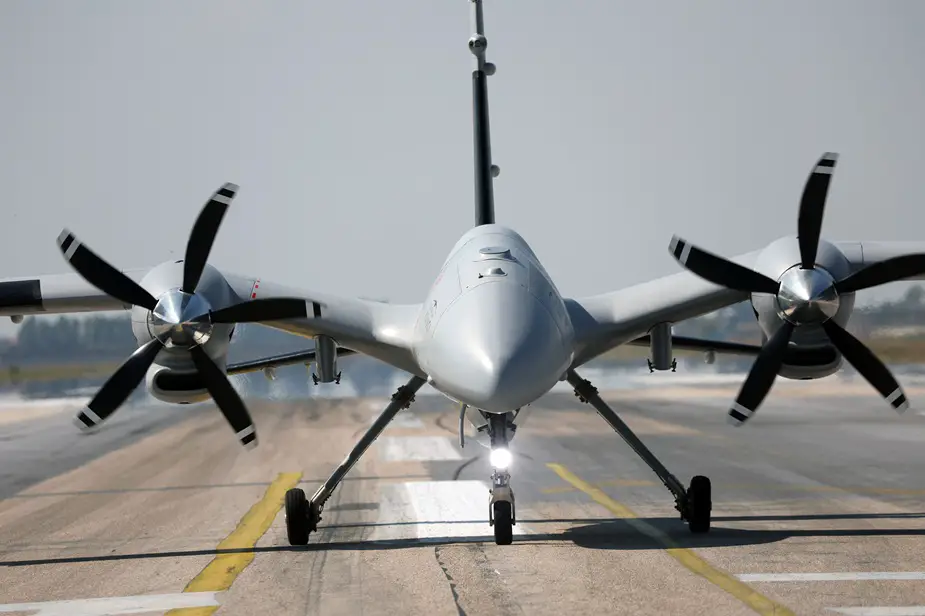
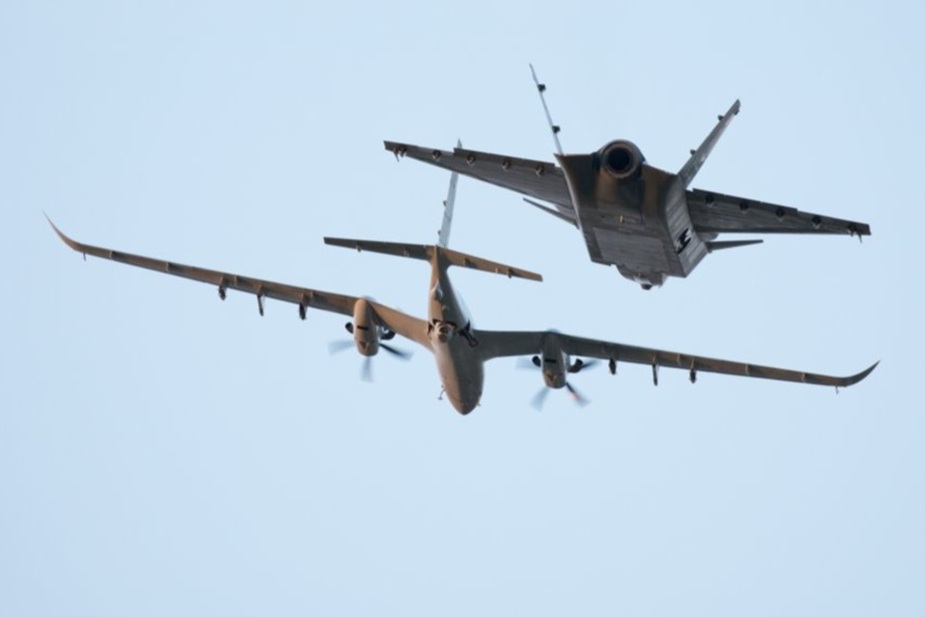
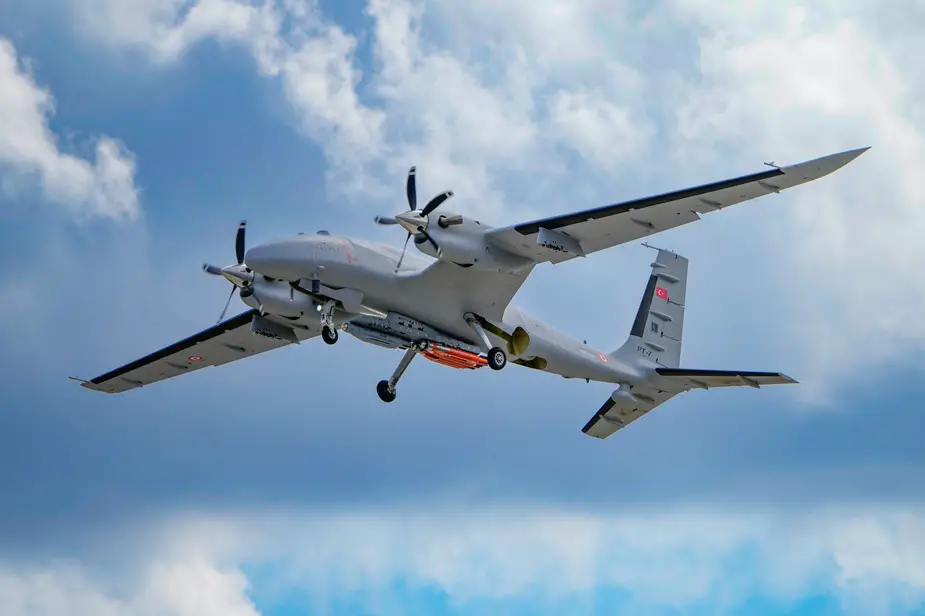
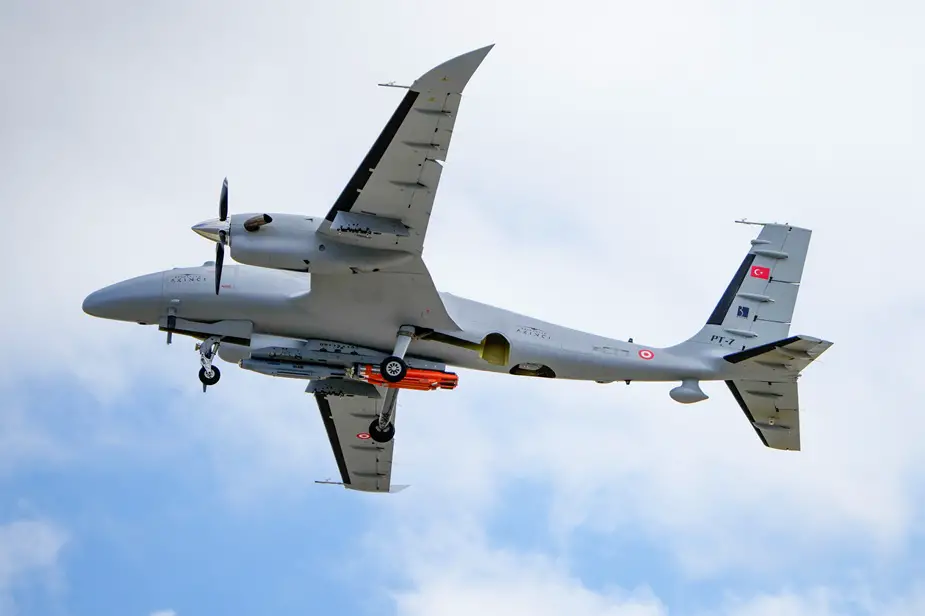
Bayraktar AKINCI was developed by Baykar as a strategic unmanned combat aircraft capable of conducting missions beyond the traditional tactical-UAV role. The aircraft completed its maiden flight on 6 December 2019 and entered Turkish Armed Forces service on 29 August 2021. It is designed for operations over both land and maritime environments, combining long-range ISTAR functions with precision air-to-ground and air-to-air strike capabilities. The family comprises the AKINCI-A, AKINCI-B and AKINCI-C configurations.

The aircraft has a 20 m wingspan, 12.2 m length and 4.1 m height, with a maximum take-off weight of 6,000 kg and payload capacity of 1,500 kg. Published performance figures include a 30,000 ft operational altitude, 40,000 ft service ceiling, more than 24 hours of endurance and a 6,000 km operational range. Cruise and maximum speeds are stated as 150 and 240 KTAS respectively. During high-altitude testing on 21 June 2022, an AKINCI reached 45,118 ft, establishing Türkiye's national aviation altitude record while exceeding the platform's nominal published service ceiling.

AKINCI's modular mission architecture supports simultaneous electro-optical, infrared and laser-designation (EO/IR/LD) functions, a multi-mode AESA radar, signals-intelligence equipment and electronic-warfare support systems. Its weapons architecture accommodates laser-guided smart munitions, INS/GPS-guided and infrared-guided weapons, missiles, stand-off weapons, cruise missiles and air-to-air weapons. The ASELFLIR-500 electro-optical reconnaissance, surveillance and targeting system has been operationally demonstrated from AKINCI during live-fire testing against maritime targets. The platform is also designed to support anti-submarine warfare, surface warfare and coastal-patrol missions.

A defining characteristic of AKINCI is its highly redundant flight-control and communications architecture. The system incorporates fully autonomous flight control, a triple-redundant autopilot, semi-autonomous flight modes, fault-tolerant triple-redundant sensor fusion, redundant servo actuators and a cross-redundant ground-control architecture. Autonomous taxi, take-off, cruise and landing are supported, including precision automatic take-off and landing independent of external ground-control systems. Command, control and video transmission are supported through redundant LOS links and SATCOM-based BLOS communications.

Akinci variants:

  • Bayraktar AKINCI-A: Initial operational variant powered by 2 × 450 hp turboprop engines, providing 900 hp total. This was the first configuration to enter Turkish service. Baykar confirms that AKINCI-A has been introduced into the inventories of Turkish security forces and partner countries.
  • Bayraktar AKINCI-B: Higher-powered operational variant equipped with 2 × 750 hp turboprop engines, delivering 1,500 hp total. It was developed to provide greater propulsion power and performance margin than the A model. AKINCI-B completed its first flight in March 2022 and is in operational inventories.
  • Bayraktar AKINCI-C: Latest higher-powered variant fitted with 2 × 850 hp turboprop engines, producing 1,700 hp total. The C model completed flight and aerodynamic-parameter testing and is intended to offer increased propulsion capability within the AKINCI family. Baykar has publicly described it as the most powerful configuration of the three, but its official releases distinguish it from the already fielded A and B variants.
Back to top

Technical Data

  • Design and Architecture

    AKINCI employs a large twin-engine fixed-wing configuration built around a 20 m wingspan airframe measuring 12.2 m in length and 4.1 m in height. Maximum take-off weight is 6,000 kg, with up to 1,500 kg of payload capacity available for mission systems and weapons. The airframe incorporates retractable landing gear and conventional runway operation, while multiple external stations support the carriage of sensors, guided munitions, missiles and stand-off weapons. Its overall system architecture emphasizes redundancy, fault tolerance, modular mission configuration and sustained high-altitude operation.

  • Armament and Payloads

    AKINCI supports a broad weapons spectrum encompassing laser-guided smart munitions, INS/GPS-guided and infrared-guided weapons, guided general-purpose bombs, supersonic air-to-surface missiles, stand-off weapons, cruise missiles and air-to-air engagement systems. Demonstrated integrations include members of the MAM family, TOLUN, TEBER, LGK, HGK, GÖKÇE, GÖZDE and KGK-82 families together with UAV-122, UAV-230 and ÇAKIR. Subsequent testing has expanded the platform's weapons envelope with ELÇİN 82, LAÇİN 82, KEMANKEŞ 1 and the EREN High-Speed Multi-Purpose Loitering Munition.

  • Propulsion and Flight Performance

    The AKINCI family uses two turboprop engines, with the AKINCI-A powered by 2×450 hp, AKINCI-B by 2×750 hp and AKINCI-C by 2×850 hp, giving the C configuration a total installed output of 1,700 hp. Published performance figures specify a 150 KTAS cruise speed, 240 KTAS maximum speed, more than 24 hours of endurance, 30,000 ft operational altitude, 40,000 ft service ceiling and 6,000 km operational range. The platform has also demonstrated flight to 45,118 ft during high-altitude testing.

  • Avionics, Autonomy and Onboard Systems

    AKINCI's avionics architecture combines fully autonomous flight control with a triple-redundant autopilot, fault-tolerant triple-redundant sensor fusion, semi-autonomous flight modes, redundant servo actuators and enhanced autonomy supported by artificial intelligence. Mission equipment can include simultaneous EO/IR/laser designation, a multi-mode AESA radar, SIGINT and electronic-warfare support systems. The aircraft supports autonomous taxi, take-off, cruise and landing, including sensor-fusion-assisted precision automatic landing independent of external ground systems. Communications combine triple-redundant LOS control/video links with SATCOM BLOS connectivity and support through worldwide satellite networks.

Back to top

Specifications

  • Manufacturer

    Baykar

  • Designer Country

    Türkiye

  • Type

    Strategic twin-engine unmanned combat aerial vehicle (UCAV) / Taarruzi İnsansız Hava Aracı (TİHA)

  • Development status

    Operational; AKINCI-A and AKINCI-B in service; AKINCI-C flight-tested configuration

  • Propulsion

    AKINCI-A — 2×450 hp turboprops; AKINCI-B — 2×750 hp turboprops; AKINCI-C — 2×850 hp turboprops

  • Maximum speed

    240 KTAS

  • Combat radius:

    Not publicly specified; published operational range — 6,000 km

  • Autonomous functions

    Autonomous taxi / take-off / cruise / landing; fully autonomous flight control; triple-redundant autopilot; semi-autonomous flight modes; enhanced autonomy and artificial intelligence; sensor-fusion-assisted automatic take-off and landing

  • Armament

    Laser-guided smart munitions; INS/GPS-guided munitions; IR-guided munitions; missiles; stand-off missiles; cruise missiles; air-to-air weapons

  • Operational altitude

    30,000 ft

  • Demonstrated weapon integrations

    MAM-C; MAM-L; MAM-L TV; MAM-T; MAM-T IIR/TV; TOLUN; TOLUN IIR; TEBER-81; TEBER-82; ELÇİN 82; LAÇİN 82; LGK-81; LGK-82; HGK-82; GÖKÇE Guidance Kit; GÖZDE Guidance Kit; KGK-82-UCAV; UAV-230 Supersonic Missile; UAV-122 TV-seeker and laser-seeker variants; ÇAKIR Cruise Missile; KEMANKEŞ 1 AI-Based Mini Cruise Missile; EREN High-Speed Multi-Purpose Loitering Munition

  • Maximum take-off weight

     30,000 ft

  • Sensors and mission systems

    Simultaneous EO/IR/laser designator; ASELFLIR-500 demonstrated electro-optical reconnaissance/surveillance/targeting system; multi-mode AESA radar; SIGINT; electronic-warfare support systems

  • Communications

    Triple-redundant LOS control and video links; SATCOM BLOS control and video transmission; worldwide satellite-network support

  • Dimensions

    Wingspan — 20 m; length — 12.2 m; height — 4.1 m

Back to top

Details View

Bayraktar AKINCI strategic UCAV drone Baykar Türkiye specifications technical review data fact sheet armament sensors payload pictures video
Back to top

Photo Gallery

Back to top
Copyright © 2019 - 2024 Army Recognition | Webdesign by Zzam