Unmanned aerial vehicles.
A3-001 Future Uncrewed Combat Air System.

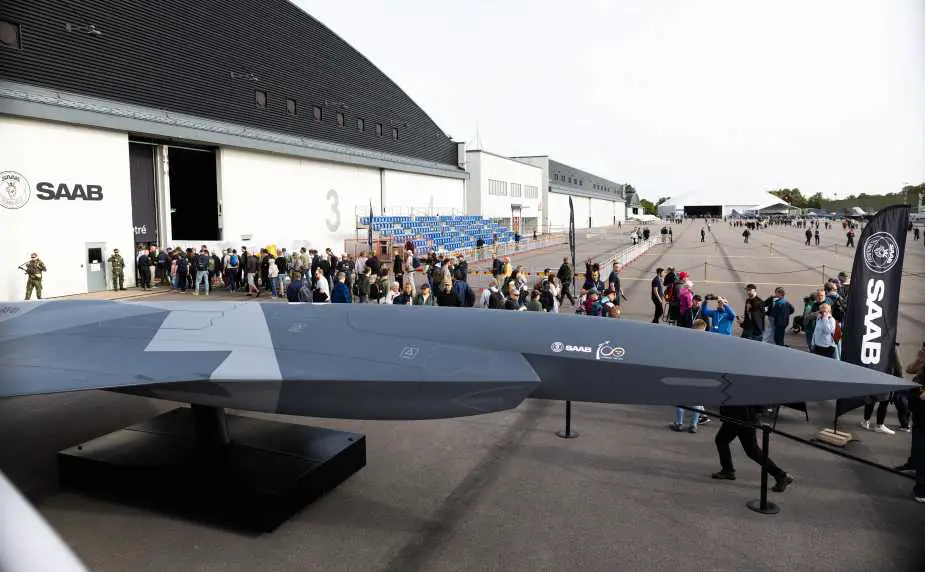
The Saab A3-001 is a Swedish future uncrewed combat air system conceived as a high-end combat-air platform for operations alongside crewed aircraft and other networked assets. Developed by Saab as part of Sweden’s exploration of next-generation combat-air technologies, the A3-001 combines a low-observable airframe concept, projected supersonic performance, autonomous operation, internal payload carriage, and collaborative mission functions intended for demanding missions in heavily defended airspace.
Country users: Sweden concept

Description
The Saab A3-001 is a future uncrewed combat air system developed in Sweden by Saab AB. Saab publicly presented the full-scale A3 concept at Malmen Air Base in Linköping, Sweden, on 22 August 2026, describing it as its own concept for a system that could follow Sweden’s current uncrewed demonstrator work in the mid-2030s if the country decides to continue development.
The A3-001 is connected to Sweden’s broader work on future combat-air technologies under the Koncept för Framtida Stridsflygplan (KFS), or Concept for Future Combat Aircraft, activity. Saab has stated that it is working with Sweden to explore technologies intended to form the basis of the next generation of combat-air systems and that fighter-like uncrewed demonstrators are expected to be flown before 2030. Saab has further explained that A3 represents a separate company concept for what could potentially follow that demonstrator phase.
The expression Autonomous Collaborative Platform (ACP) has been used in reporting by The War Zone (TWZ) following a direct Saab media briefing with Peter Nilsson, head of Saab’s Advanced Programs business unit. According to TWZ, Saab had previously used Collaborative Combat Aircraft and Unmanned Aerial System terminology before adopting ACP for the broader development effort. Saab’s own public description of A3, however, identifies it more generally as a future uncrewed combat air system.
The A3 concept is intended to represent a comparatively high-end uncrewed combat aircraft rather than a low-cost expendable drone. Reporting from Saab’s briefing indicates that the design is centered on low observability and supersonic performance for operations in highly contested airspace. Potential missions include air-to-air combat, electronic warfare, suppression of enemy air defenses, and deep precision strike.
Saab also envisages the future uncrewed system operating cooperatively with crewed aircraft and other networked platforms. According to the Saab briefing reported by TWZ, a JAS 39 Gripen E could act as a tactical mission commander for one or more uncrewed aircraft while working in conjunction with Saab GlobalEye airborne early-warning and control aircraft. Such an architecture would distribute sensing, weapons employment, electronic-warfare functions, and mission risk across several interconnected platforms.
The A3-001 is not yet a contracted production aircraft. Saab’s currently funded work centers on the A1 and A2 uncrewed technology demonstrators, which are intended to mature technologies that could support a future operational system. According to TWZ’s reporting of the Saab briefing, Saab is contracted through 2030 to develop those demonstrators, while any subsequent A3 development would depend on a future Swedish decision and follow-on contract.
The broader significance of the program extends beyond the uncrewed aircraft itself. Saab considers the technologies, architectures, digital-engineering methods, and operational concepts emerging from the demonstrator effort potentially relevant to a future crewed combat-air system. The company has indicated that lessons from the program could contribute to Sweden’s long-term evaluation of a successor to the Gripen family, although no definitive post-Gripen combat-air solution has been selected.
A3-001 uncrewed combat air system variants:
A1 — Uncrewed Technology Demonstrator
The A1 is the first uncrewed demonstrator associated with Saab’s current future combat-air development effort. Detailed public information comes principally from TWZ’s reporting of Saab’s August 2026 media briefing. According to that briefing, A1 is intended to demonstrate Saab’s ability to develop, build, and fly a low-observable uncrewed aircraft with supersonic performance. It uses a General Electric F414 afterburning turbofan and differs visibly from the tailless A3 concept through the presence of twin outward-canted vertical tail surfaces. A1 incorporates provision for an internal weapons bay, although Saab does not intend to use the aircraft for stores-release trials. Its primary purpose is technology validation rather than development of an operational combat configuration.
A2 — Uncrewed Technology Demonstrator
The A2 is the planned follow-on technology demonstrator. Saab has released less public information concerning its external configuration, but the company has indicated that A2 will not be identical to A1. According to TWZ’s Saab briefing coverage, A2 will also use the General Electric F414 and will incorporate an internal weapons bay. The aircraft is intended to support testing of additional advanced technologies, including new materials and sensors. Although A2 may provide a broader test environment than A1, the possibility that it could conduct weapons-release trials has not been formally confirmed by Saab and should not be considered an established program requirement.
A3 / A3-001 — Future Uncrewed Combat Air System Concept
The A3 is Saab’s full-scale concept for a possible future operational uncrewed combat air system. It represents a potential follow-on to the A1 and A2 technology-demonstrator phase in the mid-2030s if Sweden decides to proceed with development. The aircraft remains a concept. No production contract, final service configuration, definitive weapons package, selected production engine, or operational introduction date has been confirmed.
Technical Data
-
Design
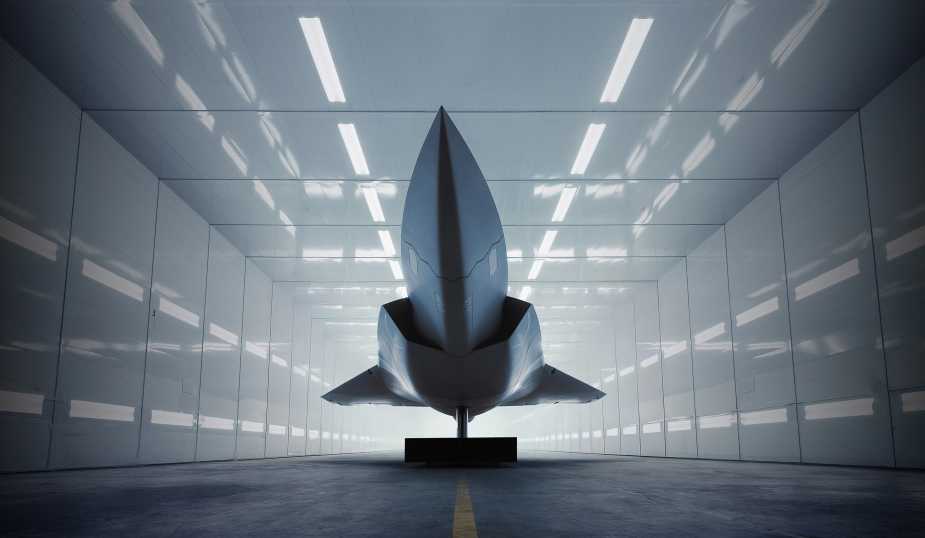
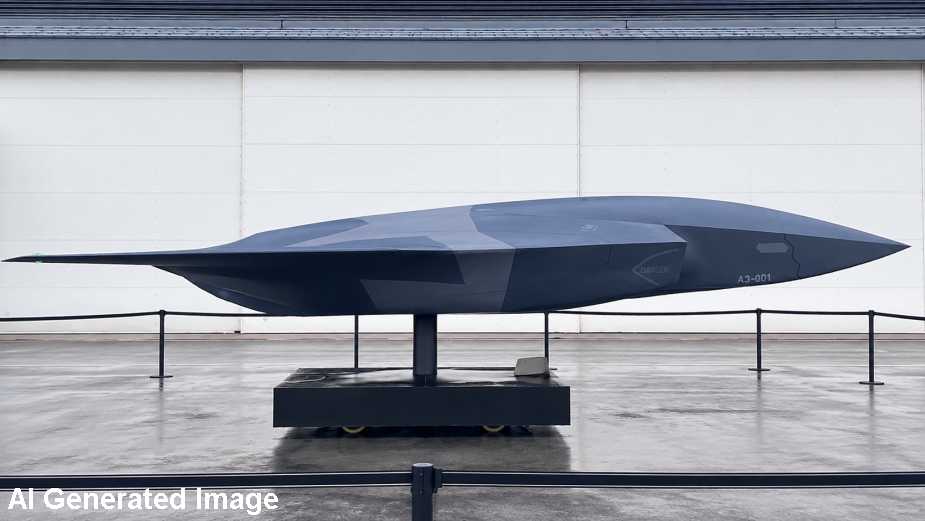
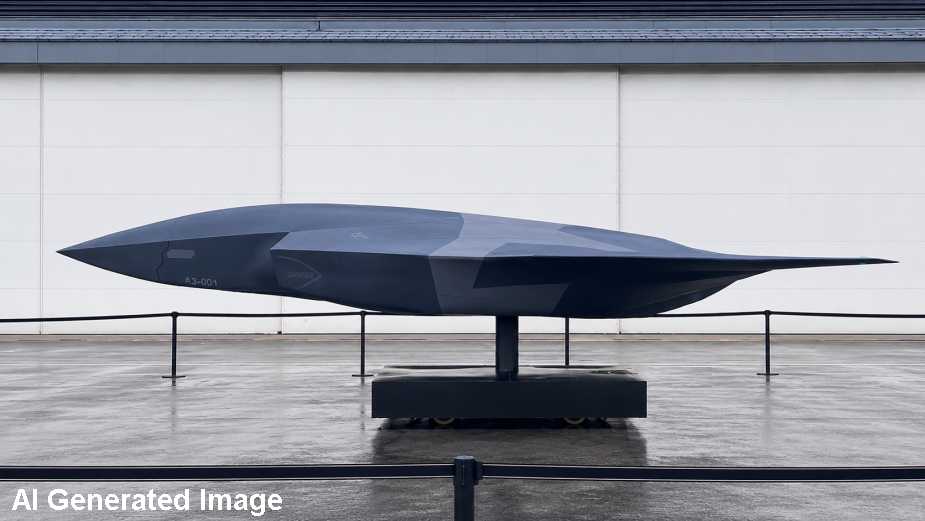
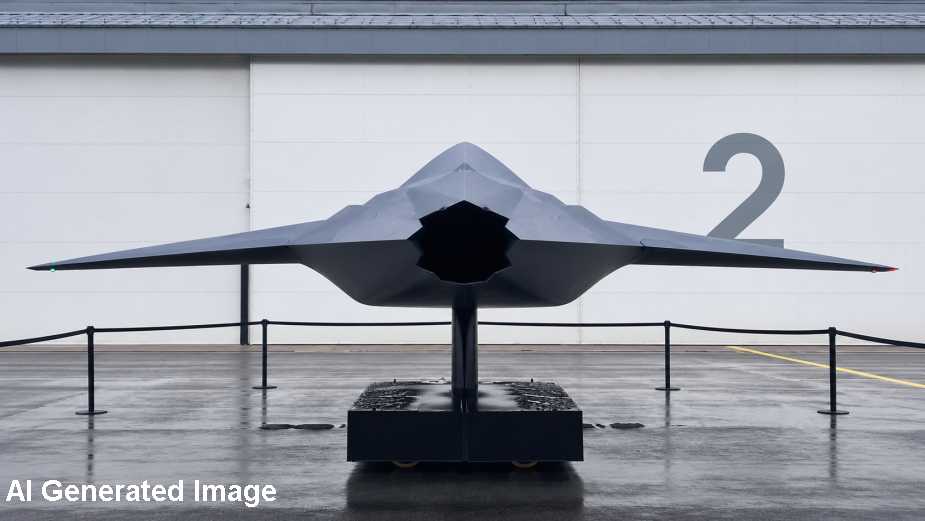
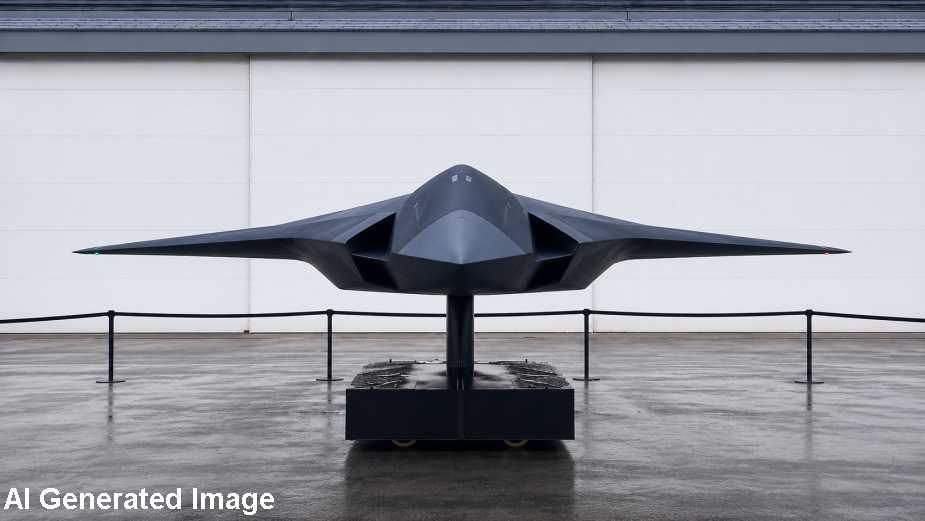
The Saab A3-001 is designed around a tailless, low-observable blended-wing/body configuration with cropped swept wings, a pronounced chine extending around the forward fuselage, and substantial internal volume intended for fuel and mission stores. TWZ’s examination of the full-scale Saab model describes chisel-type diverterless supersonic intakes positioned on either side of the fuselage and a serrated engine-nozzle treatment at the rear. The overall geometry is intended to combine reduced radar observability with aerodynamic characteristics compatible with supersonic flight. The absence of conventional vertical tail surfaces suggests that the aircraft would rely heavily on advanced digital flight-control systems for stability and directional control, although Saab has not disclosed the A3 flight-control architecture. Internal volume is intended to support fuel and mission payload carriage while reducing dependence on external stores that could increase radar signature. Saab has not published official A3 structural dimensions, radar-cross-section data, infrared-signature values, construction materials, internal-bay dimensions, or maximum takeoff weight.
-
Armament
The Saab A3-001 is designed with internal capacity for mission stores, allowing weapons or other payloads to be carried without the radar-signature penalties associated with conventional external pylons. Saab has not publicly identified a definitive weapons fit for the A3 concept. Mission roles discussed during the Saab briefing and reported by TWZ include air-to-air combat, suppression of enemy air defenses, electronic warfare, and deep precision strike. No specific air-to-air missile, anti-radiation missile, guided bomb, cruise missile, or other weapon has been formally assigned to the A3. The A1 demonstrator incorporates capacity for an internal weapons bay but is not intended to conduct stores-release testing. A2 is also planned with an internal bay. Any future use of A2 for weapons-release testing remains unconfirmed.
-
Engine and Flight Performance
The Saab A3-001 is intended to provide supersonic performance, but Saab has not publicly selected or announced a production engine for the A3 concept. According to TWZ’s reporting of Saab’s direct media briefing, the A1 and A2 technology demonstrators use the GE Aerospace F414 afterburning turbofan, the same basic engine family installed in the Gripen E/F. TWZ cites thrust in the approximately 22,000-pound class for the demonstrator installation. Saab officials have indicated that other propulsion options are being examined for A3. Continued use of the F414 could offer logistical and industrial commonality with Gripen E/F, but this has not been confirmed as the propulsion solution for a future operational aircraft. Saab has not disclosed the A3 maximum speed, combat radius, ferry range, endurance, service ceiling, acceleration, fuel capacity, or maximum takeoff weight.
-
Avionics and Onboard Equipment
The Saab A3-001 is intended to operate within a highly networked combat-air architecture in which uncrewed aircraft cooperate with crewed fighters, airborne surveillance aircraft, and other mission nodes. TWZ reports that Saab envisages Gripen E acting as a tactical mission commander for one or more future uncrewed aircraft in conjunction with Saab GlobalEye. Saab’s public description also emphasizes fighter-like uncrewed systems operating as part of a broader next-generation combat-air architecture. The A3 is therefore expected to incorporate advanced autonomous mission management, secure tactical communications, digital flight control, collaborative mission functions, and networked sensor and weapons coordination. Saab has not publicly identified the A3 radar, electro-optical sensor, infrared search-and-track system, electronic-support suite, electronic-attack equipment, mission computer, defensive aids suite, or specific tactical datalink. These systems should therefore be described only at a functional level until Saab releases formal subsystem designations or configuration details.
Specifications
-
Type
Future uncrewed combat air system
-
Country users
SAAB concept of unmanned combat aircraft
-
Designer Country
Sweden - SAAB
-
Avionics
Intended for autonomous and collaborative networked operation; specific radar, electro-optical sensors, electronic-warfare suite, mission computer, defensive aids, and tactical datalink not publicly disclosed
-
Armament
Internal mission-store capacity planned; definitive weapons fit not publicly disclosed
-
Engine
A3: production engine not selected or publicly confirmed
A1/A2: GE Aerospace F414 afterburning turbofan, according to Saab program information reported by TWZ -
Speed
Supersonic capability is a stated design objective; exact A3 maximum speed not publicly disclosed
-
Range
Not publicly disclosed
-
Missions
High-risk operations in heavily defended airspace; air-to-air combat, electronic warfare, suppression of enemy air defenses, and deep precision strike are among the missions discussed in Saab program briefings
-
Dimensions
Length: ? m; Width: ? m; Height: ? m