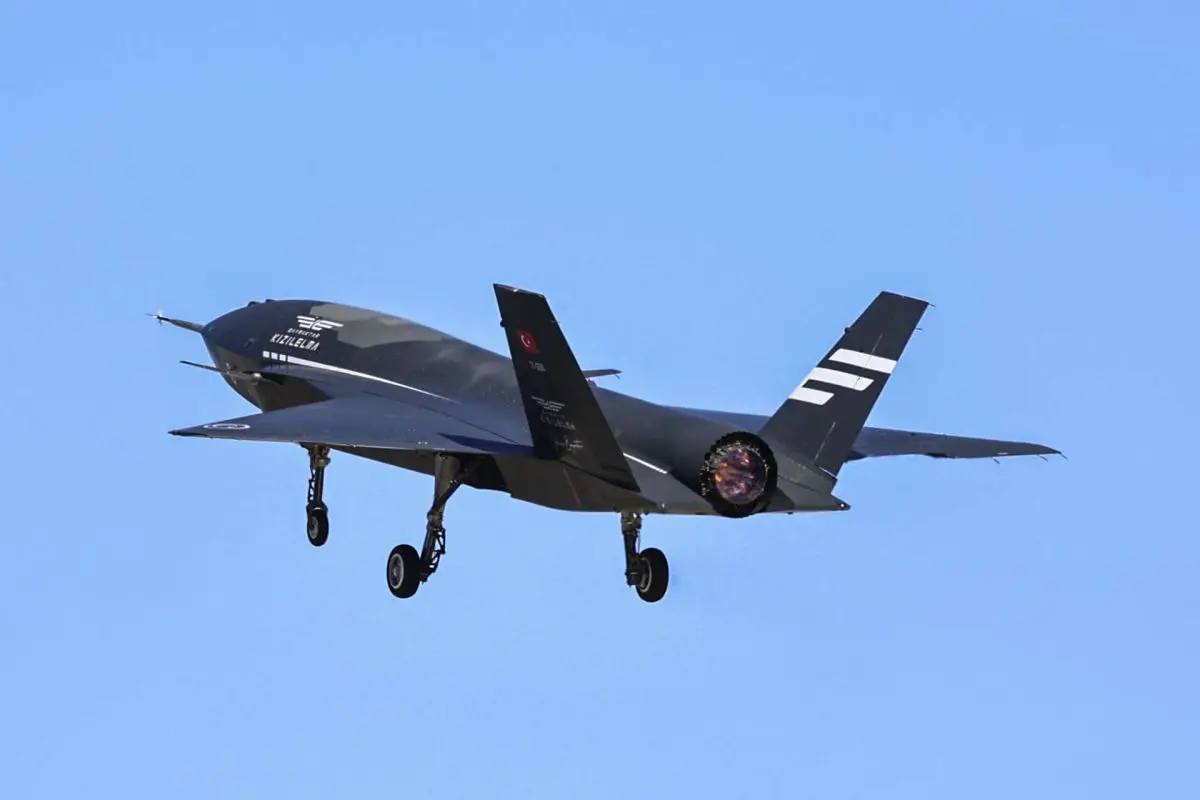
The Bayraktar KIZILELMA is a jet-powered, low-observable Unmanned Fighter Aircraft developed by Türkiye’s Baykar for air-to-air combat, strategic attack, suppression and destruction of enemy air defences, combat air patrol, escort and collaborative combat operations. Conceived as a combat aircraft rather than an endurance-oriented surveillance drone, KIZILELMA combines fighter-class aerodynamics with autonomous flight control, line-of-sight and beyond-line-of-sight communications, GPS-independent navigation, smart-fleet autonomy and a modular sensor-and-weapon architecture designed to support manned-unmanned teaming.






Technical Data
-
Design and Architecture
The Bayraktar KIZILELMA is a jet-powered Unmanned Fighter Aircraft developed by Baykar for autonomous combat operations, manned-unmanned teaming and eventual operation from conventional airfields and short-deck naval platforms. Its configuration prioritises high maneuverability, reduced detectability, rapid mission execution and combat operations in contested airspace. Baykar identifies strategic attack, SEAD/DEAD, combat air patrol and escort as its principal mission profiles.
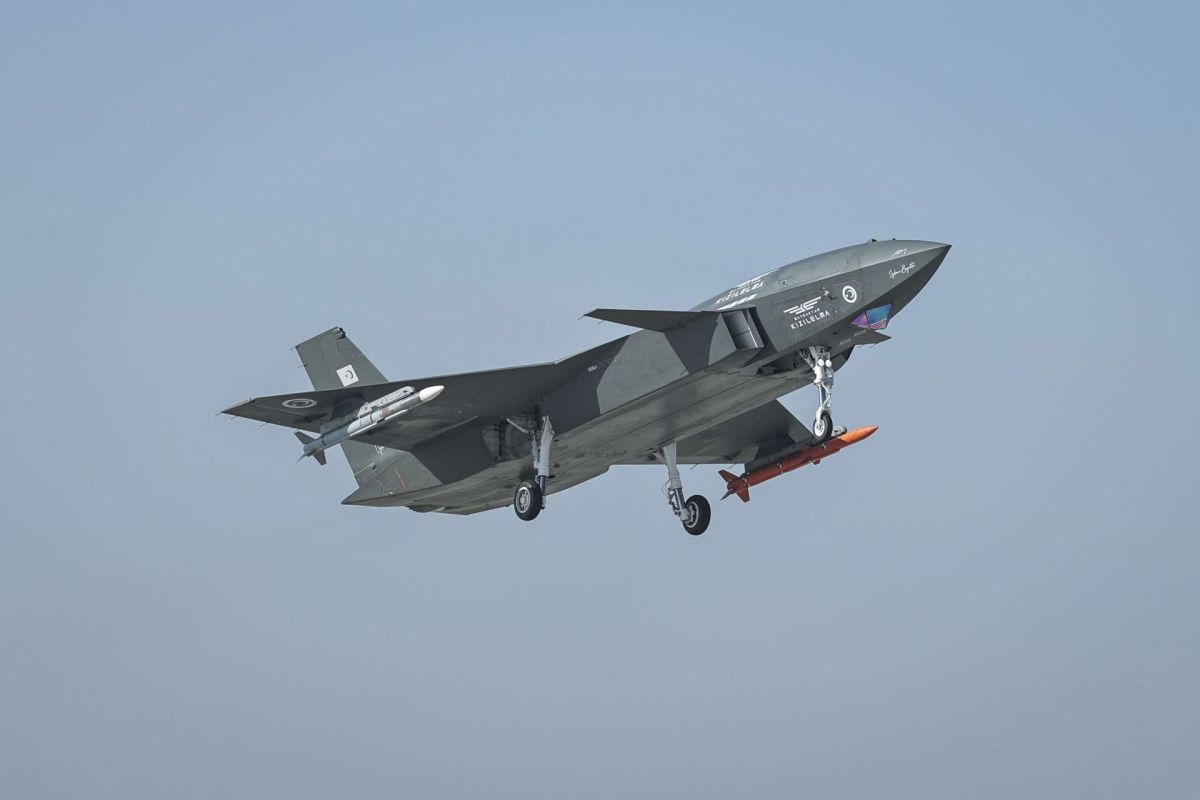
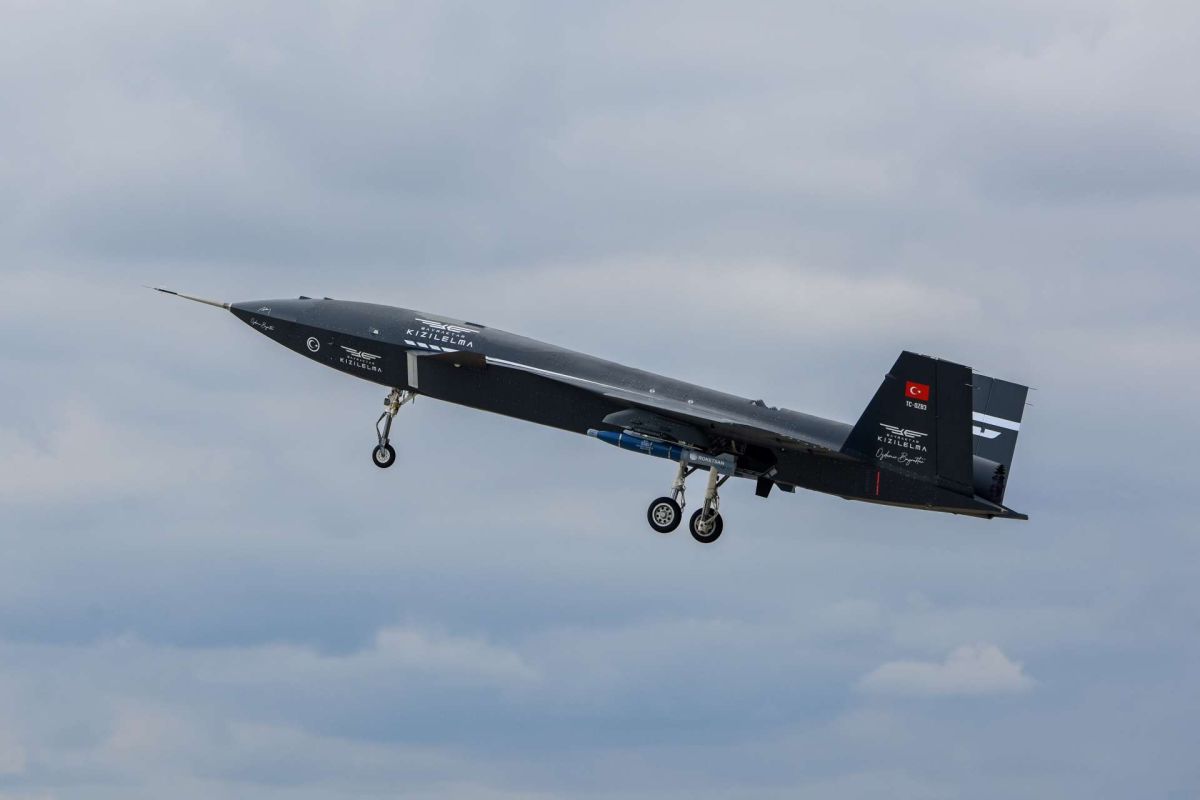
The current airframe uses a blended forward fuselage, pronounced leading-edge chines, close-coupled canards, swept wings, a ventral intake and outward-canted twin vertical stabilisers. These features are consistent with Baykar’s published objectives of low observability and high maneuverability. The absence of a cockpit, canopy, ejection seat and onboard pilot-support systems allows the forward fuselage and internal architecture to be arranged specifically for unmanned operations.
Baykar characterises KIZILELMA as a low-radar-cross-section aircraft. No numerical signature measurement has been released, and the manufacturer has not disclosed frontal, lateral or rear radar-cross-section values, measurement frequencies, test conditions or details of radar-absorbent materials. “Low observable” should therefore be treated as the manufacturer’s design classification rather than as a publicly quantified signature level.
The aircraft is based on a modular architecture intended to accommodate different sensors, weapons, communications equipment and mission systems. This allows the broader design to support air-to-air combat, precision attack, suppression of air defences, reconnaissance and collaborative operations. The current Baykar brochure identifies KIZILELMA-A, KIZILELMA-B, KIZILELMA-C and KIZILELMA-D, while Baykar’s website lists subsonic, transonic and supersonic versions without formally linking each performance category to a lettered designation.
KIZILELMA measures 14.5 m in length, 10 m in wingspan and 3.5 m in height. Its maximum take-off weight is 8,500 kg and its maximum published payload capacity is 1,500 kg. Baykar also publishes a 500-nautical-mile combat radius. No current official figure has been released for ferry range, internal fuel capacity, runway requirement, take-off roll or landing distance.
Carrier operation remains a development objective. Although the design is intended to support take-off and landing from short-runway ships, no publicly available official source confirms completion of operational shipboard qualification.
-
Armament and Payloads
KIZILELMA is designed to carry mixed air-to-air and air-to-surface payloads within its published 1,500 kg capacity. Baykar lists air-to-air missiles, INS/GPS-guided munitions, laser-guided munitions, stand-off weapons, cruise missiles and mini-cruise missiles among the aircraft’s intended weapon categories. These payload classes support combat air patrol, fighter escort, strategic attack, precision strike and suppression or destruction of enemy air defences.
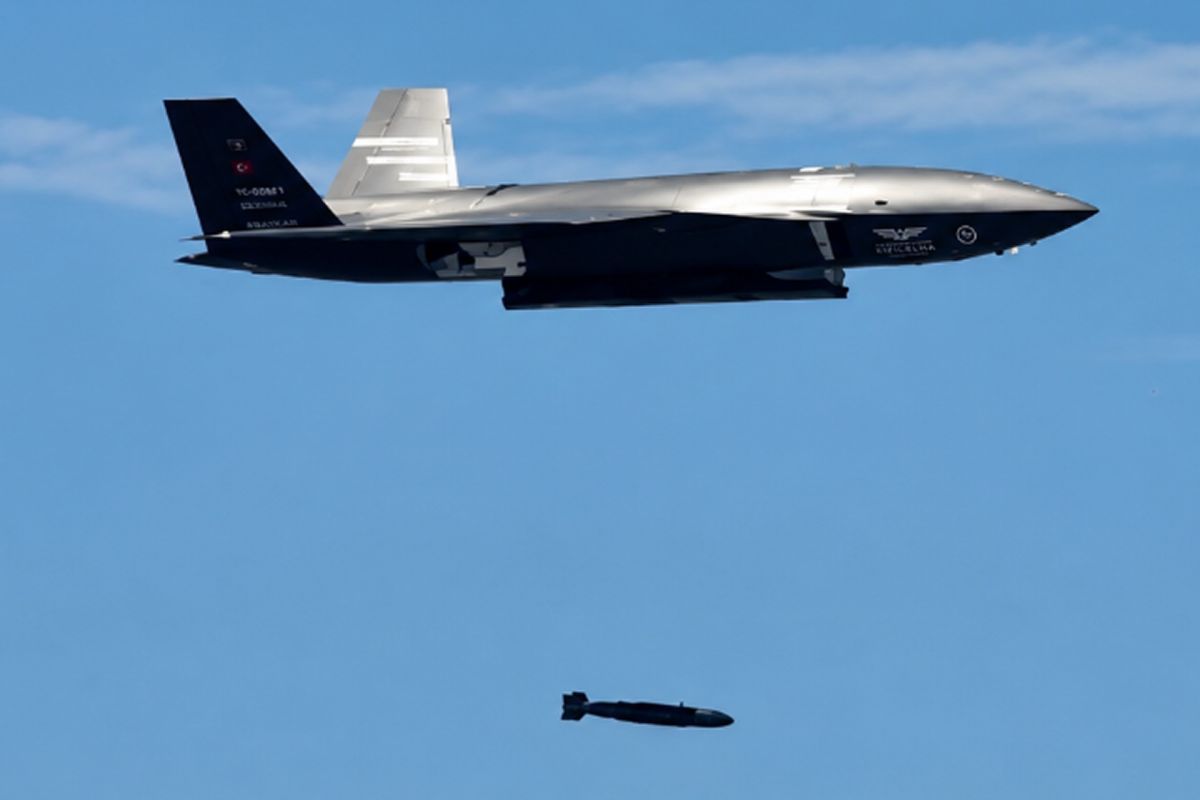
The aircraft’s demonstrated air-to-ground weapon integrations include TOLUN, TEBER-82 and LGK-82 guided munitions. In October 2025, the PT3 aircraft completed separate live-fire sorties with TOLUN and TEBER-82, with Baykar reporting successful strikes against the designated targets. Baykar’s July 2026 statement additionally identified LGK-82 among the munitions previously tested from KIZILELMA.
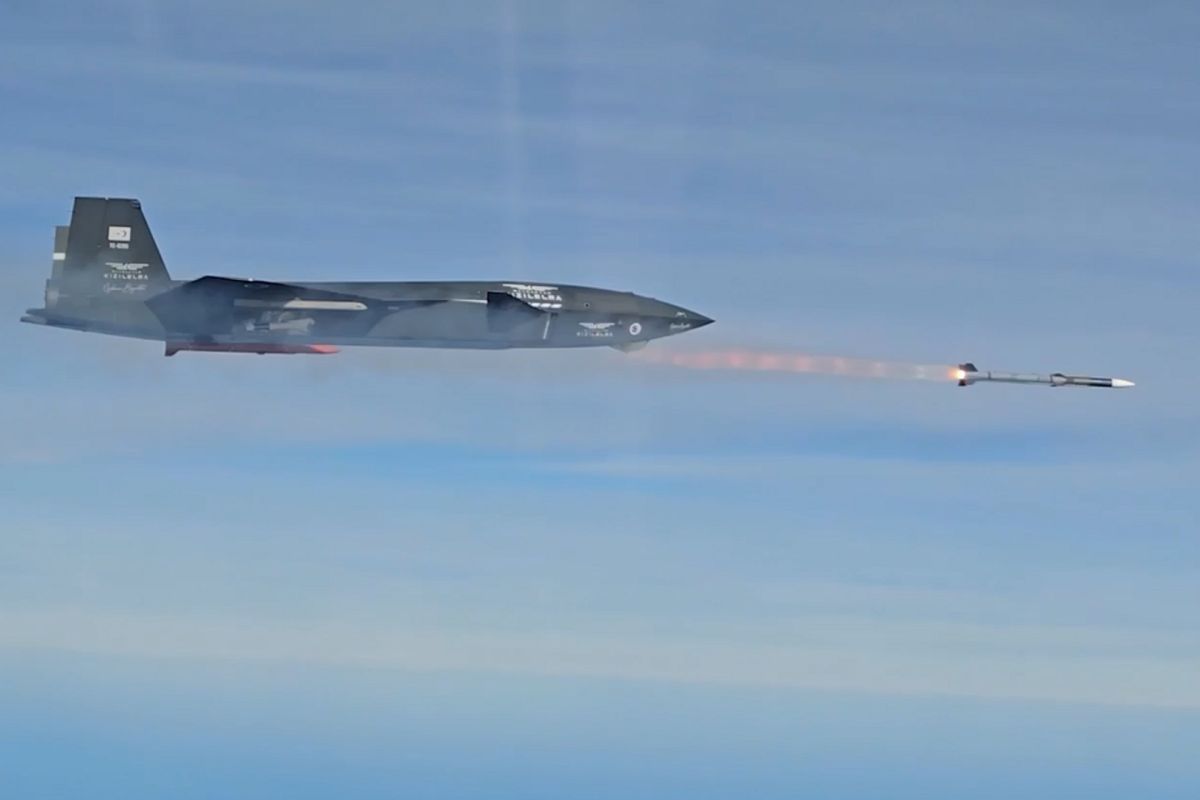
In the air-to-air role, KIZILELMA has conducted carriage, datalink and engagement testing with TÜBİTAK SAGE’s GÖKDOĞAN beyond-visual-range missile. On 29 November 2025, the aircraft used its integrated MURAD AESA radar to detect and track a jet-powered target aircraft before firing a GÖKDOĞAN missile that struck the target. TÜBİTAK SAGE separately confirmed the successful engagement.
In July 2026, KIZILELMA S2 conducted its first firing with Roketsan’s JET-230 supersonic air-to-surface missile. The aircraft took off carrying two JET-230 missiles and fired one against a naval target from a distance reported by Baykar as exceeding 120 km. The test demonstrated the integration of a further stand-off attack option but does not establish the maximum range of the aircraft or the weapon in every operational profile.
The published mission-payload architecture includes an electro-optical targeting system, an infrared search-and-track system, a multi-mode AESA radar and advanced situational-awareness equipment. ASELSAN’s MURAD AESA radar and TOYGUN electro-optical targeting system have completed announced integration and flight-test milestones. The current production configuration and supplier for the planned IRST have not been publicly identified.
Baykar has not published the final number, type or arrangement of external and internal weapon stations for every KIZILELMA variant. Successful test employment of an individual weapon should therefore be described as a demonstrated integration milestone rather than as confirmation of unrestricted operational certification across every aircraft configuration and release condition.
-
Propulsion and Flight Performance
The currently published KIZILELMA configuration is powered by a turbofan engine installed in the rear fuselage and supplied through a ventral intake. Baykar’s current technical brochure does not identify the engine model or assign a specific powerplant to the KIZILELMA-A, B, C or D designations.
Baykar has confirmed that a production prototype completed flights with a successfully integrated afterburning engine alternative. The company states that the higher-thrust installation allows the aircraft to approach the speed of sound and improves maneuverability at higher speeds. Baykar has not officially published the engine designation, thrust rating, specific fuel consumption or detailed performance envelope of that installation in its current KIZILELMA technical documentation.
Separately, Türkiye’s Defence Industry Agency has stated that the domestically developed TF6000 turbofan is intended eventually to power KIZILELMA and ANKA-3 after completion of its development and test programme. This represents a future powerplant objective and should not be interpreted as confirmation that TF6000 is installed on current KIZILELMA aircraft.
For the baseline aircraft, Baykar publishes a cruise speed of Mach 0.6 and a maximum speed of Mach 0.9. Endurance is listed as more than three hours, operational altitude as 25,000 ft, service ceiling as 45,000 ft and combat radius as 500 nautical miles. The company also identifies subsonic, transonic and supersonic versions, meaning the baseline Mach 0.9 figure does not define the ultimate planned performance of the entire programme.
The aircraft’s canard-delta aerodynamic arrangement is intended to provide high maneuverability and control authority. Baykar has not released verified figures for maximum positive or negative load factor, sustained turn rate, instantaneous turn rate, roll rate, angle-of-attack limit, acceleration, climb rate or transonic handling characteristics.
Taxiing, take-off, cruise flight and landing are designed to be autonomous. Baykar’s test aircraft have conducted autonomous taxi, take-off and flight operations during both single-aircraft and collaborative test campaigns. No current official data have been published for minimum runway length, take-off distance, landing distance, approach speed, fuel capacity or maximum ferry range.
-
Avionics, Autonomy and Onboard Systems
KIZILELMA’s avionics architecture is centred on autonomous flight management, multisensor integration, resilient communications and coordinated mission execution. Baykar identifies fault-tolerant triple-redundant sensor fusion as a principal feature. The architecture is intended to compare inputs from multiple sensors, isolate inconsistent data and preserve aircraft control following individual sensor or data-path failures.
The communications architecture supports line-of-sight and beyond-line-of-sight operation. Baykar lists satellite communications and triple-redundant line-of-sight communications, enabling the aircraft to exchange command, navigation, sensor and mission information with control stations and cooperating platforms. The manufacturer has not disclosed datalink frequencies, waveforms, encryption standards, bandwidth, latency, electronic-protection measures or resistance to hostile electronic warfare.
Baykar also identifies GPS-independent navigation as a KIZILELMA capability. The system is intended to preserve navigation when satellite signals are jammed, spoofed or otherwise unavailable. Baykar has not publicly described the full navigation architecture or confirmed whether it uses terrain-referenced, visual, celestial or signals-of-opportunity correction in addition to inertial navigation.
The aircraft supports smart-fleet autonomy, AI-assisted swarming, AI-enabled air-to-air combat, fully autonomous mission capability and manned-unmanned teaming. These functions are intended to allow multiple aircraft to exchange tactical information, maintain coordinated formations and execute assigned mission tasks. Baykar has not publicly disclosed the complete decision architecture, human-authorization requirements or rules governing autonomous weapon release.
Smart-fleet autonomy has been demonstrated in flight. On 27 December 2025, KIZILELMA PT3 and PT5 conducted autonomous close-formation flight using Baykar-developed algorithms. During the K-SWARM live trials in May 2026, KIZILELMA also operated in coordinated formations with Leonardo M-346 aircraft, responding autonomously to commands involving position changes, separation and rejoining.
The onboard sensor suite includes ASELSAN’s MURAD AESA radar and TOYGUN electro-optical targeting system. MURAD has supported airborne-target detection, tracking, targeting-data generation and GÖKDOĞAN missile employment. TOYGUN has completed integration and flight testing as an embedded low-observable EOTS. An infrared search-and-track system remains part of Baykar’s published payload architecture, but its final designation and operational performance remain undisclosed.
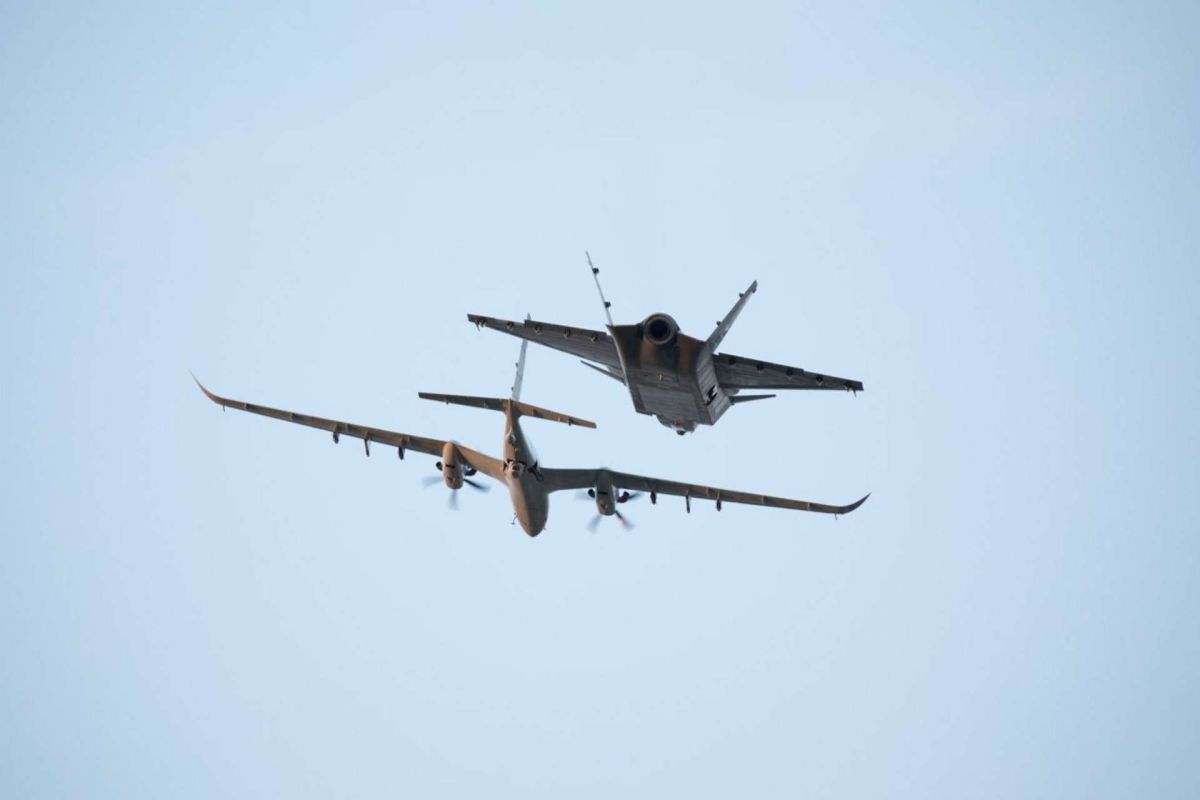
The sensor, datalink and autonomy architecture is intended to allow KIZILELMA to function as a networked combat node rather than as an isolated remotely controlled aircraft. Demonstrated collaborative operations have involved Bayraktar AKINCI, Turkish Air Force F-16s, another KIZILELMA and Leonardo’s M-346. The extent of interoperability with additional Turkish or allied command-and-control networks has not been publicly defined.
Details View


Photo Gallery