







Breaking News




Turkish company Otokar delivers first Cobra II armored vehicles to Romania.
On June 10, 2025, the Turkish company Otokar announced that the first Cobra II 4x4 armored tactical vehicles arrived in Romania, marking the launch phase of a major defense contract signed in November 2024 between Otokar and Romania’s Ministry of National Defense through its procurement agency, CN Romtehnica S.A. Fourteen units built at Otokar’s Sakarya facility were delivered to Mediaș, where local company Automecanica will begin subsystem integration.
Follow Army Recognition on Google News at this link
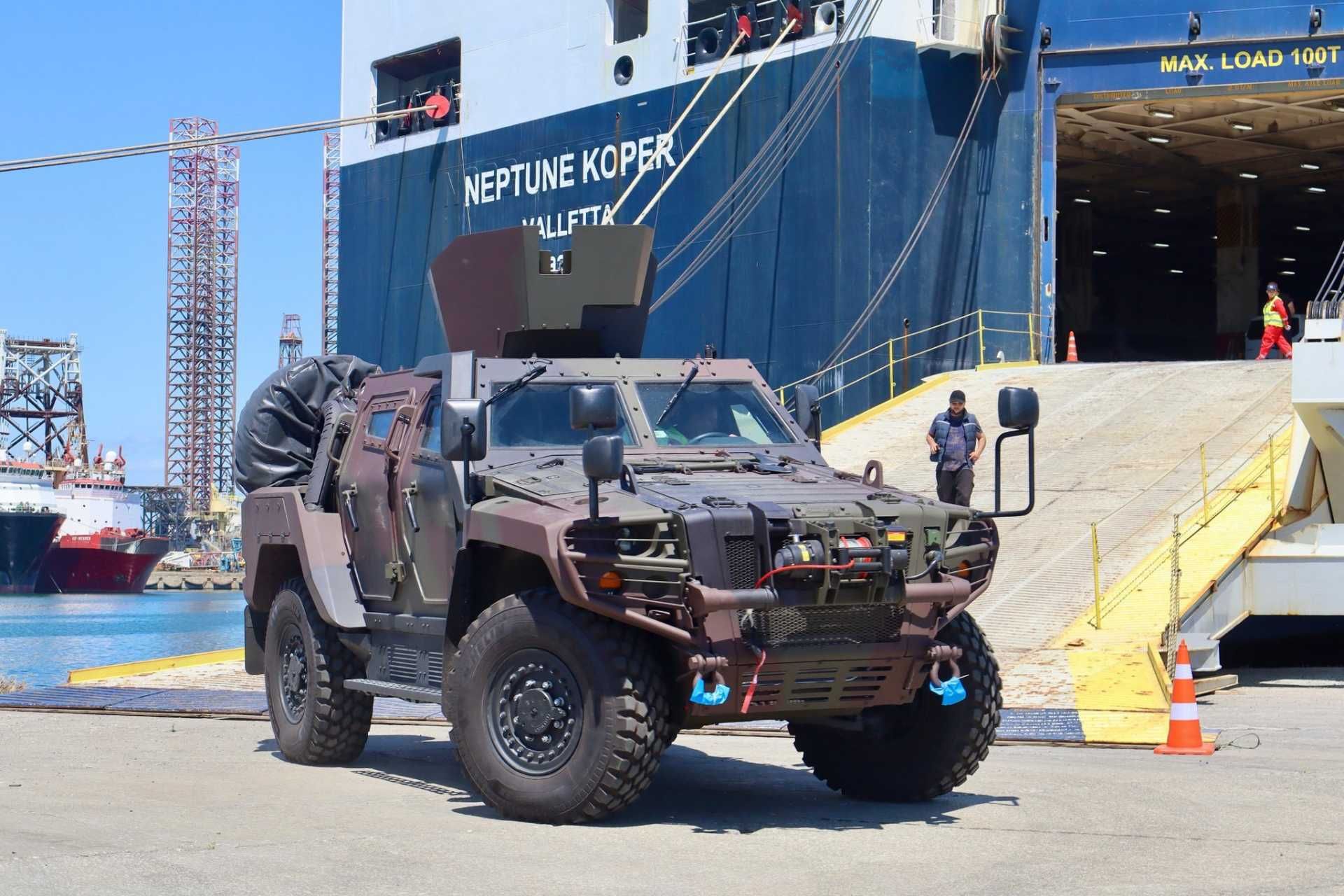
The delivery of the first Cobra II armored vehicles to Romania is part of a contract for 1,059 vehicles, which stipulates that the first 278 vehicles will be manufactured in Türkiye by Otokar, while the remaining 781 will be produced in Romania. (Picture source: Otokar)
The delivery is part of a contract for 1,059 vehicles, valued at approximately €857 million (4.26 billion RON), excluding VAT, which stipulates that the first 278 vehicles will be manufactured in Türkiye, while the remaining 781 will be produced in Romania over a five-year period beginning in the last quarter of 2025. The contract is described as the largest single-item land vehicle export deal in Türkiye’s defense sector to date.
Otokar submitted its offer for Romania’s 4x4 Light Tactical Armored Vehicle acquisition tender on March 20, 2024. After technical evaluations, field testing, and financial assessments, the company received formal notification of selection on October 4, 2024, and finalized the contract on November 27, 2024. To support the program, Otokar established a wholly owned subsidiary in Romania and signed a 50-50 joint venture agreement with Automecanica S.A. in April 2025 to form SAROM (Sisteme Apărare Romania). The new company is responsible for local manufacturing, engineering coordination, marketing, and after-sales support. The agreement also outlines plans for the integration of Romanian-made subsystems and the localized production of ten mission-specific Cobra II variants tailored to Romania’s operational needs.
The contract covers ten Cobra II configurations: armored personnel carriers (APCs), reconnaissance vehicles, APCs equipped with remote-controlled weapon stations, anti-tank platforms, anti-tank command vehicles, 120 mm mortar carriers, 81 mm mortar carriers, engineering vehicles, CBRN reconnaissance vehicles, and armored ambulances. At the BSDA 2024 defense exhibition in Bucharest, Otokar displayed a pickup variant of the Cobra II integrated with the Anubis 3.0 remotely operated weapon system developed by Romania’s Pro Optica. Otokar confirmed intentions to develop offset agreements with Romanian suppliers and to support local research and development initiatives through the new production hub in Mediaș. The joint venture is framed as a long-term industrial partnership involving technology transfer and defense industrial capacity-building in Romania.
Originally introduced in 2013, the Cobra II is a modular 4x4 armored vehicle based on the Cobra I vehicle that debuted in 1997. It is powered by a 6.7-liter turbocharged diesel engine producing 360 horsepower, enabling a maximum speed of 110 km/h and a range of 700 kilometers. The vehicle features a monocoque steel V-hull designed to withstand small arms fire, improvised explosive devices, and mines. Armament options include 7.62 mm and 12.7 mm machine guns and automatic cannons up to 25 mm. Cobra II configurations can include command and control, medevac, MRAP, and peacekeeping roles, with options for amphibious operations, CBRN filtration, run-flat tires, and winterization kits. Its design supports adaptation to different terrain and climate conditions.
The Cobra II has been adopted by 14 countries and used by over 20 end-users worldwide. Operators include Azerbaijan, Bangladesh, Tunisia, Ghana, Senegal, Ivory Coast, and Saudi Arabia. The Turkish Armed Forces have used the vehicle in domestic and cross-border operations, and it has been deployed in United Nations missions. Recently, a Cobra II was used by Ukrainian forces for medical evacuation during operations near Kursk. The Romania program represents the first instance of the Cobra II being assembled outside Türkiye and makes Romania the first member of the European Union to adopt the platform. According to Otokar’s reporting, the vehicle has been produced in over 30 variants and continues to be adapted for user-specific operational and technical requirements.
Romania’s acquisition of the Cobra II is part of a broader effort by the Romanian Land Forces to replace obsolete equipment and accelerate modernization in response to regional security developments following the full-scale Russian invasion of Ukraine in 2022. The new vehicles are expected to contribute to improving tactical mobility, convoy security, and border protection capabilities. The program aligns with other procurement efforts such as the acquisition of Piranha V armored personnel carriers and M1 Abrams main battle tanks. The Cobra II contract supports Romania’s objective of aligning its land forces with NATO standards while also contributing to domestic industrial development through localized production, component integration, and maintenance.
The agreement also strengthens Otokar’s industrial presence in the European Union and supports its strategic goal of expanding production and export activities in NATO member states. According to statements made by Otokar General Manager Aykut Özüner and Military Vehicles Deputy General Manager Sedef Vehbi, the Romanian project is considered a key milestone in the company’s global expansion strategy. Automecanica’s Chairman Andrei Scobioala stated that the joint venture aims to enhance Romania’s defense industrial capabilities and support national security requirements. Otokar reports that the Cobra II platform has been used by nearly 70 end-users globally and continues to evolve in line with partner-specific requirements. The SAROM joint venture formalizes Türkiye’s defense industrial collaboration with Romania and establishes a long-term framework for vehicle production, engineering activities, and regional cooperation centered in Mediaș.