






Breaking News





Breaking News: U.S. Air Force Intercepts Russian Il-20M Electronic Intelligence Aircraft Near Alaska Airspace.
On August 20, 2025, the North American Aerospace Defense Command (NORAD) announced that it had detected and tracked a Russian Il-20M reconnaissance aircraft, designated by NATO as “Coot-A,” operating in the Alaska Air Defense Identification Zone (ADIZ). Although the presence of this aircraft triggered U.S. surveillance and interception measures, it remained entirely in international airspace without entering the sovereign airspace of the United States or Canada. The incident reflects a regular pattern in the region, where Russian military aircraft approach the Alaskan ADIZ, systematically prompting a response from North American forces.
Follow Army Recognition on Google News at this link
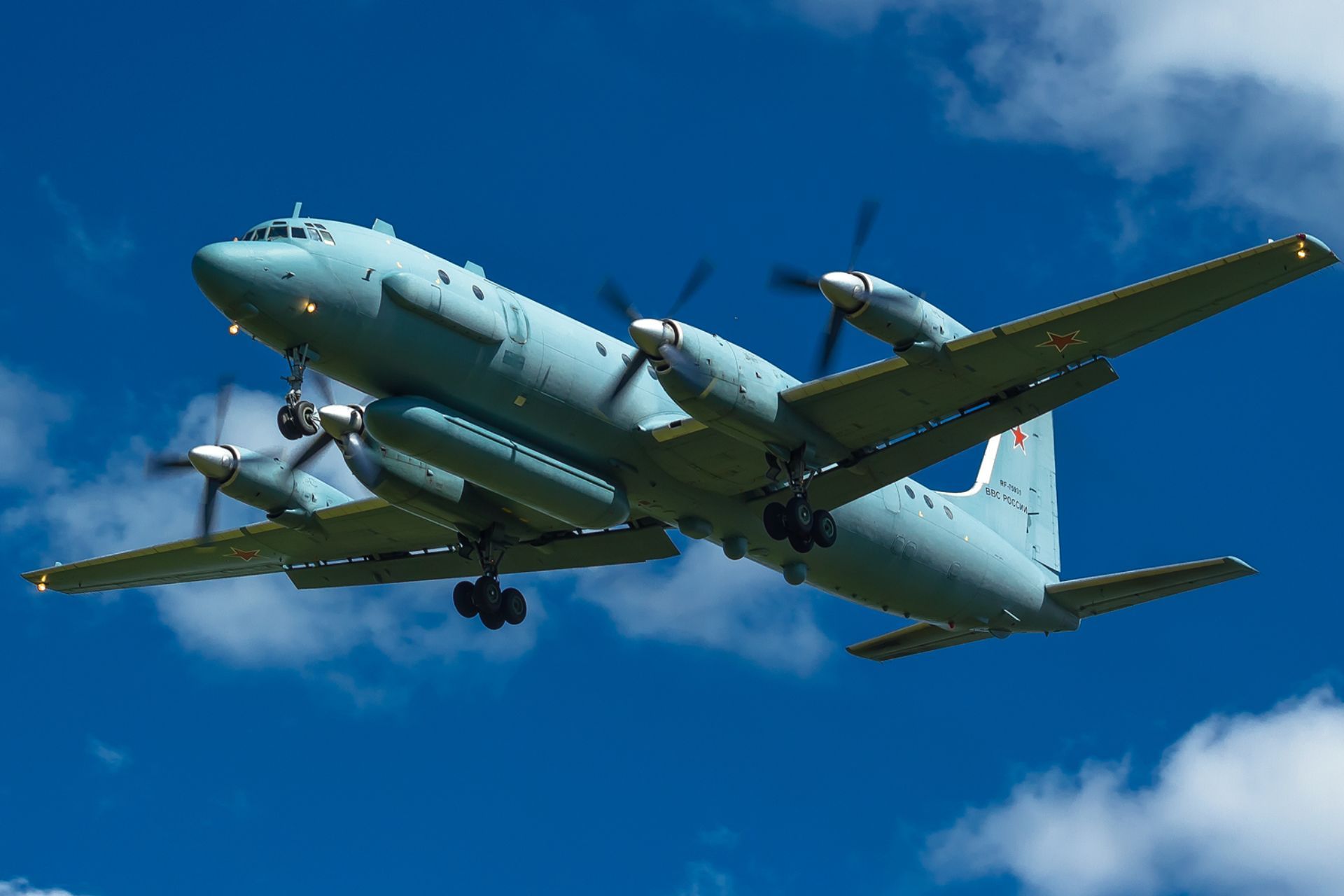
The IL-20M was designed to collect and analyze a wide spectrum of electronic signals, intercepting communications (COMINT), detecting enemy radar emissions (ELINT), and transmitting this information in real time to command centers (Picture source: Ilya the Nightingale)
NORAD reported that two F-16 fighter jets and a KC-135 tanker were dispatched to intercept, identify, and escort the Russian aircraft during its flight in the zone. The operation was conducted according to established procedures, demonstrating the readiness of air forces responsible for the protection of North American skies. The command emphasized that such missions are conducted in compliance with international rules, as the ADIZ is a portion of international airspace where national authorities require aircraft to be identified in order to ensure security and sovereignty.
An Air Defense Identification Zone does not represent national airspace but rather a preventive measure established beyond territorial borders. Its function is to provide early monitoring of aircraft that may approach sovereign airspace. North American authorities consider these measures essential for the security of the continent, as they allow for early detection and identification of foreign military flights that could be deemed suspicious. The presence of an Il-20M, a specialized aircraft designed for electronic reconnaissance and intelligence missions, highlights the strategic importance of the Arctic and Alaska in military interactions between Moscow and Washington.
Developed by the Ilyushin Design Bureau from the Il-18D civilian aircraft, the Il-20M made its first flight in 1968 before entering service the following year. It was designed to collect and analyze a wide spectrum of electronic signals, intercepting communications (COMINT), detecting enemy radar emissions (ELINT), and transmitting this information in real time to command centers. Its modified fuselage accommodates a variety of systems including the Igla-1 side-looking airborne radar (SLAR) installed in a ventral fairing, the A-87P panoramic camera, infrared sensors, and multiple antennas dedicated to signal interception. Among its most notable systems are the Vischnya, SRS-4 Romb, and Kvadrat-2 complexes, which enable it to locate and characterize hostile emissions.
The Il-20M is powered by four Ivchenko AI-20M turboprop engines, each generating 4,250 horsepower, allowing it to reach a maximum speed of about 685 km/h, with a cruising speed of 650 km/h and a range of 4,300 kilometers. Measuring 36 meters in length, with a wingspan of 37.5 meters and a height of 10.1 meters, the aircraft operates with a crew of thirteen, including eight mission specialists in charge of intelligence systems. Although unarmed, it plays a decisive role in modern military operations by providing information superiority. It has been deployed in multiple conflicts, from Afghanistan to Syria, where it contributed to strike coordination and battlefield assessments.
According to the official statement, the Russian activity observed above the Alaskan ADIZ did not represent a direct threat and was consistent with a series of similar operations conducted regularly. Russian aircraft flights in this zone have become a familiar occurrence for NORAD, which systematically responds by sending fighters to visually confirm the identity of the aircraft and ensure continuous monitoring. These interceptions, although routine, demonstrate the maintenance of constant vigilance and reflect the ongoing climate of strategic distrust between Russia and North America.
NORAD reiterated that it relies on a multilayered defense architecture to ensure surveillance of North American airspace. This structure integrates satellites, ground-based and airborne radars, as well as fighter patrols on alert. Through this combination of assets, the binational U.S.-Canadian command can quickly detect any aerial activity in the region and mobilize appropriate response options. The August 20 incident illustrates once again the responsiveness of this system, which remains at the core of continental air defense.
In conclusion, the event involving the Russian Il-20M confirms the recurring nature of military flights conducted near the Alaskan ADIZ and underscores the strategic importance of this area for North American security. While these activities are not considered a direct threat, they reflect the persistence of regular military interactions in the Arctic and compel NORAD to maintain constant vigilance. The incident highlights the central role of North America’s air defense structure, designed to guarantee immediate response capability against any foreign presence approaching the continent.