






Breaking News





US Army Could Revive Hypervelocity Cannon Project for Future Air Defense.
In an interview given on August 7, 2025, to Breaking Defense during a meeting in Huntsville, Alabama, Lieutenant General Robert Rasch, director of the Rapid Capabilities and Critical Technologies Office (RCCTO), confirmed that the US Army is finalizing the requirements and funding necessary to resume development of an air defense system based on a hypervelocity cannon. According to him, if funding is approved, several segments of the program could be opened to competition, providing the industry with new opportunities to participate in the effort.
Follow Army Recognition on Google News at this link
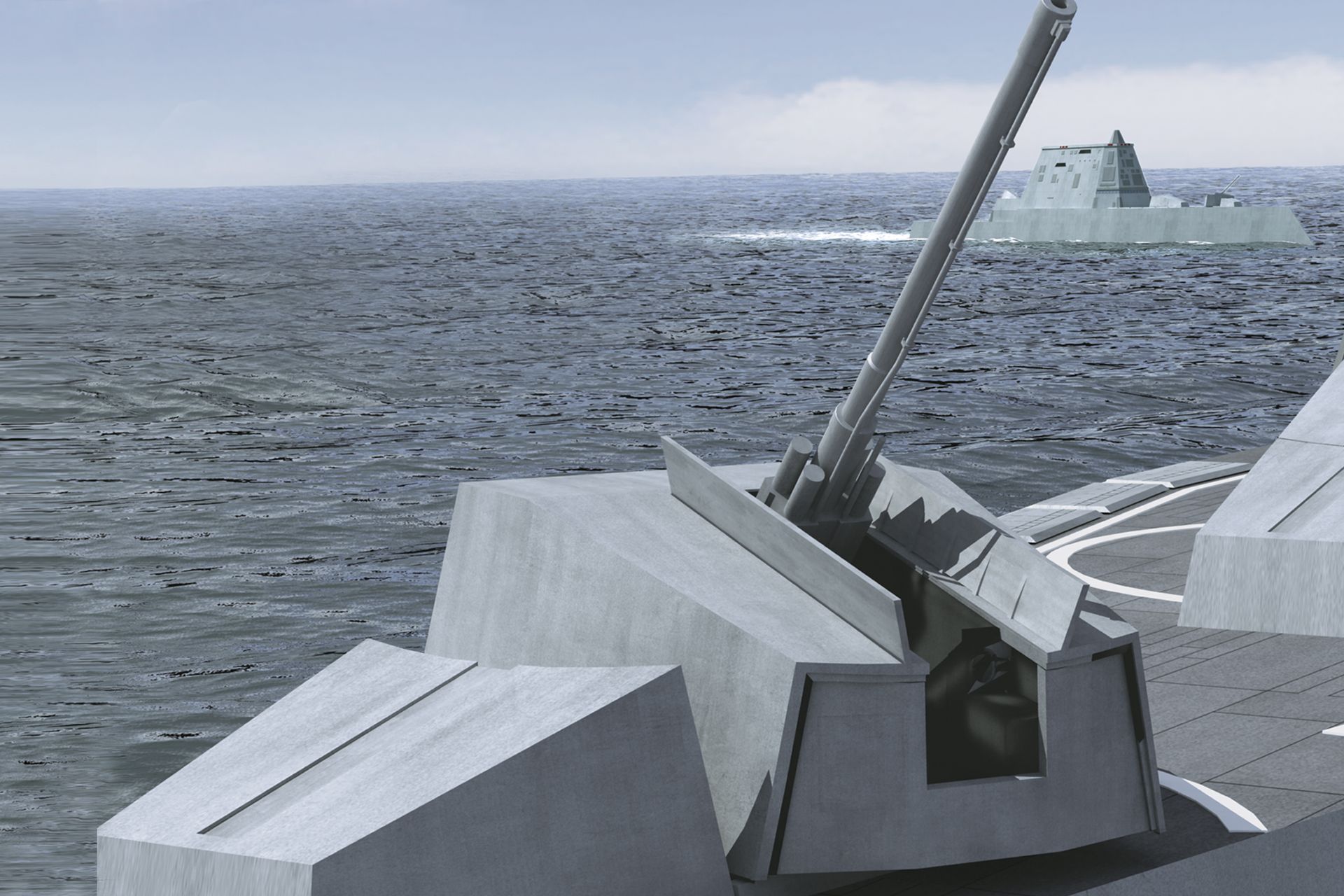
The Pentagon’s Strategic Capabilities Office (SCO) then took over under the Multi-Domain Artillery Cannon System program, combining a 155 mm self-propelled howitzer with hypervelocity munitions (Picture source: Bae Systems)
The project was initially led by the Navy with the development of BAE Systems’ Hypervelocity Projectile, before being halted in 2021. The Pentagon’s Strategic Capabilities Office (SCO) then took over under the Multi-Domain Artillery Cannon System program, combining a 155 mm self-propelled howitzer with hypervelocity munitions. This program is now in the process of being transferred to the Army, where it is referred to as Cannon-Based Air Defense. Rasch stated that teams are currently finalizing operational requirements and determining the most appropriate contractual approach to move forward.
The officer explained that the assessment covers all the components previously developed by SCO, including the 155 mm cannon, radar, battle management system, resupply solutions, and the projectile. Each of these elements has reached a different level of technological maturity, leading the Army to consider sole-source awards for certain parts and competition for others. Rasch stressed that when several credible suppliers exist, open competition could be logical, while in other areas an exclusive industrial arrangement may remain appropriate.
This re-evaluation also calls into question the decision announced at the end of 2024 to award BAE Systems the cannon and projectile work on a sole-source basis. No contract has so far been awarded as part of the program’s relaunch.
Beyond this project, the perspective of a hypervelocity cannon fits into a wider international trend in which other military powers are exploring similar concepts. In China, research on electromagnetic systems and long-range artillery already incorporates hypervelocity trajectories designed to counter missiles or extend the strategic depth of fires. Beijing has reportedly tested prototypes of shipborne electromagnetic cannons, although their operational maturity remains uncertain. Russia, for its part, is placing greater emphasis on guided projectiles and the evolution of traditional artillery such as the Koalitsiya-SV, but Western reports frequently mention ongoing work related to high-velocity munitions.
In Europe, several programs aim to strengthen artillery firepower by extending ranges and improving accuracy, but research on hypervelocity projectiles remains limited. The European Defence Agency has funded preliminary studies on guided shells and electromagnetic systems, while France and Germany are exploring technological options to improve the range of 155 mm guns within the framework of the joint Common Indirect Fire System (CIFS) program. However, these efforts focus more on conventional efficiency than on achieving extreme velocities comparable to American projects.
The issue of operational employment remains central. In the United States, there is still uncertainty as to whether the system will remain strictly defensive or be expanded to include offensive capabilities, enabling it to fire both hypervelocity rounds and conventional 155 mm shells. Such a development could transform the role of the system in Army fire doctrine and influence the review of tactical fires requirements. The potential integration of autonomy technologies, such as the leader-follower functions studied in earlier phases, also illustrates the multidimensional scope of the initiative.
Rasch noted that the acquisition strategy remains flexible, with several options studied and presented to military leadership. However, any concrete progress depends on the approval of the Fiscal Year 2026 defense budget. If Congress provides the required funding, the Army plans to quickly relaunch the program, to field a first operational battery by 2029.
The hypervelocity cannon initiative reflects the Army’s intent to build on the work carried out by SCO while situating the effort within a broader context of international technological competition. While the United States seeks to convert this technology into a credible operational capability, China, Russia, and several European states are pursuing their own paths, with different approaches and priorities. The trajectory chosen by Washington, depending on budgetary and industrial decisions, could influence the balance of fire capabilities in the decades ahead.