



Army - Defence & Security Industry Technology
-
U.S. Army Tests Rogue 1 Loitering Munition for Anti-Tank Strikes Beyond 20 km
{loadposition bannertop}{loadposition sidebarpub}
U.S. Army soldiers from the 4th Infantry Division tested Teledyne FLIR Defense’s Rogue 1 man-portable loitering munition during Project Convergence Capstone 6 at Fort Irwin, California, on July 20, 2026. Designed to be carried and employed by a single soldier, the Rogue 1 can combine reconnaissance, target acquisition, and precision strikes against tanks and other armored vehicles at ranges exceeding 20 km, giving small U.S. Army units an organic anti-tank drone capability for engagements beyond direct line of sight.
The test follows the U.S. Army’s May 2026 selection of Rogue 1 for the Low Altitude Stalking and Strike Ordnance, or LASSO, program, which is intended to equip Infantry Brigade Combat Teams with man-portable precision weapons capable of locating, tracking, and striking armored targets. Project Convergence Capstone 6 provides a broader operational environment for examining how such loitering munitions can connect reconnaissance, command networks, and lethal effects in increasingly fast and electronically contested combat.
Related Topic: First production batch of HERO 120 attack drones clears US Army's final quality test before deploymentU.S. Army Spc. Tanner Shanklin, assigned to the 4th Infantry Division, prepares a Rogue 1 unmanned aerial system for employment during Project Convergence Capstone 6 at Fort Irwin, California, on July 20, 2026. The man-portable VTOL loitering munition is being evaluated for reconnaissance and precision-strike missions against targets beyond direct line of sight. (Picture source: U.S. Department of War/Defense)
Rogue 1 is developed by Teledyne FLIR Defense, part of Teledyne Technologies, and represents the company’s entry into the rapidly expanding market for small precision loitering munitions. Teledyne FLIR Defense unveiled the system in 2024 and has since developed it to meet U.S. military requirements for reusable, man-portable unmanned weapons capable of conducting reconnaissance and precision engagements with the same aircraft.
The Rogue 1 has already secured a significant U.S. military customer outside the U.S. Army. In December 2025, Teledyne FLIR Defense announced a $42.5 million U.S. Marine Corps contract covering more than 600 Rogue 1 systems, ground control stations, and items of training equipment for the Organic Precision Fires-Light program. That requirement is intended to provide Marine rifle squads and platoons with an organic precision-strike capability for engaging targets beyond line of sight.
The U.S. Army’s LASSO requirement addresses a similar battlefield problem from an anti-armor perspective. The U.S. Army describes LASSO as a man-portable, tube-launched lethal unmanned aerial system integrating electro-optical and infrared sensors, precision flight control, and the ability to locate, track, and engage non-line-of-sight targets and armored vehicles. The U.S. Army currently plans to place this class of loitering munition in soldiers’ hands by summer 2028.
Rogue 1 Block 2 expands the system’s operational envelope considerably. Teledyne FLIR Defense states that its operating range now exceeds 20 km, twice that of the earlier configuration, while endurance exceeds 30 minutes and burst speed is greater than 113 km/h. The combination allows a small unit to launch the unmanned aircraft from cover, rapidly move it toward a suspected target area, and retain enough flight time to search for, identify, and prosecute a target.
Its vertical takeoff and landing architecture differentiates Rogue 1 from many tube-launched fixed-wing loitering munitions. The aircraft can operate without a runway and can be deployed from confined or austere locations, capabilities that can be valuable for infantry operating in urban terrain, forests, mountains, or dispersed defensive positions where launch space is limited.
The system carries electro-optical sensors and a FLIR Boson 640+ thermal camera for day-and-night reconnaissance and target identification. Teledyne FLIR Defense also integrates the sensor package closely with the warhead in a gimballed payload, allowing the operator to maintain observation of the target during the terminal phase and support more precise engagement.
Rogue 1’s modular payload architecture is central to its multi-mission design. Earlier versions have been offered with mission-specific effects, including fragmentation and explosively formed penetrator payloads, while the Block 2 upgrade introduced a new shaped-charge anti-armor payload intended to improve effectiveness against hardened vehicles. This development moves Rogue 1 from being a reconnaissance drone with a limited lethal capability toward becoming a dedicated anti-tank loitering munition able to threaten armored vehicles from outside direct-fire range.
Block 2 also incorporates upgraded onboard computing, communications, and autonomy. Dual-band radio support is intended to improve communications range and resilience against electronic warfare, while improvements to propulsion, antenna design, and thermal efficiency increase endurance. These characteristics matter because drone warfare in heavily contested environments increasingly requires unmanned aircraft to continue operating when satellite navigation, radio links, or other communications are degraded.
Another distinctive characteristic is Rogue 1’s recoverability. The design includes a fuzing arrangement that permits an operator to abort an attack and recover the unmanned aircraft when a target is no longer valid. For small units carrying limited numbers of precision weapons, retaining an unused munition rather than automatically expending it could reduce logistical demands and preserve combat power during extended operations.
For U.S. Army infantry formations, the operational consequence is greater tactical independence. A squad or platoon equipped with a man-portable Rogue 1 could search terrain beyond direct observation, identify an enemy armored vehicle, and potentially attack it without first waiting for artillery, aviation, or another higher-echelon precision weapon.
This sensor-to-shooter compression is particularly important against mobile targets. Tanks, infantry fighting vehicles, command vehicles, and mobile air-defense systems can relocate quickly after being detected, meaning delays between reconnaissance and engagement can cause targeting opportunities to disappear. A loitering munition controlled by the same formation that conducts the reconnaissance can reduce that delay.
Related Army Recognition coverage on U.S. Army loitering munitions has highlighted how the U.S. military is increasingly shifting precision effects toward smaller tactical formations. [Army Recognition analysis of Project Convergence] also shows how these weapons are being evaluated not simply as individual drones, but as components of broader networks connecting sensors, command systems, and shooters.
Rogue 1 enters a U.S. loitering-munition market in which AeroVironment’s Switchblade family provides an important comparison. The Switchblade 300 Block 20 is optimized for rapidly deployable beyond-line-of-sight attacks against personnel, light vehicles, and some armored threats, with modular fragmentation and explosively formed penetrator warheads. Rogue 1’s VTOL configuration, recoverability, and dedicated Block 2 shaped-charge option give it a different operational approach, particularly for troops requiring flexible launch and recovery from restricted terrain.
The larger Switchblade 600 is more directly comparable in the anti-armor mission. AeroVironment states that the current Switchblade 600 provides more than 40 minutes of endurance and a baseline range beyond 40 km, while its anti-armor warhead is designed for fixed or moving hardened targets. The munition weighs about 15 kg, while the complete all-up round weighs roughly 29.5 kg, and is deployed from a self-contained launch tube.
That gives Switchblade 600 greater published range and endurance than Rogue 1 Block 2, but the two systems reflect different design priorities. Rogue 1 emphasizes VTOL operation, compact deployment, recoverability when a strike is aborted, and modular payloads, while Switchblade 600 emphasizes longer-range anti-armor engagement and higher-speed fixed-wing flight. AeroVironment has also introduced Switchblade 600 Block 2, extending the family further with increased endurance, expanded range, and enhanced sensors and networking.
The comparison also illustrates why LASSO is strategically important for the U.S. Army. Rather than relying on a single loitering munition architecture, the requirement creates competition around range, anti-armor lethality, portability, electronic-warfare resilience, ease of employment, and cost. The resulting systems could ultimately determine how much precision anti-tank capability can realistically be distributed to infantry formations.
For maneuver units, Rogue 1 could therefore complement rather than replace anti-tank guided missiles, artillery, reconnaissance drones, and larger loitering munitions. A soldier could use the unmanned aircraft to investigate a suspected target, maintain observation, and conduct a precision strike while preserving weapons with greater destructive power or longer range for targets that demand them.
This capability could be particularly valuable in urban terrain, mountainous areas, and dispersed operations where conventional fire support may be difficult to coordinate. VTOL operation also reduces dependence on prepared launch areas, while a range exceeding 20 km allows soldiers to remain at a substantial distance from the armored vehicles they are attempting to locate and destroy.
Project Convergence Capstone 6 consequently tests more than the flight performance of the U.S. Army’s Rogue 1 drone. It provides an opportunity to assess whether a man-portable loitering munition can function inside a wider reconnaissance-strike network in which sensors detect enemy forces, targeting information moves through digital command systems, and a precision weapon is assigned to the target before it can reposition.
If Rogue 1 demonstrates sufficient reliability, precision, anti-armor effectiveness, and electronic-warfare resilience, its importance to the U.S. Army could extend well beyond LASSO. The combination of one-soldier portability, a range of more than 20 km, day-and-night sensors, modular warheads, and recoverable VTOL operation points toward a form of drone warfare in which infantry units increasingly carry their own aerial reconnaissance and precision anti-tank weapons into combat.
With the U.S. Marine Corps already ordering more than 600 systems under a $42.5 million contract and the U.S. Army evaluating Rogue 1 for LASSO, Teledyne FLIR Defense is positioning the loitering munition for wider adoption across U.S. ground forces. For the U.S. Army, the central question emerging from Project Convergence is whether Rogue 1 can translate those technical characteristics into a reliable battlefield capability that enables small units to find, track, and strike armored threats before the enemy can react.
Explore More Defense News
• Land Defense News
• Naval Defense News
• Defense Aerospace News
Written by Alain Servaes – Chief Editor, Army Recognition Group
Alain Servaes is a former infantry non-commissioned officer and the founder of Army Recognition. With over 20 years in defense journalism, he provides expert analysis on military equipment, NATO operations, and the global defense industry.
-
Serbia Produces Next-Generation Armored Vehicles Drones and Long-Range Artillery for Global Arms Market
{loadposition bannertop}{loadposition sidebarpub}
The Serbian defense industry took a major step onto the international stage at Eurosatory 2026 by displaying its latest generation of armored vehicles, artillery systems, drones, and precision weapons, reinforcing the country's ambition to become a competitive supplier in the global defense market. Led by the state-owned company Yugoimport SDPR, Serbia showcased modern combat systems designed around operational lessons from recent high-intensity conflicts, in which protected mobility, long-range precision fires, and unmanned capabilities have become decisive battlefield assets.
Rather than presenting isolated products, Yugoimport demonstrated a complete portfolio spanning armored combat vehicles, infantry fighting vehicles, self-propelled artillery, multiple-launch rocket systems, tactical unmanned aerial vehicles, bomber drones, and domestically produced ammunition. The exhibition highlighted Serbia's growing capability to design and manufacture integrated land warfare solutions supported by an extensive national defense industrial base.
Related Topic: Serbia’s Yugoimport unveils new military equipment for Middle East armed forces at EDEX 2025The Yugoimport SDPR exhibition booth at Eurosatory 2026 showcased Serbia's latest generation of armored combat vehicles, artillery systems, drones, guided weapons, and ammunition, highlighting the country's expanding defense industrial capabilities and commitment to developing modern military equipment for international markets. (Picture source: Army Recognition)
One of the most significant introductions was the Lazanski infantry fighting vehicle, representing Serbia's latest effort to field a modern tracked combat vehicle capable of transporting mechanized infantry while delivering substantial direct-fire support. Designed to combine enhanced protection, mobility, and firepower, the Lazanski reflects the evolving role of infantry fighting vehicles in modern warfare, where survivability against anti-tank weapons, drones, and artillery fragmentation has become as important as offensive capability. Its concept places it alongside the latest generation of infantry fighting vehicles developed across Europe, including systems such as Germany's Lynx KF41, Sweden's CV90, and Turkey's Tulpar, although each addresses different operational and export requirements.
The Lazar 3 multipurpose armored combat vehicle remains one of Serbia's flagship export products. Configured as an 8×8 wheeled combat vehicle, Lazar 3 offers a combination of troop transport, battlefield protection, and modular weapon integration that is increasingly sought by armies modernizing their mechanized infantry forces. Compared to heavier tracked vehicles, wheeled combat vehicles offer superior strategic mobility, lower operating costs, and the ability to deploy rapidly over long distances, making them particularly attractive for rapid-reaction forces, peace support missions, and territorial defense.
Complementing the larger combat vehicles were the latest versions of the Miloš and Miloš 2 armored vehicles. Developed as highly mobile 4×4 protected vehicles, the Miloš family is designed for reconnaissance, special operations, internal security, and command missions. The improved Miloš 2 incorporates continued enhancements in crew protection, mobility, and mission flexibility, while supporting the integration of remotely operated weapon stations, surveillance systems, communications equipment, or anti-tank guided missiles, as required by operational requirements.
Serbia's state-owned defense company Yugoimport SDPR unveiled its latest military technologies at Eurosatory 2026, showcasing the Lazanski infantry fighting vehicle, Lazar 3, Miloš 2, Alexander the Unifier, Nora NG 155 mm self-propelled howitzer, Tamnava MLRS, and a new family of military drones.
Serbian Defense Company Yugoimport also presented the Alexander the Unifier protected vehicle, illustrating Serbia's continued investment in highly protected tactical mobility. Modern military operations increasingly demand versatile protected vehicles capable of transporting personnel safely across environments threatened by mines, improvised explosive devices, artillery fragments, and small-arms fire while remaining adaptable to multiple mission profiles through modular configurations.
Long-range fires remained another major focus of the Serbian exhibition through the Nora NG 155 mm self-propelled howitzer. Building on the combat-proven Nora family, the latest version incorporates upgraded digital fire-control systems, improved automation, and greater tactical mobility. Modern self-propelled artillery must rapidly execute firing missions before relocating to avoid counter-battery fire, making automation and fast deployment critical operational advantages. Comparable in operational philosophy to systems such as France's CAESAR, Israel's ATMOS, and Slovakia's Zuzana 2, the Nora NG reflects the growing global demand for highly mobile artillery capable of delivering precision fire support during high-intensity operations.
Alongside the howitzer, Yugoimport displayed the Tamnava modular multiple-launch rocket system, capable of firing both 122 mm and 262 mm rockets via interchangeable launch modules. This modular design enables military operators to tailor firepower to mission requirements, combining high-volume area suppression with extended-range precision-strike capability. Similar to other modern modular rocket artillery systems entering service worldwide, Tamnava offers greater operational flexibility and simplifies logistics by enabling rapid reconfiguration between ammunition types.
Unmanned systems occupied a central position in Serbia's presentation, reflecting its status as one of the fastest-growing sectors of the global defense industry. The Raven and Sparrow tactical unmanned aerial vehicles, together with several members of the Mosquito drone family, are designed to perform intelligence, surveillance, reconnaissance, target acquisition, and artillery fire adjustment missions. The widespread use of drones during recent conflicts has fundamentally changed battlefield operations, allowing commanders to locate targets, direct artillery fire, and monitor enemy movements in near real time.
Recognizing the rapid evolution of low-cost precision-strike capabilities, Yugoimport also showcased ammunition specifically developed for bomber drones. These lightweight aerial-delivered munitions enable small unmanned aircraft to attack personnel, light armored vehicles, defensive positions, and logistical assets with significantly greater precision than conventional indirect fire. Similar concepts have become increasingly prominent in modern conflicts, where inexpensive unmanned systems are transforming tactical operations and forcing militaries worldwide to accelerate investment in both offensive drones and counter-drone technologies.
Beyond unmanned aircraft, Yugoimport also revealed mock-ups of the Owl and Swallow turboprop trainer aircraft. Although still under development, the two projects demonstrate Serbia's ambition to expand its aerospace sector by offering cost-effective pilot training solutions that support military aviation while strengthening domestic aircraft design expertise.
One of Yugoimport's greatest competitive advantages extends beyond the weapon systems themselves. Serbia maintains a diversified defense industrial base capable of manufacturing armored combat vehicles, artillery systems, guided missiles, rockets, drones, infantry weapons, and large quantities of ammunition. The company produces small-arms ammunition, artillery shells, mortar rounds, rockets, and guided munitions, providing customers with long-term logistical support that has become increasingly valuable as global ammunition demand continues to rise.
The operational lessons emerging from recent conflicts have highlighted that industrial production capacity is now as strategically important as advanced military equipment. Modern armies require not only sophisticated weapon systems but also reliable access to ammunition, spare parts, maintenance, and continuous industrial support throughout prolonged operations. By combining equipment development with domestic manufacturing capacity, Serbia offers export customers a complete capability package rather than standalone military systems.
Yugoimport's presentation at Eurosatory 2026 demonstrated how the Serbian military industry continues to evolve toward modern, networked land combat capabilities centered on protected mobility, long-range precision fires, unmanned reconnaissance, and modular weapon systems. As European defense spending continues to increase and many armed forces seek alternatives that balance capability with affordability, Serbia is positioning its defense exports to compete in an increasingly dynamic international market. Its latest generation of armored vehicles, self-propelled howitzers, MLRS, drones, and guided munitions reflects the broader transformation of the European defense industry toward systems designed for the realities of 21st-century high-intensity warfare.
Explore More Defense News
• Land Defense News
• Naval Defense News
• Defense Aerospace News
Written by Alain Servaes – Chief Editor, Army Recognition Group
Alain Servaes is a former infantry non-commissioned officer and the founder of Army Recognition. With over 20 years in defense journalism, he provides expert analysis on military equipment, NATO operations, and the global defense industry.
-
U.S. Army Conducts First Remote Fire with Autonomous M139 Volcano Mine Dispenser System
{loadposition bannertop}{loadposition sidebarpub}
The U.S. Army has successfully conducted the first remote firing of the Autonomous M139 Volcano mine emplacement system, a milestone demonstrated at Camp Grayling, Michigan, that turns a legacy engineering platform into a stand-off battlefield asset capable of creating anti-vehicle minefields without exposing soldiers to direct enemy fire. The achievement marks a significant advance in the Army’s push to integrate autonomous ground systems into combat engineering, improving survivability while accelerating obstacle emplacement in contested environments.
By enabling remote deployment of large-scale minefields, the autonomous M139 Volcano strengthens mobility denial and defensive operations while reducing risk to combat engineers operating near the front line. The demonstration also reflects a broader shift toward autonomous maneuver support, where unmanned systems enhance battlefield endurance, force protection, and operational flexibility against peer adversaries.
Related Topic: US soldiers conduct training with M139 Volcano Mine Dispenser mounted on UH-60 Blackhawk helicopterAutonomous Volcano is the U.S. Army's next-generation robotic obstacle emplacement system that combines the M139 Volcano mine dispenser with an autonomous Palletized Load System (PLS) A1 truck, enabling remote or fully autonomous deployment of up to 960 scatterable mines to rapidly create battlefield barriers while keeping combat engineers out of harm's way. (Picture source: U.S. Department of War/Defense)
The demonstration, held on May 19, 2026, during a three-day evaluation and training event, brought together U.S. Army engineers, senior modernization officials, and representatives from the British Army's Ground Maneuver Directorate. According to information released by Picatinny Arsenal on July 7, 2026, the event also highlighted the growing U.S.-UK cooperation on autonomous battlefield engineering technologies, an area increasingly viewed as essential for future coalition operations against peer adversaries.
Unlike conventional Volcano operations, which require crews to remain with the dispensing vehicle during mine deployment, the Autonomous Volcano enables Soldiers to control obstacle emplacement remotely while the vehicle executes missions independently. This capability dramatically reduces the exposure of engineer units operating close to contested front lines, where artillery, loitering munitions, and armed drones have made traditional obstacle emplacement increasingly hazardous.
At the center of the new capability remains the proven M139 Volcano mine-dispensing system, a combat engineering system originally fielded in the late stages of the Cold War. Designed to rapidly create tactical barriers, the dispenser can deploy up to 960 scatterable mines, establishing obstacle belts approximately 120 meters wide and 1,100 meters long in only a few minutes. These barriers are intended to delay, canalize, or halt armored formations, forcing enemy maneuver units into predetermined engagement areas where they become more vulnerable to artillery, anti-tank guided missiles, attack helicopters, or precision fires.
For the autonomous variant, the Army replaced the legacy Heavy Expanded Mobility Tactical Truck (HEMTT) carrier with a Palletized Load System (PLS) A1 integrated with Forterra's autonomous driving software, By-Wire controls, and an Active Safety Kit. This combination allows the vehicle to navigate designated routes, position itself for obstacle deployment, and execute mine-laying missions without requiring personnel inside the truck.
One of the most important technological advances demonstrated during the exercise was the system's digital integration with the Army's battlefield command architecture. As minefields are deployed, their exact locations are automatically recorded and transmitted into the Common Operating Picture. This digital mapping significantly reduces the risk of friendly forces unknowingly entering hazardous areas while enabling commanders to coordinate obstacle plans with maneuver, artillery, aviation, and intelligence assets in real time. Such automation also shortens the planning cycle for complex combined-arms operations and supports the Army's objective of creating a fully networked battlefield.
The live demonstrations were structured to validate both remote control and autonomous mission execution. During the first scenario, Soldiers from the 576th Combat Engineer Company (Armored), 4th Engineer Battalion, remotely fired M88 mine canisters from an M139 Volcano dispenser for the first time without remaining on the vehicle. The event marked a milestone in remotely controlled obstacle emplacement and validated combat engineers' ability to conduct dangerous missions from protected positions.
A second scenario further expanded the concept by demonstrating fully autonomous battlefield execution. Two separate minefields, designed to disrupt and fix advancing enemy formations, were emplaced simultaneously at different locations. According to Army officials, both missions were completed without any human intervention after initiation, highlighting the maturity of the autonomous navigation and mission execution software.
The demonstration reflects a broader shift in U.S. Army doctrine toward autonomous combat engineering, where robotic systems undertake high-risk battlefield tasks traditionally performed by Soldiers. Combat engineers remain indispensable for breaching, mobility, survivability, and obstacle operations, but the increasing lethality of modern reconnaissance-strike complexes has accelerated efforts to remove personnel from predictable danger zones whenever possible.
This transformation is particularly relevant when considering lessons emerging from recent high-intensity conflicts. The widespread employment of drones, persistent surveillance, precision-guided artillery, and long-range fires has made engineering vehicles among the most vulnerable assets during obstacle emplacement operations. Autonomous systems such as Volcano allow commanders to establish defensive belts while minimizing personnel exposure, preserving engineering forces for subsequent mobility and breach missions.
The project also demonstrates how the Army is extracting additional combat value from existing equipment rather than relying solely on new procurement programs. Rather than replacing the M139 dispenser, engineers integrated modern autonomy software, vehicle control systems, and digital networking onto an already fielded obstacle-laying capability. This modernization approach reduces development costs while accelerating fielding timelines, allowing proven combat systems to remain operationally relevant in increasingly technology-driven battlefields.
Army officials describe this as an example of "low-cost modernization" that supports the service's "fight tonight" philosophy, emphasizing rapid capability upgrades that can be fielded before the end of the decade rather than waiting for next-generation acquisition programs. Similar approaches are increasingly visible across Army modernization efforts involving autonomous logistics vehicles, robotic combat systems, and unmanned resupply systems.
The Autonomous Volcano program also highlights the expanding industrial and institutional cooperation supporting Army transformation. Development involved the Project Manager Close Combat Systems, the Product Manager Terrain Shaping Obstacles, the U.S. Army Combat Capabilities Development Command (DEVCOM) Armaments Center, the Ground Vehicle Systems Center (GVSC), and autonomy specialist Forterra. The collaboration integrated expertise in combat engineering, autonomous mobility, vehicle systems, munitions, and command-and-control networking into a single operational capability.
Equally significant is the international dimension of the project. Conducted as a joint U.S.-UK initiative, the program aims to ensure future interoperability between allied engineer units operating in multinational formations. Shared research and common autonomous obstacle technologies could simplify coalition planning, improve battlefield coordination, and strengthen NATO's ability to conduct integrated defensive operations in Europe. Similar multinational cooperation has become a central pillar of the Army's modernization strategy as interoperability increasingly extends beyond communications to autonomous systems and digital battlefield management.
The successful Camp Grayling demonstration now paves the way for the system's next phase of development. Autonomous Volcano will participate in Project Convergence Capstone 6 at Fort Irwin, California, where it will transition from proof-of-concept demonstrations toward operational experimentation under realistic battlefield conditions. Soldiers are scheduled to employ the system during multiple tactical scenarios before it is showcased during the Army's "Best of Breed" capability demonstration for the Secretary of the Army later this month.
If operational testing confirms its reliability under combat conditions, the Autonomous Volcano could become one of the U.S. Army's first fully autonomous combat engineering systems capable of independently shaping the battlefield. More broadly, it illustrates how legacy engineering equipment can be transformed into networked robotic capabilities that enhance force protection, accelerate obstacle operations, and strengthen multi-domain maneuver against technologically advanced adversaries.
Explore More Defense News
• Land Defense News
• Naval Defense News
• Defense Aerospace News
Written by Alain Servaes – Chief Editor, Army Recognition Group
Alain Servaes is a former infantry non-commissioned officer and the founder of Army Recognition. With over 20 years in defense journalism, he provides expert analysis on military equipment, NATO operations, and the global defense industry.
-
BAE Systems Develops MDACS Cannon Air Defense for U.S. Army to Defeat Drones and Cruise Missiles
{loadposition bannertop}{loadposition sidebarpub}
BAE Systems is developing the Multi-Domain Artillery Cannon System (MDACS) to give the U.S. Army a lower-cost way to defeat drones, cruise missiles, and other fast-emerging aerial threats, signaling a shift toward cannon-based air defense as missile-interceptor costs continue to rise. Built around a large-caliber cannon firing the Hypervelocity Projectile (HVP), the system could significantly expand the Army's capacity to counter mass attacks while preserving expensive missile interceptors for the most demanding targets.
Designed to engage drones, cruise missiles, helicopters, and fixed-wing aircraft at high rates of fire, MDACS aims to strengthen layered air defenses through greater mobility and sustained engagement. If successfully fielded, it could reshape short-range air and missile defense by providing commanders with a more affordable, scalable response to the growing use of low-cost precision threats on the modern battlefield.
Related Topic: BAE Systems MDACS Signals Return of 155mm Artillery as New Shield Against Drone and Cruise Missile SaturationBAE Systems' Multi-Domain Artillery Cannon System (MDACS) is a U.S. Army-directed concept combining a large-caliber cannon, Hypervelocity Projectiles, precision radars, and battle management systems to provide cost-effective defense against drones, cruise missiles, aircraft, and other aerial threats. (Picture source: BAE Systems)
The development follows the U.S. Army's Rapid Capabilities and Critical Technologies Office (RCCTO) publishing, in December 2024, a formal requirement to deliver a complete MDACS (Multi-Domain Artillery Cannon System) battery no later than the fourth quarter of Fiscal Year 2027, followed by an Operational Demonstration in FY2028. The ambitious timeline reflects the U.S. Army's growing urgency to field more affordable and sustainable air defense solutions as unmanned systems and precision-guided weapons proliferate across modern battlefields.
Unlike traditional field artillery, which is designed primarily for indirect fire support, MDACS is conceived as an integrated gun-based air and missile defense system. According to the Army requirement, a complete operational battery will include eight Multi-Domain Artillery Cannons (MDAC), four Multi-Function Precision Radars (MFPR), two Multi-Domain Battle Managers (MDBM), and no fewer than 144 Hypervelocity Projectiles. Together, these elements will create a fully networked defensive architecture capable of detecting, tracking, and intercepting multiple airborne threats simultaneously while operating within the U.S. Army's Integrated Air and Missile Defense (IAMD) network.
At the heart of the system is BAE Systems' Hypervelocity Projectile, a next-generation precision-guided munition that has become one of the company's flagship ammunition technologies. Originally developed as a common projectile for multiple gun systems, HVP combines a low-drag aerodynamic design, precision guidance, and extremely high launch velocity to achieve significantly greater speed, accuracy, and engagement range than conventional artillery ammunition. Its modular design enables use with various large-caliber gun systems, reducing logistical complexity and providing greater operational flexibility.
The U.S. Army's selection of HVP as the baseline munition for MDACS highlights the growing importance of cannon-based interceptors as a cost-effective alternative to traditional surface-to-air missiles. Modern conflicts have demonstrated that defending military bases against large numbers of inexpensive drones and cruise missiles using costly interceptor missiles is increasingly unsustainable. In many cases, an interceptor may cost hundreds of thousands, or even several million, dollars, while the incoming threat may be worth only a fraction of that. By using guided Hypervelocity Projectiles fired from large-caliber cannons, the Army aims to dramatically reduce the cost per engagement without sacrificing effectiveness against high-speed aerial targets.
One of the defining characteristics of HVP is its exceptional muzzle velocity. By leaving the barrel at extremely high speed and maintaining velocity through its aerodynamically optimized shape, the projectile significantly shortens engagement timelines. Reduced flight time increases the probability of intercepting fast-moving targets while limiting their opportunity to maneuver or evade. Precision guidance further improves accuracy, enabling individual projectiles to destroy or disable airborne threats that previously required expensive missile interceptors.
The Multi-Domain Artillery Cannon itself is expected to combine heavy firepower with strategic mobility. BAE Systems has advanced a concept for a large-caliber cannon mounted on a wheeled chassis that is fully air transportable, enabling rapid deployment alongside expeditionary forces. Such mobility would enable MDACS batteries to reposition quickly between defended locations while reducing logistical demands compared with heavier tracked systems. Air transportability is particularly relevant for operations in the Indo-Pacific, where dispersed island operations require rapidly deployable defensive capabilities that can be moved by military transport aircraft.
Beyond its hardware, MDACS represents a significant evolution in how the Army intends to conduct air defense operations. Rather than functioning as a stand-alone weapon, the system will rely on its Multi-Function Precision Radars to provide continuous target detection and fire-control data, while the Multi-Domain Battle Managers will coordinate engagements and integrate the battery into broader Joint Force command-and-control networks. This architecture allows MDACS to operate as one layer within a larger defensive ecosystem alongside systems such as Patriot, the Indirect Fire Protection Capability (IFPC), and future directed-energy weapons.
The operational requirement defines a remarkably broad mission profile. MDACS is expected to defend fixed and semi-fixed Joint Force locations against Group 3 and larger unmanned aerial systems, cruise missiles, fixed-wing aircraft, rotary-wing aircraft, and other advanced air and missile threats. Such versatility reflects the U.S. Army's recognition that future conflicts will involve simultaneous attacks from multiple directions and domains, requiring defensive systems capable of engaging diverse targets without relying exclusively on missile-based interceptors.
Lessons drawn from recent conflicts have reinforced this requirement. The wars in Ukraine and the Middle East have demonstrated how relatively inexpensive drones, loitering munitions, and cruise missiles can threaten air bases, logistics hubs, ammunition depots, and command centers. These conflicts have also exposed the economic imbalance created when sophisticated surface-to-air missiles are used to destroy low-cost threats. MDACS seeks to restore that balance by leveraging high-rate-of-fire artillery combined with precision-guided ammunition to deliver affordable, sustained defensive fires during prolonged engagements.
From an industrial perspective, the program provides BAE Systems with an opportunity to leverage decades of expertise in artillery systems and advanced munitions. The integration of the Hypervelocity Projectile into the Army's formal requirement validates years of investment in developing a common guided projectile capable of supporting multiple operational missions. Should the program proceed according to the Army's schedule, HVP would become a critical enabling technology for one of the U.S. Army's most innovative next-generation air defense initiatives.
Strategically, MDACS reflects a broader shift in U.S. Army modernization toward layered, cost-effective air defense architectures capable of countering saturation attacks by large numbers of aerial threats. Rather than replacing existing missile defense systems, the cannon-based capability is intended to complement them by providing a lower-cost engagement option against drones, cruise missiles, and other airborne targets that could otherwise deplete valuable interceptor inventories. If successfully fielded by the Army's target date of FY2027, the Multi-Domain Artillery Cannon System could redefine the role of large-caliber cannons, transforming them from traditional indirect-fire weapons into a central component of future integrated air and missile defense operations.
Throughout the defense industry, the U.S. Army MDACS initiative is also signaling a renewed interest in gun-based air defense solutions. As militaries confront increasingly complex threat environments dominated by mass drone attacks and precision strike weapons, combining advanced sensors, digital battle management, and high-speed guided projectiles with modern cannon technology offers an attractive balance between operational effectiveness and affordability. For BAE Systems, the development of MDACS is not simply an evolution of artillery technology but a step toward reshaping how future forces defend critical assets in the multi-domain battlespace.
Explore More Defense News
• Land Defense News
• Naval Defense News
• Defense Aerospace News
Written by Alain Servaes – Chief Editor, Army Recognition Group
Alain Servaes is a former infantry non-commissioned officer and the founder of Army Recognition. With over 20 years in defense journalism, he provides expert analysis on military equipment, NATO operations, and the global defense industry.
-
U.S. Army Tests IonStrike Counter Drone Interceptor to Defend Europe Against Swarm Attacks
 {loadposition bannertop}{loadposition sidebarpub}
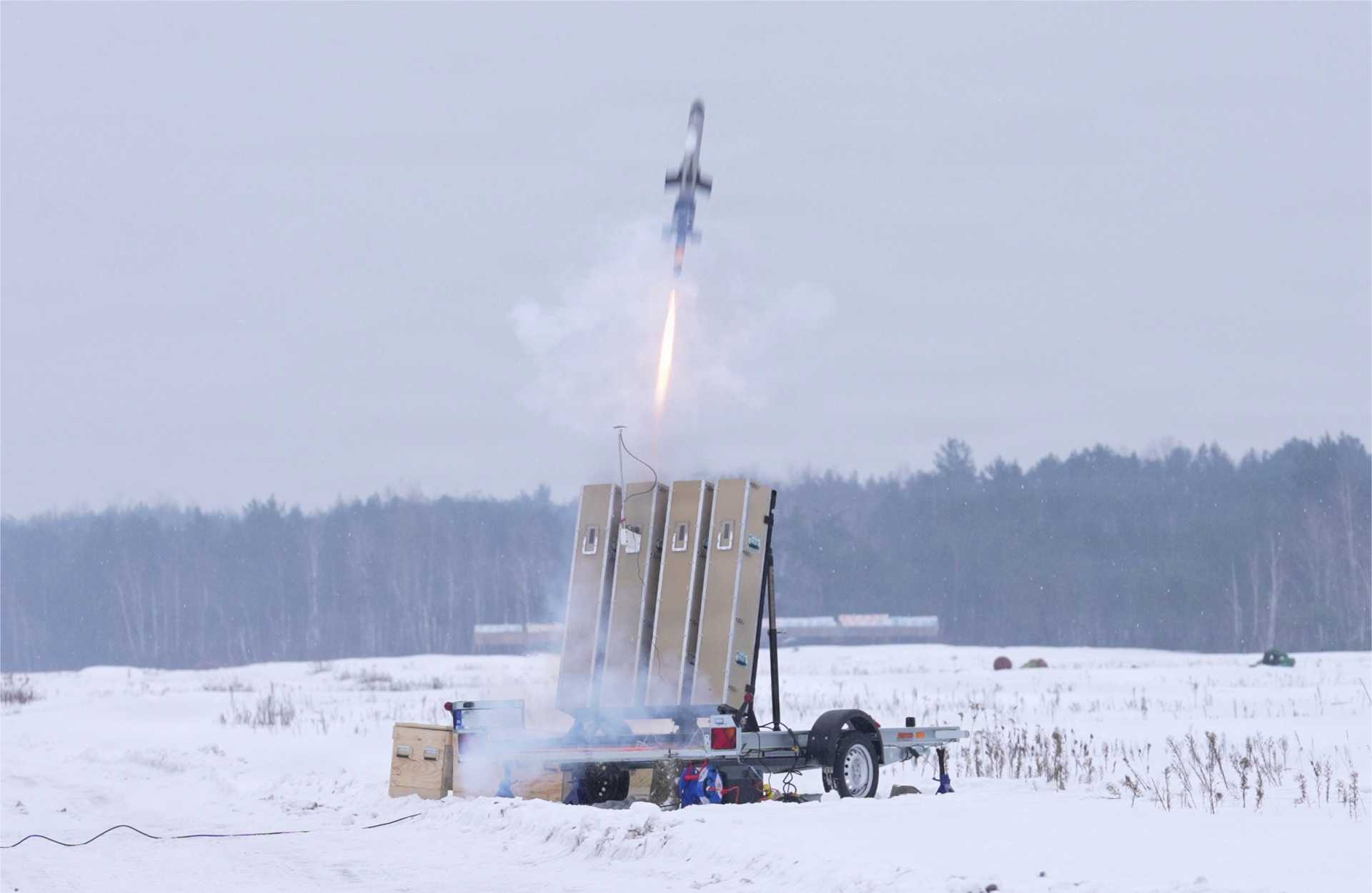
The U.S. Army’s 52nd Air Defense Artillery Brigade is advancing efforts to reinforce Europe’s layered air defense shield by testing IonStrike, a low-cost kinetic counter-drone interceptor developed by DZYNE Technologies and evaluated under the Eastern Flank Deterrence Initiative. As one-way attack drones continue to reshape modern warfare, the system is intended to give U.S. and allied forces a faster, scalable, and more affordable way to defeat mass unmanned threats without exhausting high-value air defense missiles.
IonStrike is designed to integrate directly into existing U.S. Army command-and-control networks, allowing air defense units to engage hostile drones within current operational architectures rather than relying on standalone systems. The interceptor reflects a broader shift toward low-cost, high-volume air defense solutions aimed at improving survivability, sustaining combat endurance, and strengthening NATO’s ability to counter saturation drone attacks along Europe’s eastern flank.
Related topic: U.S. and South Korea Launch Joint Counter-Drone Alliance Against North Korean UAV ThreatsAn IonStrike counter-UAS interceptor launches from a multi-cell launcher during Project Bullfrog testing on February 4, 2026, at an undisclosed location in Europe, demonstrating a new low-cost kinetic defense capability against one-way attack drones. (Picture source: U.S. Department of War/Defense)
The testing campaign, disclosed on May 21, 2026, by the U.S. Department of Defense, included demonstrations in Europe attended by senior leaders from U.S. Army Europe and Africa (USAREUR-AF) and NATO Allied Land Command (LANDCOM). The effort is strategically significant because it seeks to provide NATO forces deployed on the alliance’s eastern flank with a lower-cost but operationally flexible kinetic layer capable of countering mass drone attacks without exhausting high-end missile inventories.
IonStrike enters the growing counter-UAS market at a time when the battlefield impact of one-way attack drones has transformed air defense priorities across Europe and the Middle East. Conflicts in Ukraine and the Red Sea have demonstrated that relatively inexpensive drones can saturate traditional air defense systems, forcing militaries to seek interceptors that cost less than the threats they destroy. The U.S. Army’s decision to evaluate IonStrike reflects an urgent operational requirement to close the cost-exchange imbalance that currently favors drone operators.
Unlike traditional fire-and-forget interceptors, IonStrike introduces a re-taskable engagement concept that allows operators to abort or redirect the interceptor after launch. This capability is operationally important because it preserves engagement flexibility in rapidly evolving air defense environments, where targets may be reclassified, fall out of radar coverage, or compete with higher-priority threats. By allowing commanders to maintain decision space after launch, the system supports more aggressive engagement timelines without automatically expending scarce interceptors.
The interceptor is launched from a palletized multi-cell launcher, which is connected to radar feeds already integrated into approved U.S. Army command systems, such as the Forward Area Air Defense (FAAD) System and the Integrated Battle Command System Maneuver (IBCS-M). This architecture eliminates the need for air defense operators to learn an entirely new engagement process. Instead, Soldiers can employ IonStrike using the same command interfaces currently used to detect, track, classify, and engage aerial threats.
Maj. Cody Davis, Operations Officer for the 52nd ADA Brigade, emphasized that the interceptor’s operational value lies in its compatibility with existing kill chains. According to Davis, the system provides commanders with an additional kinetic option while reducing training burdens and preserving interoperability across NATO-aligned air defense formations.
This integration-focused approach reflects a broader Pentagon trend toward modular, networked air defense architectures rather than isolated, standalone systems. Modern air defense operations increasingly depend on sensor fusion, distributed targeting, and layered engagement networks that rapidly share threat data across multiple formations. IonStrike’s radar-agnostic design supports this doctrine by enabling the interceptor to operate with multiple sensor types rather than relying on a single proprietary radar.
The interceptor’s kill mechanism combines a terminal infrared seeker with a proximity-fuzed warhead optimized to destroy one-way attack drones in both daytime and nighttime engagements. This combination increases lethality against small- and medium-sized unmanned aerial vehicles, which are often difficult to engage with conventional gun systems or more expensive surface-to-air missiles. The use of an infrared seeker also reduces dependency on continuous radar illumination during terminal engagement, potentially improving survivability in contested electromagnetic environments.
One of the most significant aspects of the evaluation concerns magazine depth and swarm defense. Current test configurations use a four-interceptor launcher, but the 52nd ADA Brigade is already working with DZYNE Technologies to develop a twelve-interceptor configuration capable of handling larger raid profiles. This reflects lessons drawn from recent conflicts where coordinated drone attacks have overwhelmed defenses through sheer volume rather than advanced maneuverability or speed.
The Eastern Flank Deterrence Initiative serves as the operational framework for these tests and represents one of the most ambitious transformation efforts underway within U.S. Army Europe and Africa. Developed in coordination with NATO LANDCOM, the concept emphasizes unmanned and minimally manned systems, supported by integrated mission command networks that use live operational data to accelerate battlefield decision-making. The initiative is specifically designed to offset adversary advantages in force concentration, mass, and operational tempo along NATO’s eastern frontier.
For NATO planners, IonStrike could eventually occupy a critical engagement layer between electronic warfare systems, gun-based counter-drone defenses, and higher-end missile interceptors such as Patriot or NASAMS. This middle-tier capability is increasingly viewed as essential because electronic warfare alone cannot reliably defeat autonomous drones, while high-end missile systems remain too expensive for sustained use against low-cost aerial threats.
The upcoming summer operational assessment will determine whether the interceptor can transition from developmental testing into a field-relevant operational capability. According to Maj. Benjamin Bowman, Forward Operations Officer for the 52nd ADA Brigade, evaluators will examine whether IonStrike can consistently integrate into existing command systems, extend defended areas, sustain in-field operations, and maintain effective reallocation capability during live engagements.
The assessment also highlights a broader transformation underway inside the U.S. Army’s air and missile defense community. Rather than relying exclusively on technologically exquisite missile systems, the Army is increasingly pursuing scalable, economically sustainable layered defenses capable of withstanding prolonged drone-centric warfare. The emergence of inexpensive autonomous attack drones has fundamentally altered the economics of air defense, forcing militaries to prioritize affordability, reload capacity, and operational endurance alongside pure intercept performance.
If successful, IonStrike could become part of a wider NATO counter-drone architecture intended to protect fixed installations, logistics hubs, command centers, and maneuver formations across Europe. Such a capability would strengthen deterrence by complicating adversary drone attack planning while preserving advanced missile inventories for higher-end threats such as cruise missiles, rotary-wing aircraft, and tactical ballistic missiles.
The 52nd Air Defense Artillery Brigade continues to play a central role in advancing integrated air and missile defense capabilities across the European theater. As unmanned aerial threats proliferate and swarm tactics become increasingly common, the brigade’s evaluation of systems like IonStrike demonstrates how the U.S. Army is adapting its layered defense strategy to meet the realities of modern high-intensity warfare.
Written by Alain Servaes – Chief Editor, Army Recognition Group
Alain Servaes is a former infantry non-commissioned officer and the founder of Army Recognition. With over 20 years in defense journalism, he provides expert analysis on military equipment, NATO operations, and the global defense industry.
-
FN Herstal Reveals New FN MAG Tactical Long Rail Machine Gun for Modern Combat Operations
 {loadposition bannertop}{loadposition sidebarpub}
Belgian firearms manufacturer FN Herstal has introduced a new FN MAG Tactical with Long Rail configuration that upgrades one of NATO’s most widely used 7.62x51mm machine guns for modern combat environments where optics, thermal sights, and rapid target acquisition now shape battlefield effectiveness. Announced on May 21, 2026, from Herstal, Belgium, the enhanced configuration strengthens the FN MAG’s relevance for infantry support, vehicle-mounted operations, and sustained-fire missions in day and night combat conditions.
The new long-rail architecture allows broader integration of advanced electro-optical systems while improving shooter ergonomics and weapon handling under combat stress. The upgrade reflects a broader shift across Western armed forces toward digitally enhanced small arms that increase the speed of target engagement, survivability, and accuracy in increasingly sensor-driven warfare.
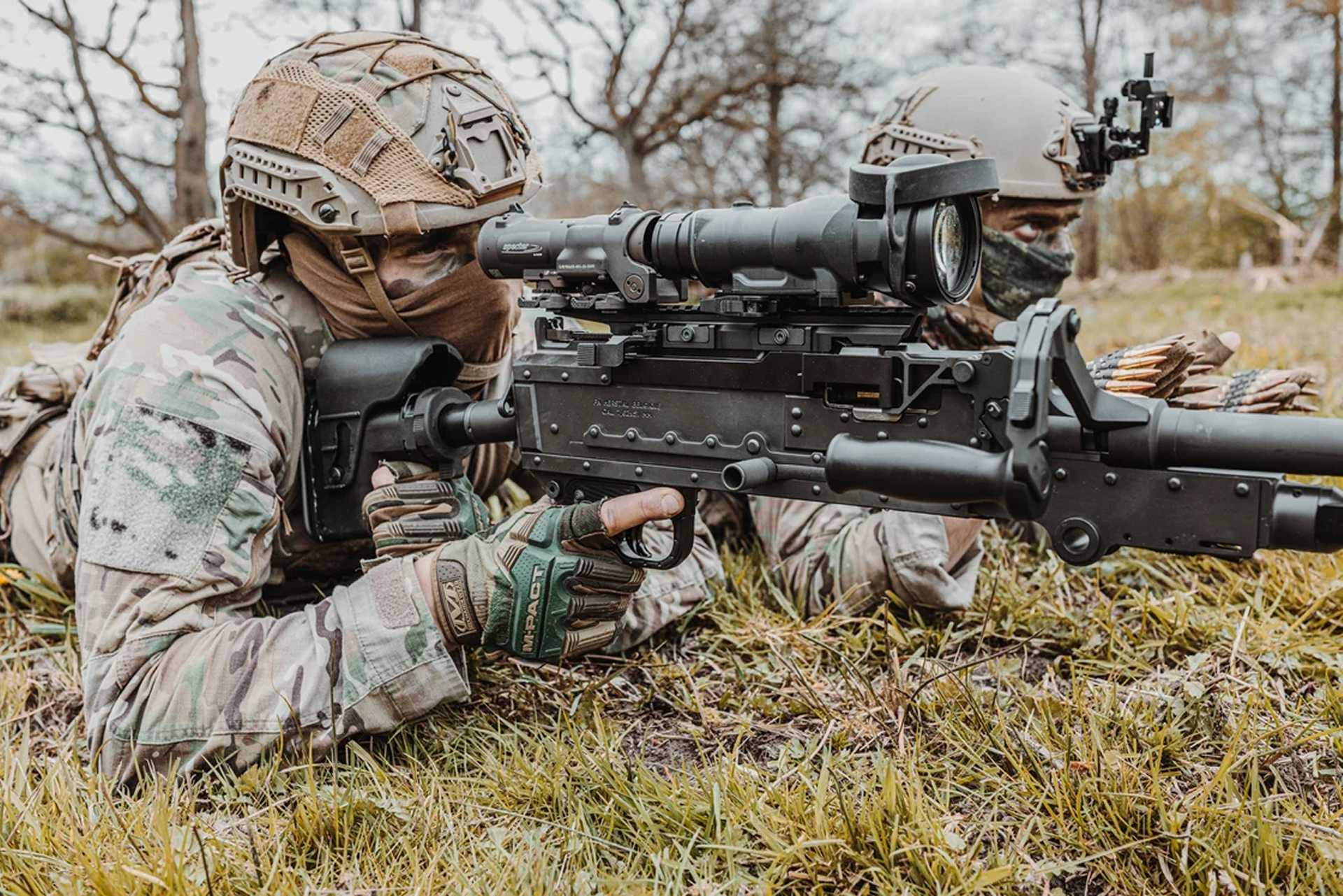
Related Topic: Belgium’s FN Herstal Unveils Layered Counter-Drone System with Cannon - Machine Gun and ShotgunBelgian firearms manufacturer FN Herstal unveils the new FN MAG Tactical 7.62mm machine gun with Long Rail configuration, integrating advanced day/night optics capability and enhanced ergonomics for modern battlefield operations. (Picture source: FN Herstal)
The new configuration introduces a Long Rail Conversion Kit that allows military users to integrate in-line day optics, night vision systems, and thermal sights without altering the machine gun's original operating mechanism. FN Herstal stated that the upgraded system will be displayed publicly during the Eurosatory 2026 defense exhibition in Paris from June 15 to 19, positioning the weapon as a modernization path for existing FN MAG fleets already serving with approximately 90 countries worldwide.
Unlike previous accessory-focused upgrades, the FN MAG Tactical with Long Rail has been developed as a complete operational package designed to enhance crew efficiency and sustained combat effectiveness. The most visible modification is the integration of an 11-inch monolithic Picatinny top rail providing roughly 14 inches of usable space for in-line optics configurations while preserving the original iron sights. This capability is particularly significant for machine gun teams operating in low-visibility environments where simultaneous use of magnified optics and thermal imagers can dramatically improve target detection and suppression accuracy beyond conventional engagement ranges.
Discover the new FN MAG Tactical with Long Rail, FN Herstal’s latest evolution of the legendary 7.62mm general-purpose machine gun. Designed for modern warfare, the upgraded configuration integrates advanced day and thermal optics capability, enhanced ergonomics, and faster target acquisition while preserving the combat-proven reliability trusted by more than 90 nations worldwide.
FN Herstal also redesigned the feed cover assembly to accommodate modern optics without compromising weapon handling during reload procedures. The upgraded feed cover incorporates the ambidextrous FN Side-Click latch system, enabling opening from either side, while the new FN Auto-Lock retention mechanism holds the cover open during loading and unloading operations. According to the manufacturer, the system can support optics weighing up to 2.5 kilograms at a 62-degree opening angle, reducing the risk of damage to mounted electro-optical equipment during combat handling.
Another important modification is the introduction of a fully adjustable tactical buttstock featuring a three-position length adjustment and a six-position cheek rest. This enhancement reflects evolving infantry doctrine in which machine gunners increasingly operate with body armor, helmet-mounted systems, and advanced optics, requiring more adaptable firing positions. The buttstock also includes an integrated folding shoulder support and soft butt plate while remaining fully compatible with the original FN MAG operating system.
The carrying handle has also been redesigned with a longer articulated structure to maintain balance during transport and ensure compatibility with barrel changes even when full-size in-line optics are installed. This addresses a longstanding challenge for machine gun operators using modern sighting systems, in which bulky optics can complicate rapid barrel replacement during sustained-fire missions. By resolving this issue, FN Herstal is attempting to preserve the FN MAG’s core battlefield role as a high-endurance support weapon while adapting it to sensor-driven combat operations.
One of the most strategically important aspects of the upgrade is its compatibility with existing FN MAG variants already in service under different national designations, including the U.S. Army’s M240 series and the British Army’s L7A2 machine guns. This approach allows armed forces to modernize current inventories without investing in entirely new weapon fleets, offering a lower-cost path to capability enhancement at a time when many NATO militaries are increasing defense spending while seeking rapid modernization solutions.
FN Herstal confirmed that the modernization package can be ordered with new production weapons or delivered separately as a conversion kit installable by local armorers using basic tools within minutes. This modular approach could significantly accelerate field deployment for allied forces seeking to improve night-fighting capability and machine gun effectiveness without extended depot-level modification programs. The tactical buttstock will also be offered independently as a stand-alone upgrade.
The launch of the FN MAG Tactical with Long Rail reflects a broader trend across NATO infantry modernization programs, emphasizing improved sensor integration at the squad level. Machine guns, traditionally optimized for suppressive fire and durability, are increasingly expected to support precision engagement, thermal target identification, and interoperability with digitally enabled infantry systems. Similar trends can already be observed in the modernization of assault rifles and light machine guns such as the FN EVOLYS and FN MINIMI, both referenced by the company as part of its broader family of modernized infantry weapons.
For FN Herstal, the upgrade also reinforces the long-term relevance of the FN MAG at a time when many armed forces are evaluating next-generation infantry weapons and lighter support systems. Despite the emergence of newer, lighter machine guns, the FN MAG retains strong appeal due to its reliability, sustained-fire capability, and extensive logistical footprint across NATO and allied inventories. By integrating advanced optical compatibility and improved ergonomics without altering the weapon’s proven operating architecture, FN Herstal is positioning the FN MAG to remain operationally relevant for future high-intensity conflicts in which night combat and sensor-enabled engagement dominate battlefield requirements.
Written by Alain Servaes – Chief Editor, Army Recognition Group
Alain Servaes is a former infantry non-commissioned officer and the founder of Army Recognition. With over 20 years in defense journalism, he provides expert analysis on military equipment, NATO operations, and the global defense industry.
-
Taiwan Unveils Red Falcon II Anti-Tank Rocket to Counter Chinese Armored Vehicle Threats
 {loadposition bannertop}{loadposition sidebarpub}
Taiwan has publicly unveiled the Red Falcon II portable anti-armor rocket for the first time, signaling a major effort to strengthen frontline infantry defenses against growing Chinese armored threats and potential amphibious assault operations. Developed by the National Chung-Shan Institute of Science and Technology (NCSIST), the new disposable weapon improves Taiwan’s ability to counter modern tanks with a lighter, longer-range, and more mobile system that enters a market traditionally dominated by the U.S. FGM-148 Javelin and Sweden’s Carl Gustaf M4 recoilless weapon system.
The Red Falcon II delivers greater armor penetration, extended firing range, and enhanced night combat capability, giving Taiwanese infantry a more effective tool for urban warfare, coastal defense, and rapid-response operations. Its debut reflects a broader shift toward highly mobile anti-armor warfare, in which portable precision weapons are becoming essential for deterrence, survivability, and distributed battlefield operations against larger mechanized forces.
Related Topic: Taiwan Moves Toward Autonomous Coastal Denial Network with Shield AI Hivemind-Powered Thunder Tiger Sea DronesTaiwan’s new Red Falcon II portable anti-armor rocket combines a lightweight design, improved 50+ cm RHA penetration, 500 m range, and thermal night-fighting capability to counter Chinese armored threats during amphibious and urban combat operations. (Picture source: DEF Taiwan)
The unveiling comes as Taiwan accelerates efforts to modernize its asymmetric defense strategy against a potential amphibious assault by the People’s Liberation Army (PLA). According to NCSIST, the Red Falcon II was specifically designed to counter next-generation armored vehicles and support coastal and urban defense operations where infantry anti-armor weapons play a decisive role in delaying mechanized advances and disrupting amphibious landing operations.
The Red Falcon II evolves directly from Taiwan’s earlier Red Falcon I disposable anti-tank rocket, known locally as the Kestrel series. Development work on the new variant reportedly began in 2024, with NCSIST launching full-system planning and verification studies to address shortcomings identified in the original weapon. In 2025, Taiwan’s Legislative Yuan approved additional requirements focusing on reduced system weight, improved engagement of moving targets, and the ability to fire safely from enclosed spaces, a critical capability for urban combat and defensive operations inside buildings.
The outdoor-launch version of the weapon has already completed development and is entering research and development testing during the first half of this year. Following system verification, Taiwan’s military will conduct initial operational testing and evaluation before potential serial production. An indoor-launch variant, designed for confined-space firing, is expected to complete testing before the end of the year.
The most significant improvement concerns armor penetration capability. NCSIST confirmed that the Red Falcon II increases penetration against rolled homogeneous armor (RHA) from approximately 30 cm in the previous model to more than 50 cm. During live-fire trials, the warhead reportedly penetrated 62 cm of armor equivalent, while peak performance tests reached up to 67 cm. Such performance substantially enhances Taiwan’s ability to threaten modern Chinese armored fighting vehicles during amphibious landings or mechanized breakthrough operations.
The weapon’s effective combat range has increased from 400 m to 500 m while maintaining a total projectile weight of only 3.5 kg. Engineers achieved this by using aluminum alloy and composite materials in the projectile's structure, balancing improved lethality with infantry portability. Such weight reduction is operationally significant for Taiwan’s reserve and light infantry forces, which must operate in dense urban terrain, mountainous areas, and coastal defensive positions with limited logistical support.
NCSIST also introduced a substantial lightweighting program for the launcher itself. The launcher mass was reduced from 5.1 kg to 3.9 kg while reinforcing the internal launch tube structure to preserve safety margins and firing durability. The launcher’s overall length was simultaneously shortened from 119 cm to 116 cm by adopting a redesigned front-section flow guide inspired by the French APILAS anti-tank rocket system.
Another major advancement is the incorporation of a Predictive Line of Sight (PLOS) targeting concept. According to NCSIST engineer Huang Chih-ching, the system calculates target movement and adjusts the aiming point in advance, significantly increasing hit probability against moving armored vehicles. This feature improves effectiveness against maneuvering armored targets and partially narrows the capability gap between conventional disposable rockets and guided anti-tank missile systems.
The new launcher can also integrate detachable thermal imaging sights mounted on a tactical rail system, providing all-weather and night-fighting capability. This enhancement is particularly important for Taiwan’s defensive doctrine, which anticipates continuous operations during low-visibility conditions, including nighttime amphibious assault scenarios across the Taiwan Strait.
The thermal imaging module itself reflects Taiwan’s increasing domestic defense-electronics capability. Unlike traditional optical tube systems, the sight uses advanced digital chip technology, enabling an operational standby time of up to 8 hrs. The device includes external power bank charging capability, a digital data interface, 5x magnification, and a night observation range of up to 500 m. The thermal sight can also be detached from the launcher and mounted on other infantry equipment fitted with tactical rails, expanding its utility as a standalone battlefield observation system.
Although the Red Falcon II does not match the long-range fire-and-forget precision of the U.S. Javelin anti-tank guided missile, Taiwan appears to be targeting a different operational niche focused on lightweight, mass-deployable systems and lower production costs. Compared with the Javelin’s heavier guided-missile architecture and the Carl-Gustaf M4’s reusable multi-role recoilless-weapon design, the Taiwanese system emphasizes disposable operation, reduced combat load, and rapid distribution to reserve infantry, coastal defense units, and urban combat teams. While the Javelin remains superior in top-attack capability against heavily protected main battle tanks and the Carl-Gustaf M4 offers broader ammunition flexibility, the Red Falcon II provides Taiwan with a domestically produced anti-armor weapon optimized for large-scale territorial defense and sustained wartime consumption.
NCSIST additionally confirmed that future ammunition development is already underway. Beyond the anti-armor warhead, Taiwan plans to introduce high-explosive and bunker-buster variants tailored for different operational requirements across the armed forces. This modular approach mirrors the evolution of Western infantry support weapon systems, such as the Carl-Gustaf family, which achieved operational success through diverse ammunition options ranging from anti-armor to anti-structure and anti-personnel effects.
Strategically, the Red Falcon II demonstrates Taiwan’s determination to reduce its dependence on foreign anti-tank weapons while simultaneously building a domestic defense industrial base capable of supporting prolonged wartime consumption rates. In a conflict scenario involving large-scale amphibious landings, infantry anti-armor systems would likely be among the most heavily expended munitions. Indigenous production, therefore, provides Taiwan with greater sustainability and wartime resilience.
The emergence of the Red Falcon II also reflects a broader trend among Indo-Pacific militaries seeking lighter, cheaper, and more adaptable infantry anti-tank weapons optimized for urban warfare and coastal defense rather than traditional Cold War armored engagements. For the PLA, the growing sophistication of Taiwan’s infantry anti-armor inventory complicates operational planning for amphibious assault formations, particularly during vulnerable landing and breakout phases ashore, where large numbers of portable anti-armor rockets could saturate beachheads and mechanized assault corridors with mobile defensive fire.
Written by Alain Servaes – Chief Editor, Army Recognition Group
Alain Servaes is a former infantry non-commissioned officer and the founder of Army Recognition. With over 20 years in defense journalism, he provides expert analysis on military equipment, NATO operations, and the global defense industry.
-
U.S. Army and NATO Use Intelligence Balloons to Guide HIMARS Rocket Launchers
 {loadposition bannertop}{loadposition sidebarpub}
The U.S. Army and NATO allies demonstrated a fully integrated digital kill chain during Arcane Thunder 26, combining signal-sensing balloons, targeting drones, and M142 HIMARS rocket launchers to accelerate battlefield detection and strike execution. Reported by the U.S. Mission to NATO on May 15, 2026, the exercise showed how allied forces are tightening the link between sensors and long-range fires to rapidly engage high-value threats in contested environments.
By connecting every step from detection to destruction, the exercise highlighted NATO’s push toward faster, more networked warfare built around real-time targeting and precision-strike coordination. The demonstration also underscored the role of U.S. defense industry technologies and advanced munitions in sustaining allied deterrence and maintaining combat readiness against modern battlefield threats.
Related Topic: U.S. Deploys High Altitude Surveillance Balloon in Alaska to Reinforce Arctic Defense PostureU.S. Army intelligence balloon links drones and HIMARS during Arcane Thunder 26 NATO exercise, demonstrating rapid sensor-to-shooter battlefield targeting and multidomain warfare integration. (Picture source: U.S. Mission to NATO)
The exercise highlighted NATO’s growing emphasis on multidomain warfare and rapid integration of targeting as the alliance adapts to increasingly contested operational environments. Conducted under a broader modernization framework linking U.S. defense industry technologies with allied operational requirements, Arcane Thunder 26 demonstrated how distributed reconnaissance and precision strike systems improve deterrence, battlefield survivability, and coalition responsiveness.
At the core of the exercise was the integration of elevated signal-detection balloons designed to provide persistent battlefield surveillance and electronic sensing over large operational areas. These systems can identify hostile emissions, detect troop movements, and relay targeting information to command networks in near real time. By maintaining persistent aerial observation without relying exclusively on satellites or manned aircraft, such systems provide NATO commanders with a resilient intelligence layer that remains operational even in degraded electromagnetic environments.
Targeting drones operating alongside these balloons expanded the detection network by providing close-range identification and target verification. Unmanned aerial vehicles involved in the exercise were reportedly linked directly into digital fire-control networks, enabling the rapid transmission of coordinates to U.S. HIMARS rocket launcher crews. This significantly compresses the time between target acquisition and precision engagement, an increasingly critical factor in modern warfare where adversary units relocate quickly after emitting signals or firing weapons.
At Arcane Thunder 26, we brought the future of warfare to the present, linking aerial sensors, unmanned systems, and precision fires to rapidly detect and defeat threats. By integrating signal-sensing balloons, targeting drones, and HIMARS, soldiers connect every step from… pic.twitter.com/Xbh6vWa6l6
— U.S. Mission to NATO (@USNATO) May 15, 2026Arcane Thunder 26 showcases next-generation warfare by linking intelligence balloons, targeting drones, and HIMARS into a rapid sensor-to-shooter strike network.
The M142 High Mobility Artillery Rocket System continues to play a central role in U.S. and NATO long-range fires doctrine. Mounted on a 6x6 tactical truck chassis, HIMARS can launch Guided Multiple Launch Rocket System (GMLRS) munitions with ranges exceeding 70 kilometers, while also being capable of firing the Army Tactical Missile System and future Precision Strike Missile variants. Its high mobility, rapid displacement capability, and digital targeting integration make it one of NATO’s most effective counter-battery and deep-strike artillery systems.
Arcane Thunder 26 also reflected the U.S. Army’s broader transition toward sensor-fused battlefield operations in which every reconnaissance asset becomes part of a larger combat network. Rather than relying on isolated reconnaissance units or centralized command structures, modern U.S. doctrine increasingly focuses on interconnected battlefield nodes capable of autonomously sharing targeting information across multiple domains. This architecture is intended to shorten decision cycles and allow commanders to execute strikes before enemy forces can maneuver or conceal themselves.
The use of signal-sensing balloons during the exercise is particularly notable because elevated surveillance systems are re-emerging as cost-effective alternatives to more expensive airborne early-warning assets. Unlike satellites with predictable orbital paths or manned aircraft vulnerable to advanced air defenses, tethered or semi-persistent balloons can remain operational for extended durations while providing continuous ISR coverage. Their integration into artillery kill chains reflects the growing military value of low-cost, persistent-sensing technologies in high-intensity conflicts.
The exercise further demonstrated the importance of U.S. defense industry involvement in NATO modernization efforts. American manufacturers continue supplying precision-guided munitions, secure communications systems, autonomous reconnaissance drones, and battlefield networking technologies required to sustain alliance interoperability. As NATO members accelerate defense spending following ongoing security concerns in Eastern Europe, exercises such as Arcane Thunder 26 serve as operational demonstrations of how U.S.-produced systems can integrate into multinational combat formations.
The operational relevance of this capability is substantial. Future conflicts against peer adversaries are expected to involve heavy electronic warfare, rapid maneuver operations, and contested airspace where traditional reconnaissance aircraft may face elevated risks. By linking dispersed sensors, autonomous systems, and mobile rocket artillery into a unified digital fires network, NATO forces can preserve strike effectiveness even under degraded battlefield conditions.
Arcane Thunder 26 ultimately illustrates how the United States and NATO are shifting from platform-centric warfare toward highly connected combat ecosystems focused on speed, precision, and distributed lethality. The exercise demonstrated that future battlefield dominance will increasingly depend not only on the range of weapons systems but also on how rapidly sensors, artificial intelligence-enabled processing, and precision-strike assets can operate together to identify and destroy threats before adversaries can respond.
Written by Alain Servaes – Chief Editor, Army Recognition Group
Alain Servaes is a former infantry non-commissioned officer and the founder of Army Recognition. With over 20 years in defense journalism, he provides expert analysis on military equipment, NATO operations, and the global defense industry.
-
U.S. Army Converts Humvee into Drone Hunter with CROW Turret in Lithuania Near Russia
 {loadposition bannertop}{loadposition sidebarpub}
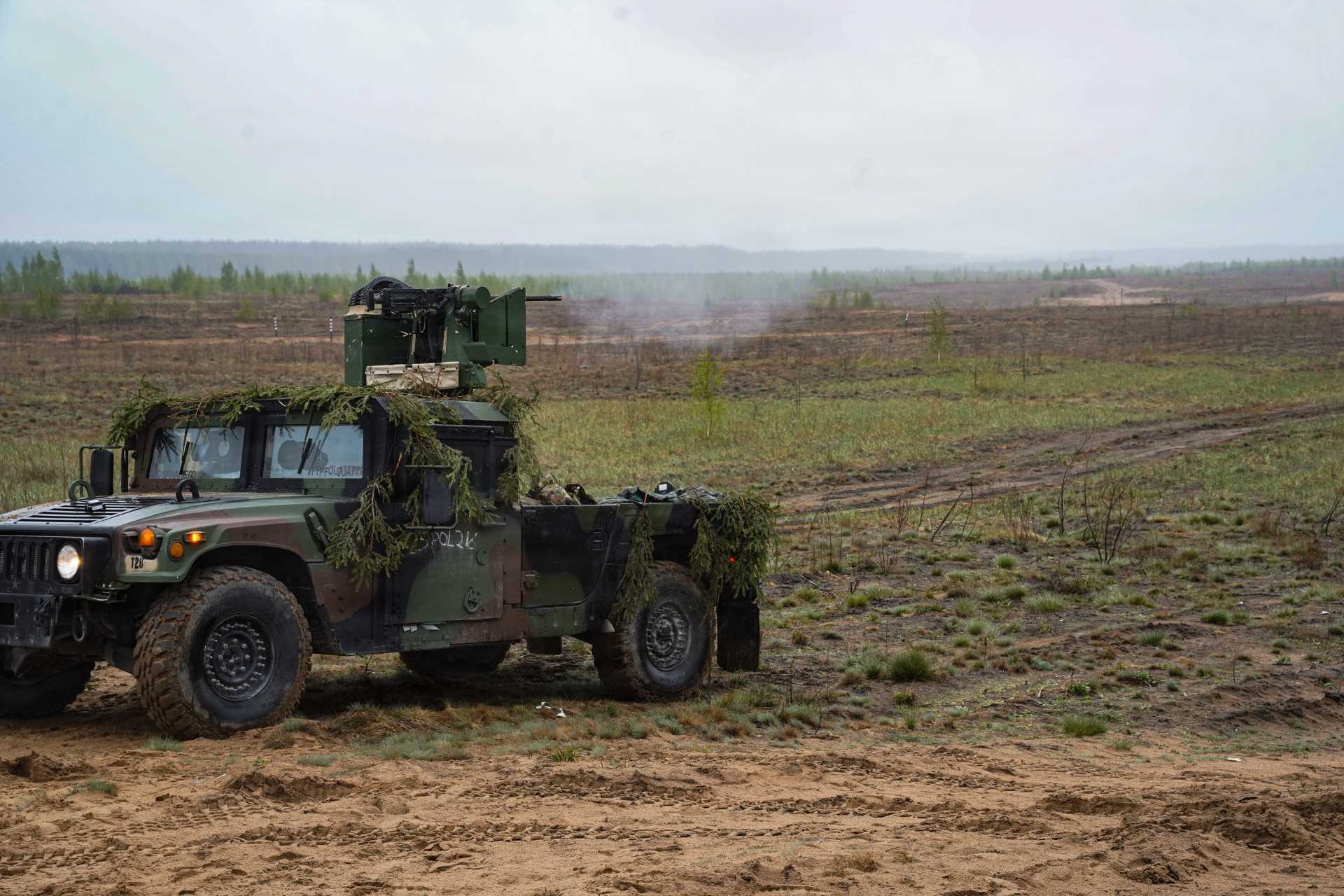
The U.S. Army has transformed a Humvee into a low-cost anti-drone combat vehicle armed with a remotely operated .50 caliber machine gun, as NATO races to counter the growing threat of Russian-style drone warfare spreading from Ukraine toward Europe’s eastern border. Tested during live-fire exercises in Lithuania near Russia on May 9, 2026, the improvised “drone hunter” was developed by soldiers from the 5th Battalion, 4th Air Defense Artillery Regiment to destroy low-flying attack drones without relying on expensive missile interceptors.
Built using a Common Remotely Operated Weapon Station (CROWS) already deployed across the U.S. Army, the mobile counter-UAS system reflects an urgent Pentagon push to field cheap, fast, and scalable air defense solutions capable of stopping drone swarms threatening NATO forces, armored convoys, and critical military infrastructure. The battlefield-adapted Humvee highlights how lessons from Ukraine are rapidly reshaping U.S. Army air defense strategy for future high-intensity conflict with Russia.
Related topic: U.S. Army IFPC Air Defense System Demonstration in the Philippines Highlights New Indo-Pacific Defense LayerU.S. Army soldiers from the 5th Battalion, 4th Air Defense Artillery Regiment test a modified Humvee equipped with a CROWS remote weapon station and M2 Browning machine gun near Baltodvaris, Lithuania, on May 9, 2026. The improvised Mobile Fire Team vehicle, created by mounting a recycled CROWS turret onto a Humvee, provides a mobile, low-cost counter-drone capability as part of NATO’s Eastern Flank Deterrence Initiative. (Picture source: U.S. Department of War/Defense)
The battlefield-adapted Humvee was created by removing a CROWS turret from an older U.S. Army combat vehicle and custom-welding the remotely operated weapon station onto a High Mobility Multipurpose Wheeled Vehicle. The improvised Mobile Fire Team vehicle forms part of the Eastern Flank Deterrence Initiative and reflects growing Pentagon urgency to field cheap, mobile, and scalable defenses against Russian-style drone attacks threatening NATO forces across Eastern Europe.
The conversion highlights how lessons from Ukraine are directly influencing U.S. Army battlefield innovation. Cheap commercial drones, loitering munitions, and first-person-view attack drones have transformed modern combat by exposing armored vehicles, artillery units, and logistics convoys to constant aerial surveillance and precision strikes. In response, U.S. forces are increasingly searching for affordable counter-drone solutions capable of defeating mass drone attacks without relying solely on expensive missile interceptors.
The Common Remotely Operated Weapon Station, widely known as CROWS, was originally designed to improve crew survivability by allowing soldiers to fire heavy weapons from inside armored vehicles rather than exposing themselves through roof hatches. Developed for the U.S. Army by Kongsberg Defense & Aerospace, the turret integrates stabilized electro-optical sights, thermal imaging sensors, laser rangefinders, and computerized targeting systems that enable accurate engagement while moving or operating in poor visibility.
CROWS systems are widely deployed across the U.S. Army fleet and can be mounted on vehicles including the M1126 Stryker infantry carrier vehicle, the Joint Light Tactical Vehicle, the M-ATV mine-resistant ambush-protected vehicle, the Family of Medium Tactical Vehicles, and several Humvee variants. The system can fire multiple weapon types, including the M2 Browning .50-caliber machine gun, the M240 7.62 mm machine gun, and the MK19 40 mm automatic grenade launcher. For counter-UAS operations, the M2 Browning provides an effective low-cost kinetic option against small drones operating at low altitude.
By integrating the turret onto a Humvee, Army air defenders have created a highly mobile short-range air defense system capable of accompanying maneuver forces across dispersed terrain. Unlike heavier dedicated air defense vehicles, the modified Humvee can rapidly reposition along forest roads, convoy routes, and forward operating zones common in the Baltic region. This mobility is increasingly critical as NATO planners prepare for future combat environments saturated with drones, electronic warfare, and long-range precision fires.
The live-fire exercise was conducted during Project Flytrap, a large-scale multinational experimentation campaign running from April 27 to May 31, 2026, alongside Saber Strike, Sword 26, Immediate Response, and Swift Response exercises. The program focuses on integrating counter-unmanned aerial systems, artificial intelligence-enabled command and control, and real-time battlefield data sharing to accelerate targeting decisions and improve force protection across multiple operational domains.
Project Flytrap demonstrates how the Pentagon is adapting to the reality that future wars may involve large-scale drone swarms capable of overwhelming conventional air defense systems. Missile-based interceptors such as Patriot remain essential against aircraft and ballistic missiles, but they are economically unsustainable against cheap, expendable drones costing only a fraction of the price of interceptors. Mobile gun-based systems such as the Humvee-mounted CROWS configuration offer a far cheaper engagement solution while remaining highly deployable.
The U.S. Army’s improvised anti-drone Humvee also reflects a broader shift toward rapid battlefield adaptation rather than waiting for long acquisition cycles. By recycling existing CROWS turrets from older vehicles and integrating them onto available tactical trucks, units can quickly field new capabilities using existing inventory and maintenance infrastructure. The approach mirrors wartime innovation cycles seen in Ukraine, where combat units continuously adapt commercial technology and legacy weapons to meet emerging battlefield threats.
For NATO forces positioned near Russia’s borders, the development carries important strategic implications. Russian military doctrine increasingly emphasizes layered drone reconnaissance, electronic warfare coordination, and precision strike capability designed to disrupt command posts, artillery batteries, and logistics corridors before larger offensive operations. Mobile counter-UAS vehicles, such as the Lithuanian-tested Humvee, provide frontline formations with an additional defensive layer capable of responding rapidly to low-altitude aerial threats.
The Humvee drone hunter tested in Lithuania may therefore represent more than a temporary field modification. It offers a glimpse into how the U.S. Army could rapidly expand distributed short-range air defense coverage across Europe using inexpensive and adaptable systems optimized for the realities of modern drone warfare.
Written by Alain Servaes – Chief Editor, Army Recognition Group
Alain Servaes is a former infantry non-commissioned officer and the founder of Army Recognition. With over 20 years in defense journalism, he provides expert analysis on military equipment, NATO operations, and the global defense industry.
-
U.S. M1A2 SEPv3 vs. Leopard 2A8 Comparison Shows How US and NATO Tanks Differ in Modern Warfare
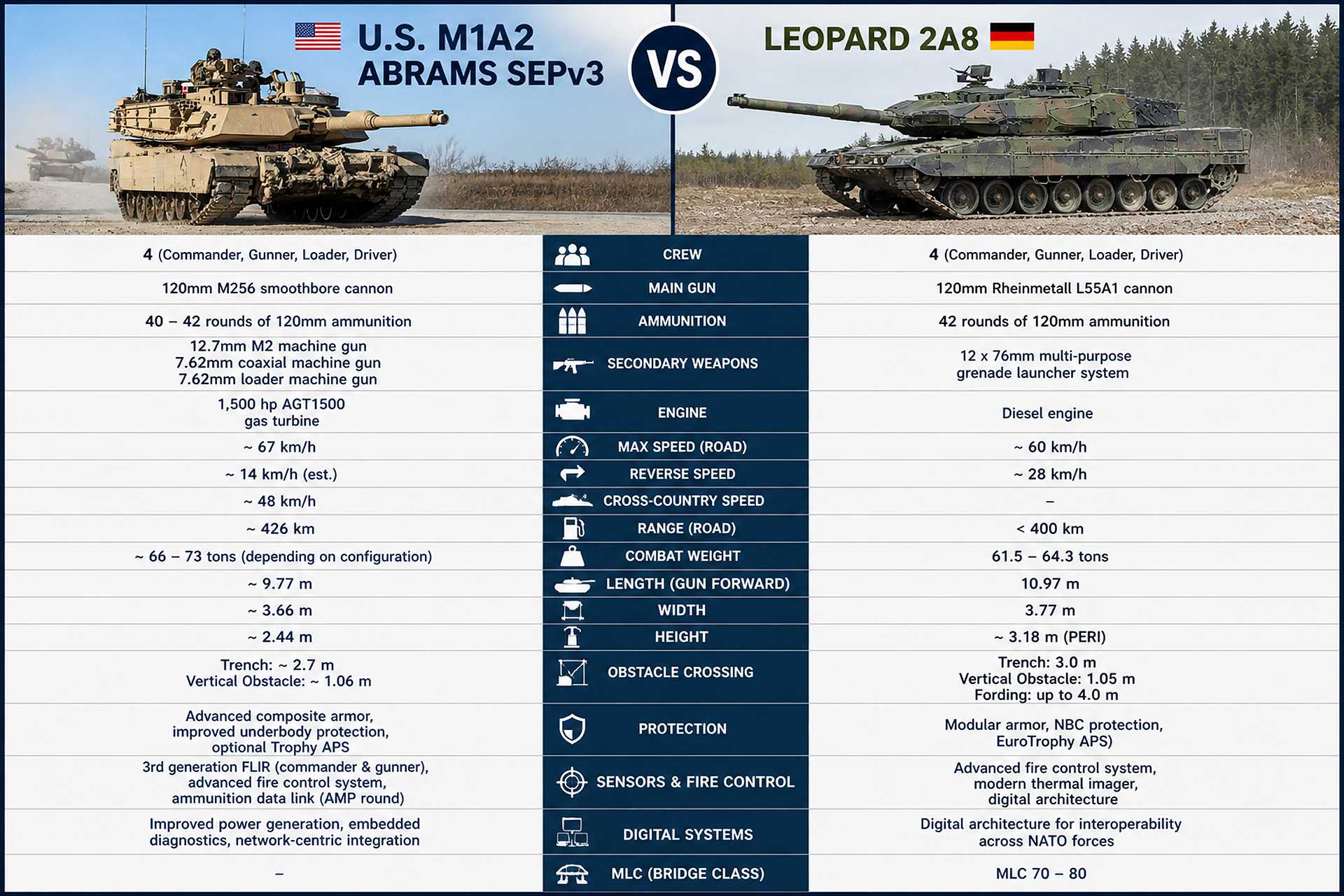 {loadposition bannertop}{loadposition sidebarpub}
The U.S. M1A2 SEPv3 Abrams and Germany’s Leopard 2A8, recently introduced within Norway armed forces, are being directly compared as two of the most advanced main battle tanks designed for high-intensity warfare. This comparison highlights how the United States and its allies are prioritizing survivability, firepower, and mobility to counter advanced anti-armor threats and maintain battlefield superiority against near-peer adversaries.
Both tanks reflect key lessons drawn from recent conflicts, such as Ukraine, where precision-guided munitions, drones, and layered defenses have significantly increased the risks to armored formations. Their evolving capabilities demonstrate how NATO is adapting its heavy forces to operate effectively in contested environments where protection, mobility, and sustained combat performance are critical to survival.
Related Topic: Top Tank Power Countries in Europe 2026: Fleet Size, Models and Combat Readiness RankedSide-by-side comparison of the U.S. Army M1A2 SEPv3 Abrams and Germany’s Leopard 2A8 highlights key differences in firepower, protection systems, mobility, and digital battlefield integration shaping NATO armored warfare. (Picture: IA generated with editing of the Army Recognition Group cannot be republished with authorization)
The M1A2 SEPv3 Abrams emphasizes layered protection and combat endurance. It integrates advanced composite armor, explosive reactive armor options, and the Trophy active protection system, which can intercept incoming anti-tank guided missiles before impact, giving it a clear advantage in direct engagements against guided threats. The Leopard 2A8 adopts a modular protection concept, combining enhanced passive armor with the EuroTrophy system and an NBC protection suite, allowing rapid adaptation to evolving threats including loitering munitions and top-attack weapons, which provides a long-term advantage in scalability and future upgrades. In technical terms, the Abrams operates with a crew of four and is powered by a 1,500 horsepower AGT1500 gas turbine engine, delivering superior acceleration and sustained power under combat conditions.
A critical distinction lies in how each tank approaches active protection. The Trophy system used on the Abrams is a combat-proven hard-kill system that detects incoming missiles using radar and launches countermeasures to destroy them before impact. EuroTrophy, selected for the Leopard 2A8, is based on the same core Israeli technology but adapted for European integration and future growth. Its main value is not only the interception of anti-tank guided missiles and rocket-propelled grenades, but also its open architecture, which allows upgrades to address emerging threats such as top-attack munitions and potentially loitering drones. This gives the Leopard 2A8 a structural advantage in long-term threat evolution, even if the Abrams currently benefits from broader operational experience with its protection system.
Firepower between the two main battle tanks remains closely matched but reflects different optimization paths. The Abrams is equipped with the 120mm M256 smoothbore cannon, supported by advanced fire control systems, third-generation FLIR thermal sights for both commander and gunner, and a digital ammunition data link that improves first-round hit probability and engagement flexibility. It carries between 40 and 42 rounds and is supported by secondary armament, including a 12.7 mm M2 heavy machine gun and multiple 7.62 mm machine guns, giving it strong multi-target engagement capability. The Leopard 2A8 fields the Rheinmetall L55A1 120mm cannon, designed for higher chamber pressure and compatibility with next-generation kinetic energy rounds, offering a potential advantage in raw armor penetration and future ammunition growth potential.
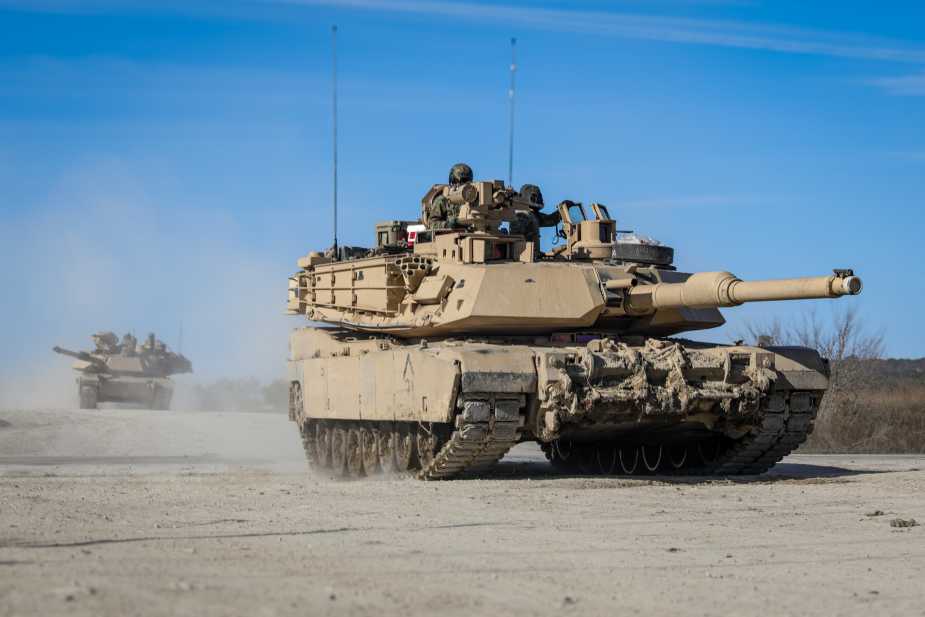
U.S. Army M1A2 SEPv3 Abrams main battle tank, representing the U.S. focus on networked warfare, heavy protection, and combat-proven performance in comparison with Europe’s Leopard 2A8. (U.S. Department of War)
Mobility reveals a clearer divergence in design philosophy. The Leopard 2A8, weighing between 61.5 and 64.3 tons, is powered by a diesel engine that enables a road speed of up to 60 km/h and a reverse speed reaching 28 km/h, a critical advantage for rapid disengagement under fire and tactical repositioning. Its operational range remains below 400 km on roads, with strong obstacle-crossing capability, including 3.0 m trench crossing, 1.05 m vertical obstacles, and fording up to 4.0 m with preparation. The M1A2 SEPv3, with a combat weight ranging from approximately 66 to over 70 tons depending on configuration, reaches speeds of about 67 km/h on roads and around 48 km/h cross-country, with an operational range near 426 km. Its gas turbine engine provides superior acceleration and power-to-weight performance, offering an advantage in offensive maneuver and rapid assault operations despite higher fuel consumption.
The Leopard 2A8’s mobility characteristics highlight a focus on survivability through maneuver. Its ability to rapidly reverse at high speed improves crew survivability in ambush scenarios and under drone observation, reflecting recent battlefield lessons. This specific capability is increasingly relevant in Ukraine, where tanks that cannot quickly disengage after firing are highly vulnerable to precision strikes. The Abrams, while highly mobile, prioritizes forward offensive momentum supported by robust logistics and recovery systems within U.S. doctrine, giving it an advantage in breakthrough operations where sustained forward pressure is essential.
In terms of dimensions, the Leopard 2A8 measures nearly 11 meters in length with the gun forward, 3.77 meters in width, and approximately 3.18 meters in height, placing it within the standard envelope for European infrastructure and transport constraints. Its Military Load Classification of 70-80 reflects compatibility with NATO bridging systems, offering an advantage in infrastructure flexibility across Europe. The Abrams operates within a similar dimensional range but places greater strain on infrastructure due to its higher weight and fuel requirements, reinforcing reliance on U.S. engineering assets while benefiting from superior protection levels.
Crew configuration remains identical, with four personnel including commander, gunner, loader, and driver, ensuring redundancy and sustained operational tempo. Both tanks are equipped with multi-purpose smoke grenade launchers, with the Leopard 2A8 featuring a 12-tube 76 mm system for rapid concealment and countermeasure deployment, enhancing its defensive reaction capability.
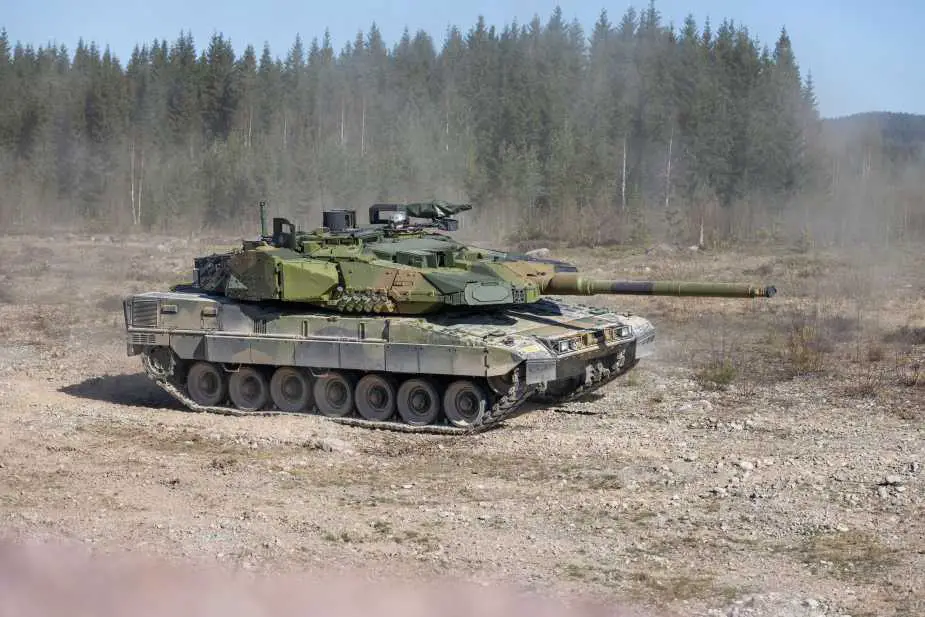
Leopard 2A8 main battle tank, reflecting the European approach to armored warfare with emphasis on modular protection, high mobility, and adaptability in comparison with the U.S. M1A2 SEPv3. (Picture source : Norway MoD)
Digital integration is where the Abrams maintains a decisive edge. The M1A2 SEPv3 features improved onboard power generation, embedded diagnostics, and full integration into U.S. Army network-centric warfare systems. This enables real-time data exchange with unmanned aerial vehicles, reconnaissance units, and artillery, significantly accelerating sensor-to-shooter cycles and giving it a major advantage in coordinated, multi-domain operations. The Leopard 2A8 incorporates modern digital architecture but is optimized for interoperability across multinational NATO formations, providing flexibility and ease of integration across different armies, which is a key advantage in coalition operations.
Operational experience continues to shape both systems. The Abrams has been extensively deployed in combat, giving it a proven track record in survivability, reliability, and crew protection under real battlefield conditions. The Leopard 2A8 reflects a forward-looking approach, integrating lessons from recent conflicts and emphasizing adaptability to emerging threats, particularly the growing importance of drones and top-attack attack profiles.
The core value of the Leopard 2A8 compared to the M1A2 SEPv3 lies in its adaptability and battlefield survivability model. It is designed not just to resist current threats, but to evolve rapidly as those threats change, with modular armor, scalable active protection, high reverse mobility, and lower logistical burden. In contrast, the Abrams delivers maximum combat power through superior integration, acceleration, and proven protection systems, making it dominant in structured, high-intensity offensive operations.
As NATO prepares for future large-scale conflict scenarios, the combination of these two advanced main battle tanks enhances overall alliance resilience. The M1A2 SEP V3 Abrams provides unmatched integration, offensive power, and battlefield dominance in coordinated operations, while the German Leopard 2A8 ensures flexible, sustainable armored capability across Europe, complicating adversary targeting and reinforcing deterrence across multiple operational theaters.
Written by Alain Servaes – Chief Editor, Army Recognition Group
Alain Servaes is a former infantry non-commissioned officer and the founder of Army Recognition. With over 20 years in defense journalism, he provides expert analysis on military equipment, NATO operations, and the global defense industry.
-
U.S. Army Accelerates LUCAS Loitering Munition Deployment for Modern Battlefield Combat
 {loadposition bannertop}{loadposition sidebarpub}
The U.S. Army and the Indiana National Guard have taken a low-cost attack drone from a public demo to combat deployment in just seven months, a rare pace that signals a shift in how the military fields new weapons. Announced April 8, 2026, the Low-cost Uncrewed Combat Attack System, or LUCAS, has moved from concept to operational use, giving U.S. forces a fast, affordable strike option designed for real-world missions.
The rapid rollout matters because it puts scalable firepower into the hands of commanders at a fraction of the cost of traditional systems, strengthening the Joint Force in high-risk, contested environments. By proving that autonomous strike systems can be developed and fielded in months rather than years, LUCAS sets a precedent for how the U.S. can outpace adversaries and expand combat capabilities without relying on expensive platforms.
Related Topic: Iran Shahed-136 vs US LUCAS: Mass Drone Strikes Redefine Warfare in US-Iran ConflictThe Indiana National Guard leveraged the T-REX experimentation framework to rapidly transition the Low-cost Uncrewed Combat Attack System (LUCAS) from public demonstration to operational deployment in just seven months, showcasing a new benchmark in accelerated military innovation. (Picture source: U.S. Army)
The LUCAS loitering munition was first unveiled in July 2025 at a Pentagon courtyard demonstration led by the Department of War and was operationally employed by February 2026 during Operation Epic Fury. Enabled by the T-REX (Technology and Readiness Experimentation) framework, this compressed timeline demonstrates a new acquisition model focused on battlefield urgency, directly improving readiness and deterrence through rapid integration of emerging technologies.
The LUCAS drone represents a new class of expendable or attritable uncrewed combat systems designed to deliver precision effects at significantly lower cost than traditional manned or high-end unmanned platforms. While detailed specifications remain limited, the system is understood to integrate autonomous navigation, modular payload configurations, and network-enabled targeting, allowing it to operate in distributed formations or as part of manned-unmanned teaming constructs. This capability directly supports U.S. Army concepts such as Multi-Domain Operations (MDO), where mass, survivability, and adaptability are critical against peer adversaries.
LUCAS is a long-range loitering attack munition, also known as a one-way attack drone, developed by U.S. company SpektreWorks and designated FLM 136, designed to loiter over a target area before executing a precision strike by impact. The system reportedly operates for up to 6 hours, carries an approximately 18 kg payload, and can range beyond 350 nautical miles, enabling deep-strike missions against high-value targets such as air defense systems, missile launchers, and command nodes. During Operation Epic Fury, U.S. Central Command employed LUCAS drones in coordinated strikes against Iranian military infrastructure, including command-and-control facilities, air defenses, and launch sites, demonstrating their role as a low-cost force multiplier capable of saturating and penetrating layered defenses without risking manned aircraft.
Central to this rapid development cycle is the T-REX framework, overseen by the Office of the Under Secretary of War for Research and Engineering. Unlike traditional acquisition pathways that often span years or decades, T-REX compresses development through iterative prototyping, real-time operator feedback, and direct collaboration between engineers, warfighters, and procurement authorities. The Indiana National Guard has emerged as a key operational hub for this model, providing realistic environments where experimental systems can be tested, refined, and validated under near-operational conditions.
The “speed of relevance” methodology underpinning T-REX prioritizes immediate battlefield applicability over prolonged development cycles. In the case of LUCAS, this meant rapidly identifying operational requirements, such as survivability in contested airspace, ease of deployment, and low unit cost, and translating them into deployable capability without waiting for full-spectrum program maturation. This approach aligns with broader Pentagon directives to counter near-peer threats by fielding large volumes of affordable systems that can saturate and complicate enemy defenses.
Operational deployment during Operation Epic Fury suggests that LUCAS has already moved beyond experimental status into active mission roles. Although specific mission profiles remain undisclosed, the system likely supports strike, reconnaissance, or electronic warfare missions in contested environments, where its low cost and autonomous capabilities reduce personnel risk while maintaining operational tempo. Its deployment also indicates growing confidence in autonomous engagement systems and their integration into joint force operations.
From an industrial perspective, LUCAS underscores a shift toward more agile defense innovation ecosystems. By leveraging non-traditional contractors, rapid-prototyping pipelines, and flexible funding mechanisms, programs like T-REX reduce dependence on legacy acquisition structures. This model could influence future procurement strategies, particularly for systems requiring rapid iteration in response to evolving threats, such as loitering munitions, counter-drone technologies, and electronic warfare platforms.
The implications for U.S. military strategy are significant. The ability to move from demonstration to deployment in under a year challenges adversaries’ assumptions about U.S. procurement timelines and introduces uncertainty into their planning cycles. Systems like LUCAS enable scalable force projection, allowing commanders to generate combat mass at lower cost while preserving high-end assets for critical missions. This approach is particularly relevant in potential high-intensity conflicts where attrition rates are expected to be high.
As the U.S. Army continues to refine its modernization priorities, the LUCAS program and the T-REX framework may serve as templates for future rapid acquisition efforts. The success of this initiative reinforces the importance of integrating innovation directly into operational units, bridging the gap between concept development and battlefield execution. For further context on U.S. Army modernization trends, see our analysis on [U.S. Army autonomous systems strategy], [rapid acquisition reforms], and [loitering munition developments].
Ultimately, the U.S. LUCAS loitering munition achievement signals a structural shift in how the U.S. military develops and fields combat capabilities. By prioritizing speed, affordability, and operational relevance, the Army is reshaping its force generation model to better respond to the demands of modern warfare, where technological advantage must be delivered not in years, but in months.
Written by Alain Servaes – Chief Editor, Army Recognition Group
Alain Servaes is a former infantry non-commissioned officer and the founder of Army Recognition. With over 20 years in defense journalism, he provides expert analysis on military equipment, NATO operations, and the global defense industry.
-
Ukraine Claims Leopard 2A6 Tank Destroyed Russian T-72B3 Tank at 5.5 km Record Range
 {loadposition bannertop}{loadposition sidebarpub}
A battlefield claim circulating in defense circles asserts that a Ukrainian-operated Leopard 2A6 Main Battle Tank (MBT) destroyed a Russian T-72B3 tank head-on at a distance of 5.5 km, far beyond the typical range of tank engagements. If verified, the strike would mark one of the longest confirmed tank-on-tank kills and demonstrate exceptional accuracy and fire control under combat conditions.
Such a feat would underscore the extended reach and lethality of Western-supplied armor in Ukrainian service, potentially reshaping expectations for the range and survivability of armored warfare. It would also signal a growing ability to engage and defeat adversaries before they can effectively return fire, shifting both tactical calculations and battlefield risk.
Read also: Leopard 2A6 VS. T-90M - Advantages and weaknesses in upcoming battles in UkraineUkrainian Army Leopard 2A6 main battle tank equipped with a 120mm L/55 smoothbore gun during field operations, highlighting advanced Western firepower and long-range engagement capability in Ukraine. (Picture source: Wikimedia)
The report, which has not yet been supported by imagery or sensor data as of early April 2026, alleges that Ukrainian forces employed a German-made Leopard 2A6 tank against a Russian T-72B3 tank under unknown conditions. The claim is operationally significant as it would demonstrate the ability of Ukrainian crews to exploit advanced NATO tank firepower and targeting systems at ranges well beyond standard engagement envelopes.
The Leopard 2A6, supplied to Ukraine by several European nations, is equipped with the Rheinmetall 120mm L/55 smoothbore gun, a system designed to maximize muzzle velocity and long-range lethality. Compared to earlier L/44 variants, the longer barrel increases projectile acceleration, enabling kinetic-energy rounds to exceed 1,700 m/s, depending on the ammunition. This translates into improved armor penetration at extended distances and reduced time-of-flight, a critical factor in dynamic battlefield conditions such as those observed in Ukraine.
The gun is optimized for NATO-standard 120mm APFSDS rounds, such as DM53 and DM63, among those supplied. These use high-density tungsten for armor defeat. The DM53 leverages the L/55's power, while the DM63 offers consistent performance in varying climates.
In addition to kinetic-energy rounds, Ukrainian Leopard 2A6 tanks can employ multi-purpose ammunition, such as the DM12 HEAT round, to engage fortified positions and light armored targets. The integration of programmable airburst munitions like the DM11 further enhances battlefield effectiveness, allowing Ukrainian crews to engage infantry in trenches, urban cover, or behind obstacles—capabilities that have proven particularly relevant in the trench-dominated combat environment of the conflict.
Germany, Portugal, and other European partners have contributed Leopard 2A6 tanks to Ukraine as part of a coordinated NATO support effort initiated in early 2023. Germany committed 18 Leopard 2A6 tanks from Bundeswehr stocks, while Portugal supplied 3 additional units. These deliveries formed one of the most capable Western tank contingents in Ukrainian service, often grouped within dedicated battalion-level formations alongside other Leopard 2 variants and supported by extensive training, logistics, and ammunition packages. The introduction of Leopard 2A6 significantly enhanced Ukraine’s ability to conduct high-intensity armored operations with improved firepower, protection, and targeting capabilities compared to legacy Soviet-era systems.
From an Army Recognition (ARG) analytical perspective, the effectiveness of Ukrainian Leopard 2A6 tanks is not solely defined by firepower but by the integration of advanced fire-control and sighting systems. The EMES 15 stabilized gunner’s sight, combined with a laser rangefinder and thermal imaging, enables precise target acquisition in both day and night operations. The PERI R17A2 commander’s panoramic sight provides independent surveillance capability, allowing Ukrainian crews to conduct hunter-killer engagements, a critical advantage in high-intensity combat scenarios where rapid target acquisition is essential.
The digital fire control system continuously calculates ballistic solutions by integrating environmental and operational variables, including range, ammunition type, barrel wear, wind conditions, and vehicle attitude. This enables high first-round hit probability within typical combat ranges of 2 to 3 km. Thermal imaging systems further enhance survivability and lethality by enabling detection in degraded visual environments, including smoke, fog, and night-time operations frequently encountered on the Ukrainian battlefield.
However, extending an engagement to 5.5 km introduces significant constraints. At such distances, APFSDS rounds lose velocity and kinetic energy, reducing their ability to penetrate heavily protected frontal armor such as that of the T-72B3 equipped with Kontakt-5 explosive reactive armor. This system is specifically designed to disrupt long-rod penetrators, complicating frontal engagements even at shorter distances.
Hit probability is another limiting factor. While Ukrainian Leopard 2A6 crews benefit from advanced Western fire-control systems, accuracy beyond 4 km is increasingly affected by atmospheric conditions, ballistic dispersion, and target motion. A successful engagement at 5.5 km would likely require a stationary or slow-moving target, a highly coordinated crew, and potentially external targeting support, such as drone-based observation, which Ukrainian forces widely use to enhance battlefield awareness and fire correction.
The geometry of the hit is also critical. A frontal kill at this distance would most plausibly involve striking a vulnerable area such as the lower glacis, turret ring, or mantlet, rather than penetrating the most heavily armored sections. Alternatively, the target may have been degraded, improperly oriented, or lacking effective reactive armor at the time of impact.
If confirmed, such an engagement would not redefine tank warfare doctrine but would illustrate the outer limits of what Ukrainian-operated Leopard 2A6 tanks can achieve when combining advanced Western firepower, modern ammunition, and increasingly sophisticated battlefield integration. It would also highlight the growing role of drone-assisted targeting and networked combat systems in extending engagement ranges in the Ukraine conflict.
From an ARG defense analysis standpoint, the claim underscores that while Ukrainian Leopard 2A6 tanks provide a significant qualitative advantage in firepower and targeting capability, real-world effectiveness remains governed by physics, environmental factors, and tactical conditions. Until verified by visual or sensor evidence, the reported 5.5-km frontal kill should be treated as an unconfirmed and potentially exceptional event rather than a new operational benchmark.
Written by Alain Servaes – Chief Editor, Army Recognition Group
Alain Servaes is a former infantry non-commissioned officer and the founder of Army Recognition. With over 20 years in defense journalism, he provides expert analysis on military equipment, NATO operations, and the global defense industry.
-
SAMP/T NG vs Patriot: Europe Challenges U.S. Air Defense System in Missile Interception Race
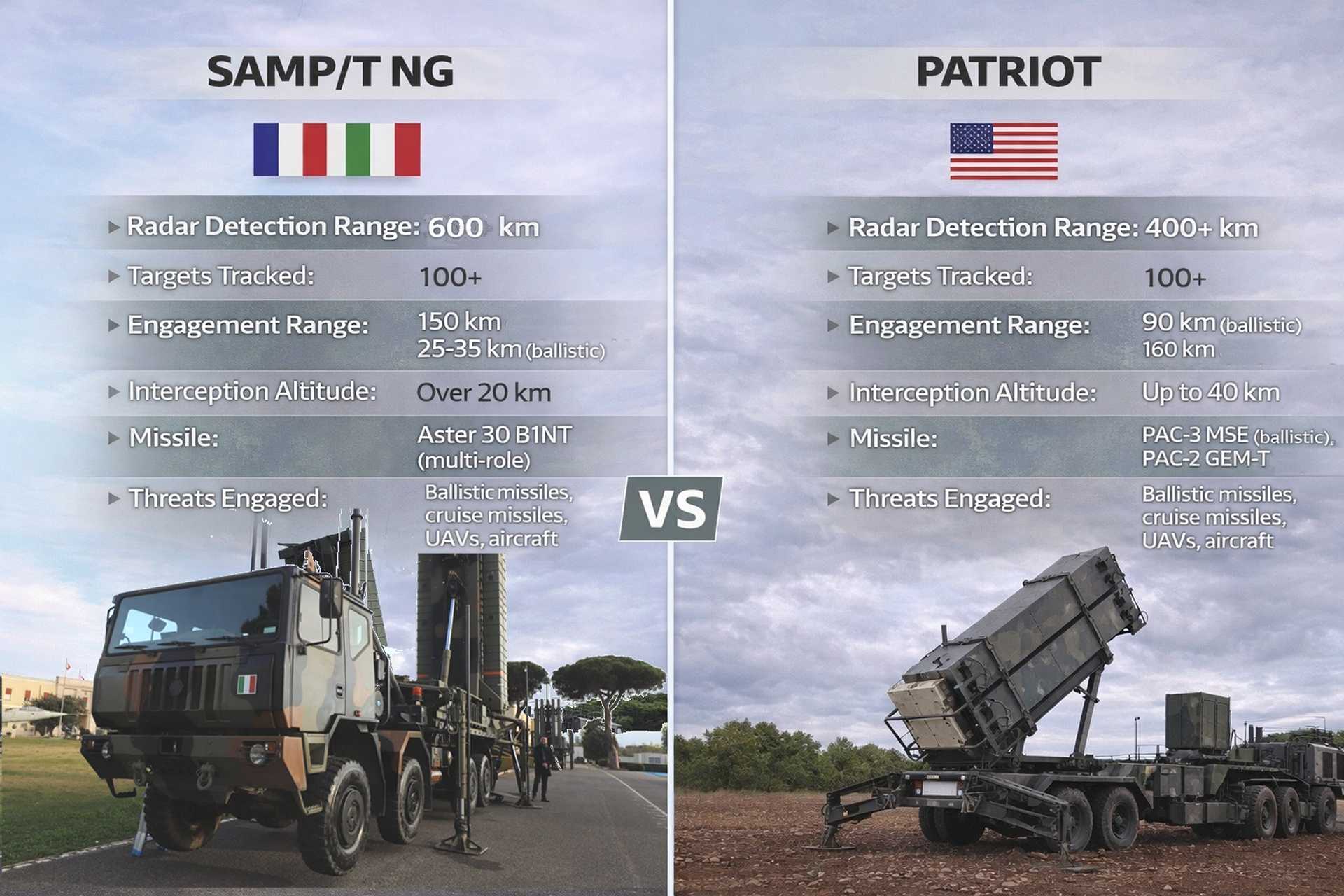 {loadposition bannertop}{loadposition sidebarpub}
Europe’s SAMP/T NG air defense system is positioning itself as a serious challenger to the U.S. Patriot, offering advanced protection against ballistic missiles, cruise missiles, aircraft, and drones. Developed by the Franco-Italian Eurosam consortium, the system combines next-generation radar with upgraded interceptors to deliver performance aligned with the most modern Patriot variants.
Beyond technical parity, SAMP/T NG marks a strategic shift for Europe, reducing reliance on U.S. systems while strengthening sovereign defense capabilities. As demand for integrated air and missile defense accelerates, the program underscores Europe’s push to secure its own skies with domestically controlled, high-end solutions.
Read also: Ukraine to Combat-Test SAMP/T NG Air Defense Against Russian Ballistic Missiles in 2026SAMP/T NG and Patriot air defense systems are compared side by side, highlighting differences in radar coverage, missile performance, and ballistic missile interception capability as Europe advances a sovereign alternative to the U.S. standard. (Picture source: Editing Army Recognition Group)
At the core of the Italy/France SAMP/T NG is a fully digital AESA radar architecture built around the Thales Ground Fire 300 or Leonardo Kronos Grand Mobile High Power radar. These systems provide native 360 degree coverage without mechanical repositioning, a key advantage in scenarios involving attacks from multiple directions. Detection ranges are assessed at approximately 350 km or more for large aerial targets, with reduced performance against low observable or very small threats. The system is designed to track well over 100 targets simultaneously and guide multiple interceptors in parallel, allowing it to maintain effectiveness during saturation attacks.
By comparison, the U.S. Patriot air defense missile system has undergone a major radar evolution with the introduction of the LTAMDS radar, replacing older sector scanning systems such as the AN MPQ 65. LTAMDS also delivers full 360 degree coverage and is assessed to detect targets beyond 400 km depending on altitude and radar cross section, with a tracking capacity exceeding 100 targets. However, many Patriot systems in current service still rely on legacy sector-scanning radars, which can reduce effectiveness against coordinated multi-axis attacks unless deployed in optimized configurations.
Missile performance highlights a fundamental difference in system architecture. SAMP/T NG relies on a single interceptor, the Aster 30 B1NT, designed to handle both aerodynamic and ballistic threats. Against aircraft and cruise missiles, the engagement range is typically around 120 to 150 km. Against ballistic missiles, the effective interception range is shorter, generally estimated between 25 and 35 km, with interception altitudes above 20 km. The missile combines an active Ka-band seeker with high agility, enabling engagement of maneuvering targets, including supersonic cruise missiles and short- to medium-range ballistic missiles.
The Patriot system uses a dual missile approach. The PAC 2 GEM T provides long range engagement against aircraft with ranges up to approximately 160 km but has limited capability against modern ballistic threats. The PAC-3 MSE interceptor is optimized for ballistic missile defense and uses hit-to-kill technology. Its engagement range is typically between 60 and 100 km, depending on the engagement geometry, with interception altitudes estimated at 30-40 km. This gives Patriot a stronger capability against higher altitude and more demanding ballistic trajectories.
In terms of threat coverage, both systems are capable of engaging aircraft, UAVs, cruise missiles, and short to medium range ballistic missiles. Patriot has demonstrated this capability extensively in combat, including intercepting tactical ballistic and cruise missiles in real operational environments. SAMP/T has also seen operational deployment, including recent use in Ukraine, but the NG configuration with the B1NT interceptor and new radar has not yet been validated in combat conditions.
Mobility and deployment concepts further differentiate the systems. SAMP/T NG is designed for rapid deployment, reduced crew requirements, and high mobility, enabling flexible positioning and quick redeployment. This makes it particularly suitable for distributed defense concepts, where systems must frequently relocate to avoid detection and targeting. Patriot systems are generally heavier and require more logistical support, but benefit from a highly mature deployment doctrine and extensive global sustainment infrastructure.
From an operational standpoint, SAMP/T NG presents a strong solution for nations seeking flexibility and simplified force structure. The use of a single interceptor allows operators to engage any target without pre-planning missile allocation, a critical advantage in fast-evolving engagements involving mixed-threat salvos. Its full 360 degree radar coverage as a baseline capability also ensures consistent protection without requiring multiple radar orientations, improving survivability against complex attack profiles.
Patriot, on the other hand, offers a higher level of specialization and depth in ballistic missile defense. The PAC 3 MSE interceptor provides greater interception altitude and a direct hit to kill mechanism, which significantly increases lethality against ballistic threats, especially those with higher speeds or more complex trajectories. This makes Patriot particularly effective for protecting high-value assets against advanced missile threats, including quasi-ballistic or maneuvering systems.
Another decisive factor is combat validation and network integration. Patriot has decades of operational use, extensive interoperability within U.S. and allied forces, and continuous upgrades integrated into broader architectures such as integrated air and missile defense networks. This gives it a clear advantage in terms of reliability, doctrine maturity, and immediate readiness. SAMP/T NG, while technologically advanced, is still in the process of building that same level of operational credibility.
Industrial and strategic considerations also influence system selection. SAMP/T NG supports European defense sovereignty, strengthens the continental industrial base, and reduces dependence on external suppliers. This is particularly relevant for European nations seeking greater autonomy in critical defense capabilities. Patriot, in contrast, benefits from strong U.S. government support, established export mechanisms, and a large user community, which facilitates interoperability and long term sustainment.
Ultimately, SAMP/T NG can be seen as a highly modern, flexible, and mobile system optimized for multi-threat environments and distributed operations, offering strong performance with simplified logistics. Patriot remains a benchmark system with superior ballistic missile interception performance, proven combat effectiveness, and deep integration into allied defense structures. As both systems continue to evolve, the choice between them reflects not only technical considerations but also strategic priorities, including autonomy, alliance alignment, and the nature of the threats each nation expects to face.
Written by Alain Servaes – Chief Editor, Army Recognition Group
Alain Servaes is a former infantry non-commissioned officer and the founder of Army Recognition. With over 20 years in defense journalism, he provides expert analysis on military equipment, NATO operations, and the global defense industry.
-
Iran Shahed-136 vs US LUCAS: Mass Drone Strikes Redefine Warfare in US-Iran Conflict
 {loadposition bannertop}{loadposition sidebarpub}
Iran’s Shahed-136 and the U.S.-developed FLM-136 LUCAS highlight a growing head-to-head shift in modern warfare, as recent combat in Operation Epic Fury exposed how both systems are shaping the battlefield through mass drone and missile attacks that challenge traditional air defenses.
The comparison underscores a decisive move toward saturation warfare, where success depends on affordability, range, and volume rather than advanced platforms alone. Iran’s combat-proven use of the Shahed-136 across multiple theaters contrasts with the U.S. push toward modular, networked systems like LUCAS, signaling an emerging competition defined by scale, persistence, and cost-efficient strike power.
Read also:U.S. Conducts First Combat Use of LUCAS Kamikaze Drone During Operation Epic Fury Against IranComparative view of Iran’s Shahed-136 and U.S. FLM-136 LUCAS loitering munitions, highlighting design similarities, payload differences, and evolving roles in the U.S.–Iran conflict, where low-cost drone warfare is reshaping strike operations. (Picture source: Army Recognition Group)
The comparison gained immediate battlefield relevance in early 2026 following the first combat deployment of LUCAS by U.S. forces during Operation Epic Fury against Iranian targets, marking a turning point in Washington’s adoption of attritable drone strike capabilities. Simultaneously, Iranian Shahed-136 systems continue to be used in persistent attacks against U.S. positions and regional infrastructure, confirming their maturity and effectiveness in operational environments.
From a design standpoint, both loitering munitions show a high degree of convergence. The FLM-136 LUCAS closely replicates the aerodynamic architecture of the Shahed-136, featuring a delta-wing configuration with wingtip vertical stabilizers and a blended fuselage. This layout is optimized for long-endurance missions while maintaining structural simplicity, enabling rapid production and scalability.
???????????????? The U.S. copied the Iranian Shahed-136 drone and turned it into the “Lucas” because the original design is brutally effective for the price, $35,000 vs $2.5 million for a single Tomahawk missile.
— Mario Nawfal (@MarioNawfal) March 18, 2026
Iran nailed the basics: simple airframe, basic guidance, and a warhead that… https://t.co/rVqJOAd8L8 pic.twitter.com/hEFMyD4HsT
Both systems employ a rear-mounted pusher propeller engine, a configuration that reduces frontal infrared signature and complicates detection by short-range air defense systems. This design also improves aerodynamic efficiency by allowing a streamlined nose section, which contributes to extended operational range in contested environments.
Despite these similarities, important technical differences define their respective combat roles. The Shahed-136 is larger and optimized for maximum destructive effect, carrying a warhead typically estimated between 30 and 50 kg, with some variants reaching higher payloads. It is designed for strikes against fixed, high-value targets such as infrastructure and military facilities, where its payload and long range provide strategic impact.
In contrast, the FLM-136 LUCAS carries a smaller payload estimated between 18 and 20 kg, reflecting a different operational philosophy. Rather than focusing solely on destructive power, LUCAS is designed for modularity and adaptability. The platform can support multiple mission types, including strike, intelligence support, and communications relay, allowing integration into a broader networked battlespace.
Guidance systems further differentiate the two platforms. The Shahed-136 relies primarily on pre-programmed GPS and inertial navigation, making it highly effective for planned long-range strikes but limiting flexibility once launched. LUCAS, by comparison, is designed with more advanced communication architecture, enabling potential in-flight retargeting and integration with U.S. command and control networks, significantly enhancing responsiveness and coordination.
Range performance reflects differing strategic priorities. The Shahed-136 offers an estimated range of up to 2,000 km, allowing Iran to conduct deep strikes across the region. LUCAS operates within an estimated range of 800 to 1,500 km depending on configuration, balancing endurance with payload flexibility and system integration.
Combat experience highlights the maturity gap between the two systems. The Shahed-136 has been extensively used in Ukraine and across the Middle East, where it has demonstrated effectiveness in large-scale saturation attacks, particularly against critical infrastructure. Its ability to overwhelm air defenses through volume has forced opponents to expend significantly more expensive interceptors, creating a persistent cost imbalance.
LUCAS represents a rapid U.S. response to these battlefield realities. Its initial combat use focused on targeting Iranian air defense systems, command nodes, and drone launch infrastructure, indicating its role not only as a strike platform but also as a counter-force tool aimed at degrading enemy drone capabilities at their source.
Cost remains central to the effectiveness of both systems. The Shahed-136 is estimated to cost between €20,000 and €50,000 per unit, enabling mass deployment and sustained use. LUCAS, with an estimated cost of €30,000 to €35,000, aligns closely with this economic model while offering greater flexibility and integration potential.
In the context of the U.S.–Iran conflict, the Shahed-136 embodies a doctrine centered on volume and persistence, using large numbers of drones to overwhelm defenses and impose economic pressure. The U.S. approach with LUCAS reflects a more network-centric model, where affordability is combined with connectivity and multi-role capability to enhance operational effectiveness.
This comparison underscores a broader transformation in warfare. Low-cost loitering munitions have become central to modern military operations, shifting the balance from platform superiority to production capacity, integration, and sustainability. The competition between Shahed-136 and LUCAS illustrates how both sides are adapting to this reality, shaping the future of airpower through mass, cost-efficiency, and evolving operational concepts.
The growing competition between Iranian Shahed-136 and U.S. LUCAS signals a fundamental shift in warfare, where victory is no longer defined by technological superiority alone, but by the ability to produce, deploy, and sustain large volumes of low-cost, networked strike systems at scale.
Written by Alain Servaes – Chief Editor, Army Recognition Group
Alain Servaes is a former infantry non-commissioned officer and the founder of Army Recognition. With over 20 years in defense journalism, he provides expert analysis on military equipment, NATO operations, and the global defense industry.
-
What Is LUCAS US Loitering Munition Makes Combat Debut against Iran in Operation Epic Fury
 {loadposition bannertop}{loadposition sidebarpub}
U.S. forces have deployed the LUCAS loitering munition, built by SpektreWork, and designated by the manufacturer as FLM 136, during Operation Epic Fury, targeting Iranian military infrastructure. The move signals a deeper shift toward domestically produced, attritable unmanned strike capabilities that can operate in contested airspace without risking manned aircraft.
U.S. forces have fielded the LUCAS loitering munition, manufactured domestically by the U.S. Company SpektreWorks and designated by the manufacturer as FLM 136, during Operation Epic Fury to enhance long-range precision strike options against Iranian military infrastructure. The loitering munition’s operational debut underscores the United States’ growing emphasis on attritable unmanned strike platforms designed to penetrate layered air defenses while limiting exposure of manned aircraft in one of the most heavily defended regions in the Middle East. By relying on U.S.-produced loitering munitions with modular payload flexibility and extended loiter capability, commanders gain a scalable tool for time-sensitive targeting without committing high-value crewed assets.
Follow Army Recognition on Google News at this linkThe U.S.-manufactured LUCAS FLM 136 loitering munition is a long-range, six-hour-endurance unmanned strike drone built by SpektreWorks, capable of carrying an 18 kg (40 lb) payload over 350 nautical miles (648 km) to conduct precision one-way attacks against air defenses, missile launchers, and hardened military targets. (Picture source: U.S. Department of War)
Operation Epic Fury, launched jointly by the United States and Israel in late February 2026, is designed to degrade Iran’s integrated air defense systems, ballistic missile forces, and command and control architecture. The campaign integrates stealth aircraft, stand-off cruise missiles, electronic warfare, and unmanned systems in synchronized strike cycles aimed at fracturing Tehran’s defensive depth. Within this framework, the FLM 136 LUCAS serves as a persistent loiter-and-strike asset capable of identifying, tracking, and engaging time-sensitive targets deep inside defended territory while compressing the sensor-to-shooter chain.
The operational groundwork for LUCAS employment in the region predates Epic Fury. On December 16, 2025, a Low-cost Unmanned Combat Attack System successfully launched from the flight deck of the Independence-class littoral combat ship USS Santa Barbara (LCS 32) while operating in the Arabian Gulf. The drone was operated by U.S. Naval Forces Central Command’s Task Force 59. He served with Task Force Scorpion Strike, a one-way attack-drone squadron deployed to the Middle East to enhance regional security and deterrence. That maritime launch demonstration confirmed the platform’s flexibility for sea-based operations and its compatibility with distributed naval strike concepts, directly informing its subsequent employment in the current campaign.
The platform, known operationally as LUCAS, is commercially designated FLM 136 by SpektreWorks, an Arizona-based U.S. defense company specializing in unmanned combat systems. The aircraft measures 3 meters (9.8 ft) in length with a wingspan of 2.5 meters (8.2 ft). It has an empty weight of 31.75 kilograms (70 lb) and a maximum takeoff weight of 81.5 kilograms (180 lb), allowing for significant fuel carriage and modular payload integration within a compact, transportable airframe.
According to manufacturer performance data, the FLM 136 offers approximately 6 hours of endurance, powered by a 215 cc carbureted engine. Cruise speed is rated at 102 km/h (55 knots), with a dash speed of 185 km/h (100 knots) for rapid repositioning or terminal attack. The operational ceiling exceeds 3,000 meters density altitude (10,000 ft DA), placing it above the engagement envelope of some short-range air defense systems while remaining below traditional medium-altitude UAV bands. Under unrestricted command and control conditions, the platform has a published range of 350 nautical miles, equivalent to approximately 648 kilometers (403 miles), confirming its classification as a long-range loitering system capable of deep-strike from standoff launch points.
Launch is conducted via a pneumatic rail system or rocket-assisted takeoff, eliminating the need for runways and enabling deployment from austere forward positions or naval decks. The system is described as fully autonomous from takeoff to landing, with a landing distance of approximately 30.5 meters (100 ft) in recoverable configurations. SpektreWorks emphasizes an open payload architecture and small operational footprint, allowing rapid reconfiguration for strike, surveillance, or threat-emulation roles.
In strike configuration, the FLM 136 can carry a maximum payload of 18 kilograms (40 lb). This payload class supports high-explosive fragmentation or shaped-charge warheads capable of neutralizing radar arrays, mobile surface-to-air missile launchers, ballistic missile transporter erector launchers, fuel depots, and reinforced command facilities. During terminal engagement, the aircraft transitions from loiter to a steep dive profile, combining explosive yield with kinetic energy to maximize structural penetration and destructive effect against hardened or relocatable military targets.
Within Operation Epic Fury, LUCAS has been employed to suppress and attrit Iranian air defense nodes that complicate manned air operations. Its six-hour loiter window enables persistent surveillance over suspected missile deployment corridors, allowing operators to wait for identification before committing to strike. This flexibility is critical against mobile systems that can relocate between traditional strike cycles. Compared to high-cost stand-off cruise missiles, the FLM 136's lower unit cost enables sustained operational tempo without rapidly depleting strategic munition stockpiles.
Operationally, the LUCAS loitering munition strengthens distributed lethality by providing commanders with a deep-strike option extending beyond traditional artillery and tactical aviation ranges. It's nearly 650-kilometer (350 nautical mile) reach under controlled conditions, which places critical infrastructure at risk from outside heavily defended airspace. At the same time, autonomous navigation and inertial backup systems mitigate the impact of electronic warfare interference.
Strategically, the integration of the SpektreWorks-built FLM 136 into Epic Fury illustrates a broader evolution in U.S. strike doctrine. Rather than relying exclusively on high-end aircraft and expensive cruise missiles, the Pentagon is increasingly incorporating scalable, domestically manufactured loitering munitions capable of imposing persistent pressure over time. By combining six-hour endurance, a modular payload capacity of 18 kilograms (40 lb), autonomous flight capability, and extended operational reach of approximately 650 kilometers (350 nautical miles), LUCAS represents a structurally different approach to deep precision strike.
As Epic Fury continues, the battlefield performance of the FLM 136 LUCAS will serve as a key indicator of how effectively long-range loitering munitions can complement traditional airpower in high-intensity state-on-state conflict. Its deployment from both land-based launchers and naval platforms such as USS Santa Barbara demonstrates the system’s adaptability across domains, reinforcing its role in shaping the future architecture of U.S. distributed strike operations.
Written by Alain Servaes – Chief Editor, Army Recognition Group
Alain Servaes is a former infantry non-commissioned officer and the founder of Army Recognition. With over 20 years in defense journalism, he provides expert analysis on military equipment, NATO operations, and the global defense industry.
-
Germany Integrates ENFORCER Anti-Tank Missile on GEREON UGV ground robot for Robotic Anti-Armor Strike
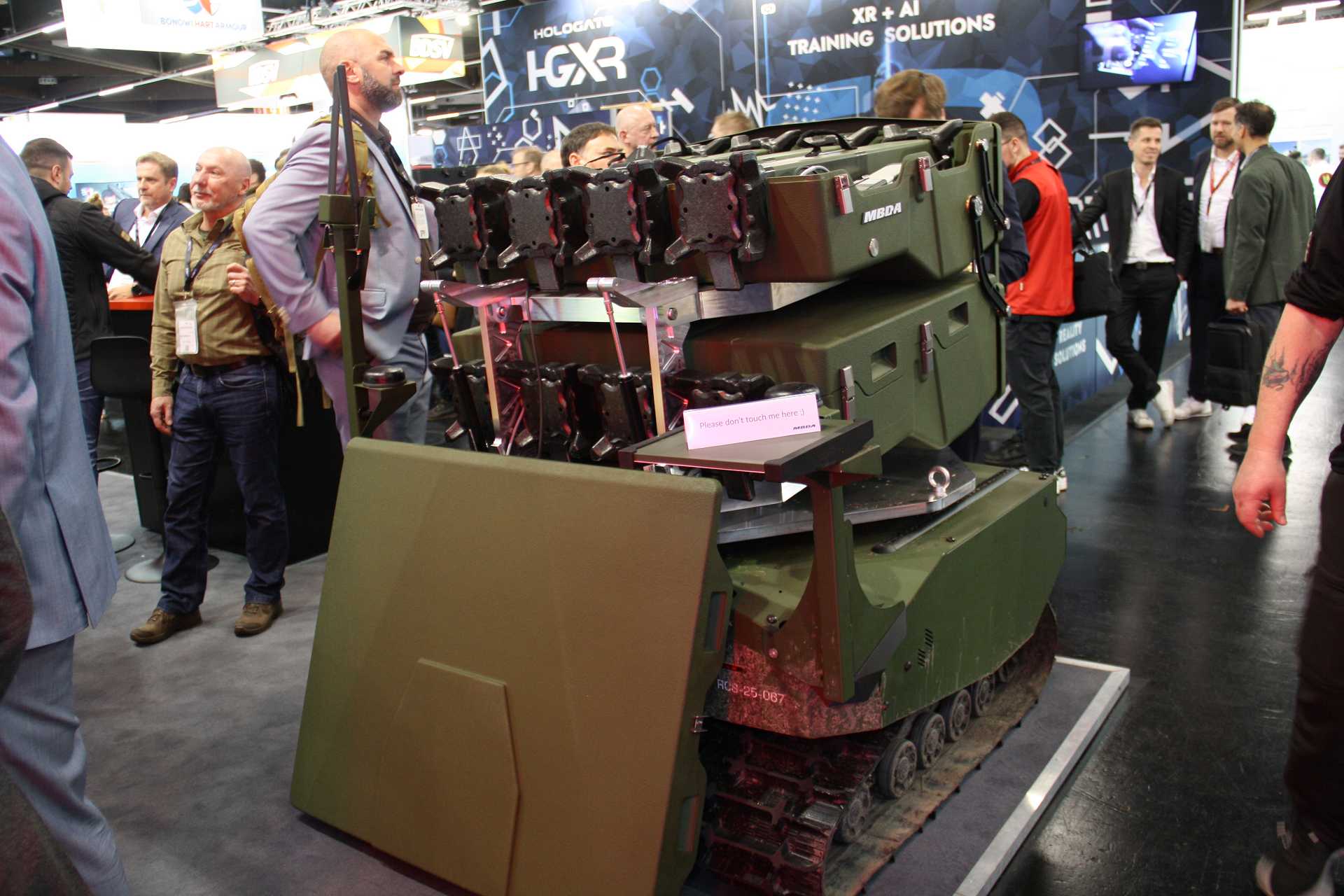 {loadposition bannertop}{loadposition sidebarpub}
ARX Robotics and MBDA Deutschland have mounted the ENFORCER precision-guided missile onto the GEREON unmanned ground vehicle, unveiling the four-launcher configuration at Enforce TAC 2026. The integration signals growing momentum behind distributed, robotic anti-armor systems designed to reduce infantry exposure while extending precision strike reach at the tactical edge.
ARX Robotics and MBDA Deutschland have integrated the ENFORCER precision-guided missile onto the GEREON unmanned ground vehicle and publicly presented the new configuration at Enforce TAC 2026. The demonstrator featured a GEREON UGV equipped with four ready-to-fire ENFORCER launchers, creating a remotely operated, mobile strike platform capable of engaging armored vehicles and fortified positions. ENFORCER, a lightweight precision missile designed for dismounted forces, offers fire-and-forget capability and day or night targeting through electro-optical guidance. By pairing the missile with an unmanned ground system, the companies aim to push precision firepower forward without exposing infantry to direct enemy contact, aligning with broader European and NATO efforts to expand robotic combat support at the tactical edge.
Follow Army Recognition on Google News at this linkGEREON RCS unmanned ground vehicle equipped with four MBDA ENFORCER precision-guided missile launchers displayed at Enforce TAC 2026, highlighting Germany’s push toward modular robotic strike capabilities. (Picture source: Army Recognition Group)
The pairing combines MBDA’s lightweight fire-and-forget missile system with ARX Robotics’ modular unmanned ground platform, effectively transforming the GEREON from a reconnaissance and logistics robot into a precision strike asset. This integration signals a broader shift in European land warfare concepts toward robotic lethality, where unmanned systems extend the reach of infantry units while reducing vulnerability to enemy fire, drones, and ambushes.
The ENFORCER missile, developed by MBDA Deutschland, is a short-range precision-guided effector designed for dismounted operations. With a range of approximately 2 km and an electro-optical/infrared seeker, the missile provides fire-and-forget capability against light armored vehicles, fortified positions, and high-value point targets. Its compact design allows a complete round to weigh roughly 7 kg, enabling carriage by individual soldiers or integration onto lightweight platforms such as the GEREON. The system uses a soft-launch mechanism, reducing backblast and enabling safe deployment from confined or urban environments.
Mounted on the GEREON, four ENFORCER launchers significantly enhance the platform’s combat persistence. Instead of a single infantry operator carrying limited ammunition, a remotely controlled vehicle can maneuver forward under cover, designate targets, and engage multiple threats in rapid succession. The robotic carrier can operate in high-risk zones such as contested urban corridors, wooded terrain, or forward defensive positions, where exposure to anti-tank guided missiles, loitering munitions, and small arms fire presents severe risks to dismounted troops.
The GEREON RCS is ARX Robotics’ medium-sized, battlefield-proven, autonomous, and modular unmanned ground system designed to operate across reconnaissance, logistics, and combat roles. It supports both manual and autonomous modes of operation, allowing commanders to switch between direct teleoperation and pre-programmed or semi-autonomous mission profiles depending on tactical requirements. The vehicle can be controlled at ranges of up to 4 km, providing standoff capability while maintaining real-time responsiveness in dynamic engagements.
Equipped with integrated thermal night vision cameras, the platform is optimized for day and night operations, enhancing target acquisition and situational awareness in low-visibility or contested environments. The GEREON reaches a maximum speed of 15 km/h and offers an operational range of up to 40 km. With a charging time of approximately 2.5 hours and an operating endurance of up to 72 hours, depending on mission configuration, the system is designed for sustained forward deployment. Its payload capacity of up to 500 kg enables the integration of heavy mission modules, including missile launchers, sensor masts, electronic warfare kits, or resupply cargo. The vehicle’s compatibility with the ARX Modular System architecture ensures rapid reconfiguration for different operational roles without structural modification.
Operationally, the ENFORCER-armed GEREON aligns with NATO’s growing emphasis on distributed operations and manned-unmanned teaming. Infantry platoons equipped with robotic strike elements can conduct forward screening, ambush operations, and defensive blocking actions with reduced personnel exposure. In defensive scenarios, a GEREON equipped with ENFORCER missiles could serve as a concealed overwatch asset, positioned in defilade and remotely activated to engage advancing armor or fortified positions. In offensive urban combat, the system enables precise engagement of strongpoints before troops enter high-threat structures.
The integration also reflects a broader European industrial trend to accelerate battlefield robotics and modular missile applications in response to lessons from Ukraine and other recent conflicts. The widespread use of drones and loitering munitions has underscored the importance of dispersal, mobility, and rapid precision strike capability. Ground robots armed with precision missiles offer a complementary capability to aerial drones by maintaining a persistent ground presence, carrying heavier payloads, and operating in GPS-denied or electronically contested environments.
From an industrial and strategic standpoint, the ARX-MBDA collaboration positions both companies within a competitive European market focused on autonomous and semi-autonomous land combat solutions. Germany’s modernization trajectory under its expanded defense budget framework has placed renewed emphasis on force protection, digitization, and lethality enhancements for mechanized and infantry formations. Integrating domestically developed precision munitions onto robotic platforms supports sovereign capability objectives while potentially opening export pathways among NATO and partner nations seeking scalable unmanned combat systems.
While the Enforce TAC 2026 presentation demonstrated a technology integration rather than a confirmed procurement program, the concept underscores a tangible evolution in how short-range precision missiles may be deployed. Instead of being carried solely by soldiers, lightweight effectors like ENFORCER can now serve as modular strike packages on unmanned carriers, enabling distributed lethality across smaller tactical units.
The next phase will likely focus on operational testing, command-and-control integration within digitized battlefield networks, and survivability assessment in contested electromagnetic environments. If successfully matured, the GEREON-ENFORCER pairing could serve as a template for future European robotic combat systems, reinforcing a doctrinal shift toward unmanned precision engagement at the platoon and company levels.
Written by Alain Servaes – Chief Editor, Army Recognition Group
Alain Servaes is a former infantry non-commissioned officer and the founder of Army Recognition. With over 20 years in defense journalism, he provides expert analysis on military equipment, NATO operations, and the global defense industry.
-
Germany Reveals Ziesel Unmanned Anti-Tank Vehicle Equipped with Spike LR2 Missiles
 {loadposition bannertop}{loadposition sidebarpub}
German Company Diehl Defence has introduced a compact unmanned ground vehicle based on the tracked Ziesel platform, armed with Spike LR2 anti-tank guided missiles and designed for forward infantry deployment. The system offers European and NATO forces a quiet, precision anti-armor capability that reduces soldier exposure while expanding battlefield reach in complex terrain.
German defense firm Diehl Defence has unveiled a compact unmanned ground combat vehicle integrating the lightweight tracked Ziesel UGV (Unmanned Ground Vehicle) with a two-round Spike LR2 anti-tank guided missile launcher, presenting at Enforce Tac 2026 in Germany. Electrically powered for low acoustic and thermal signatures, the robotic vehicle is designed to move with dismounted infantry through urban streets, forests, and rugged terrain, delivering precision anti-armor fire while keeping operators under cover.
Follow Army Recognition on Google News at this linkGerman Company Diehl Defence Ziesel's unmanned ground vehicle, armed with a twin Spike LR2 anti-tank missile launcher, was displayed at Enforce Tac 2026, showcasing a compact robotic solution for infantry anti-armor operations. (Picture source: Army Recognition Group)
The Spike LR2 anti-tank missile, with a range of up to 5.5 km depending on the launch profile and featuring fire-and-forget and fire-and-observe modes, gives small units a stand-off strike capability previously limited to larger vehicles. By pairing mobility, remote operation, and a proven missile system, Diehl positions the platform as a force multiplier for modern ground combat operations.
The concept integrates the Mattro-built Ziesel platform into a dedicated anti-tank configuration, transforming what was originally designed as a logistics and support carrier into a lethal remote weapon system. Diehl Defence’s integration of the Israeli-developed Spike LR2 missile positions the vehicle as a high-value ambush and defensive asset tailored for urban, forested, and restrictive environments where traditional armored vehicles struggle to maneuver. The choice of the LR2 variant reflects a deliberate focus on extended engagement range, enhanced penetration performance, and improved digital connectivity compared to earlier Spike generations.
Technically, the Ziesel platform measures approximately 1.6 meters in length and 1.3 meters in width, with a base weight of 380 kilograms. Despite its compact size, it can support a payload exceeding 500 kilograms, enabling it to carry a stabilized launcher module, electro-optical targeting systems, and associated command-and-control equipment. Powered by interchangeable 11 kWh lithium-ion battery packs, the vehicle operates entirely electrically, eliminating engine heat signatures and acoustic noise typically associated with internal combustion systems. This configuration enables a top speed of up to 20 km per hour while preserving a low observable profile during reconnaissance or ambush positioning.
The integration of the Spike LR2 significantly elevates the platform’s lethality. The Spike LR2 is the latest evolution of the long-range member of the Spike missile family, developed by Rafael Advanced Defense Systems and produced in Europe through partnerships that include Diehl Defence. It is a fifth-generation electro-optically guided anti-tank missile designed for engaging armored vehicles, fortified positions, and high-value targets. In its ground-launched configuration, the missile offers a maximum range of 5.5 km while maintaining compatibility with existing Spike LR launch units via digital upgrades.
The missile uses a dual-mode seeker combining uncooled infrared imaging and a high-resolution day camera, enabling true fire-and-forget capability and fire-observe-update functionality via a fiber-optic data link. This allows the operator to adjust the aimpoint after launch, switch targets mid-flight, or abort the mission if necessary. The Spike LR2 incorporates an improved tandem high-explosive anti-tank warhead capable of defeating modern main battle tank armor protected by explosive reactive armor and advanced composite protection systems. In addition to its primary anti-armor role, the missile can be fitted with a multi-purpose warhead optimized for use against bunkers, urban structures, and light armored vehicles, expanding mission flexibility for infantry units.
When mounted on an unmanned platform, the missile’s full capability can be used without risking exposure of infantry during launch or post-launch tracking. The remote operator can remain under cover while the UGV positions itself forward, designates targets through its onboard electro-optical suite, and conducts engagements from concealed firing points. This configuration enhances survivability for both personnel and the launch system, particularly in environments saturated with counter-sniper, artillery, or drone surveillance threats.
Operationally, the system is tailored for distributed infantry formations operating in contested environments. Its small footprint enables it to accompany troops through dense wooded terrain, narrow urban streets, and restrictive mountain passes where heavier vehicles cannot deploy. The electric propulsion system reduces acoustic and thermal detection risk, improving survivability in counter-reconnaissance scenarios. In defensive operations, multiple units could be prepositioned along likely armored avenues of approach, creating concealed anti-armor kill zones that are controlled remotely from protected positions.
From a doctrinal perspective, this development reflects a broader shift toward robotic combat support systems within NATO forces. Lightweight uncrewed ground vehicles are increasingly viewed as force multipliers that enhance lethality while preserving the workforce. For light infantry, airborne units, and special operations forces lacking organic armored firepower, a robotic missile carrier offers a cost-effective way to counter mechanized threats without deploying heavy anti-tank vehicles.
Industrial implications are equally significant. By combining a commercially developed electric UGV platform with a proven European-produced missile system, Diehl Defence demonstrates a modular approach to ground robotics that could reduce development timelines and procurement costs. The system’s relatively low weight also suggests compatibility with rotary-wing transport, enabling rapid air deployment in expeditionary operations. This could prove attractive for rapid reaction forces seeking scalable anti-armor capability without expanding armored fleet footprints.
Strategically, the emergence of silent robotic anti-tank platforms aligns with lessons drawn from modern conflicts where dispersed units equipped with precision-guided munitions have successfully neutralized armored formations. The integration of advanced missiles onto unmanned carriers reduces casualty risk while complicating the adversary's targeting cycle. For peer adversaries relying on armored maneuver doctrine, such systems introduce new uncertainties in reconnaissance and counter-mobility planning.
Looking ahead, the effectiveness of this platform will depend on its sensor suite integration, secure communications architecture, and resistance to electronic warfare interference. Future iterations could incorporate autonomous navigation, cooperative swarm tactics, and integration into broader battlefield management systems. If adopted at scale, compact missile-armed UGVs like the Diehl configuration may represent an evolutionary step in infantry anti-armor doctrine, shifting the balance between mobility, survivability, and lethality in favor of smaller, networked ground units.
Written by Alain Servaes – Chief Editor, Army Recognition Group
Alain Servaes is a former infantry non-commissioned officer and the founder of Army Recognition. With over 20 years in defense journalism, he provides expert analysis on military equipment, NATO operations, and the global defense industry.
-
Northrop Grumman Proposes Cannon-Based Air Defense System for U.S. Army Drone Threat
 {loadposition bannertop}{loadposition sidebarpub}
U.S. Company Northrop Grumman has proposed a Cannon-Based Air Defense system designed to provide the U.S. Army with scalable terminal protection against mass drone and subsonic cruise missile attacks. The concept centers on guided medium-caliber ammunition tied into layered sensors and battle management networks, aiming to lower interception costs while sustaining short-range air defense capacity.
U.S. Company Northrop Grumman is advancing the Cannon-Based Air Defense (CBAD) concept as a scalable solution to counter the growing threat of drone swarms and low-flying cruise missiles targeting U.S. Army formations. The system integrates guided medium-caliber cannon ammunition with layered radar and electro-optical sensors, all linked through battle management command and control networks to enable coordinated terminal defense. By relying on precision-guided projectiles rather than high-cost interceptors, CBAD is intended to deliver sustained short-range air defense against large-volume, low-cost aerial raids. The proposal reflects Army concerns that current missile-based defenses may be financially and logistically strained in high-intensity conflicts.
Follow Army Recognition on Google News at this linkNorthrop Grumman’s Cannon-Based Air Defense concept integrates medium-caliber automatic cannons with guided ammunition, advanced sensors, and battle management systems to provide scalable terminal defense against drone swarms and subsonic cruise missiles. (Picture source: Northrop Grumann)
The CBAD (Cannon-Based Air Defense) is structured not as a standalone gun, but as an integrated defensive architecture combining battle-proven automatic cannons, advanced ammunition, surveillance radars, electro-optical trackers, and networked battle management systems. It is designed to augment existing U.S. Army air defense layers, reinforcing the terminal engagement zone that protects air bases, logistics hubs, maneuver brigades, and critical infrastructure once outer missile defenses are saturated or bypassed.
The enabling technology is guided ammunition. Unlike conventional programmable airburst rounds that rely on timed detonation, guided cannon projectiles are designed to execute in-flight trajectory corrections toward aerial targets. Fired in small salvos, these munitions increase effective engagement range and improve the probability of kill against maneuvering unmanned aircraft systems and low-flying cruise missiles. The concept transforms the cannon from a purely ballistic area weapon into a maneuver-capable short-range interceptor.
While Northrop Grumman has not publicly released full performance data for CBAD, the concept leverages medium-caliber cannons such as the Bushmaster family. In U.S. Army service, the XM813 30 mm Bushmaster chain gun mounted on Stryker M-SHORAD vehicles has a cyclic rate of fire of approximately 200 rounds per minute, with effective air defense engagement ranges typically cited around 2 to 3 km, depending on ammunition type. Larger 35 mm systems, widely used in European air defense, can extend effective range beyond 4 km and deliver higher fragment mass per round.
For comparison, Germany’s Rheinmetall Skynex air defense system is among the most mature modern cannon-based air defense architectures currently in service. Skynex uses the Oerlikon Revolver Gun Mk3 in 35 mm caliber with a rate of fire of up to 1,000 rounds per minute. Its Advanced Hit Efficiency And Destruction (AHEAD) ammunition releases a cloud of pre-formed tungsten sub-projectiles in front of the target, increasing lethality against drones and rockets. The effective engagement range for the 35 mm system is typically around 4 kilometers against aerial threats. Skynex integrates X-TAR3D search radars, tracking sensors, and a modular command-and-control system that coordinates multiple gun units within a networked defense grid.
The key distinction between CBAD and Skynex lies in ammunition philosophy. Skynex relies on programmable airburst munitions that create dense fragmentation patterns along a predicted intercept point. CBAD, by contrast, emphasizes guided ammunition capable of multiple in-flight maneuvers, effectively narrowing the gap between traditional cannon rounds and missile interceptors. If fully matured, guided cannon rounds could extend engagement envelopes and improve the single-shot probability of kill beyond what programmable airburst alone can achieve.
From the Army Recognition defense analysts’ perspective, CBAD’s primary advantage for the U.S. Army would be economic sustainability and scalability. Missile-based short-range interceptors such as Stinger have engagement ranges of roughly 4 to 8 kilometers, but at significantly higher unit cost. In saturation scenarios involving dozens or hundreds of low-cost drones, missile inventories can be rapidly depleted. Cannon systems, particularly those with high onboard ammunition capacity, offer greater magazine depth and lower cost per engagement, preserving missile stocks for higher-tier threats.
In terms of rate of fire, the 30 mm XM813’s approximate 200 rounds per minute provides controlled engagement suitable for integration on maneuver platforms such as Stryker. By contrast, the 35 mm Oerlikon Revolver Gun’s 1,000 rounds per minute enables dense projectile clouds for base defense scenarios. CBAD’s scalability across calibers suggests it could be adapted to both maneuver and fixed-site defense roles, depending on platform selection.
Operationally, both CBAD and Skynex address the same strategic reality: adversaries are expanding the quantity, variety, and expendability of aerial weapons. Future conflicts are expected to involve significantly larger raid sizes targeting air bases and critical infrastructure. Traditional long-range interceptor missiles remain indispensable for high-performance aircraft and advanced missile threats, but they are not optimized for economically defeating mass-produced drones.
CBAD’s integration with battle management command and control systems aligns with the U.S. Army’s Integrated Air and Missile Defense architecture, enabling sensor-to-shooter connectivity across layered defenses. Skynex similarly operates within a modular networked structure, demonstrating that modern cannon-based systems are no longer standalone guns but digitally integrated defensive nodes.
Strategically, the comparison highlights diverging but complementary approaches. European systems such as Skynex emphasize highly optimized programmable airburst lethality at known ranges, already fielded and combat-proven in counter-drone roles. Northrop Grumman’s CBAD concept advances toward maneuverable guided ammunition that could increase flexibility, extend effective engagement zones, and enhance resilience against agile threats.
For the U.S. Army, the relevance of CBAD lies in restoring credible, scalable terminal defense while addressing the cost-exchange imbalance exposed by drone saturation warfare. Whether adopted formally under that designation or integrated into future short-range air defense modernization efforts, guided cannon-based systems represent a structural evolution in how ground forces defend against mass air threats in high-intensity conflict environments.
Written by Alain Servaes – Chief Editor, Army Recognition Group
Alain Servaes is a former infantry non-commissioned officer and the founder of Army Recognition. With over 20 years in defense journalism, he provides expert analysis on military equipment, NATO operations, and the global defense industry.
-
FN 303 less lethal launcher by FN Herstal features safety oriented design for law enforcement use
 {loadposition bannertop}{loadposition sidebarpub}
Army Recognition’s expert analysis examines the FN 303, developed by the Belgian Company FN Herstal, as a purpose-engineered less-lethal engagement system designed for controlled threat management at distance. The platform highlights how predictable energy transfer and accuracy can reduce injury risk while giving security forces more graduated response options.
According to Army Recognition’s expert assessment, the FN 303, developed by the Belgian Company FN Herstal, plays a distinct role in modern law enforcement and security operations, positioned not as a conventional weapon but as a dedicated force-management platform. Developed to address unarmed or low-level threats at controlled distances, the system prioritizes predictable performance, regulated kinetic energy, and precision engagement as foundational safety elements, aligning with evolving use-of-force doctrines adopted by police and security agencies worldwide.
Follow Army Recognition on Google News at this linkThe FN SMART PROTECTOR® 303T integrates regulated pneumatic propulsion with real-time head detection technology to reduce injury risk during less lethal engagements. (Picture source: Army Recognition Group)
Less lethal solutions are defined by their engineering objectives rather than by intent alone. They are designed to deliver sufficient kinetic effect to temporarily incapacitate or deter aggressive behavior while minimizing the probability of irreversible trauma. This is achieved through strict control of projectile mass, velocity, stabilization, and engagement distance. The underlying principle is to provide an intermediate response option when verbal commands or physical restraint are ineffective, yet where lethal firearms would be disproportionate.
The FN 303 is a less-lethal solution developed around this philosophy since its inception and has accumulated more than two decades of operational use worldwide. Army Recognition analysts note that the system relies on compressed-air propulsion rather than combustion. This pneumatic architecture allows precise regulation of muzzle velocity and eliminates pressure spikes and thermal variability, resulting in highly consistent ballistic performance. Consistency is a critical safety parameter, as unpredictable energy delivery is a primary contributor to unintended injury.
The FN 303 fires proprietary .68 caliber projectiles specifically engineered for controlled impact. These projectiles feature a lightweight body combined with rear stabilization fins that maintain a nose-forward orientation throughout flight. Fin stabilization prevents tumbling and ensures that impact energy is distributed predictably across the target surface. Unlike legacy rubber ball systems, which can behave erratically in flight, the FN 303 projectile design emphasizes repeatability and controlled force application.
Accuracy is central to the FN 303 safety concept. The launcher incorporates a barrel optimized for fin-stabilized ammunition, enabling precise shot placement at distances that provide operators with critical standoff. From a technical standpoint, precision directly contributes to injury reduction by limiting the likelihood of unintended strikes and enabling engagement of approved target zones. In a less lethal system design, accuracy is therefore a safety feature rather than a purely tactical advantage.
From a physics perspective, Army Recognition experts stress that all impact-based less lethal systems operate within unavoidable biomechanical limits. A projectile capable of producing a stopping effect at range inherently carries the potential to cause serious injury if deployed outside defined parameters. At very short distances, reduced time for energy dissipation increases the risk of blunt trauma, regardless of projectile composition. For this reason, minimum engagement distances and prohibited target zones are integral to the safe use of any modern less lethal platform. They are dictated by energy transfer mechanics rather than policy.
Building on extensive operational feedback and safety analysis, FN Herstal introduced the FN SMART PROTECTOR® 303T as an evolution of the FN 303 concept with a focus on actively reducing injury risk. While retaining the proven shoulder-fired FN 303 Tactical architecture and pneumatic propulsion system, the 303T integrates an image processing camera capable of detecting human heads in real time. This technology directly addresses one of the most critical risk factors associated with less-lethal engagements: unintentional impacts on vulnerable anatomical areas under stress.
The FN SMART PROTECTOR® 303T represents a shift from passive safety, based solely on training and procedures, to active safety embedded in the system itself. By identifying high-risk target zones before a shot is released, the platform is designed to drastically reduce the likelihood of accidental head impacts that could result in severe or irreversible injuries. From an engineering standpoint, this integration of digital assistance reflects a new generation of less lethal design focused on compensating for human limitations in chaotic environments.
In addition to real-time risk mitigation, the integrated camera system supports after-action analysis and advanced marksmanship training. Engagement data can be reviewed to reinforce correct use, improve operator proficiency, and strengthen accountability. This dual role enhances both immediate safety and long-term operational discipline, aligning the system with evolving expectations for responsible force management.
Army Recognition’s analysis concludes that the FN 303 and FN SMART PROTECTOR® 303T illustrate the maturity of modern less lethal technology as a specialized engineering field. Through regulated pneumatic propulsion, fin-stabilized projectiles, accuracy-driven design, and real-time digital safety mechanisms, FN Herstal has developed a solution that actively reduces injury risk rather than merely statistically reducing it. Evaluated on technical merit alone, the FN SMART PROTECTOR® 303T sets a new benchmark in safety-oriented less lethal engagement systems, demonstrating how engineering innovation can meaningfully improve outcomes in complex operational scenarios.
Written by Alain Servaes – Chief Editor, Army Recognition Group
Alain Servaes is a former infantry non-commissioned officer and the founder of Army Recognition. With over 20 years in defense journalism, he provides expert analysis on military equipment, NATO operations, and the global defense industry.
-
France and Belgium Study 105mm Gun Variant of French Jaguar 6x6 Combat Vehicle
 {loadposition bannertop}{loadposition sidebarpub}
France and Belgium are examining a joint program to develop a light armored combat vehicle armed with a 105mm gun, derived from the French Jaguar 6x6 platform. If pursued, the project could deepen the bilateral CaMo partnership and provide both armies with a higher-caliber direct fire option that enhances mobility, operational flexibility, and interoperability.
France and Belgium are exploring the possibility of jointly developing a new light armored combat vehicle equipped with a 105mm gun, according to a January 14, 2026, report by the French economic newspaper Les Echos. Jean-Luc Maurange, CEO of Belgian defense company John Cockerill, said discussions are underway at both industrial and governmental levels to study a heavier-armed variant based on the Jaguar 6x6 reconnaissance and combat vehicle already operated by the two countries under the CaMo framework.
Follow Army Recognition on Google News at this linkThe French EBRC Jaguar 6x6 armored reconnaissance vehicle, armed with a 40mm CTA cannon and MMP missiles, forms the backbone of France and Belgium’s CaMo partnership. A potential 105mm-armed variant is now under consideration to boost direct fire capability. (Picture source: Army Recognition Group)
Jean-Luc Maurange, CEO of Belgian defense company John Cockerill, who recently returned to helm John Cockerill following its acquisition of French military vehicle manufacturer ARQUUS, described the project as an “evolutionary step” in European land capability. The envisioned vehicle would retain Jaguar’s mobility, integrated sensors, and battlefield networking capabilities, but replace the current 40mm CTA cannon mounted on the French Jaguar wheeled combat vehicle with a more potent 105mm direct-fire weapon. “It is a way to offer heavier fire support while preserving strategic mobility,” he told Les Echos, suggesting the concept addresses operational demands seen in recent conflicts, where light armored units have encountered more resilient targets in urban and semi-conventional theaters.
John Cockerill Defense, the Belgian firm’s armored systems division, already includes a mature 105mm turret system in its product portfolio. Known as the COCKERILL® 3105, this turret is designed to deliver high-pressure, direct-fire on mobile, air-transportable platforms. It features a fully digital fire control system, hunter-killer capability, day/night thermal optics, and the ability to fire NATO-standard 105mm kinetic and multi-purpose ammunition. Weighing under 3.5 tons and engineered for integration on wheeled and tracked platforms from 18 to 25 tons, the turret was specifically conceived to bridge the gap between reconnaissance vehicles and heavier direct-fire platforms.
The 3105 system can be operated by a two-man crew or remotely, offering flexibility and adaptability. Already integrated on various wheeled vehicles and in serial production, it is a strong candidate for a future Franco-Belgian 105mm Jaguar-based armored vehicle.
The initiative would represent a significant enhancement of the Franco-Belgian armored architecture. It has the potential to provide NATO forces with a flexible, expeditionary platform with sufficient firepower to confront medium-armored threats. Strategically, such a vehicle would complement the French Army’s upcoming VBAE (Véhicule Blindé d’Aide à l’Engagement) reconnaissance vehicle and could fill a niche between light cavalry and main battle tank formations, particularly in hybrid conflict zones or for rapid deployment forces.
This concept also reflects the trend in Europe toward indigenous solutions, enabling France and Belgium to reduce dependence on non-European platforms. Leveraging CaMo's shared industrial capacity, training, and logistics can accelerate timelines, reduce costs, and ensure sustained operational readiness.
Maurange’s remarks indicate growing political and military interest, though the idea is still developing. If formalized, the project could become a flagship NATO co-development, yielding strategic and industrial benefits. In the next few months, initial feasibility studies and consultations are planned between the French DGA and the Belgian Ministry of Defence.
For John Cockerill, the potential program would deepen its role in European armored vehicle development and consolidate its unique position between the French and Belgian defense industries. The acquisition of ARQUUS provides near-complete vertical integration, from vehicle chassis to advanced weapon stations.
The base wheeled armored vehicle at the center of this proposed evolution is the EBRC Jaguar, a next-generation 6x6 armored reconnaissance and combat vehicle jointly developed by Nexter, ARQUUS, and Thales for the French Army under the Scorpion program. Designed to replace legacy AMX-10RC and ERC-90 wheeled armored vehicles, the Jaguar features a fully digital architecture, high mobility, and advanced protection systems.
Its current armament configuration includes a 40mm CTA (Cased Telescoped Ammunition) cannon developed by CTA International. This weapon can fire advanced airburst munitions. The vehicle also integrates two ready-to-launch MBDA MMP (Missile Moyenne Portée) anti-tank missiles and a 7.62mm remote-controlled coaxial machine gun. The system includes a panoramic optronic sight, battlefield networking tools, and cutting-edge vetronics, enabling seamless command-and-control integration across joint units.
Belgium became the first export customer for the Jaguar through the landmark CaMo program, signing a €1.6 billion agreement with France in 2018. Under the terms of this strategic cooperation, Belgium will acquire 60 Jaguar EBRC vehicles along with 382 Griffon VBMR armored personnel carriers, ensuring full operational and doctrinal interoperability with French ground forces. Deliveries of the Belgian Jaguars began in 2025 and are scheduled to be completed by 2030.
When fielded, the Jaguar will give Belgium a modern combat and reconnaissance vehicle. A 105mm variant would increase mission flexibility and meet rising demand for mobile firepower.
Written by Alain Servaes – Chief Editor, Army Recognition Group
Alain Servaes is a former infantry non-commissioned officer and the founder of Army Recognition. With over 20 years in defense journalism, he provides expert analysis on military equipment, NATO operations, and the global defense industry.
-
Ukrainian Special Forces Reveal Shotgun Tactics Against Aerial Drones Relevant to U.S. and NATO
 {loadposition bannertop}{loadposition sidebarpub}
Ukraine’s 3rd Special Operations Forces Regiment has unveiled new counter-drone training methods designed to defeat Russian FPV kamikaze drones on the battlefield. The tactics, refined under real combat conditions, offer practical lessons for U.S. and NATO forces facing drone-heavy conflicts.
Ukraine’s Special Operations Forces (SOF) are adapting rapidly to one of the most persistent threats on today’s battlefield, the widespread use of Russian first-person-view kamikaze drones. The 3rd Regiment of the Ukrainian SOF recently disclosed details of newly developed counter-drone training tactics that rely on shotguns and close-range engagement techniques, according to material released by Ukrainian military sources. The methods were tested and refined during frontline operations, where FPV (First Person View) drones have been increasingly used to target troops in trenches, tree lines, and defensive positions.
Follow Army Recognition on Google News at this linkUkrainian Special Forces from the 3rd Regiment of UASOF conduct live-fire training with 12-gauge shotguns to intercept hostile FPV drones during close-range counter-UAS drills near the front line. (Picture source: 3rd Regiment of UASOF)
At a classified training ground in eastern Ukraine, soldiers from this elite regiment are undergoing intensive drills to neutralize incoming FPV (First Person View) drones using 12-gauge shotguns, both pump-action and semi-automatic. This approach, far from being improvised, is the result of structured training cycles, real-world combat feedback, and rapidly evolving doctrine that is now being exported to other Ukrainian brigades.
Rather than relying solely on jamming systems or missile-based air defense - which are often unavailable or economically impractical in the field - the 3rd Regiment is focusing on perfecting close-range kinetic interception of drones. The logic is simple: if an FPV drone can be detected in time, a well-placed shotgun blast can disable or destroy it before it hits its target. But the key to this defense is not the weapon alone - it is the training.
Troops are drilled in shooting at drone analogues flying at varying speeds and angles, from head-on to flanking trajectories. Realistic scenarios involve dummy drones equipped with visual cues such as flashing lights or smoke, while instructors simulate battlefield conditions with noise and distraction. The exercises also cover ambidextrous firing positions, rapid target reacquisition, and firing from cover, mimicking trenches and urban rubble where soldiers would realistically encounter drone threats.
Crucially, situational awareness training plays a central role. Drones often appear with little warning, guided manually by operators hiding kilometers away. Ukrainian forces are learning to identify low-altitude flight corridors, recognize the sound signatures of FPV engines, and coordinate with spotters to trigger a fast response. In many frontline zones, electronic warfare support is either unavailable or degraded, making manual countermeasures the last and only line of defense.
This shotgun-centric approach to drone defense has gained traction among global arms manufacturers, who are now racing to field infantry-level solutions against the rising threat of small unmanned aerial systems (sUAS). At Milipol 2025, FN Herstal presented a tactical version of the Winchester SX4 semi-automatic shotgun, adapted for military and security forces. Chambered in 12-gauge and capable of firing both 2¾" and 3" magnum shells, the SX4 Tactical features a gas-operated semi-automatic action, allowing for rapid follow-up shots - critical when engaging fast-moving FPV drones. Its lightweight design, approximately 3.2 kg depending on configuration, and compatibility with red-dot optics through integrated Picatinny rails make it particularly effective for close-range aerial interdiction. While FN Herstal has not publicly confirmed specialized anti-drone ammunition, the shotgun’s high cycling rate and modularity are already positioning it as a practical asset for units operating in drone-contested zones.
Elsewhere, other firearm manufacturers are expanding similar capabilities. Beretta Defense Technologies is reportedly developing enhanced 12-gauge ammunition with optimized spread patterns and fragmentation effects tailored for drone defense. In Turkey, companies such as Hatsan have begun marketing tactical shotgun variants featuring reinforced polymer stocks, recoil control systems, and improved sighting options specifically for counter-UAS roles in close quarters and open terrain. Germany’s Rheinmetall has gone a step further, integrating shotgun modules into mobile counter-drone stations mounted on tactical vehicles, combining sensor fusion and kinetic intercept capabilities for convoy and base defense.
In the United States, the M1014 Joint Service Combat Shotgun has been evaluated for counter-drone use by the U.S. Marine Corps and other services. Trials have included the use of heavier shot loads, such as tungsten or steel pellets, to increase aerial lethality. Paired with red-dot optics and audio-visual detection cues, these shotguns have been tested in urban, jungle, and mountainous scenarios - conditions where larger air defense systems are impractical or unavailable.
Operational data from multiple forces suggest that shotguns can deliver high drone kill probabilities in that short-range envelope, particularly against plastic-bodied quadcopters vulnerable to fragmentation. A single well-aimed blast can damage a rotor, shatter a camera, or sever control circuits, causing the drone to crash. Buckshot rounds, in particular, offer the ideal balance of spread and stopping power for drones traveling at oblique angles or moving erratically.
Several NATO and allied armed forces have begun integrating similar tactics into their training regimes. The U.S. Marine Corps has explored using the M1014 Joint Service Combat Shotgun for short-range drone defense, while Israel’s Defense Forces have tested tactical shotguns during urban counter-UAS exercises. In Australia, drone-stopping drills using off-the-shelf pump-action shotguns have been conducted during infantry training cycles, particularly in jungle and built-up environments where radar and jammers have limited reach.
European manufacturers are also responding. Italy’s Beretta Defense Technologies has developed 12-gauge cartridges with enhanced aerial fragmentation payloads, and Rheinmetall in Germany has proposed integrating shotguns into vehicle-mounted drone defense modules for convoy protection. Turkish firms, including Hatsan, have marketed anti-drone shotgun kits complete with targeting optics and reinforced stocks for military buyers.
In Ukraine, the 3rd Regiment’s training has already been extended to National Guard units and regular infantry brigades, with instructors emphasizing that close-range drone defense must become a standard skill for every frontline soldier. The speed at which the battlefield is adapting to the FPV threat is forcing a complete rethink of conventional air defense hierarchies. Instead of centralized systems controlling drone defense, the fight is now moving to the tactical edge - down to the squad level.
While Ukraine continues to press Western partners for more advanced drone-jamming and missile-based systems, it is clear that the low-tech shotgun is carving out a vital niche. Cheap, available, and instantly deployable, a shotgun in trained hands can serve as a frontline firewall against drones that cost a fraction to build but can take out a vehicle, mortar team, or command post with devastating effect.
This shift toward decentralized, kinetic drone defense signals a broader transformation in how modern militaries will prepare for warfare over the next decade. As unmanned threats proliferate, from swarming quadcopters to autonomous loitering munitions, the global race is not only to build smarter drones, but to find faster ways to shoot them down.
Written by Alain Servaes – Chief Editor, Army Recognition Group
Alain Servaes is a former infantry non-commissioned officer and the founder of Army Recognition. With over 20 years in defense journalism, he provides expert analysis on military equipment, NATO operations, and the global defense industry.
-
U.S. Army Enhances M1A2 Abrams SEPv3 Tank Firepower with PERCH Switchblade Loitering Munitions
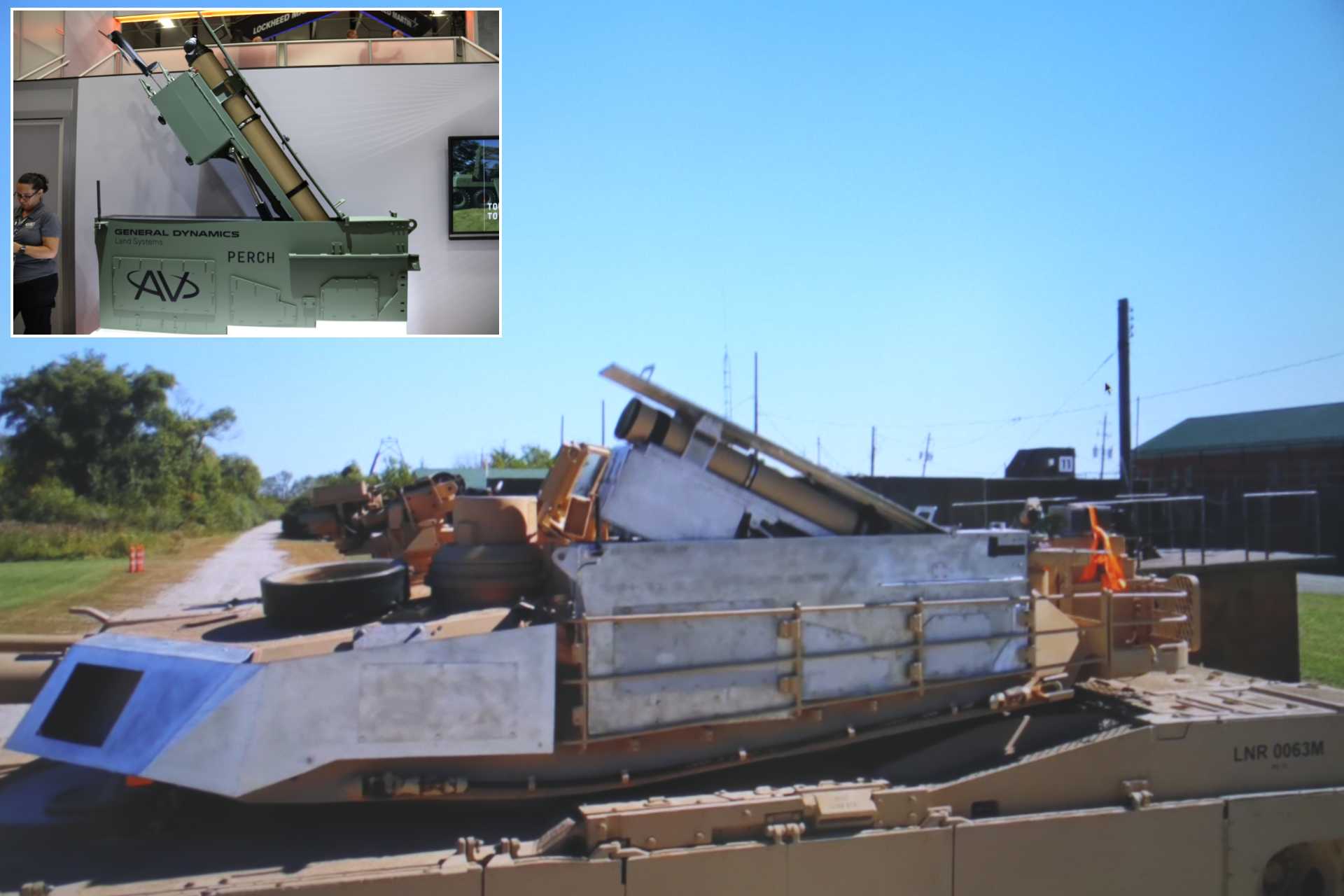 {loadposition bannertop}{loadposition sidebarpub}
The U.S. Army has successfully tested the PERCH loitering munition system integrated onto M1A2 Abrams SEPv3 main battle tanks, according to industry and U.S. Army sources. The effort signals a shift toward providing armored crews with organic, beyond-line-of-sight reconnaissance and precision-strike capabilities without relying on external drone units.
In a milestone for armored warfare modernization, the U.S. Army has successfully demonstrated the Precision Effects & Reconnaissance, Canister-Housed (PERCH) system mounted on the M1A2 Abrams SEPv3 Main Battle Tank. Developed by General Dynamics Land Systems in partnership with AeroVironment, the system allows tank crews to launch Switchblade loitering munitions directly from the vehicle, extending surveillance and strike reach well beyond visual range while remaining under armor. Army officials have emphasized that PERCH is still in the evaluation phase and has not yet been fielded to operational units.
Follow Army Recognition on Google News at this linkPERCH launcher module mounted on the side of a U.S. Army M1A2 Abrams SEPv3 tank, enabling deployment of Switchblade loitering munitions for beyond-line-of-sight reconnaissance and precision strike capabilities. (Picture source: Army Recognition Group)
PERCH equips the Abrams with two categories of tactical loitering munitions: the Switchblade 300 Block 20 and the Switchblade 600. Housed in modular canisters that bolt onto the exterior of the vehicle using existing mounting points, the system avoids any permanent modifications to the tank’s hull and operates natively through the onboard battle management systems. The result is a tightly integrated drone strike capability that requires no external command-and-control architecture and can be operated directly by the tank crew under armor.
For non-specialist readers, the significance of this upgrade hinges on the concept of "Beyond Line of Sight" (BLOS) capability. Traditionally, tanks are limited to engaging targets they can physically see through their optics or sensors, meaning if an obstacle, such as terrain, buildings, or foliage, blocks the view, the tank cannot detect or engage the enemy. BLOS systems, such as loitering munitions, overcome this limitation by enabling reconnaissance and precision strikes over hills, behind buildings, or across complex urban terrain. With loitering drones launched from the tank itself and controlled in real time, crews can now locate, observe, and neutralize enemy forces without ever exposing the tank to return fire.
In combat applications, the Switchblade 300 Block 20 introduces a highly responsive reconnaissance and engagement tool tailored for infantry targets, light vehicles, and anti-tank teams operating from concealed positions. With over 20 minutes of flight endurance, steep terminal attack angles, and user-selectable points of detonation, it excels in hunting down threats that are otherwise shielded from the Abrams’ main gun. The 300 can be used, for example, to eliminate an enemy ATGM team operating from a rooftop or trench line before they even come into firing range. Its patented wave-off and recommit capability enables mid-flight targeting changes, ensuring that the munition strikes only when conditions are optimal.
The heavier Switchblade 600 expands these capabilities into the anti-armor and bunker-busting realm. With a 40-minute loiter time and a larger warhead specifically designed to defeat armored vehicles and fortified positions, it acts as both a reconnaissance drone and a precision long-range missile. In combat terms, this means that an Abrams platoon equipped with Switchblade 600s can shape the battlefield before direct contact, targeting enemy tanks, command posts, or logistics vehicles at extended distances, well beyond the reach of the 120mm smoothbore cannon. These strikes can be carried out without warning and without the need to call for artillery or air support, dramatically shortening the sensor-to-shooter timeline.
Loitering munitions also offer a fundamentally different mode of lethality compared to the tank’s standard armament. The Abrams’ 120mm gun is optimized for high-energy, direct-line engagements, firing high-explosive and armor-piercing rounds to destroy tanks, structures, or exposed infantry. But its effectiveness depends on visibility, line of fire, and proximity. Loitering munitions introduce a parallel strike capability: slower but precise, intelligent, and capable of hovering, observing, and selecting when and how to strike. They enable a tank not just to destroy what it sees, but to destroy what it senses, without risking the vehicle.
In high-threat environments such as urban combat zones or complex terrain with high ambush risk, PERCH fundamentally enhances crew survivability. Rather than advancing blindly into a choke point or relying on scouts, Abrams units can now launch a Switchblade to reconnoiter intersections, ridgelines, or suspected ambush sites. If hostile forces are detected, they can be eliminated before the tank ever moves. This added layer of decision-making space is critical in modern warfare, where first contact often determines survivability.
Operationally, the PERCH system is also a major force enabler. Because it uses common vehicle hardware and control interfaces, it can be deployed not only on Abrams tanks but also on Stryker platforms and potentially other combat vehicles. The modular design ensures it can be upgraded as drone technology evolves, whether with new munitions, AI-assisted targeting, or future swarming capabilities.
From a tactical standpoint, the pairing of the Abrams’ traditional firepower with the surgical precision of loitering munitions provides commanders with unmatched flexibility. During offensive operations, a formation can use Switchblades to disrupt enemy defensive positions, create deception through drone incursions, or isolate targets before committing tanks to close contact. In defensive missions, the drones offer persistent aerial overwatch and can rapidly neutralize infiltrating infantry or mobile ATGM teams before they can position for an ambush.
The PERCH system is not an experimental concept. It is a fieldable and combat-ready capability already aligned with the Army’s doctrine for multi-domain operations. It reflects a broader shift in armored warfare, where the tank is no longer just a kinetic platform but a multi-role command-and-strike hub within a larger digital battlefield. By integrating sensors, weapons, and decision-making into a single unit, the U.S. Army M1A2 Abrams SEPv3 tank with PERCH is equipped not just for today’s battles but for tomorrow’s unpredictable and rapidly evolving combat environments.
As peer adversaries expand their anti-armor capabilities with drones, guided missiles, and electronic warfare, the U.S. Army’s approach is clear: match mass with precision, armor with agility, and direct fire with aerial lethality. PERCH delivers all three, and it positions the Abrams, once again, at the forefront of mechanized warfare innovation.
Written by Alain Servaes – Chief Editor, Army Recognition Group
Alain Servaes is a former infantry non-commissioned officer and the founder of Army Recognition. With over 20 years of experience in defense journalism, he provides expert analysis of military equipment, NATO operations, and the global defense industry.
-
U.S. Army AH-64E Apache attack helicopter demonstrates counter-drone capability in Kuwait
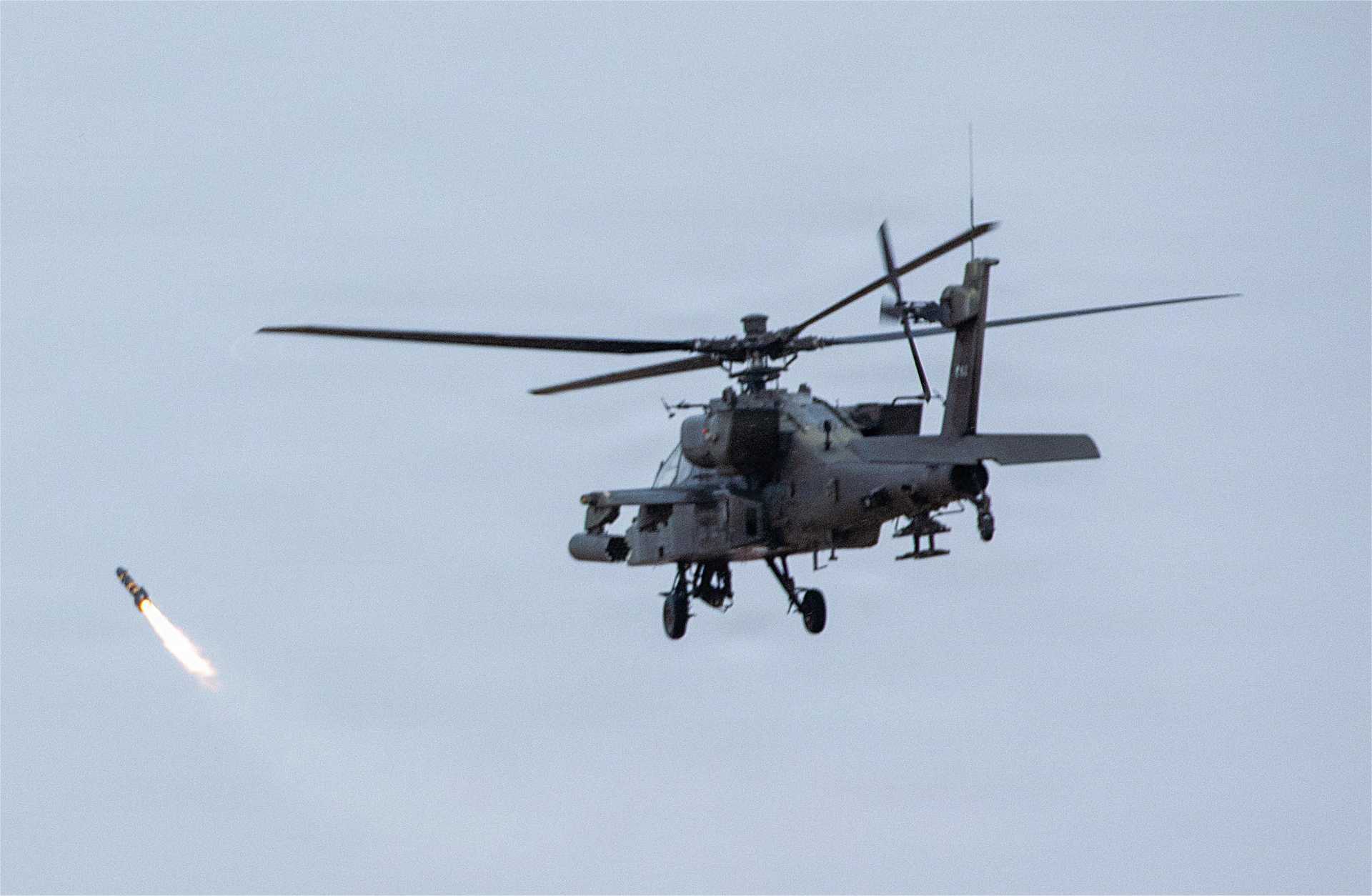 {loadposition bannertop}{loadposition sidebarpub}
U.S. Army AH-64 Apache attack helicopters participated in the Kuwaiti-led Sky Shield exercise at Udari Range Complex on Dec. 9, 2025, focusing on joint counter-drone operations. The event underscores how U.S. Army aviation is adapting to confront the rapid spread of small unmanned aerial systems on today’s battlefields.
U.S. Army AH-64 Apache attack helicopters trained alongside Kuwaiti and partner forces during Exercise Sky Shield at the Udari Range Complex in Kuwait on Dec. 9, 2025, according to information released by the U.S Department of War. The drill emphasized integrated air defense and counter-unmanned aerial system operations, reflecting growing concern across U.S. Central Command about the increasing use of small, low-cost drones in regional conflicts.
Follow Army Recognition on Google News at this linkA U.S. Army AH-64 Apache operates during a live-fire phase of Exercise Sky Shield at the Udari Range Complex in Kuwait on Dec. 9, 2025. The Kuwait-led exercise brought together forces from the United States, Bahrain, and the United Kingdom to strengthen combined air defense and operational interoperability. (Picture source: U.S. Department of War)
Traditionally, in the U.S. Army, the AH-64 Apache has been optimized as a heavy attack helicopter, designed to destroy armored vehicles, support ground forces, and conduct deep attack missions against high-value targets. Since its introduction during the Cold War, the Apache’s core missions have included close combat attack, armed reconnaissance, and the suppression of enemy armored formations using precision-guided munitions.
However, the character of warfare has shifted significantly over the past decade. Conflicts such as the war in Ukraine have demonstrated how unmanned aerial systems now dominate reconnaissance, targeting, and strike missions at every echelon. Small, inexpensive drones are used to spot artillery fire, attack armored vehicles, and threaten aircraft operating at low altitude, fundamentally altering the operating environment for helicopters.
These developments have forced the U.S. Army to reassess how attack helicopters like the AH-64 can survive and remain relevant in drone-saturated battlespaces. Rather than operating solely as offensive strike platforms, Apaches are increasingly viewed as multi-role assets that can contribute to sensing, command-and-control, and limited counter-drone functions within a layered air defense framework.
During Exercise Sky Shield, the AH-64 operated as part of an integrated air defense architecture, supporting detection, tracking, and response efforts against simulated aerial threats. Its inclusion demonstrated how attack helicopters can provide mobile coverage and rapid reaction capabilities, particularly in areas where fixed air defense systems may be constrained by terrain or coverage gaps.
Beyond this exercise, the U.S. Army has tested and evaluated the AH-64E Apache Guardian as a counter-UAS contributor during recent operational experiments. These assessments have focused on how the aircraft’s sensor suite, including electro-optical, infrared, and fire control radar systems, can detect and track small aerial targets and share that data with ground-based air defense units.
From a weapons perspective, several systems mounted on the AH-64E are being examined for their applicability against aerial drones, depending on threat type and engagement conditions. The 30mm M230 chain gun offers a relatively cost-effective option for engaging slow-moving or low-altitude drones within visual range, particularly when cued by onboard sensors. Its high rate of fire and flexible aiming system make it suitable for short-range aerial engagements.
The Apache’s guided rocket systems, including laser-guided 70mm rockets, are also being studied as potential counter-drone options against larger unmanned aircraft or clustered targets. While not specifically designed for air defense, guided rockets offer a balance between precision and cost compared to larger missiles.
In contrast, heavy precision weapons such as the AGM-114 Hellfire or AGM-179 Joint Air-to-Ground Missile (JAGM) are generally considered less economical for small-drone engagements, but they remain relevant against larger, high-value unmanned platforms or when no other engagement options are available. Army planners are evaluating doctrine to determine when such weapons may be justified in counter-UAS scenarios.
Equally important is the Apache’s role as a networked sensor and command node. Through secure data links, the AH-64E can relay real-time tracking data to air defense batteries, command posts, and other aircraft, enabling faster, more coordinated responses to drone incursions. This networked approach mirrors lessons from Ukraine, where rapid sensor-to-shooter connectivity has proven decisive.
For Kuwaiti forces, Sky Shield provided valuable insight into how the U.S. Army aviation is adapting to these realities. The combined training strengthened interoperability and demonstrated how rotary-wing platforms can support national air defense and critical infrastructure protection in an era defined by unmanned threats.
Strategically, the Apache’s evolving role reflects a broader U.S. Army modernization effort driven by lessons learned from contemporary conflicts. By adapting proven platforms like the AH-64 to counter drone threats, the Army aims to build resilient, layered defenses capable of operating effectively in highly contested and technologically dense environments.
Exercises such as Kuwaiti-Led Sky Shield underscore that the AH-64 Apache is no longer viewed solely as an anti-armor platform. Instead, it is increasingly integrated into air defense and counter-UAS planning, ensuring it remains a relevant and adaptable asset on the modern battlefield.
Written by Alain Servaes – Chief Editor, Army Recognition Group
Alain Servaes is a former infantry non-commissioned officer and the founder of Army Recognition. With over 20 years in defense journalism, he provides expert analysis on military equipment, NATO operations, and the global defense industry.
-
Northrop Grumman AN/TPS-80 G/ATOR software update boosts radar range for U.S. Marines and Air Force
 {loadposition bannertop}{loadposition sidebarpub}
Northrop Grumman has pushed a significant software upgrade to all fielded AN/TPS-80 GATOR radars used by the Marine Corps and the Air Force. The update strengthens detection range and threat clarity and improves joint network integration at a time when U.S. forces are facing faster and more complex aerial challenges.
Northrop Grumman confirmed that AN/TPS-80 GATOR (Ground/Air Task-Oriented Radar) has received a new software package that enables extended-range capabilities, allowing the U.S. Marine Corps (USMC) and U.S. Air Force (USAF) to detect threats at greater distances and respond more swiftly. Program officials describe the upgrade as a step change in how the radar sorts and prioritizes modern air threats, noting that the revisions refine track stability, improve clutter rejection, and enable smoother data sharing across joint and allied command networks. The timing reflects a strategic push by the Pentagon to harden sensor architecture against a growing mix of cruise missiles, small unmanned aircraft, low-observable platforms, and emerging hypersonic systems.
Follow Army Recognition on Google News at this linkU.S. Marines from Marine Air Control Squadron 24, part of Marine Air Control Group 48, 4th Marine Aircraft Wing, operate an AN/TPS-80 G/ATOR radar system during a training mission in Cold Bay, Alaska, as part of ARCTIC EDGE 2025. (Picture source: U.S. Department of War)
While Northrop Grumman has confirmed the introduction of a new extended-range mode, precise detection ranges remain classified. Official product specifications do not publicly define a fixed maximum range. However, the radar has consistently been described as a long-range system with four-dimensional tracking across azimuth, elevation, range, and time. The company has stated that the recent upgrade delivers improved tracking performance and an expanded surveillance envelope, enabling earlier threat detection and faster engagement timelines. These advancements are especially critical in expeditionary and forward-operating scenarios, where early warning and precise classification can mean the difference between neutralizing a threat and absorbing a strike.
G/ATOR is designed as a multi-mission, software-defined radar capable of replacing several legacy systems across the Marine Corps and Air Force inventory. With a single platform, operators can perform air surveillance, air defense fire control, counter-fire target acquisition, and air traffic control missions. Operating in the S-band frequency, the radar uses active electronically scanned array (AESA) technology to deliver high-resolution imagery and rapid beam agility, even under electronic warfare and jamming conditions.
One of G/ATOR’s key strengths lies in its expeditionary mobility. The system is configured for rapid deployment and can be easily transported by tactical trucks or C-130 aircraft. This design is well-suited to the Marine Corps’ distributed operations model and to Air Force missions requiring agile base defense or gap-filling radar coverage in denied environments. Once deployed, the radar’s open-architecture command-and-control interface enables real-time data sharing with other sensors and fire-control systems, positioning it as a critical node within the Department of Defense’s broader Joint All-Domain Command and Control (JADC2) framework.
The software upgrade also enhances the radar’s Identification, Friend or Foe (IFF) capability, providing operators with more reliable classification tools and reducing the risk of blue-on-blue engagements. This improvement, combined with its enhanced tracking algorithms, allows the system to better discriminate among a growing variety of airborne threats, particularly in cluttered or contested airspace where traditional radars struggle.
Though exact figures remain undisclosed, industry officials and service members have described the update as a substantial performance leap that enhances G/ATOR’s utility against low-altitude, low-observable, and high-speed targets. Northrop Grumman has emphasized that G/ATOR’s software-defined architecture enables continuous modernization, with future enhancements expected to include artificial intelligence-assisted threat detection and tighter integration with both kinetic and non-kinetic effectors.
To date, 39 G/ATOR systems have been delivered, with the 40th expected by the end of the year. All units incorporate U.S.-manufactured microelectronics, a deliberate choice to ensure supply chain security and compliance with the Pentagon’s push for defense industrial base resilience. As the U.S. military continues shifting toward adaptable, sensor-driven operations, G/ATOR remains a cornerstone system for integrated air and missile defense.
In its latest form, G/ATOR offers more than just incremental improvement. It reflects a broader transformation in how the U.S. services approach battlefield sensing: with agility, precision, and digital integration at the forefront. Whether protecting frontline Marines or extending surveillance coverage for Air Force airfields, the upgraded radar gives U.S. forces a decisive tool for dominating the air domain in today’s multi-threat environment.
Written by Alain Servaes – Chief Editor, Army Recognition Group
Alain Servaes is a former infantry non-commissioned officer and the founder of Army Recognition. With over 20 years in defense journalism, he provides expert analysis on military equipment, NATO operations, and the global defense industry.
-
U.S. Marines Train with M1014 Shotgun as Counter-Drone Solution Against Small Aerial Threats
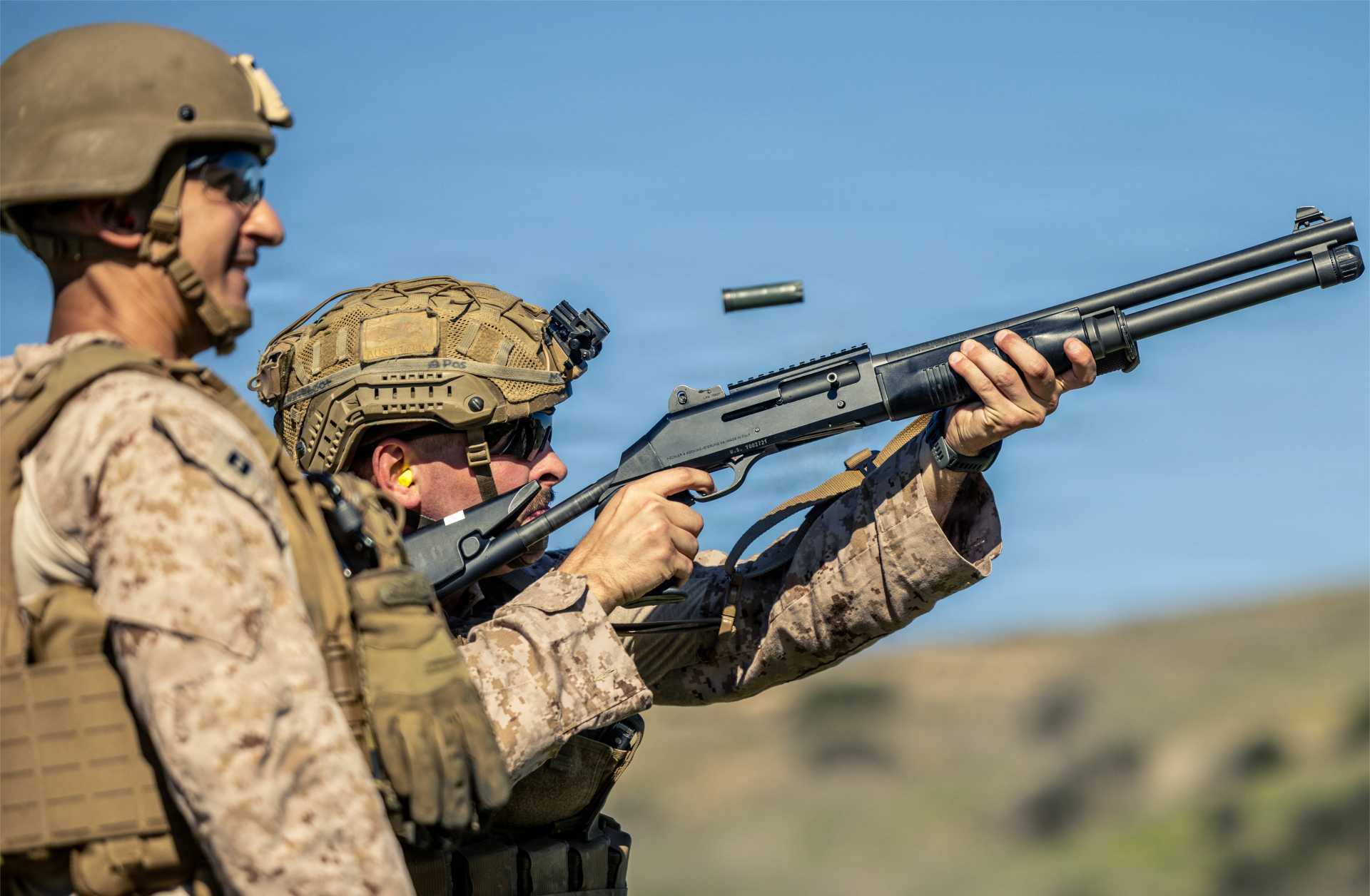 {loadposition bannertop}{loadposition sidebarpub}
U.S. Marines at Camp Pendleton used the M1014 shotgun in live counter-drone training during Exercise Steel Knight 25. The drills show how frontline units are adding practical, close-range tools to handle fast, low-flying aerial threats.
On December 2, 2025, during a training event at Marine Corps Base Camp Pendleton, Marines used the M1014 shotgun to engage small, low-flying drones as part of their regular Steel Knight 25 field regimen. Instructors described the work as hands-on, live-fire training that builds confidence and muscle memory for Marines who may face similar threats in dispersed or urban environments. The service is expanding these drills across multiple units as small drones become a routine presence in global conflicts.
Follow Army Recognition on Google News at this linkU.S. Marine Sgt. Emerick Wurstner fires an M1014 shotgun during a counter-small drone training range at Camp Pendleton during Exercise Steel Knight 25, Dec. 2, 2025. (Picture source: U.S. Department of War)
The U.S. Marine Corps Base Camp Pendleton range puts U.S. Marines in realistic engagement scenarios, requiring them to detect targets visually, track them, and fire rapidly at drone-representative targets. These drills reinforced the shotgun’s role as a last-line defensive tool when drones approach too quickly or at altitudes too low for sensors or jammers to stop.
The M1014 (Benelli M4) is a 12-gauge semiautomatic shotgun with a gas-operated action for reliable cycling. Its 7+1 capacity, quick recoil recovery, and compatibility with various shells support close-range use. Specialized buckshot and frangible rounds spread to damage drone rotors, sensors, and lightweight frames.
U.S. Marines calculated leads, executed rapid shoulder transitions, and coordinated team firing—techniques essential for engaging drones that maneuver unpredictably. The training showed how the shotgun serves as an affordable, immediately available countermeasure that fills a critical gap in layered C-UAS (Counter Unmanned Aerial System) defense.
This approach is not unique to the United States. Several armies worldwide have begun using combat shotguns as counter-drone weapons due to their simplicity and low cost. Forces in the United Kingdom, Australia, Ukraine, and multiple NATO members have fielded 12-gauge platforms for short-range drone interception, often pairing them with handheld radars or visual spotters. In recent conflicts, shotgun fire has proven particularly effective at stopping small quadcopters during reconnaissance or explosive delivery missions.
By incorporating shotgun-based counter-drone engagements into Steel Knight 25, the Marine Corps aligns its training with global best practices. Many militaries view the shotgun as a practical defensive tool that can be carried at the squad level, requires minimal electronics, and offers immediate lethality against small UAS that bypass sophisticated air-defense networks.
Officials supporting the event highlighted that enemy drone use is expanding rapidly, as adversaries rely on inexpensive commercial and military-grade platforms for surveillance and precision attacks. Units that quickly destroy these systems at close range strengthen force protection for expeditionary forces and enhance survivability during distributed operations.
Deploying the M1014 in counter-drone roles signals an immediate shift in U.S. defense priorities. As small UAS threats accelerate in both capabilities and numbers, the Marine Corps must act now by integrating combat-proven tools to ensure readiness in every environment.
Written by Alain Servaes – Chief Editor, Army Recognition Group
Alain Servaes is a former infantry non-commissioned officer and the founder of Army Recognition. With over 20 years in defense journalism, he provides expert analysis on military equipment, NATO operations, and the global defense industry.
-
Germany’s Rheinmetall demonstrates amphibious Mission Master SP2 ground robot capabilities in NATO trials
 {loadposition bannertop}{loadposition sidebarpub}
Rheinmetall’s Mission Master SP2 unmanned ground vehicle demonstrated its advanced amphibious capabilities and real-time integration with NATO networks during the REPMUS and Dynamic Messenger 2025 exercises off the coast of Portugal. This milestone highlights NATO’s commitment to adopting autonomous systems to protect coastal infrastructure and enhance joint force connectivity.
Rheinmetall’s Mission Master SP2 unmanned ground vehicle made a significant leap in amphibious autonomy and operational maturity during this year’s REPMUS and Dynamic Messenger exercises, as demonstrated in a Rheinmetall video released on November 18, 2025. Company engineers and NATO officials highlighted this as one of the clearest public demonstrations of the platform’s capabilities, describing how the vehicle seamlessly shifted from shoreline movement to semi-submerged tasks while feeding data directly into NATO’s evolving command and control architecture. The tests took place along the Portuguese coast, where NATO regularly evaluates cutting-edge unmanned systems for reconnaissance, protection, and multi-domain support roles.
Follow Army Recognition on Google News at this linkRheinmetall’s Mission Master SP2 is a fully amphibious, autonomous ground vehicle designed for multi-domain operations, capable of executing surveillance, logistics, and combat support missions on land and at sea with seamless NATO system integration. (Picture source: Rheinmetall)
This deployment is distinguished by the Rheinmetall Mission Master SP2’s real-time interoperability with allied command and control systems during live missions, and its advanced autonomous waterborne navigation. Rheinmetall’s video, featuring rare footage of the SP2 deploying from a naval platform and traversing sea and coastal terrain, underlines the strategic importance of unmanned amphibious systems under NATO’s expanding multi-domain operations. During the exercise, the SP2 performed infrastructure surveillance, port security, naval fire-support observation, and dynamic rerouting under GPS denial.
Built on Rheinmetall’s second-generation SP2 platform, the Mission Master is engineered for full amphibious capability and high land mobility. It uses a rugged 8x8 electric drivetrain, enabling low acoustic and thermal signatures ideal for stealth operations in contested areas. For maritime maneuvering, the SP2 is equipped with integrated dual waterjets at the rear hull, giving it propulsion across inland waterways, surf zones, and flooded urban terrain. The chassis is fully sealed and IP-rated for saltwater operations, and the vehicle maintains directional stability in rough surf through adaptive software that adjusts propulsion and steering vectors in real time.
Technically, the SP2 is built around a modular architecture allowing for rapid reconfiguration across a range of missions. During REPMUS 2025, it was observed operating in a reconnaissance and surveillance configuration featuring a full suite of electro-optical and infrared sensors, acoustic detection systems, and AI-powered object classification tools. It also supports weapons integration, electronic warfare payloads, casualty evacuation kits, and even logistics modules. A tethered UAV launcher is reportedly under development, offering commanders organic aerial ISR capabilities directly from the UGV.
The platform features a digital open architecture compatible with NATO’s C4ISR systems, enabling plug-and-play integration with unmanned aerial and surface platforms. Its autonomous navigation software incorporates LiDAR-based mapping, obstacle avoidance, GPS-denied localization, and multi-path rerouting based on real-time threat analysis. Human operators can assume manual control at any point via Rheinmetall’s intuitive control console, which supports encrypted communications over secure mesh networks and tactical LTE.
The Mission Master SP2 brings a compelling mix of survivability, tactical flexibility, and low signature. Its main technical features include:
The SP2’s fully amphibious 8x8 all-terrain electric drivetrain provides mobility over both land and water. Its integrated dual waterjets ensure effective aquatic propulsion, while independent suspension and sealed hull construction make it resilient across flooded terrain and urban rubble. The vehicle measures approximately 2.95 meters in length, 1.65 meters in width, and stays under 1.5 meters high in its low-profile transport mode. It can carry up to 1,000 kg of mission-specific payloads, including ISR pods, remote weapon stations, medevac stretchers, or logistics racks. Silent electric motors support both stealth and endurance missions, while the modular payload interface allows for rapid mission reconfiguration.
Its advanced autonomous system is equipped with AI-powered navigation and adaptive decision-making tools. The vehicle can operate in GPS-denied environments and re-route dynamically in response to terrain or threats. Navigation and obstacle avoidance are guided by a combination of LiDAR, inertial navigation, and real-time mapping. Communication capabilities include encrypted mesh networking, tactical LTE, and optional SATCOM, providing real-time data relay and coordination with other unmanned systems. The SP2 is built for full NATO interoperability, enabling seamless integration into allied command-and-control structures.
This year’s REPMUS (Robotic Experimentation and Prototyping with Maritime Unmanned Systems) and Dynamic Messenger 2025 exercises brought together over 2,500 personnel and more than 30 autonomous platforms from 17 nations. Rheinmetall’s Mission Master SP2 was among a small number of systems cleared for full amphibious integration across both scenarios, highlighting its operational maturity and alignment with NATO’s modernization priorities.
NATO’s deployment of the Mission Master SP2 signals an intensified focus on countering hybrid threats to critical maritime infrastructure. As adversaries use gray-zone tactics targeting ports, undersea cables, and coastal radar nodes, the SP2 offers decisive advantages by projecting force and conducting ISR in high-risk zones without endangering personnel. These attributes make such autonomous systems increasingly essential for alliance defense planning.
With its performance in Portugal now part of NATO’s broader experimentation portfolio, the SP2 positions Rheinmetall at the forefront of autonomous land-sea integration. Several allied nations with coastal defense priorities are reportedly evaluating the platform for future procurement. Further enhancements under consideration include weaponized variants with Rheinmetall’s Skyranger turret for mobile counter-UAS defense, potentially transforming the SP2 from a reconnaissance asset into a frontline combat multiplier.
Written by Alain Servaes – Chief Editor, Army Recognition Group
Alain Servaes is a former infantry non-commissioned officer and the founder of Army Recognition. With over 20 years in defense journalism, he provides expert analysis on military equipment, NATO operations, and the global defense industry.
-
French SAMP/T vs. U.S. Patriot Air Defense Systems: Technical and Operational Analysis in Ukraine
 {loadposition bannertop}{loadposition sidebarpub}
In a video released by the French Senate on X on November 8, 2025, General Fabien Mandon said the Franco-Italian SAMP/T air defense system is outperforming the U.S.-built Patriot in Ukraine. His remarks have reignited NATO debate over which system offers superior protection against Russia’s evolving missile tactics.
A video published by the French Senate on X on November 8, 2025, has stirred debate across NATO after France’s Chief of Defense Staff, General Fabien Mandon, stated that the European-built SAMP/T air defense missile system is performing better in Ukraine than the American-made Patriot. According to Mandon, some modified Russian missiles are now bypassing Patriot defenses, while SAMP/T units continue to intercept similar threats effectively. His comments, delivered during a Senate defense hearing, represent one of the clearest official comparisons of NATO’s two leading long-range air defense systems based on actual combat experience in Ukraine.
Follow Army Recognition on Google News at this linkU.S. Patriot air defense system on the left and the Franco-Italian SAMP/T system on the right. Both represent NATO’s top-tier surface-to-air capabilities, now central to renewed debate over missile defense performance and technology. (Picture source: Editing Army Recognition Group)
????????????????????????????????
— Antoine ???????? (@thetoitoi) November 6, 2025
Selon le chef d’état-major des armées, le général Mandon, les systèmes SAMP/T livrés à l’Ukraine parviennent à intercepter des missiles russes modifiés que les systèmes Patriot peinent à abattre efficacement.
En conclusion, le CEMA estime que le SAMP/T se révèle… pic.twitter.com/x4zuTWC9op
The U.S. MIM-104 Patriot and the French SAMP/T (Sol-Air Moyenne Portée/Terrestre) are both modern, high-performance surface-to-air defense missile systems tasked with neutralizing a wide spectrum of aerial threats. These include fixed-wing aircraft, unmanned aerial vehicles, cruise missiles, and tactical ballistic missiles. While broadly similar in mission profile, the two systems differ fundamentally in terms of radar architecture, missile technology, engagement logic, mobility, and real-world operational performance.
Radar Capabilities and Threat Detection
The Patriot system relies on the AN/MPQ-65 radar, an X-band, sector-scanning phased-array system responsible for both surveillance and fire control. Based on U.S. Army documentation and allied operational use, this radar can detect large, high-altitude aircraft at distances of 150–170 km. Smaller, low-signature targets such as cruise missiles are typically detected at 100–130 km, depending on flight profile and radar clutter. However, the radar offers only 120 degrees of coverage, meaning that threats approaching from outside this arc may go undetected unless the system is supported by auxiliary radars or repositioned. The reaction time from detection to engagement ranges from 8 to 15 seconds, depending on battery readiness and system alignment.
SAMP/T’s radar configuration offers full 360-degree coverage. The original French version uses the Thales Arabel radar, a rotating AESA system operating in the X-band. The upgraded SAMP/T NG variant, now in early deployment, integrates the Thales Ground Fire 300 radar, a fixed-panel, digital AESA radar offering multifunction detection and tracking. This radar provides detection ranges of up to 500 km for high-altitude aircraft and 150–180 km for low-signature cruise missiles. Its refresh cycle is below 2 seconds, enabling real-time engagement with multiple targets. The SAMP/T radar is capable of maintaining simultaneous fire control and target acquisition even under heavy jamming, a feature that has proven valuable in Ukraine. Detection-to-engagement times range from 5 to 10 seconds.
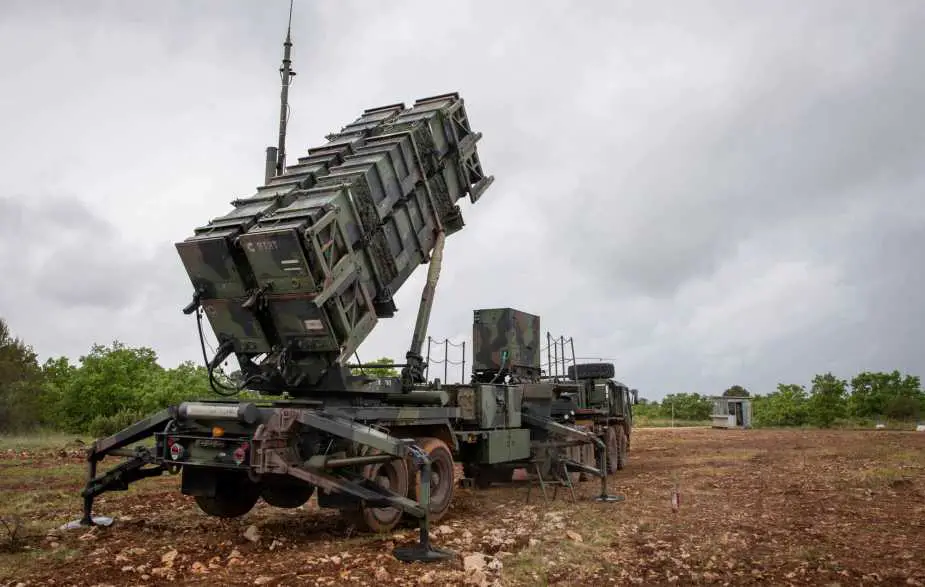
The U.S. Patriot air defense system, developed by Raytheon, uses PAC-3 MSE interceptors guided by the AN/MPQ-65 radar. It is designed to defend against aircraft, cruise missiles, and short- to medium-range ballistic missile threats. (U.S. Department of War)
Missile Characteristics and Engagement Profiles
The Patriot system uses the PAC-3 MSE missile, a solid-fueled interceptor employing hit-to-kill technology. It is guided through inertial navigation with mid-course updates from the radar, and its onboard active radar seeker activates during the terminal phase. It reaches speeds above Mach 4.5, with a maximum engagement range of around 100 km and a ceiling of 35 km. Its precision in intercepting ballistic targets is proven, although it can be affected by electronic warfare and decoys during saturation attacks or low-altitude cruise missile threats.
The French SAMP/T fires the Aster 30 missile, designed by MBDA. The missile is equipped with a dual-pulse motor and an active radar seeker, enabling mid-course maneuvering without relying solely on ground guidance. The Aster 30 also features the PIF-PAF thrust vectoring system, enabling high agility and rapid course correction during the final intercept phase. Its engagement range is up to 120–150 km, with an altitude ceiling of 30 km. The Aster 30 Block 1NT variant, currently fielded in France and soon Italy, is designed to intercept medium-range ballistic missiles with ranges up to 1,500 km. Unlike Patriot, which uses kinetic impact, Aster uses a high-fragmentation warhead with a proximity fuse, increasing effectiveness against maneuverable targets and drone swarms.
Mobility and Survivability
Patriot systems are composed of radar units, launchers, command centers, and generators mounted on trailers. Full deployment typically takes between 4 and 6 hours. While ideal for static defense of high-value targets such as cities, air bases, or strategic command infrastructure, Patriot batteries are not optimized for rapid relocation. Launchers are directional, requiring pre-alignment to engage incoming threats, and must be repositioned manually to cover new sectors.
SAMP/T is designed for battlefield mobility. All system components are mounted on 8×8 wheeled platforms, enabling rapid deployment and movement. A full battery can be set up, fire, and then redeploy in under 30 min. The vertical launch architecture enables 360-degree missile firing without launcher movement, enhancing survivability in high-threat environments. Ukrainian crews have specifically highlighted this feature as critical in defending against persistent drone surveillance and Russian counterstrikes.
Engagement Speed and Reaction Time
Engagement cycle timing is essential in contested airspace. The Patriot system completes its detection-to-intercept cycle in 20–45 seconds, depending on target speed, radar coverage, and system configuration. The SAMP/T system completes a similar cycle in 15–40 seconds, with faster transitions enabled by omnidirectional radar and vertical launch capability. In scenarios involving multi-axis threats or electronic jamming, the SAMP/T’s system architecture enables faster threat recognition and response.
The SAMP/T (Sol-Air Moyenne Portée/Terrestre) is a Franco-Italian air defense system developed by Eurosam. It uses the Aster 30 missile and a 360-degree radar to intercept aircraft, cruise missiles, and short-range ballistic threats.
Combat Experience in Ukraine
Since its deployment in Ukraine in early 2023, the Patriot system has played a crucial role in defending key infrastructure and military targets. It gained international recognition after intercepting a Russian Kh-47M2 Kinzhal missile over Kyiv. Subsequent engagements included successful intercepts of Iskander-M missiles, Kh-22 cruise missiles, and Shahed-type drones. Ukrainian air defenders reported high confidence in Patriots’ ability to defend fixed strategic sites, but also noted challenges during complex, multi-directional attacks. In several documented incidents, cruise missiles and drones evaded detection by exploiting radar sector gaps, and some batteries were forced offline by persistent drone swarm harassment.
The French SAMP/T entered Ukrainian service in mid-2024 and was initially deployed to central and western Ukraine. Ukrainian operators, trained by French and Italian teams, reported high system reliability and high intercept success rates. According to sources within the Ukrainian Air Force, SAMP/T batteries successfully intercepted modified Kh-101 cruise missiles that had avoided Patriot detection due to reduced radar signatures and complex flight paths. One specific engagement occurred in October 2025 near Vinnytsia, where a SAMP/T battery destroyed three incoming cruise missiles within 30 seconds, then redeployed in minutes to avoid follow-on drone strikes. Ukrainian crews described SAMP/T as better suited for mobile warfare and praised its radar performance in jamming-heavy environments.
Strategic and Alliance Implications
French General Mandon’s comments reflect a broader shift in European thinking. France and Italy have long criticized the exclusion of SAMP/T from Germany’s European Sky Shield Initiative, which favors U.S. and Israeli systems such as Patriot, IRIS-T SLM, and Arrow 3. With SAMP/T now combat-validated in Ukraine, its advocates are pressing for a more balanced approach in NATO procurement policy. The system’s success may also influence future export decisions, as interest grows among NATO frontline states facing similar threat environments.
The U.S. Patriot air defense missile system remains essential to NATO’s integrated air and missile defense. Its strong interoperability with U.S. command-and-control systems, wide user base, and logistics infrastructure make it a cornerstone of alliance deterrence. Upcoming upgrades, including the LTAMDS radar, promise to eliminate some current limitations. However, these systems are still undergoing testing and have not yet been fielded in Ukraine.
French SAMP/T air defense missile system is demonstrating results in today’s battlefield conditions. Its combination of full-azimuth radar coverage, short engagement times, high missile maneuverability, and rapid redeployment makes it highly adaptable to modern air defense needs. In an environment defined by saturation attacks, multi-vector salvos, and electronic warfare, SAMP/T is emerging as one of NATO’s most responsive and survivable air defense platforms.
The war in Ukraine has exposed both the potential and the vulnerabilities of NATO’s most advanced missile defense systems. While U.S. Patriot and French SAMP/T air defense systems are both achieving operational success, their differences are becoming more apparent under combat conditions. The Patriot offers deep-layered defense and precision engagement for high-value static targets. SAMP/T delivers tactical agility, all-direction engagement, and a robust response to evolving aerial threats. As NATO continues to reassess its air defense posture, Ukraine’s skies are offering hard-earned answers about what modern air dominance really requires.
Written by Alain Servaes – Chief Editor, Army Recognition Group
Alain Servaes is a former infantry non-commissioned officer and the founder of Army Recognition. With over 20 years in defense journalism, he provides expert analysis on military equipment, NATO operations, and the global defense industry.
-
Top 5 Main Battle Tank MBT Developments Revolutionizing Armored Warfare in 2025
 {loadposition bannertop}{loadposition sidebarpub}
Five new main battle tank programs are redefining how modern armies approach firepower, protection, and networked combat. From Turkey’s Altay to the U.S. M1E3 Abrams, these designs reveal how militaries are preparing for drone-era threats and multi-domain operations.
As armored warfare experiences its most profound shift since the end of the Cold War, a new generation of main battle tanks is setting fresh benchmarks for survivability and combat integration. These vehicles are not simple upgrades but the result of full-scale design overhauls aimed at countering drone swarms, loitering munitions, and top-attack precision weapons. Following Turkey’s induction of the Altay into active service, analysts are pointing to five MBTs that now define the cutting edge of armored engineering in 2024–2025: the South Korean K3, the German KF51 Panther, the U.S. M1E3 Abrams, the Turkish Altay, and the British Challenger 3.
Follow Army Recognition on Google News at this linkVisual the world’s most advanced next-generation main battle tanks in 2025: South Korea’s K3 concept model, Germany’s KF51 Panther in Hungarian trials, the U.S. M1E3 Abrams design evolution, Turkey’s newly fielded Altay, and the UK’s Challenger 3 during live-fire evaluation. (Picture source: Editing Army Recognition Group)
1. South Korea: K3 Main Battle Tank
The K3 MBT, currently in advanced development by Hanwha Aerospace and South Korea's Agency for Defense Development, is envisioned as a clean-sheet next-generation tank to replace the K2 Black Panther by 2030. It will mount a 130 mm smoothbore main gun with a high-rate autoloader and dual-feed ammunition system capable of firing next-generation kinetic energy rounds and airburst munitions. Its turret will be fully unmanned, integrating AI-assisted fire control with a multi-layer sensor suite including millimeter-wave radar, thermal imaging, and electro-optical targeting. Crew members will operate from an armored citadel inside the hull, separated from the ammunition and gun housing.
In terms of mobility and power management, the K3 is set to incorporate a hybrid hydrogen-electric propulsion system that offers significantly lower thermal and acoustic signatures. This design supports extended silent operation in urban and contested environments. The hull will feature IR-suppressive coatings, radar-deflective geometry, and active thermal camouflage, enhancing survivability in the sensor-saturated battlefield. An embedded AI-based health monitoring system will handle predictive maintenance, while digital mission systems will enable real-time data exchange with UAVs and robotic support platforms under manned-unmanned teaming doctrines.

South Korea’s next-gen K3 concept features a 130 mm cannon, AI-driven fire control, and a hydrogen-electric hybrid powerpack, signaling a bold leap toward autonomous and stealth armored warfare.
2. Germany: Rheinmetall KF51 Panther
The KF51 Panther, developed by Rheinmetall, is Germany’s bid to lead European armored warfare modernization through a scalable, modular combat platform. It features the Rh-130 L/52 smoothbore cannon with a 50 percent increase in armor penetration over legacy 120 mm systems and includes a bustle-mounted autoloader that can accommodate both kinetic rounds and programmable high-explosive munitions. The turret also supports optional integration of HERO-120 loitering munitions and UAV launchers, extending the tank’s reach into tactical ISR and strike roles. The fire control architecture is based on open NGVA (NATO Generic Vehicle Architecture), enabling software-defined targeting and seamless sensor fusion.
The Panther uses the proven Leopard 2 chassis as a base but incorporates new-generation passive composite armor with ceramic and reactive layers. Rheinmetall's StrikeShield active protection system provides full-spectrum hard-kill coverage against anti-tank guided missiles and kinetic projectiles. A distributed 360-degree camera system feeds real-time battlefield imagery into a commander helmet-mounted display. The KF51 is currently in pre-series production for Hungary and undergoing firepower and survivability testing at Rheinmetall’s test centers, with additional interest from Eastern European NATO allies seeking Leopard 2 successors.

The Rheinmetall KF51 Panther redefines European MBT standards with its 130 mm Rh-130 gun, loitering munition integration, and full-spectrum StrikeShield active protection for urban and peer-conflict scenarios.
3. United States: M1E3 Abrams with technologies of AbramsX
The M1E3 Abrams is the U.S. Army’s most ambitious MBT overhaul in over four decades, incorporating critical technologies developed through the AbramsX Technology Demonstrator unveiled in 2022. While not a direct copy, the M1E3 leverages AbramsX advancements in three key areas: propulsion, crew survivability, and digital systems. The tank will replace the legacy AGT1500 gas turbine with a hybrid-electric propulsion system, likely derived from the Advanced Combat Engine (ACE) program. This move significantly reduces fuel consumption, lowers the platform’s infrared signature, and supports energy demands for advanced sensors and potential future integration of directed energy weapons.
The turret will be redesigned to allow partial automation and remote operation, with improved protection against top-attack threats through layered modular armor and a new active protection system developed in parallel with the U.S. Modular APS initiative. The M1E3 will feature embedded AI for threat prioritization, fused long-wave IR and LIDAR sensors, and a completely open digital backbone to support real-time mission adaptability. The crew compartment is expected to incorporate next-generation displays and situational awareness tools modeled after the AbramsX human-machine interface. The first prototypes are projected for delivery in FY2026, with long-term replacement of M1A2 SEPv3 units in mind.

The U.S. Army’s M1E3 Abrams integrates hybrid-electric propulsion and AbramsX-inspired AI systems, combining modular armor and digital lethality to survive drone-saturated battlefields.
4. Türkiye: Altay Main Battle Tank
Türkiye’s Altay MBT has officially begun deliveries to the Turkish Land Forces as of mid-2025, marking the country's transition from licensed production to full-spectrum tank manufacturing. Developed by BMC Defense, the Altay now integrates the domestically produced BATU V12 1,500 horsepower diesel engine and automatic transmission developed by BMC Power. This powerpack enables the tank to reach speeds of up to 70 km/h and supports an operational range exceeding 450 kilometers. Cooling systems and onboard diagnostics have been redesigned for desert and high-altitude performance, addressing operational requirements in Turkey’s diverse terrain.
Armament includes a 120 mm L/55 smoothbore main gun compatible with NATO standard ammunition, stabilized across all axes and paired with the Aselsan VOLKAN-M digital fire control system. The system offers automated target recognition, laser rangefinding, and third-generation thermal imaging for both gunner and commander. Defensive capabilities are enhanced through modular armor blocks, a soft-kill laser warning system, and infrared jamming. The Altay’s architecture is designed to accommodate future integration of Aselsan’s AKKOR hard-kill active protection system. Negotiations are ongoing for export variants to Pakistan and Qatar, with co-production options being discussed for partner nations.

Turkey’s Altay MBT marks its entry into independent armored manufacturing with a domestic BATU engine, NATO-standard 120 mm firepower, and indigenous fire control and protection systems.
5. United Kingdom: Challenger 3
The Challenger 3 program, developed by Rheinmetall BAE Systems Land (RBSL), is modernizing the British Army’s armored forces through a complete turret replacement and systems overhaul. The vehicle retains the Challenger 2 hull but receives a new welded steel turret equipped with the L55A1 120 mm smoothbore gun, offering full interoperability with NATO ammunition and increased barrel pressure ratings for next-gen APFSDS rounds. Ammunition is stored in armored compartments with blast-out panels, and the gun is supported by a digital fire control system with Leonardo’s third-generation thermal sights and Thales Orion panoramic optics.
Challenger 3 features modular armor packages with classified ceramic and composite materials developed for multi-threat environments. Rafael’s Trophy-MV active protection system is integrated into the base platform, providing hard-kill defenses against RPGs, ATGMs, and top-attack drones. The vehicle’s new electronic backbone supports predictive diagnostics, software-defined updates, and cross-platform data sharing through the Army’s broader Land ISTAR network. Initial production models are undergoing live-fire validation and mobility testing in the UK and Germany, with IOC targeted for late 2026. The program is also being pitched to NATO partners seeking off-the-shelf modernization paths with proven survivability.

The British Army’s Challenger 3 upgrades a proven platform with a NATO-compatible smoothbore gun, modular armor, and the Trophy APS, ensuring survivability in high-threat operational theaters.
The Battlefield is Changing, and the MBT is Changing With It
What defines a modern tank today is no longer just the size of its gun or the thickness of its armor. The new generation of MBTs emerging in 2025 reflects a profound shift toward networked survivability, multi-domain integration, and digital adaptability. As seen in programs like the M1E3 and K3, tanks are evolving into energy-conscious, AI-enhanced combat systems designed to operate in drone-heavy, sensor-saturated battlespaces. Traditional strengths such as firepower and protection remain essential, but survivability now hinges just as much on electronic warfare resilience, signature management, and interoperability with unmanned systems.
The MBT is far from obsolete. On the contrary, it is being reimagined to meet the demands of a faster, more lethal battlefield where mobility, autonomy, and data are as decisive as steel and firepower. Whether rolling into urban combat zones or maneuvering across open terrain under constant drone surveillance, tomorrow’s tanks will need to think, see, and strike faster than ever before. These five platforms show that the race to define the future of armored warfare is not just alive, but accelerating.
Written by Alain Servaes – Chief Editor, Army Recognition Group
Alain Servaes is a former infantry non-commissioned officer and the founder of Army Recognition. With over 20 years in defense journalism, he provides expert analysis on military equipment, NATO operations, and the global defense industry.
-
Türkiye’s FNSS develops PARS ALPHA 8×8 combat vehicle to counter new battlefield threats
 {loadposition bannertop}{loadposition sidebarpub}
Türkiye’s defense manufacturer FNSS is developing the PARS ALPHA, a next-generation 8×8 armored combat vehicle engineered to confront the evolving threats of modern warfare. The platform combines mobility, protection, and digital integration to meet the tactical demands of high-intensity battlefields.
Istanbul, Türkiye, October 26, 2025 - Turkish-based Company FNSS has developed the PARS ALPHA, a new generation 8×8 armored fighting vehicle designed to operate in increasingly lethal, technology-driven combat environments. The company describes the vehicle as a response to lessons learned from recent conflicts, where conventional armored platforms have faced greater vulnerability from precision munitions, drones, and electronic warfare. The PARS ALPHA program reflects Türkiye’s ambition to field adaptable, network-ready vehicles that align with future NATO and allied operational concepts.
Follow Army Recognition on Google News at this linkThe Turkish-made FNSS PARS ALPHA 8x8 is a new-generation armored combat vehicle designed to deliver enhanced mobility, protection, and digital integration for modern battlefield operations. (Picture source: FNSS)
Military planners are adapting to a new threat landscape shaped by drone swarms, loitering munitions, top-attack anti-tank weapons, and real-time battlefield surveillance. These factors have highlighted the limitations of legacy infantry fighting vehicles, especially in terms of survivability, mobility, and situational awareness. At the same time, modern militaries are seeking armored platforms that can serve as digital combat nodes, integrate easily into networked command structures, and support modular mission configurations.
With the PARS ALPHA, FNSS introduces a completely reengineered layout. The powerpack is placed in the front, allowing the driver and commander to sit side by side behind the engine. This not only enhances frontal protection but also improves crew coordination and battlefield awareness. The crew is supported by 360-degree day and night vision through a suite of cameras and multispectral sensors. The system architecture is designed to accommodate future upgrades, including remote control, autonomous functions, and active protection systems.
Mobility is one of the platform’s standout features. The vehicle uses a new generation of fully independent hydropneumatic suspension, all-wheel drive, and all-wheel steering, allowing it to maneuver with exceptional agility for its weight class. It can turn within a tight radius and maintain a road speed of over 115 kilometers per hour. Its combat weight is rated at up to 40 tons, and the platform offers an operational range exceeding 800 kilometers. FNSS has also integrated a next-generation digital control suite that is compatible with future hybrid-electric propulsion systems.
In its standard configuration, the PARS ALPHA is armed with the TEBER-II 30/40 remote turret. The turret includes a 30mm dual-feed cannon (upgradeable to 40mm), a coaxial 7.62mm machine gun, and optional integration of anti-tank guided missiles. It supports hunter-killer engagement modes and dynamic target tracking, making it suitable for both high-threat conventional engagements and asymmetric warfare.
Protection is scalable to meet mission requirements. The vehicle meets STANAG 4569 Level 4 baseline protection and can be upgraded with reactive armor, soft-kill and hard-kill active protection systems, and CBRN shielding. Internally, blast-attenuating seats and decoupled flooring are used to increase survivability against mines and improvised explosive devices. The vehicle is fully compatible with NATO-standard digital communications and battlefield management systems.
The PARS ALPHA is designed for modularity, supporting a wide range of roles including reconnaissance, mobile gun system, command post, ambulance, and mortar carrier. It is also fully air-transportable by platforms such as the A400M and C-17, enhancing its strategic mobility for rapid deployment scenarios.
With the new PARS ALPHA 8x8 armored fighting vehicle, FNSS is aiming to challenge leading 8x8 competitors such as the German Boxer, Patria AMV XP from Finland, and American Stryker A1 by offering a more future-proof solution that combines battlefield survivability with cutting-edge technology and logistical adaptability.
For full technical specifications and system integration details of the PARS ALPHA 8x8, visit our dedicated technical data page.
Written by Alain Servaes – Chief Editor, Army Recognition Group
Alain Servaes is a former infantry non-commissioned officer and the founder of Army Recognition. With over 20 years in defense journalism, he provides expert analysis on military equipment, NATO operations, and the global defense industry.
-
Northrop Grumman & U.S. Army test new Integrated Battle Command System for air and missile defense
 {loadposition bannertop}{loadposition sidebarpub}
Northrop Grumman and the U.S. Army have conducted the first live-fire test of the new Integrated Battle Command System using production hardware. The successful demonstration shows the system’s ability to link and control air and missile defense units ahead of deployment in Europe and the Indo-Pacific.
Washington D.C., United States, October 22, 2025 - Northrop Grumman announced on October 20, 2025, that it has completed the first live-fire demonstration of the Integrated Battle Command System (IBCS), in collaboration with the U.S. Army, using operational production hardware. The test confirmed the system’s ability to integrate sensors, launchers, and command nodes from multiple defense units into one coordinated network.
Follow Army Recognition on Google News at this linkPictured above is the Engagement Operations Center, the central hub for data processing and communications within the Integrated Battle Command System IBCS. (Picture source: U.S. Department of War)
U.S. Army officials said the event represents a major step toward deploying the system to forward commands in Europe and the Indo-Pacific, where it will help strengthen regional defense coordination against advanced threats.
In a decisive show of modernization momentum, the U.S. Army has completed its first live-fire demonstration of the Integrated Battle Command System (IBCS) using deployable Low-Rate Initial Production (LRIP) hardware. This watershed moment signals operational readiness as the system begins deployment to forward theaters in Europe and the Indo-Pacific. IBCS is the U.S. Army’s next-generation command-and-control system designed to integrate sensors, weapons, and decision-making tools across air and missile defense units. It enables a unified battlespace picture, allowing faster and more accurate responses to evolving aerial threats. This advanced networked architecture replaces legacy stovepiped systems, linking radars and effectors across domains to deliver unprecedented flexibility and precision on the modern battlefield.
Conducted in August 2025, at White Sands Missile Range, New Mexico, the test simulated a hostile air-breathing target, challenging the U.S. Army’s new command and control architecture to detect, track, classify, and neutralize the threat. Leveraging real-time sensor fusion between the IBCS system and the in-development Lower Tier Air and Missile Defense Sensor (LTAMDS), the operation culminated in the successful engagement of the target with a Patriot PAC-3 Missile Segment Enhancement interceptor. All elements from initial track to kill confirmation were orchestrated by IBCS, which performed autonomously and seamlessly under live-fire conditions.
This marked the first time that the U.S. Army has fired a live interceptor controlled by field-ready IBCS hardware, rather than lab-based prototypes or simulation suites. Sources close to the program describe the test as a tactical turning point that represents a transition from development to operational deployment. The system’s performance not only confirmed the integrity of its fire control and decision-support algorithms but also validated its battlefield survivability under real-world operational tempo.
Northrop Grumman, which leads the IBCS program under a series of Pentagon contracts, delivered the LRIP hardware and software suite now entering service. The company has already completed major deliveries under its low-rate production schedule and is transitioning to full-rate production at its Enhanced Production and Integration Center (EPIC) facility in Huntsville, Alabama. This new production hub enables scaled manufacturing of IBCS units, ensuring readiness for large-scale fielding to both U.S. and allied forces.
Kenn Todorov, Northrop Grumman’s vice president and general manager for command and control and weapons integration, emphasized the broader implications of the successful test. He stated that it proves IBCS is fully capable of supporting U.S. and allied forces in the world’s most demanding operational environments. According to Todorov, the live-fire performance "demonstrates IBCS is not just ready, but indispensable for modern, multi-domain air and missile defense missions." He also underscored the system’s role in enhancing international cooperation, calling it a vital tool for strengthening both homeland and allied security in the face of rapidly evolving threats.
At its core, IBCS is built around several key components that operate together to deliver distributed command and control across dispersed units. The system’s architecture includes Engagement Operations Centers (EOCs), which serve as the primary command nodes for processing sensor data, executing fire control decisions, and coordinating engagement orders. These EOCs are connected via a resilient Integrated Fire Control Network (IFCN) that links sensors and shooters regardless of physical location or platform type. Sensors feeding into IBCS include the Sentinel radar, the AN/MPQ-65 radar used with Patriot systems, and the next-generation LTAMDS. On the effector side, IBCS can command a range of interceptors including PAC-2, PAC-3 MSE, and future systems such as the Lower Tier Interceptor (LTI). The system also incorporates Battle Management Command and Control (BMC2) software hosted on ruggedized, modular computing systems, giving commanders real-time access to an integrated air picture across all threat axes. This highly adaptable framework enables rapid kill chain execution and empowers tactical commanders with unmatched situational awareness and operational flexibility.
For the U.S. Army, the operational value of IBCS lies in its ability to unify previously isolated systems into a single, integrated command structure capable of controlling a wide variety of air and missile defense assets. Historically, U.S. air defense units were constrained by closed, proprietary fire control systems that limited sensor-to-shooter interoperability. IBCS breaks those barriers by creating a modular, open-architecture network that links every sensor and shooter on the battlefield, regardless of manufacturer, range, or domain, into a cohesive ecosystem.
IBCS can control and integrate data from multiple sensor platforms including the Patriot radar, Sentinel radar, and the LTAMDS. On the effector side, it is fully capable of managing engagements using interceptors such as the Patriot PAC-2 and PAC-3, the forthcoming Lower Tier Interceptor, and even emerging directed energy weapons and future hypersonic interceptors. The system is also designed to incorporate third-party and allied systems, making it adaptable for coalition operations under NATO or joint-force command structures.
This flexibility allows IBCS to deliver what military planners refer to as "any sensor, best shooter" capability. For example, a target detected by a forward-deployed Sentinel radar can be tracked and classified by IBCS and then engaged by a Patriot launcher positioned miles away, without the need for manual coordination. This drastically reduces response time and increases the likelihood of intercepting high-speed or low-observable threats such as cruise missiles, ballistic missiles, and unmanned aerial systems.
In practical terms, IBCS enables U.S. air defense units to outpace the speed and complexity of the modern threat environment, where adversaries are deploying coordinated salvos of missiles, drones, and aircraft in an attempt to saturate defenses. With IBCS, commanders can see across domains and react with a unified picture that stretches beyond the range of any single radar or launcher.
IBCS is already in active service with international partners. Poland became the first allied nation to field the system as part of its WISŁA medium-range air defense program. In September, Poland’s Ministry of National Defense conducted its first live operational exercise using IBCS, validating its capability under NATO-aligned conditions. The move underscores growing transatlantic trust in IBCS as a cornerstone for European air defense.
With deployments now underway to U.S. Indo-Pacific Command and U.S. European Command, IBCS is entering a new phase of geostrategic significance. By enhancing sensor and shooter interoperability across domains, the system offers Combatant Commanders a force multiplier against growing missile threats from near-peer adversaries. Analysts note that IBCS could become a critical node in the future architecture of integrated deterrence, particularly in regions like the Taiwan Strait and Eastern Europe, where early warning and rapid decision-making are essential to preempting escalation.
This milestone comes as the Pentagon accelerates efforts to field multi-domain command and control capabilities across the services. IBCS, originally envisioned to modernize the U.S. Army’s air defense command layer, is increasingly being integrated into joint concepts under the Department of Defense’s Joint All-Domain Command and Control (JADC2) initiative. As such, the recent flight test not only demonstrated tactical functionality but also confirmed strategic viability for broader force-wide integration.
By moving from prototype to fielded capability, IBCS reaffirms the U.S. Army’s shift toward a digitally integrated battlespace, where speed, resilience, and interoperability define combat advantage. With global deployments now underway, the live-fire test sends an unmistakable signal: the future of air and missile defense is no longer theoretical; it is operational.
Written by Alain Servaes – Chief Editor, Army Recognition Group
Alain Servaes is a former infantry non-commissioned officer and the founder of Army Recognition. With over 20 years in defense journalism, he provides expert analysis on military equipment, NATO operations, and the global defense industry
-
Future U.S. Army Infantry Fighting Vehicle XM30 Designed to Survive Modern Battlefields
 {loadposition bannertop}{loadposition sidebarpub}
The U.S. Army’s XM30 Infantry Fighting Vehicle is emerging as the service’s next-generation replacement for the aging M2 Bradley. Designed to endure drone swarms, top-attack munitions, and digital-age warfare, the XM30 signals a leap in how mechanized forces will fight and survive.
Washington D.C., United States, October 20, 2025 - The U.S. Army is moving forward with its XM30 Infantry Fighting Vehicle program, a clean-sheet design that breaks from decades of incremental upgrades to the M2 Bradley. Developed under the Optionally Manned Fighting Vehicle initiative, the XM30 is intended to thrive on battlefields defined by electronic warfare, autonomous systems, and near-peer threats. Army acquisition officials describe it as a networked, modular vehicle capable of operating with or without a crew, integrating seamlessly with the Army’s future command and control architecture.
Follow Army Recognition on Google News at this linkThe American Rheinmetall Vehicles Lynx KF41 (left) and General Dynamics Land Systems Griffin III (right), the two competing prototypes selected by the U.S. Army for the XM30 Mechanized Infantry Combat Vehicle program, aimed at replacing the legacy M2 Bradley in frontline mechanized units. (Picture source: Army Recognition Group)
Developed under the U.S. Army’s Next Generation Combat Vehicle portfolio, the XM30 is engineered to give Armored Brigade Combat Teams a decisive edge with modular design, hybrid-electric propulsion, advanced sensor integration, and superior lethality. It is not just a new vehicle; it is a transformational shift in how the U.S. Army conceives of armored infantry warfare.
As of October 20, 2025, the XM30 IFV (Infantry Fighting Vehicle) U.S. Army program is well into the Engineering and Manufacturing Development phase following a Milestone B decision taken in June 2025. This critical approval moved the project from the design phase into the physical prototyping stage. Both General Dynamics Land Systems and American Rheinmetall Vehicles are currently constructing full-scale prototypes, scheduled for delivery to the U.S. Army in early 2026. Evaluation and trials will inform the final selection process, with a low-rate initial production decision expected by late 2027.
The U.S. Army has established clear threshold requirements across three core areas: mobility, armament, and protection. These define the technological foundation of the XM30 and represent a fundamental leap beyond what the M2 Bradley is capable of delivering.
Mobility
The XM30 must outperform the M2A4 Bradley in terms of both tactical and operational mobility. It will be equipped with a hybrid-electric propulsion system to enable silent mobility, rapid acceleration, and expanded onboard power generation. This is essential for powering advanced sensors, communications equipment, and future energy-based weapon systems. Air transportability remains a hard requirement, with two XM30s needing to fit inside a single C-17 aircraft. The Army also demands superior cross-country performance, improved power-to-weight ratio, and better endurance in austere environments.
Armament
The XM30 will feature a remote-operated turret integrating a 30mm autocannon with growth potential to the XM913 50mm chain gun. This firepower upgrade is paired with a coaxial machine gun and integrated launchers for precision-guided anti-tank missiles. The vehicle must also support advanced fire control systems, laser rangefinders, day and night targeting sensors, and artificial intelligence-enabled targeting support. These features are essential for engaging enemy IFVs, personnel, and drones across complex environments while minimizing exposure of the crew to hostile fire.
Protection
The XM30 is expected to deliver a dramatic improvement in survivability over the Bradley IFV. The vehicle must feature modular passive armor, underbody blast protection, and advanced Active Protection Systems capable of intercepting rocket-propelled grenades and guided missiles. Crew and dismount safety against IEDs and top-attack munitions is a top priority. The XM30 must also integrate full-spectrum countermeasures against UAV threats, along with chemical, biological, radiological, and nuclear protection and onboard fire suppression systems.
Each vehicle will carry a crew of two, a driver and a commander, and transport at least six to nine fully equipped infantry soldiers. The interior layout is being designed to allow rapid dismounting under fire, while also supporting long-duration missions with integrated situational awareness and mission planning tools.
The two current competitors bring distinct approaches to the program. General Dynamics Land Systems has proposed a Griffin III-based design that draws on ASCOD chassis heritage and technologies proven during the U.S. Army’s Mobile Protected Firepower program. American Rheinmetall Vehicles, in partnership with Raytheon and Textron Systems, is adapting its Lynx KF41 platform to meet U.S. requirements, emphasizing modularity, digital architecture, and soldier-centric design.
Both teams received a combined 1.6 billion dollars in prototype development contracts from the U.S. Army in 2023 and are under close scrutiny as testing timelines tighten. Industry insiders report that vehicle integration and power management systems are being closely examined by Army officials ahead of the upcoming field trials.
One of the most important ground vehicle programs for the U.S. Army
The XM30 is not just a new armored vehicle. It is one of the most strategically significant ground combat programs currently underway in the U.S. defense apparatus. For more than 40 years, the M2 Bradley has served as the backbone of U.S. mechanized infantry operations. While it has undergone dozens of upgrades, its core structure can no longer support the technological requirements of modern warfare. Its limitations in protection, digital integration, power generation, and internal volume have become more acute as threats evolve.
The replacement of the Bradley is not a routine fleet modernization. It is a critical force transformation aimed at enabling multi-domain operations against near-peer adversaries like Russia and China. The XM30 must integrate seamlessly with joint and allied forces, support advanced communications and command networks, and defeat a new class of threats including loitering munitions, top-attack ATGMs, and swarm drones.
The U.S. Army’s vision for the XM30 is clear. It must deliver decisive overmatch in lethality, mobility, and protection, while remaining flexible enough to adapt over decades of service life. Its open architecture and digital backbone are designed for continuous upgrade, ensuring the platform remains relevant through 2040 and beyond.
With rising tensions in the Indo-Pacific and continued pressure to deter Russian aggression in Europe, Army leaders are treating the XM30 as a keystone modernization priority. It directly addresses operational gaps identified over two decades of combat deployments and prepares U.S. armored forces for high-intensity warfare against peer adversaries.
For Army Recognition readers, the future XM30 IFV for U.S. Army offers a rare window into the future of U.S. ground combat doctrine. Beyond its industrial significance, the technologies being tested, from hybrid-electric propulsion to AI-enabled targeting, are likely to influence armored vehicle design and procurement strategies across NATO for the next generation.
As the prototypes near delivery and the evaluation phase begins, the XM30 stands at the center of a historic transition in American land warfare. Its success could redefine what it means to fight and win in the 21st-century battlespace.
Written by Alain Servaes – Chief Editor, Army Recognition Group
Alain Servaes is a former infantry non-commissioned officer and the founder of Army Recognition. With over 20 years in defense journalism, he provides expert analysis on military equipment, NATO operations, and the global defense industry.
-
BAE’s new M109A7 52 caliber howitzer gives U.S. Army Paladin long-range capability
 {loadposition bannertop}{loadposition sidebarpub}
BAE Systems has introduced the new M109A7 52 caliber self-propelled howitzer, pairing the M109A7 Paladin howitzer tracked chassis with Rheinmetall’s L52 155mm cannon to significantly increase range. The design marks a quick-turn solution for the U.S. Army’s long-range fires gap following the ERCA program’s halt.
Washington D.C., United States, October 19, 2025 - BAE Systems is offering the U.S. Army a practical upgrade in its pursuit of extended-range firepower. The company’s new M109A7 52 caliber self-propelled howitzer prototype combines the proven M109A7 Paladin howitzer tracked chassis with the German Rheinmetall 155mm L52 cannon, delivering greater range and rate of fire while maintaining full logistical compatibility with existing fleets.
Follow Army Recognition on Google News at this linkBAE Systems showcases the M109A7 52-caliber self-propelled howitzer, featuring the 155mm 52-caliber Rheinmetall gun integrated on the M109A7 chassis, during the AUSA 2025 exhibition in Washington, D.C., marking a key step in U.S. Army artillery modernization. (Picture source: Army Recognition Group)
The M109A7 is the latest iteration of the long-serving M109 Paladin series and serves as the U.S. Army’s primary tracked self-propelled howitzer. It provides indirect fire support to armored brigade combat teams with improved survivability, mobility, and power generation compared to earlier models. Built on a modified Bradley Fighting Vehicle chassis, the M109A7 integrates a fully electric gun drive system, enhanced digital fire control, and upgraded onboard diagnostics. Crucially, it maintains compatibility with the legacy 39-caliber 155mm howitzer, while offering a modernized platform ready for growth, such as the integration of longer-range cannons like the L52. With the Army prioritizing maneuverability and rapid response in large-scale combat operations, the M109A7 serves as the foundational platform for future artillery capability enhancements like the M109A7 52 caliber.
This new platform is not just a speculative prototype. It is a deliberate blend of combat-tested hardware and NATO-standard firepower. After years of struggling with the technical risks of experimental artillery concepts, BAE Systems has opted for a lower-risk integration that could fast-track the U.S. Army’s long-range fires gap closer to operational readiness.
Unlike the now-cancelled ERCA platform, which ran into technical bottlenecks including rapid barrel degradation and excessive system weight, the M109A7 52 caliber takes a pragmatic path forward. By grafting the proven Rheinmetall L52 long-barrel cannon onto the M109A7’s digital fire control and robust electric-drive chassis, the system promises a significant leap in range without redesigning the entire vehicle architecture. BAE officials describe the project as leveraging mature subsystems while doubling down on NATO compatibility. The L52 cannon is already in frontline use with platforms such as the German PzH 2000 155mm self-propelled tracked howitzer and the Swedish Archer, making it a logical choice for cross-force interoperability.
From a technical perspective, the leap in performance is substantial. The current M109A7, armed with a 39-caliber gun, delivers effective fire at roughly 23 kilometers using standard high-explosive rounds and about 30 kilometers with rocket-assisted projectiles. With the Rheinmetall L52 integrated, the unassisted range extends beyond 30 kilometers, while rocket-assisted rounds reportedly reach as far as 60 kilometers. This effectively doubles the operational fire envelope and could significantly alter force posture at the brigade level. While those figures are subject to continued field validation, they reflect real potential to regain the standoff advantage in peer-level engagements.
The M109A7 52 caliber’s development is being advanced under a Cooperative Research and Development Agreement (CRADA) with the U.S. Army’s Combat Capabilities Development Command Armaments Center (DEVCOM-AC). Testing milestones include successful live-fire trials at Camp Ripley, Minnesota, where the new cannon was mounted and fired from the M109A7’s existing turret structure. Early reports confirm full mechanical integration with the vehicle’s existing recoil system and gun mount, a critical factor in limiting development costs and simplifying eventual fielding.
This program also carries significant strategic weight. The failure of ERCA left a conspicuous gap in the Army’s long-range precision fires modernization roadmap. The M109A7 52 caliber appears to fill that void not by revolutionizing artillery, but by upgrading what already works. That reflects a broader shift inside Army Futures Command, a move away from moonshot programs toward more incremental, achievable modernization that can withstand congressional scrutiny and budgetary pressure.
The adoption of a foreign-made cannon also signals a notable shift in acquisition philosophy. For decades, U.S. ground systems have relied almost exclusively on domestic cannon designs. By integrating Rheinmetall’s L52, BAE and the Army are accepting that in a race for capability, allied solutions may sometimes offer the fastest path to the battlefield. That could have ripple effects on domestic cannon producers and the broader U.S. artillery industrial base.
However, questions remain about long-term sustainability. The L52’s barrel, while proven, may still face wear issues under sustained firing conditions. Autoloader integration remains uncertain. The current M109A7 52 caliber configuration appears to retain manual loading, which could limit rate of fire in high-intensity operations. And while the system enhances range, accuracy and lethality will depend heavily on integration with the Army’s wider networked fires architecture, including sensors, targeting systems, and real-time data links.
It is also unclear how soon the M109A7 52 caliber could enter serial production or at what scale. BAE has not released unit costs or production timelines, though the use of existing vehicle platforms is expected to help contain overall program expense. Still, any decision to procure the system at scale would likely come as part of the FY2026 or FY2027 U.S. defense budget cycles.
In operational terms, the M109A7 52 caliber is a meaningful bridge, not a destination. It brings immediate improvements in range and coalition interoperability while the Army continues developing longer-range systems like Precision Strike Missile (PrSM) variants and extended-range rocket artillery. For heavy brigade combat teams, however, it may restore the relevance of tracked self-propelled artillery in high-intensity, contested domains, particularly in Europe or the Indo-Pacific.
This development reflects a broader recalibration of the U.S. Army’s fires modernization priorities. Having learned the hard lessons of ERCA, the M109A7 52 caliber represents a disciplined, evolution-based approach. It leverages field-proven technology, cross-NATO standardization, and rapid integration timelines to meet urgent operational needs. It is not revolutionary, but it might be exactly what the Army needs right now: range, reliability, and readiness without the risks of reinvention.
Written by Alain Servaes – Chief Editor, Army Recognition Group
Alain Servaes is a former infantry non-commissioned officer and the founder of Army Recognition. With over 20 years in defense journalism, he provides expert analysis on military equipment, NATO operations, and the global defense industry.
-
U.S. soldiers test 3D printed Widowmaker grenade dropper on PDW C100 drone in Germany
 {loadposition bannertop}{loadposition sidebarpub}
U.S. soldiers from the 101st Airborne Division tested a 3D printed munition dropper called Widowmaker, mounted on a PDW C100 drone, during Combined Resolve 26 1 in Germany. The system represents a new frontier in soldier-driven innovation, combining field fabrication with real-time battlefield utility.
GRAFENWOEHR, Germany - On October 9 2025, the U.S. Department of War reported that soldiers from the Multi Purpose Company, 1st Battalion, 502nd Infantry Regiment, 2nd Mobile Brigade Combat Team, 101st Airborne Division tested a 3D printed munition dropper system known as Widowmaker during the multinational exercise Combined Resolve 26 1. Mounted on a PDW C100 drone, the compact device enables precision release of M67 fragmentation grenades, M18 smoke grenades, and training munitions. Developed and manufactured entirely in theater through additive manufacturing, the project underscores how deployed units can design and field mission-specific tools within days.
Follow Army Recognition on Google News at this linkU.S. soldiers from the 101st Airborne Division monitor a PDW C-100 drone in flight, outfitted with the Widowmaker munition dropper, during exercises in Germany. (Picture source: U.S. Department of War)
The combat capabilities offered by the Widowmaker fundamentally alter the dynamics of small-unit warfare. At its core, the system empowers platoon-level forces to carry out independent precision strikes from the air without waiting for external fire support or rotary-wing assets. Instead of requesting artillery or airstrikes through lengthy approval chains, infantry squads equipped with the Widowmaker can identify, engage, and neutralize enemy positions within minutes using coordinated drone operations. Typically, one drone serves as a forward observer, locating and tracking targets, while another executes the munition drop. This compresses the sensor-to-shooter timeline into a tactical advantage at ground level.
The platform enabling this capability is the PDW C-100 drone, a rugged, electric quadcopter designed by Pacific Defense Works and selected by the U.S. Army under its Company-Level Small Unmanned Aircraft System (sUAS) initiative. With a payload capacity exceeding 5 pounds, VTOL capability, a flight endurance of over 30 minutes, and a compact, foldable frame, the C-100 is purpose-built for dismounted infantry operations. Its low acoustic signature and stable flight profile make it ideal for precision munition delivery in urban, wooded, or mountainous terrain, exactly the types of environments where conventional fires are often delayed or unavailable.
During testing in Germany, the Widowmaker demonstrated the ability to release up to four grenades per sortie with accuracy from standoff ranges exceeding 100 meters. The system uses a lightweight, 3D-printed pylon-mounted dropper affixed beneath the drone’s fuselage, with electronic release mechanisms triggered by the operator via remote control. What sets it apart is the flexibility of its design. The dropper system can be tailored to various mission needs and quickly reprinted or modified in the field. Soldiers with no formal engineering background produced the current prototype using commercial CAD software and standard Army additive manufacturing kits, showcasing the potential of low-cost, soldier-led development for tactical systems.
From a combat perspective, this represents more than an incremental improvement. It introduces a disruptive capability at the squad level, transforming infantry units into autonomous strike teams with their own air-delivered munitions. Whether used to flush out enemy forces from cover, deliver obscuring smoke to screen maneuvers, or harass opposing positions during assaults, the Widowmaker provides new options for shaping the battlefield in real time. In decentralized, contested environments where mobility, responsiveness, and self-sufficiency are paramount, the system fills a critical gap between man-portable fires and higher-echelon support.
The broader implications are equally significant. The Widowmaker is not the product of a defense contractor or formal acquisition program. It is a solution built by Soldiers, for Soldiers, conceived, designed, and iterated entirely within the ranks of the 101st Airborne Division. The design has already been transferred to EagleWerx, the division’s innovation lab at Fort Campbell, Kentucky, for refinement and potential wider implementation across U.S. Army formations. This aligns directly with the Army’s “Transforming in Contact” doctrine, which encourages bottom-up innovation and rapid field experimentation in operational environments.
As modern conflicts trend toward greater decentralization, electronic warfare threats, and the erosion of uncontested air superiority, the ability to generate effects at the lowest levels becomes more valuable. Systems like the Widowmaker offer scalable lethality, battlefield adaptability, and logistical simplicity, all critical attributes in peer-to-peer combat. They also reflect a growing institutional recognition that warfighters closest to the problem often hold the key to the solution.
The 101st Airborne’s pioneering use of this technology signals a turning point in how tactical capabilities are developed and deployed. More than just a successful prototype, the Widowmaker could serve as a blueprint for a new generation of soldier-designed drone munitions, modular, mission-configurable, and made for the fight at hand. If adopted at scale, it could fundamentally reshape how infantry units apply force, extending their reach and survivability in ways previously reserved for larger, slower-moving formations.
Army Recognition will continue following the Widowmaker’s evolution as it advances from operational testing into potential program-level adoption. For now, its impact is clear: the future of infantry combat is airborne, adaptive, and increasingly in the hands of the Soldiers themselves.
Written by Alain Servaes – Chief Editor, Army Recognition Group
Alain Servaes is a former infantry non-commissioned officer and the founder of Army Recognition. With over 20 years in defense journalism, he provides expert analysis on military equipment, NATO operations, and the global defense industry.
-
DSEI 2025: U.S. Lockheed Martin new TPY-4 radar delivers advanced long-range battlefield surveillance
 {loadposition bannertop}{loadposition sidebarpub}
At DSEI 2025 defense exhibition in London, UK, American Company Lockheed Martin delivered a strong strategic signal to U.S. allies and competitors alike with the expanded promotion of its AN/TPY-4 radar system. The high-performance long-range surveillance radar, which has recently completed early delivery to the U.S. Air Force under the Three-Dimensional Expeditionary Long-Range Radar (3DELRR) program, took center stage at the company’s exhibition with a prominent static display and new details following Sweden’s confirmed selection of the system in June 2025. The Nordic nation now becomes the third confirmed operator of the TPY-4, following the United States and Norway, in what defense officials describe as a strategic acceleration of regional air defense integration within NATO.
Follow Army Recognition on Google News at this linkScale model of Lockheed Martin's TPY-4 radar on display at DSEI 2025, illustrating its modular design and expeditionary configuration optimized for strategic mobility and NATO interoperability. (Picture source Army Recognition Group)
The Swedish Defence Materiel Administration (FMV) announced its decision to procure the TPY-4 after a multi-phase evaluation campaign focused on radar survivability, interoperability, and long-range detection under electronic warfare conditions. By June 2025, it was announced that Sweden had selected the TPY-4, becoming the latest NATO member to align its air defense architecture with U.S.-developed radar technology. Lockheed Martin confirmed that Sweden will receive its first unit by late 2027 under a multi-system contract, with plans to field the radars along Sweden’s eastern air defense belt facing the Baltic Sea. Integration into Sweden’s national air picture will be coordinated with NATO’s Integrated Air and Missile Defense System (NATINAMDS), marking a milestone in Sweden’s defense modernization following its full NATO accession earlier this year.
The TPY-4 radar, developed under the U.S. Air Force’s 3DELRR initiative, is designed to replace legacy AN/TPS-75 units and redefine expeditionary radar capability across the L-band spectrum. Built around a gallium nitride-based active electronically scanned array (AESA), the radar provides full 360-degree surveillance, enabling simultaneous tracking of tactical ballistic missiles, cruise missiles, fifth-generation aircraft, and small unmanned systems. Lockheed Martin officials detailed to Army Recognition how the radar’s digital beamforming and adaptive signal processing provide persistent surveillance even under intense jamming or clutter environments. The system’s software-defined architecture allows seamless upgrades and tailored mission configurations without hardware changes.
Key performance specifications include detection ranges beyond 550 km in 360-degree coverage mode, and extended reach of over 1,000 km when operated in a focused directional "stare" mode. These capabilities are designed to provide early warning and threat tracking across multiple domains, enabling rapid cueing of missile defense assets and fighter intercepts. A company spokesperson highlighted the radar’s operational flexibility as a decisive advantage for NATO forces facing simultaneous air, missile, and drone threats across broad theaters of operation.
Compared to its predecessor, the AN/TPS-75, the TPY-4 represents a generational leap in radar technology and operational relevance. While the TPS-75 relied on older analog architecture with limited electronic protection and fixed operating modes, the TPY-4 introduces a fully digital, software-defined sensor framework powered by gallium nitride (GaN) transmit-receive modules. This shift enables not only significantly extended detection ranges and higher resolution tracking but also allows the radar to dynamically adapt waveforms in response to emerging threats and jamming attempts in real time. Unlike the TPS-75’s directional and mechanically steered array, the TPY-4 offers true 360-degree coverage in a rotating configuration and can operate in both mobile and fixed roles. Its built-in cybersecurity hardening, modular architecture, and plug-and-play integration with modern command-and-control networks make it fully compatible with NATO's evolving digital battlespace requirements. These advancements position the TPY-4 as not just a replacement but a full-spectrum upgrade over the previous generation of ground-based air surveillance radars.
The U.S. Air Force has already taken delivery of its first TPY-4 unit and has contracted 19 systems under a 472 million dollar procurement, with long-term plans to deploy up to 35 units by 2028. The system is being integrated into the Air Force’s broader Advanced Battle Management System (ABMS) and Joint All-Domain Command and Control (JADC2) infrastructure. Early testing at Hill Air Force Base has demonstrated not only superior detection ranges but rapid operational setup and high mobility, with the entire system transportable via C-130 or wheeled platforms for agile deployment.
For Sweden, the acquisition marks a significant leap in national air surveillance and a broader shift toward NATO-standard integrated defense. The TPY-4’s selection sends a clear message: Stockholm is investing in capabilities that extend beyond territorial defense, aiming to contribute to NATO’s collective situational awareness and deterrence posture across northern Europe. Defense analysts see the radar as central to Sweden’s plans to harden its Baltic flank, especially given the increasing air and missile threat from Russia’s Western Military District and naval forces operating in the region.
As of September 2025, Lockheed Martin has confirmed ongoing discussions with additional European partners including Romania, the Netherlands, and Greece, each seeking to modernize legacy air surveillance networks in the face of growing aerial and missile threats. The TPY-4’s strong showing at DSEI and the momentum gained from Sweden’s June acquisition suggest that Lockheed Martin’s radar is on track to become NATO’s primary ground-based long-range sensor over the next decade.
The company is also exploring co-production and sustainment agreements with select European customers, an effort aimed at reducing delivery timelines and strengthening local industrial participation. Sources close to the Swedish deal noted that at least one Swedish defense electronics firm will be involved in integration and life-cycle support, reflecting the growing emphasis on transatlantic defense industrial cooperation.
With its advanced threat tracking, rapid deployability, and modular growth potential, the TPY-4 is now firmly positioned as the radar centerpiece of NATO’s next-generation air defense strategy.
Written by Alain Servaes – Chief Editor, Army Recognition Group
Alain Servaes is a former infantry non-commissioned officer and the founder of Army Recognition. With over 20 years in defense journalism, he provides expert analysis on military equipment, NATO operations, and the global defense industry.