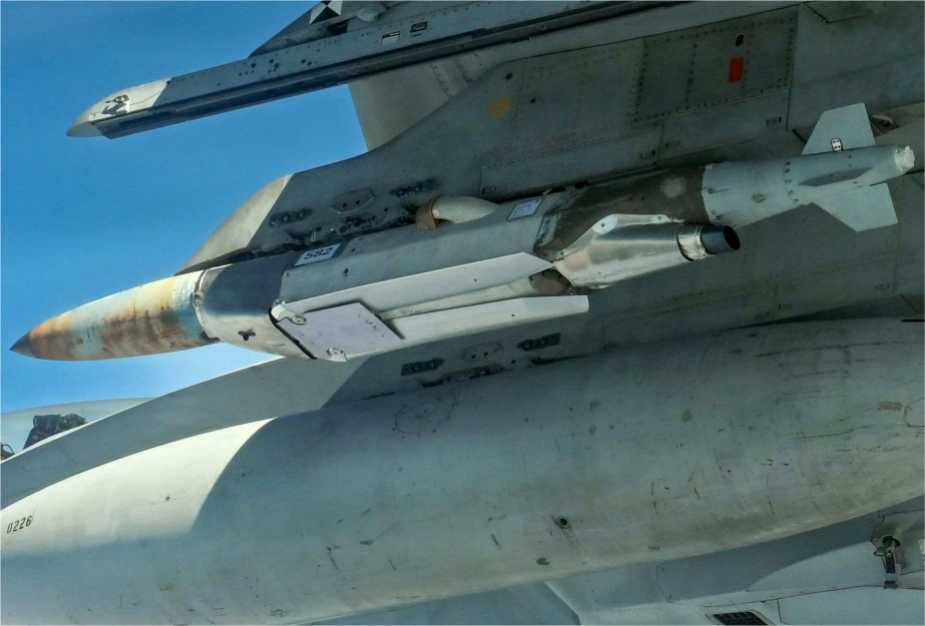
Bombs.

GBU-75 JDAM-LR Joint Direct Attack Munition Long-Range Bomb.

GBU-75 JDAM-LR Joint Direct Attack Munition Long-Range precision-guided air-to-surface glide bomb United States specifications technical data review fact sheet pictures video

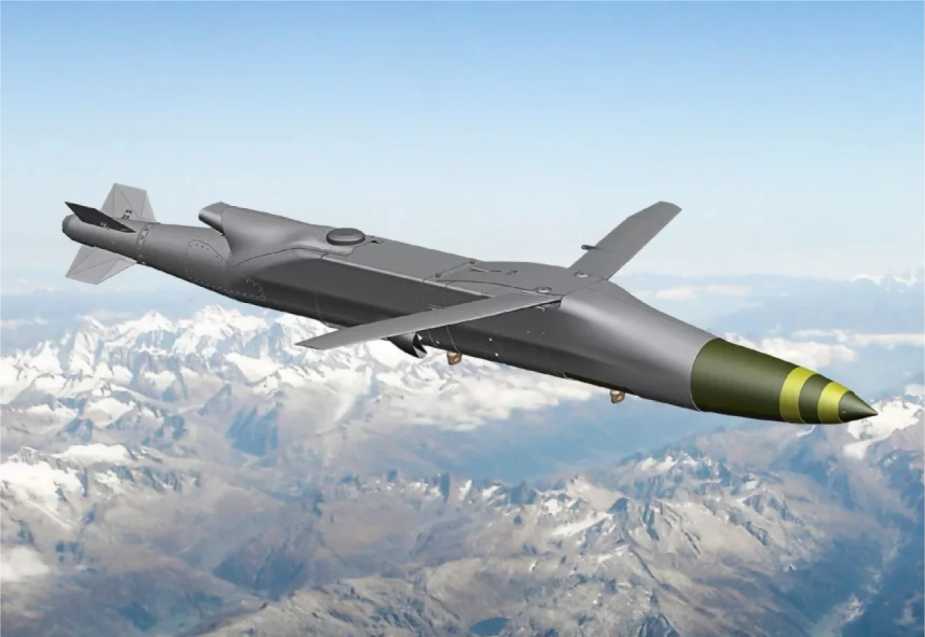
The GBU-75 JDAM-LR (Joint Direct Attack Munition Long Range) is a new-generation long-range precision-strike weapon developed by Boeing for the U.S. military. Derived from the extensive JDAM program, it is intended to provide an affordable and mass-producible stand-off weapon for conventional land attack, naval strike and maritime aerial-mining missions in contested operational environments.

Country users: United States

Description

The Boeing GBU-75 JDAM-LR (Joint Direct Attack Munition Long Range) is an air-launched long-range precision-guided weapon system developed as a major evolution of Boeing's Joint Direct Attack Munition family. Rather than serving simply as another modification of the conventional JDAM guided bomb, the GBU-75 was conceived to expand the family into the long-range stand-off strike category while retaining the production, integration and logistical advantages associated with the existing JDAM ecosystem.

Boeing funded a significant portion of the weapon's early development internally, investing nearly $100 million in the program before its transition toward initial production. This company-funded effort was intended to accelerate development and demonstrate how an established precision-munition product line could be adapted to meet growing U.S. military demand for larger inventories of affordable stand-off weapons.

A major program milestone was announced on August 5, 2026, when the U.S. Air Force awarded Boeing a $75 million Undefinitized Contract Action (UCA) covering acquisition of the BSU-111/B Payload Delivery Unit (PDU). The action cleared Boeing for initial production of PDUs for the U.S. Navy and represented the first production contract associated with the JDAM-LR program.

The production weapon has received the U.S. military designation GBU-75, establishing JDAM-LR as a distinct member of the American guided-weapon inventory. Its emergence represents an important expansion of the JDAM concept, which originated as a means of transforming conventional gravity bombs into precision-guided weapons but has subsequently evolved to address increasingly diverse strike requirements.

Boeing developed JDAM-LR around extensive commonality with the existing JDAM enterprise. This approach is intended to exploit established manufacturing capacity, supply chains, aircraft integration work, maintenance experience and operational familiarity instead of creating an entirely independent weapon ecosystem. Boeing consequently positions the GBU-75 for high-volume production and comparatively rapid introduction aboard aircraft already associated with JDAM operations.

The program also reflects increasing U.S. emphasis on affordable mass for long-range precision strike. Operations against sophisticated anti-access/area-denial environments can require substantial inventories of stand-off weapons, creating cost and magazine-depth pressures when forces depend exclusively on specialized long-range missiles. JDAM-LR is intended to provide another option for expanding precision-strike capacity while allowing combat aircraft to operate at greater separation from defended objectives.

Its mission spectrum extends beyond conventional attacks against land targets. Boeing identifies precision conventional land strike, naval strike and maritime aerial mining as primary applications, giving the program relevance to both U.S. Air Force and U.S. Navy operations. The maritime applications are particularly noteworthy because they expand the JDAM lineage into stand-off missions conducted against or within contested sea areas.

Before the initial production decision, JDAM-LR completed its first flight test off the coast of California. Boeing reported that the demonstration met its planned objectives and confirmed the system's ability to complete its predefined flight profile while maintaining guidance toward the intended target. The successful demonstration provided an important developmental milestone before initial production authorization.

With the GBU-75 designation, BSU-111/B production activity and initial U.S. Navy requirement, JDAM-LR represents one of the most substantial developments of the JDAM concept. Boeing positions the system as an affordable, sustainable and scalable long-range strike solution intended to increase the number of precision weapons available for operations against land and maritime threats in contested battlespace.

GBU-75 JDAM-LR variants:

- GBU-75 JDAM-LR: The production-designated Joint Direct Attack Munition Long Range, developed for long-range precision engagement of land and maritime targets. The GBU-75 designation identifies the complete operational weapon configuration entering initial production for U.S. military requirements.
- BSU-111/B Payload Delivery Unit (PDU): The PDU identified in the August 2026 U.S. Air Force contracting action. The $75 million UCA authorized acquisition of BSU-111/B units and cleared Boeing for initial production of PDUs for the U.S. Navy.
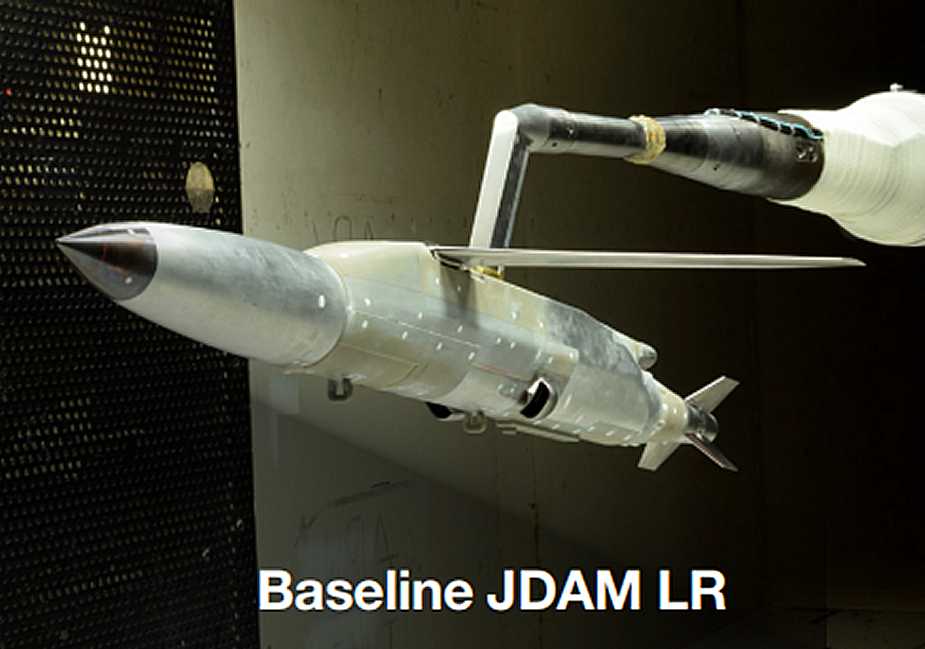
- Baseline JDAM-LR: The principal long-range strike configuration developed around the JDAM-LR architecture for precision conventional strike. It forms the technological basis from which specialized mission configurations can be derived.
- Quickstrike Long Range: A JDAM-LR-related configuration intended for stand-off maritime aerial mining, extending the Quickstrike mission concept by permitting mine delivery from considerably greater distances than traditional direct-overflight employment.
- Maritime Strike: A mission configuration intended for naval strike operations, expanding JDAM-LR beyond conventional land attack and providing the architecture with a dedicated maritime combat application.

Back to top

Technical Data

  • Design

    The GBU-75 JDAM-LR introduces a fundamentally different propulsion and aerodynamic architecture from the conventional JDAM family. Boeing combines the established weapon concept with a wing kit and compact air-breathing turbojet engine, allowing the munition to sustain powered flight rather than relying exclusively on gravity and aerodynamic energy after release. The wing assembly supplies the lifting surface necessary for efficient long-distance flight, while the compact turbojet provides sustained propulsion over the extended mission profile. This powered arrangement enables JDAM-LR to exceed the engagement distance achievable by standard JDAM or unpowered wing-assisted derivatives while maintaining the program's emphasis on comparatively low-cost manufacture. Boeing's previously released program information also describes provisions for optional onboard electrical-power enhancements and modular mission equipment. Exact production dimensions, overall launch weight, wingspan, turbojet thrust, fuel capacity and flight speed have not been publicly disclosed for the GBU-75/BSU-111/B configuration and should therefore not be inferred from conventional JDAM specifications.

  • Guidance Systems

    The GBU-75 JDAM-LR guidance system leverages the proven JDAM guidance tail kit and existing aircraft interface, preserving a major element of commonality with Boeing's established precision-guided weapon family. During the first flight test off the California coast, Boeing reported that the weapon successfully used military-code GPS navigation while maintaining consistent guidance toward its target throughout the predefined test profile. The architecture is also designed around an open and modular approach that can accommodate additional mission equipment, with Boeing having identified potential enhancements including seekers, data links, other mission avionics and increased onboard electrical power. This modularity provides a pathway for mission-specific configurations without requiring the entire weapon architecture to be redesigned. Existing JDAM aircraft interfaces and associated weapon-employment infrastructure are particularly important because they are intended to reduce the time and engineering burden required to introduce JDAM-LR onto compatible combat aircraft.

  • Warhead

    The GBU-75 JDAM-LR is designed around a 500 lb-class (226 kg) payload capacity, allowing a significant mission payload to be carried over its extended stand-off envelope. Boeing describes the system as a Payload Delivery Unit architecture, reflecting its ability to support multiple operational applications rather than restricting the design to a single land-attack warhead. The announced mission portfolio encompasses precision conventional land strike, naval strike and maritime aerial mining, with specialized payload arrangements applicable to the intended target set. Boeing's earlier JDAM-LR material also referenced an all-Mk 82 form factor payload as one configuration concept, while Quickstrike Long Range applies the architecture to stand-off mine delivery. Detailed explosive composition, individual production warhead designation, fuze model and terminal-effect options for the GBU-75 have not been publicly detailed in Boeing's August 2026 production announcement.

  • Combat Use

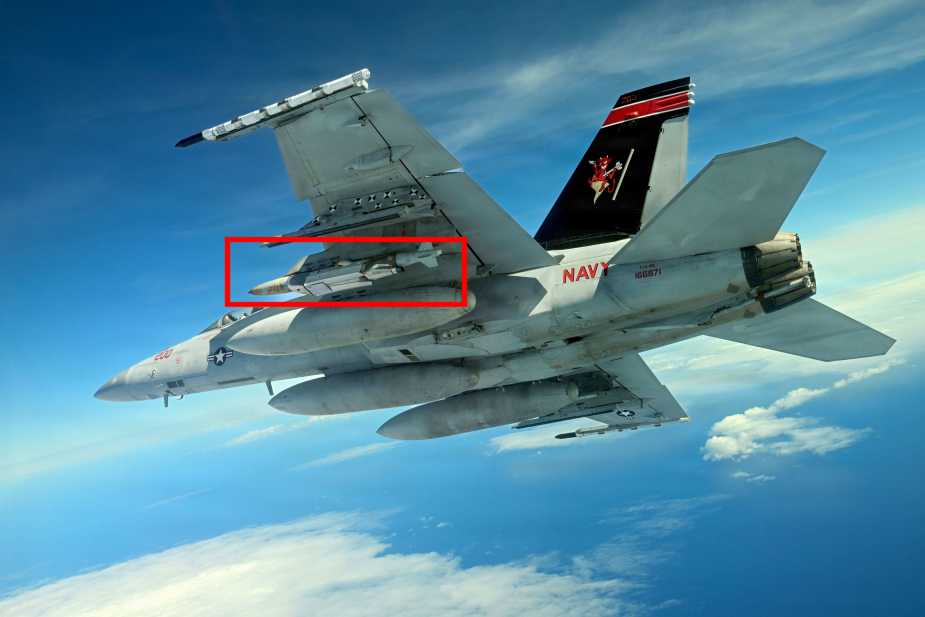
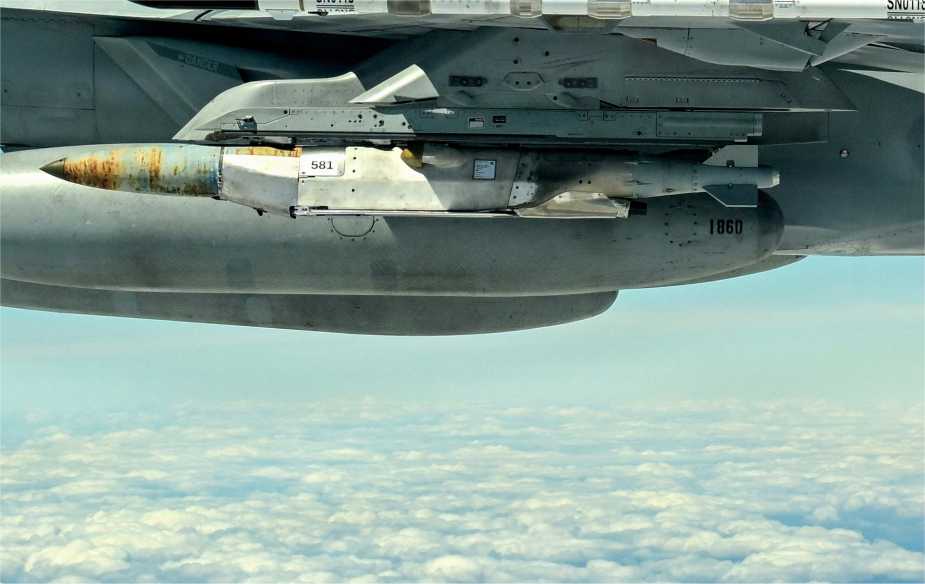
    The GBU-75 JDAM-LR is specified by Boeing as capable of traveling more than 300 nautical miles (approximately 556 km) while carrying its 500 lb-class payload, placing it firmly within the long-range stand-off weapon category. Boeing's development approach emphasizes compatibility with existing JDAM infrastructure, and the company states that JDAM-LR can be rapidly integrated with aircraft capable of carrying conventional JDAM, using the established JDAM aircraft interface. Its extended reach is intended to permit weapon employment from beyond the effective range of many hostile defenses and to increase the number of affordable long-range weapons available for contested operations. Boeing identifies conventional land strike, naval strike and maritime aerial mining as principal missions. The weapon's first flight test demonstrated sustained powered flight over a predefined profile together with military-code GPS navigation and guidance toward the target, while the subsequent U.S. Air Force production action moved the system from company-funded development toward initial production for U.S. Navy requirements.

Back to top

Specifications

  • Type

    Long-range powered precision-guided air-to-surface munition

  • Country users

    United States

  • Designer Country

    United States - Boeing

  • Guidance Systems

    JDAM-derived guidance tail kit with military-code GPS navigation; modular architecture supports additional mission avionics

  • Launch Weight

    Complete launch weight not publicly disclosed; 500 lb-class (226 kg) payload capacity

  • Range

    More than 300 nautical miles (556+ km) with a 500 lb-class payload

  • Launch Aircraft

    Potential GBU-75 JDAM-LR launch platforms include the F/A-18E/F Super Hornet, F-35A Lightning II, F-35B Lightning II, F-35C Lightning II, F-15E Strike Eagle, F-15EX Eagle II, F-16 Fighting Falcon, B-1B Lancer, B-2A Spirit, and B-52H Stratofortress, as these aircraft support conventional JDAM carriage in relevant configurations

  • Accuracy

    65 km/h road speed

  • Ceiling

    No data

  • Dimensions

    Length: ? m; Wingspan: ? m; Diameter: ? m

Back to top

Details View

Back to top

Photo Gallery

Back to top
Copyright © 2019 - 2024 Army Recognition | Webdesign by Zzam