Bombs.
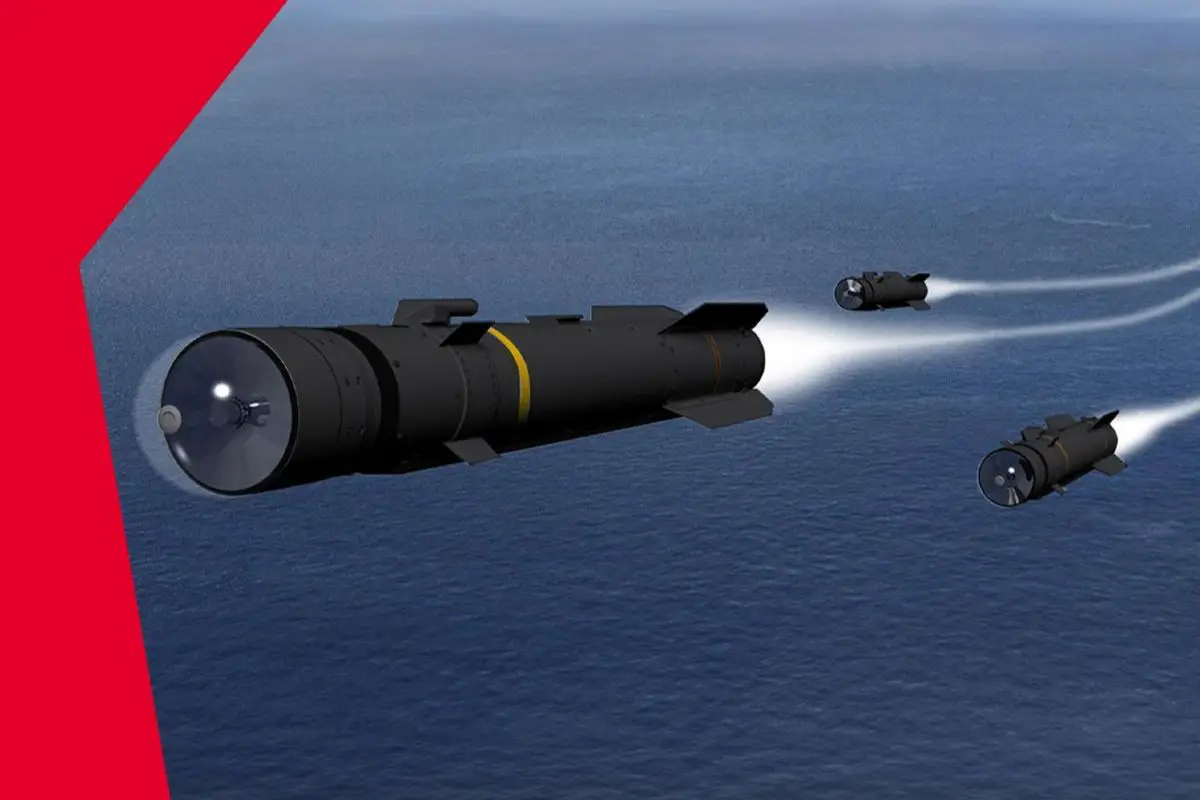
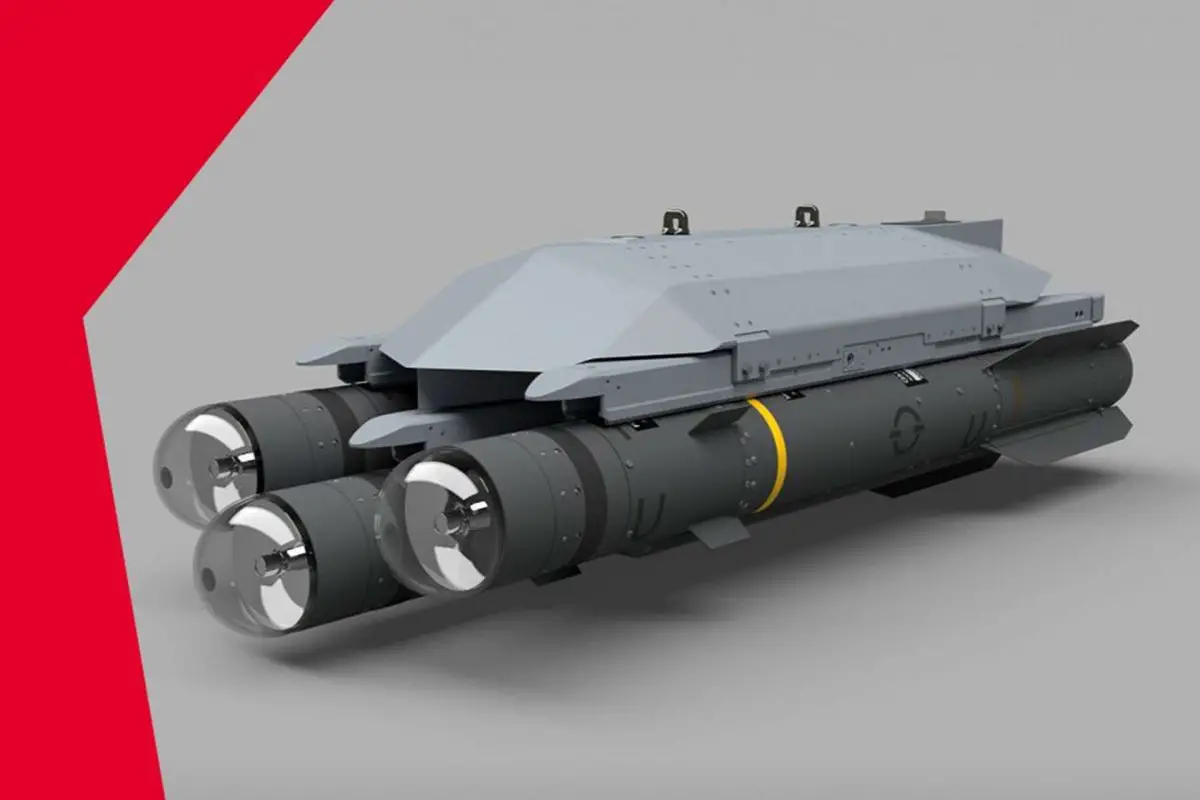
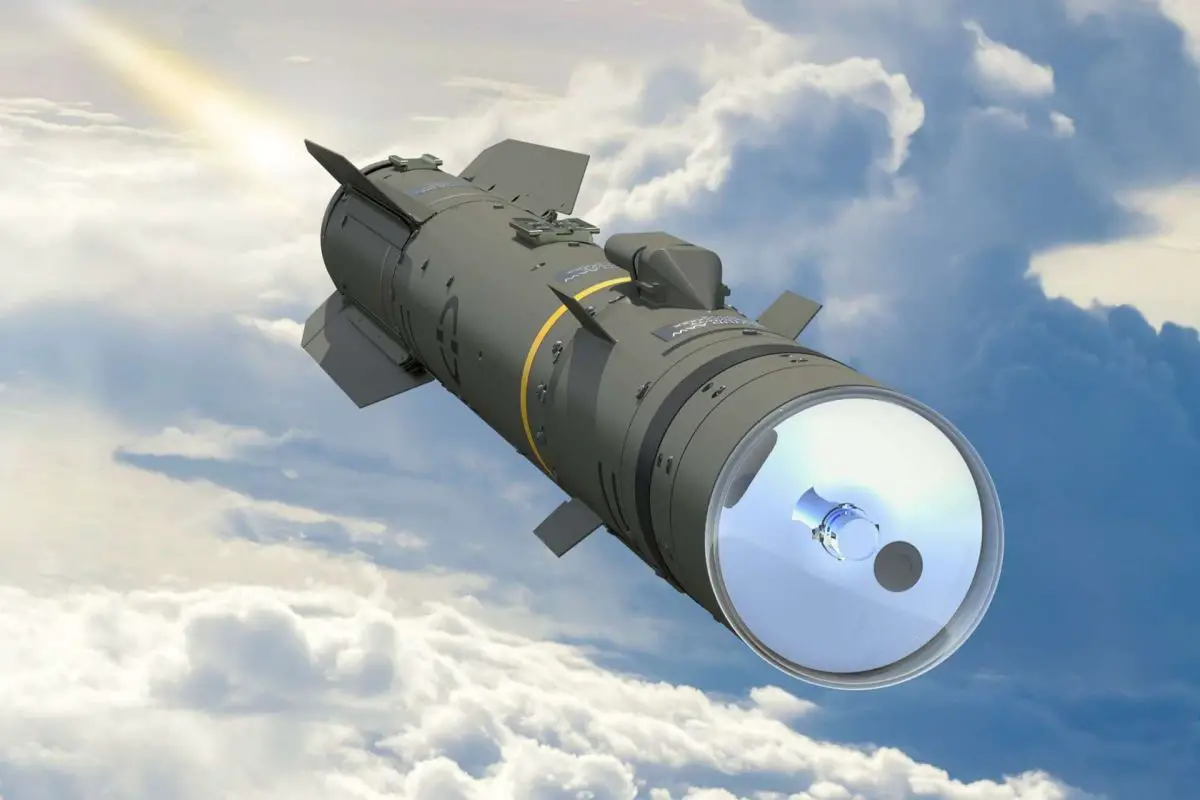
Brimstone air-to-surface missile (MBDA).

The MBDA Brimstone is a United Kingdom-developed precision-guided missile family designed for the engagement of main battle tanks, armored fighting vehicles, self-propelled artillery, mobile air-defense systems, missile launchers, fortified positions, light vehicles, fast attack craft and other moving or time-sensitive targets. Although originally conceived as an air-launched anti-armor weapon for Royal Air Force combat aircraft, the family has evolved into a multi-platform strike system suitable for fixed-wing aircraft, remotely piloted aircraft, helicopters, tactical ground vehicles, coastal-defense launchers, naval vessels and uncrewed surface platforms. Contemporary Brimstone variants combine millimetric-wave active radar homing, semi-active laser guidance, inertial midcourse navigation, programmable engagement modes and a tandem multi-effects warhead architecture within a compact missile designed to support MBDA’s “one missile, multi-platform” concept.
Country users : United Kingdom, Saudi Arabia, Ukraine and Poland. The United Kingdom is the original developer and principal operator, employing Brimstone from Royal Air Force combat aircraft and developing additional air- and surface-launched applications. Saudi Arabia has acquired Brimstone for its combat-aircraft fleet. Ukraine has received Brimstone missiles from the United Kingdom for operational surface-launched employment. Poland selected Brimstone for the Ottokar-Brzoza tank-destroyer program and associated land-based anti-armor capability.

Description
Type, manufacturer and country of origin: The Brimstone is a British, supersonic precision-strike missile engineered for air-to-surface, surface-to-surface and maritime engagements. MBDA UK is the principal industrial authority for the missile family, including its seeker architecture, multi-rail launcher integration and continuing development under the Brimstone 2 and Brimstone 3 programs. Within the family, the contemporary Brimstone 3 configuration represents the most advanced publicly identified standard, combining dual-mode guidance, improved propulsion, updated processing and a broadened multi-platform integration concept.
Development: The program emerged from a United Kingdom requirement for a fast-jet-launched anti-armor weapon capable of attacking multiple armored vehicles from stand-off distance. Its original engineering formula combined a compact solid-propellant missile body with a millimetric-wave active radar seeker and tandem shaped-charge warhead, permitting autonomous target acquisition after release from a high-performance aircraft. Although its diameter and general form reflected earlier Hellfire-class dimensions, the British weapon was extensively redesigned for high-speed external carriage, automated target search and multi-missile employment.
Evolution of the family: Brimstone subsequently developed into a modular precision-strike family rather than a single fixed anti-tank missile. Successive versions introduced semi-active laser guidance, improved dual-mode seekers, new insensitive-munition-compliant propulsion, enhanced warhead effects, revised digital processing and broader launch compatibility. The external form remained broadly consistent, but the seeker, rocket motor, mission computer, warhead and engagement software changed substantially between production standards.
Brimstone mission concept: The current Brimstone concept is intended to provide one compact missile for multiple target classes and launch platforms. Its dual-mode seeker and programmable engagement logic allow the same missile family to prosecute main battle tanks, infantry fighting vehicles, self-propelled artillery, mobile air-defense systems, missile launchers, light vehicles, fortified positions and small maritime craft. This reduces the need to load different missile types for separate target categories and supports MBDA’s “one missile, multi-platform” approach.
Operational employment: The missile supports laser-designated attack, radar-guided terminal engagement, lock-on after launch and rapid salvo employment. In semi-active laser mode, the weapon homes on coded reflected laser energy supplied by the launch platform or a third-party designator. In radar-assisted employment, the inertial system carries the missile toward the designated engagement area before the millimetric-wave seeker acquires and tracks the target. This allows offset attacks, remote designation, engagements through smoke or dust and attacks against moving targets beyond the launcher’s direct line of sight.
Service maturity: The original Brimstone entered Royal Air Force service in 2005 on the Panavia Tornado GR4. Dual Mode Brimstone later gained operational prominence in Afghanistan and Libya, where its combination of high precision, moving-target capability and relatively limited collateral-effects footprint proved particularly valuable. The missile family has since been integrated or selected for additional airborne and ground-based roles, including Eurofighter Typhoon, remotely piloted aircraft and surface-launched anti-armor systems. Exact production totals and the detailed status of all later Brimstone 3 sub-configurations are not consistently disclosed in public sources.
Brimstone variants:
- Brimstone 1: Initial production configuration using a millimetric-wave active radar seeker and a tandem shaped-charge anti-armor warhead. It established the missile’s basic aerodynamic arrangement, compact three-round launcher concept and autonomous target-search capability.
- Dual Mode Brimstone: Improved configuration adding semi-active laser guidance to the original millimetric-wave radar seeker. The dual-mode arrangement enabled direct operator designation while retaining radar-assisted terminal guidance in darkness, smoke, dust and adverse weather.
- Brimstone 2: Major upgrade incorporating a new rocket motor, improved dual-mode seeker, enhanced warhead, revised digital guidance electronics, increased range, better reliability and insensitive-munitions-compliant components. It was designed to improve performance against moving and maneuvering targets while retaining compatibility with the existing three-round launcher.
- Brimstone 3: Later-generation configuration developed to support broader air, land and maritime integration. Publicly identified improvements include enhanced processing, updated mission software, refined seeker performance, improved propulsion and growth capacity for future platform and network integration.
- Brimstone 3B: Further development standard associated with additional hardware, software, production and integration improvements. Detailed differences in seeker performance, range, warhead effects and propulsion remain limited in publicly available information.
- Surface-Launched Brimstone: Land-based configuration adapted for tactical vehicles or fixed launch systems. It is intended for mobile anti-armor warfare, battlefield overwatch, precision attack against moving targets and networked engagement using third-party targeting data.
- Brimstone HMT Overwatch: Vehicle-mounted concept combining multiple Brimstone missiles with the Supacat HMT600 high-mobility platform. The system is designed for concealed launch, rapid salvo fire, dispersed operations and shoot-and-scoot employment.
- Sea Spear: Maritime adaptation of Brimstone technology intended for the engagement of fast inshore attack craft, patrol boats, uncrewed surface vessels and other maneuvering littoral threats. It retains the compact missile form and dual-mode guidance principles of the land-attack family.
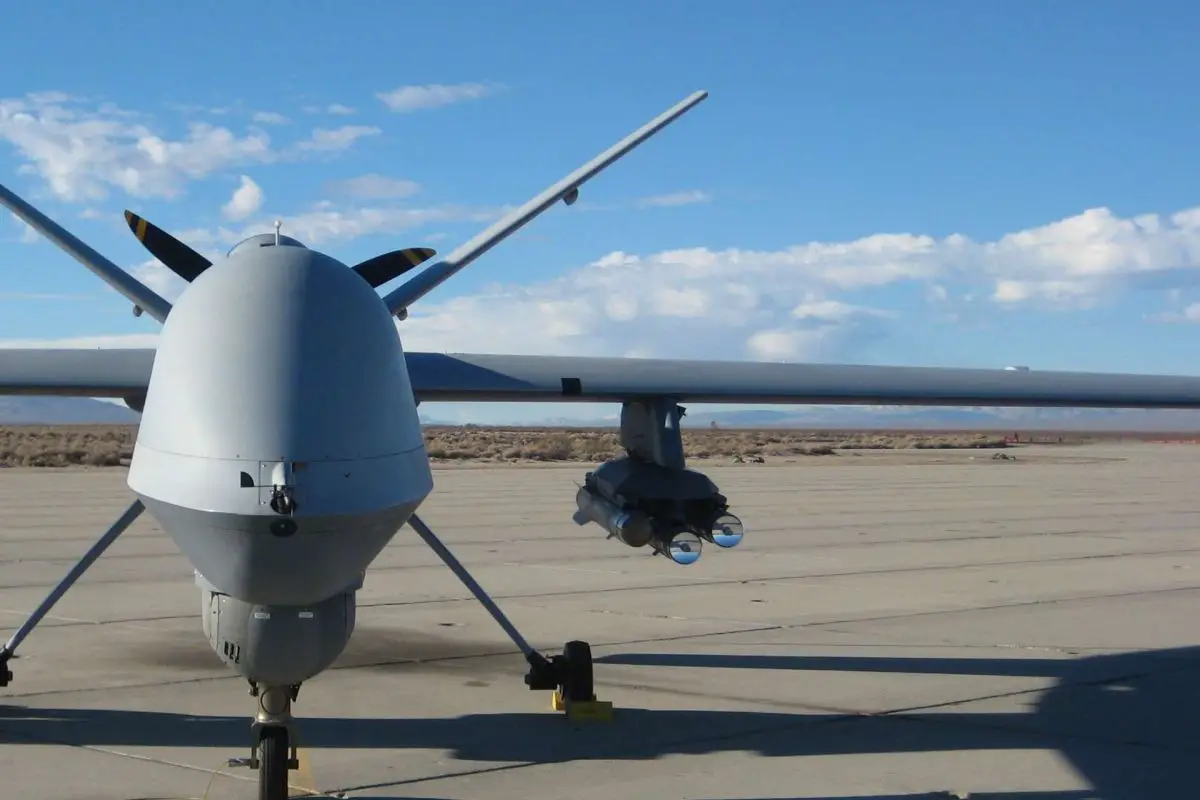
- Air-Launched Brimstone: Principal operational configuration carried by fast combat aircraft and selected remotely piloted platforms. The missile has been associated with the Panavia Tornado GR4, Eurofighter Typhoon and the United Kingdom’s Protector RG Mk1 program.
- Helicopter-Launched Brimstone: Rotary-wing integration configuration intended to provide attack helicopters with a compact, stand-off precision weapon for use against armored vehicles, mobile air-defense systems and other battlefield targets.
- Brimstone for remotely piloted aircraft: Configuration optimized for medium-altitude, long-endurance remotely piloted systems. Its relatively low mass and compact launcher arrangement allow persistent armed-overwatch aircraft to carry several precision-guided missiles without the payload penalty associated with larger air-to-surface weapons.
- Training and inert rounds: Captive-carry, handling and instructional configurations used for launcher testing, maintenance training, aircrew familiarization and integration activity without an operational warhead or live propulsion sequence.
Technical Data
-
Design
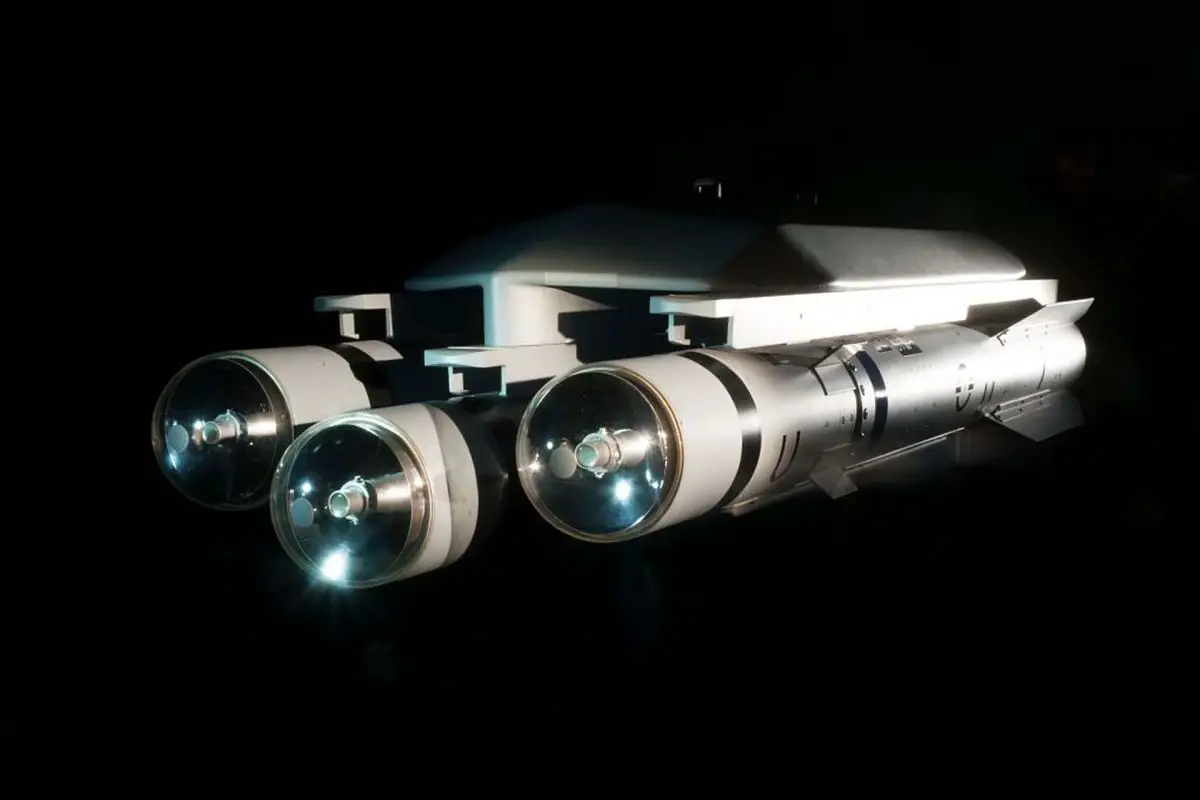
The Brimstone missile has a compact cylindrical airframe approximately 1.8 meters in length and 0.18 meters in diameter, with a launch weight of about 50 kg. Its internal architecture is divided into seeker, guidance-electronics, warhead, propulsion and flight-control sections, while cruciform aerodynamic surfaces provide stability and maneuvering after launch. The missile’s narrow body and low mass allow three rounds to be carried on a single aircraft launcher, while the same basic weapon can also be integrated with tactical vehicles, naval craft and other modular launch systems in support of MBDA’s “one missile, multi-platform” concept.
-
Warhead
Brimstone carries a tandem shaped-charge warhead developed primarily for the defeat of armored vehicles protected by conventional or explosive reactive armor. The precursor charge is intended to disrupt the reactive armor element before the main shaped charge attacks the underlying vehicle structure. Later Brimstone standards are described as having improved multi-target effects, allowing the missile to engage main battle tanks, infantry fighting vehicles, mobile air-defense systems, artillery vehicles, missile launchers, light vehicles, fortified positions and small maritime craft. The precise explosive composition, penetration capability, liner geometry and fuze programming remain undisclosed.
-
Propulsion
The missile is powered by a solid-propellant rocket motor that accelerates it to supersonic speed shortly after launch. Open-source reporting commonly places Brimstone’s speed at approximately Mach 1.3, although the exact velocity profile varies according to launch altitude, platform speed, atmospheric conditions and terminal maneuvering. Brimstone 2 and later versions incorporate an improved propulsion system intended to provide greater range, enhanced reliability and better insensitive-munitions compliance. Public range figures differ by platform and launch profile, with lower-altitude or rotary-wing engagements generally associated with ranges above 12 km and fast fixed-wing employment reported at more than 20 km, with some later profiles cited in the 40 km class or beyond.
-
Guidance System
Current Brimstone variants use dual-mode guidance combining millimetric-wave active radar homing, semi-active laser guidance, inertial navigation and digital flight-control electronics. The missile can be employed in laser-designated, radar-assisted and lock-on-after-launch modes, with target designation provided by the firing platform or by a third-party observer. The inertial system carries the missile toward a programmed engagement area before the seeker acquires the target, enabling offset attacks, remote designation and strikes against moving targets beyond the launcher’s immediate line of sight. The radar seeker allows terminal tracking through smoke, dust, darkness and adverse weather, while the laser channel provides direct target selection in cluttered or collateral-sensitive environments.
-
Combat Use
Brimstone is employed from combat aircraft and has also been developed for remotely piloted aircraft, helicopters, tactical ground vehicles, coastal-defense systems and naval platforms. It is optimized for mixed-target operations in which crews may encounter armored vehicles, mobile air-defense systems, artillery, fortified positions, light vehicles and small vessels during the same mission. Remote designation, lock-on-after-launch employment and rapid salvo firing reduce the time the launch platform must remain exposed, while the compact three-round launcher increases the number of precision weapons available on a single pylon. The missile entered Royal Air Force service in 2005 and has since been used operationally in several conflicts, while later Brimstone 2 and Brimstone 3 standards have expanded its range, target set and multi-platform integration potential.
Specifications
-
Type
Short-to-medium-range, supersonic air-to-surface, surface-to-surface and maritime precision-guided missile
-
Country users
United Kingdom, Saudi Arabia, Ukraine and Poland. The United Kingdom is the original operator and principal user. Saudi Arabia has acquired Brimstone for combat-aircraft employment, Ukraine has received the missile for operational surface-launched use, and Poland selected Brimstone for its Ottokar-Brzoza tank-destroyer program.
-
Designer Country
United Kingdom
-
Manufacturer
MBDA UK
-
Propulsion
Solid-propellant rocket motor
-
Weight
Approximately 50 kg, depending on missile variant and configuration
-
Speed
Supersonic, commonly cited at approximately Mach 1.3, depending on launch altitude, trajectory, atmospheric conditions and missile variant
-
Range
- Original Brimstone: approximately 12 km class under lower-altitude or rotary-wing launch conditions
- Brimstone 2: more than 12 km from rotary-wing or comparable low-altitude launch profiles
- Brimstone 2 and later fixed-wing profiles: more than 20 km
- Later high-altitude fixed-wing profiles: commonly reported in the 40 km class or beyond
- Published range figures vary according to launch altitude, platform speed, trajectory, atmospheric conditions and missile version. MBDA does not publicly provide one universal maximum range for all launch conditions.
-
Dimensions
Length: approximately 1.8 m, Diameter: approximately 0.18 m, Wingspan: approximately 0.30 m with aerodynamic surfaces deployed
-
Aircraft Launchers
Panavia Tornado GR4, Eurofighter Typhoon, Protector RG Mk1 and other compatible fixed-wing, rotary-wing and remotely piloted aircraft configurations. Brimstone is commonly carried on a compact three-round launcher that allows several missiles to be installed on a single aircraft weapon station.
-
Guidance Systems
- Primary: Dual-mode millimetric-wave active radar homing and semi-active laser guidance
- Midcourse: Inertial navigation system with digital autopilot
- Engagement modes: Laser-designated attack, radar-assisted terminal engagement, lock-on after launch, autonomous target search, salvo attack and ripple fire
- Designation: Launch-platform or remote laser designation, with target data supplied by airborne, ground-based or maritime sensors
- Terminal functions: Moving-target tracking, engagement through smoke, dust, darkness and adverse weather, target discrimination and radar-assisted terminal homing