Bombs.
AGM-114 HELLFIRE (Lockheed Martin).

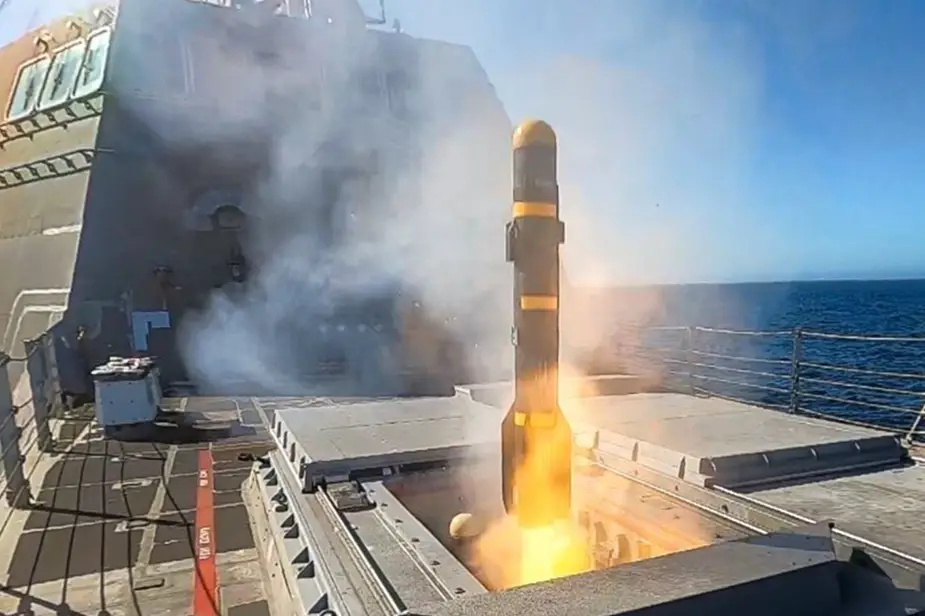
The AGM-114 HELLFIRE is a United States-developed precision-guided missile family designed for engagement of armored vehicles, fortified positions, air-defense equipment, small vessels, light vehicles and exposed personnel. Although conceived as a helicopter-launched anti-armor weapon, the family has evolved into a multi-platform strike system carried by attack helicopters, unmanned aircraft, fixed-wing aircraft, surface vehicles, naval craft and portable ground launchers. The contemporary AGM-114R Multi-Purpose HELLFIRE II combines semi-active laser guidance, selectable flight profiles and a multi-effects warhead in a single missile intended to replace several earlier laser-guided variants.
Country users : United States and numerous international operators, including Australia, Bahrain, Egypt, France, Greece, India, Indonesia, Iraq, Israel, Italy, Japan, Jordan, Kuwait, Lebanon, the Netherlands, Norway, Pakistan, Poland, Qatar, Saudi Arabia, Singapore, South Korea, Spain, Taiwan, Tunisia, Türkiye, the United Arab Emirates and the United Kingdom. Lockheed Martin reported the HELLFIRE family as being in service with 29 customers in 2021.

Description
Type, manufacturer and country of origin: The AGM-114 HELLFIRE is an American, supersonic precision-strike missile engineered for air-to-surface and surface-launched engagements. Lockheed Martin Missiles and Fire Control is the principal industrial authority for the current HELLFIRE II architecture, its M299 launcher interface and the associated JAGM transition pathway. Within the family, the AGM-114R “Romeo” is the consolidated semi-active-laser configuration intended to replace several mission-specific HELLFIRE II rounds.
Development: The program emerged from a 1970s U.S. Army requirement for a helicopter-borne anti-armor weapon able to attack tanks beyond the practical reach of vehicle-mounted direct-fire systems. Its original engineering formula paired a compact solid-propellant airframe with coded laser homing and a shaped-charge warhead, permitting designation either from the launch aircraft or from a separate forward observer.
Evolution of the family: HELLFIRE subsequently developed into a modular weapons series rather than a single fixed missile. Successive versions introduced tandem-charge penetrators for explosive reactive armor, blast-fragmentation and metal-augmented warheads, digital guidance electronics, unmanned-aircraft launch profiles and the millimeter-wave-radar seeker of the AGM-114L Longbow HELLFIRE. The external form remained broadly familiar, but the seeker, fuze, warhead and flight-control logic changed significantly between variants.
AGM-114R mission concept: The AGM-114R was created to compress the functions of several laser-guided HELLFIRE II models into one loadout. Its multi-purpose warhead and programmable trajectory logic allow the same missile to prosecute armored vehicles, short-range air-defense systems, patrol craft, utility vehicles, buildings, caves and exposed personnel. This reduces pre-mission weapon specialization and gives aircrews greater freedom when the actual target set differs from the original intelligence picture.
Operational employment: The missile supports both lock-on before launch and lock-on after launch, with terminal homing on coded reflected laser energy. In LOAL employment, the inertial measurement unit carries the missile toward a predicted acquisition basket before the seeker captures the designated target. This enables offset attacks, remote designation and engagements outside the platform’s immediate forward axis, while reducing the time the launch aircraft must remain exposed.
Service maturity: The original HELLFIRE entered U.S. Army aviation service during the 1980s; no single public exhibition can be treated as its definitive first presentation. By 2021, Lockheed Martin reported more than 100,000 HELLFIRE missiles delivered, integration on over 17 platform types, service with 29 customers and an in-flight reliability rate above 98 percent—figures that underline the system’s unusual production depth and cross-platform maturity.
AGM-114 HELLFIRE Variants:
- AGM-114A Basic HELLFIRE: Initial production configuration using semi-active laser guidance and a single shaped-charge anti-armor warhead. It established the missile’s basic aerodynamic arrangement and helicopter-launch concept.
- AGM-114B: Improved early version configured principally for United States naval-service requirements, including shipboard-compatible safety provisions and a reduced-signature propulsion arrangement.
- AGM-114C: Army-oriented counterpart to the AGM-114B, retaining the improved guidance and propulsion characteristics without all naval-specific safety equipment.
- AGM-114F Interim HELLFIRE: Anti-armor development incorporating a tandem shaped-charge warhead. The precursor charge was intended to initiate explosive reactive armor before the main charge attacked the underlying vehicle armor.
- AGM-114K HELLFIRE II: Principal laser-guided anti-armor HELLFIRE II version. It introduced improved digital guidance electronics, better target tracking and a tandem-charge warhead optimized for modern armored vehicles.
- AGM-114K2/K2A: Incrementally modified K-series configurations incorporating reliability, safety, warhead or production improvements while retaining the semi-active-laser anti-armor role.
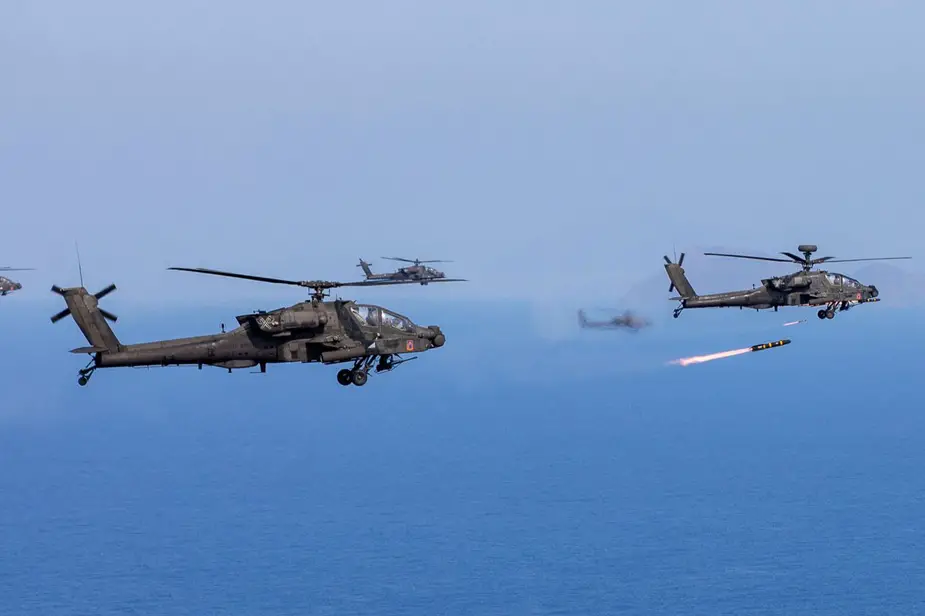
- AGM-114L Longbow HELLFIRE: Fire-and-forget anti-armor variant equipped with a millimeter-wave radar seeker. It is associated particularly with radar-equipped AH-64D and AH-64E Apache configurations and can continue its terminal attack without continuous laser designation.
- AGM-114M: Blast-fragmentation version intended for lightly protected vehicles, small vessels, structures and personnel rather than heavy main battle tank armor.
- AGM-114N: Specialized version using a metal-augmented-charge warhead. Its enhanced pressure and thermal effects were developed for enclosed positions, buildings, caves and other targets where a conventional narrow shaped-charge jet would be less effective.
- AGM-114P: Semi-active-laser version adapted for launch from medium-altitude unmanned aircraft. Modified guidance and trajectory characteristics accommodate higher-altitude, lower-dynamic-pressure release conditions.
- AGM-114R Multi-Purpose HELLFIRE II: Current multi-role laser-guided configuration combining several target effects in one missile. It incorporates trajectory shaping, an inertial measurement unit, improved obscurant performance and a multi-purpose warhead.
- AGM-114R9X: Publicly reported low-collateral-damage derivative believed to employ kinetic impact and deployable blade-like structures instead of a conventional explosive warhead. Detailed configuration and performance information remain officially limited, and it is not described in the supplied Lockheed Martin commercial brochures.
- CATM-114 and inert training rounds: Captive-carry, handling and training configurations used for aircrew instruction, launcher testing and maintenance without an operational warhead or live propulsion sequence.
- AGM-179 JAGM: Not a HELLFIRE variant, but its operational successor in several applications. JAGM combines semi-active laser and millimeter-wave sensing and is designed to use much of the existing HELLFIRE launch and platform infrastructure.
Technical Data
-
Design
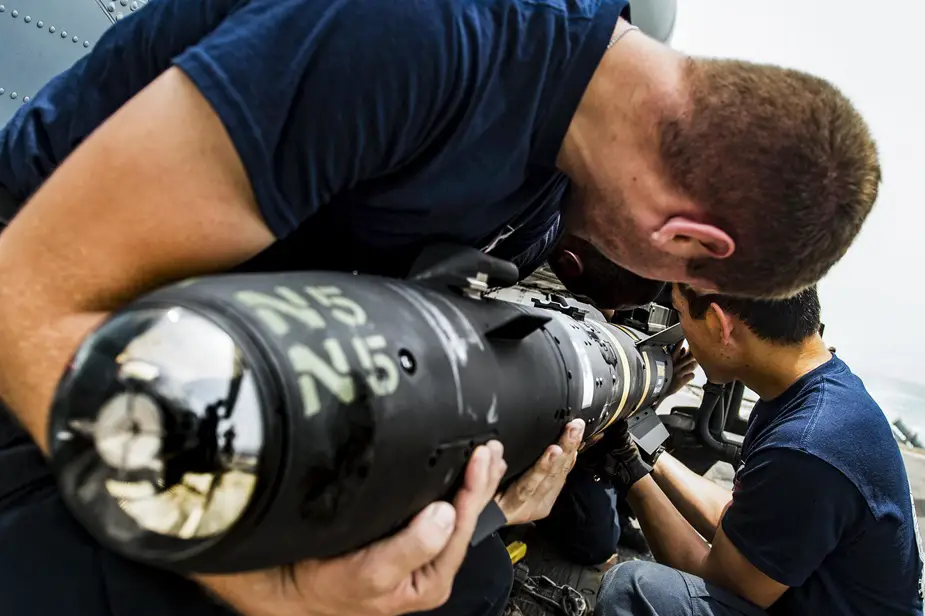
The AGM-114R Multi-Purpose HELLFIRE II has a compact cylindrical airframe measuring 1.63 meters in length and 0.178 meters in diameter, with a launch weight of 49.4 kg. Its internal architecture is divided into seeker, guidance-electronics, warhead, propulsion and flight-control sections, while cruciform aerodynamic surfaces provide stability and maneuvering after launch. The missile is compatible with aircraft, vehicle, boat and tripod-mounted launch systems, including the digitally controlled M299 launcher.
-
Warhead
The AGM-114R carries a multi-purpose warhead designed to replace several specialized semi-active-laser HELLFIRE variants within a single operational loadout. It can engage armored vehicles, air-defense systems, patrol boats, light vehicles, buildings, cave positions and personnel in the open. Programmable trajectory shaping and fuze logic allow the missile to adapt its impact geometry and terminal effect to different target categories, although the warhead’s exact explosive composition and armor-penetration performance remain undisclosed.
-
Propulsion
The missile is powered by a solid-propellant rocket motor that accelerates it to supersonic speed shortly after launch. Lockheed Martin specifies a maximum range of 8 km when fired from an altitude of 914 meters using a high lock-on-after-launch trajectory, or 7.1 km using a low or direct flight profile. Actual engagement range varies according to launch altitude, platform speed, atmospheric conditions and selected trajectory.
-
Guidance System
The AGM-114R uses coded semi-active laser guidance supported by an inertial measurement unit and digital flight-control electronics. It can operate in lock-on-before-launch or lock-on-after-launch modes, with laser designation provided by the firing platform or a remote observer. The inertial unit guides the missile toward a predicted acquisition area before the seeker locks onto reflected laser energy, enabling offset attacks and engagements against targets located beside or behind a properly integrated launch platform. Lockheed Martin also states that the missile offers improved tracking through dust, smoke, sea spray, water vapor and laser backscatter, with automatic target reacquisition after temporary track loss in low cloud.
-
Combat Use
The AGM-114R is employed from attack helicopters, unmanned aircraft, selected fixed-wing aircraft, ground vehicles, patrol boats and tripod launchers. It is optimized for mixed-target operations in which crews may encounter heavy armor, structures, small vessels and personnel during the same mission. Remote designation and lock-on-after-launch employment reduce the time the launch platform must remain exposed, while the M299 launcher allows HELLFIRE and JAGM missiles to be carried and fired in mixed order when supported by the host platform’s mission software. Lockheed Martin reported that the HELLFIRE family was combat-capable on more than 17 platform types and in service with 29 customers as of 2021.
Specifications
-
Type
Short-range, supersonic air-to-surface and surface-to-surface precision-guided missile
-
Country users
United States, Australia, Bahrain, Egypt, France, Greece, India, Indonesia, Iraq, Israel, Italy, Japan, Jordan, Kuwait, Lebanon, Netherlands, Norway, Pakistan, Poland, Qatar, Saudi Arabia, Singapore, South Korea, Spain, Taiwan, Tunisia, Türkiye, United Arab Emirates, United Kingdom. Lockheed Martin reported 29 HELLFIRE customers in 2021.
-
Designer Country
United States
-
Manufacturer
Lockheed Martin Missiles and Fire Control
-
Propulsion
Solid-propellant rocket motor
-
Launch Weight
49.4 kg for the AGM-114R Multi-Purpose HELLFIRE II
-
Range Missile
AGM-114R, LOAL high trajectory: 8.0 km
AGM-114R, LOAL low/direct trajectory: 7.1 km
Published figures apply to launch from an altitude of 914 m. -
Speed
Supersonic, approximately Mach 1.3, depending on launch altitude, trajectory and missile variant
-
Aircraft Launchers
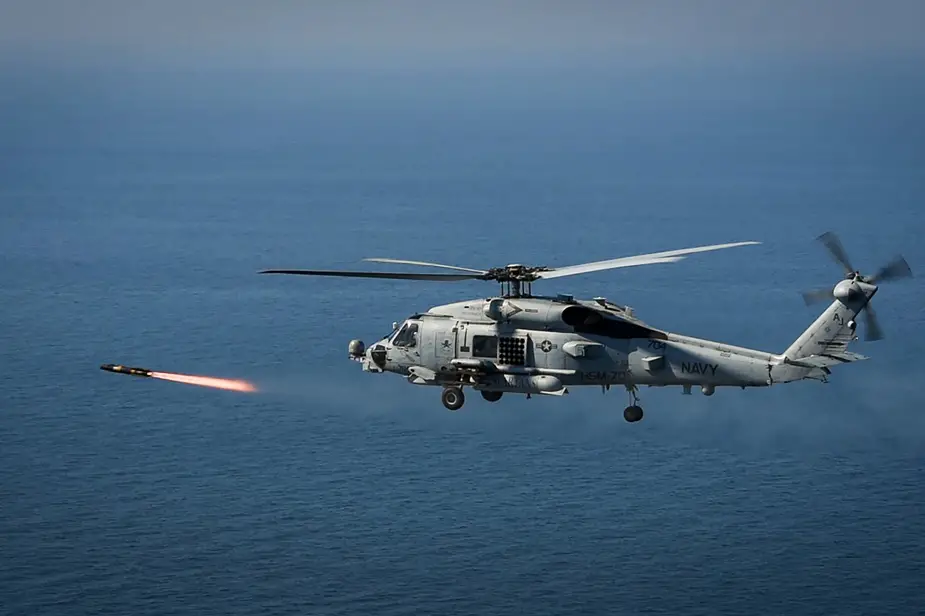
AH-64 Apache, AH-1W/Z Cobra/Viper, MH-60R/S Seahawk, Tiger ARH, MQ-1 Predator, MQ-9 Reaper and other compatible rotary-wing, fixed-wing and unmanned aircraft. The missile is commonly integrated through the M299 multi-rail launcher. Lockheed Martin reports HELLFIRE compatibility with more than 17 platform types.
-
Guidance Systems
Primary: Coded semi-active laser homing
Midcourse: Inertial Measurement Unit with digital autopilot
Engagement modes: Lock-on before launch and lock-on after launch
Designation: Launch-platform or remote laser designation
Terminal functions: Improved tracking through dust, smoke, water vapor and sea spray, with automatic reacquisition following temporary loss of laser track -
Dimensions
Length: 1.63 m; Diameter: 0.178 m; Wingspan: approximately 0.33 m with control surfaces deployed.