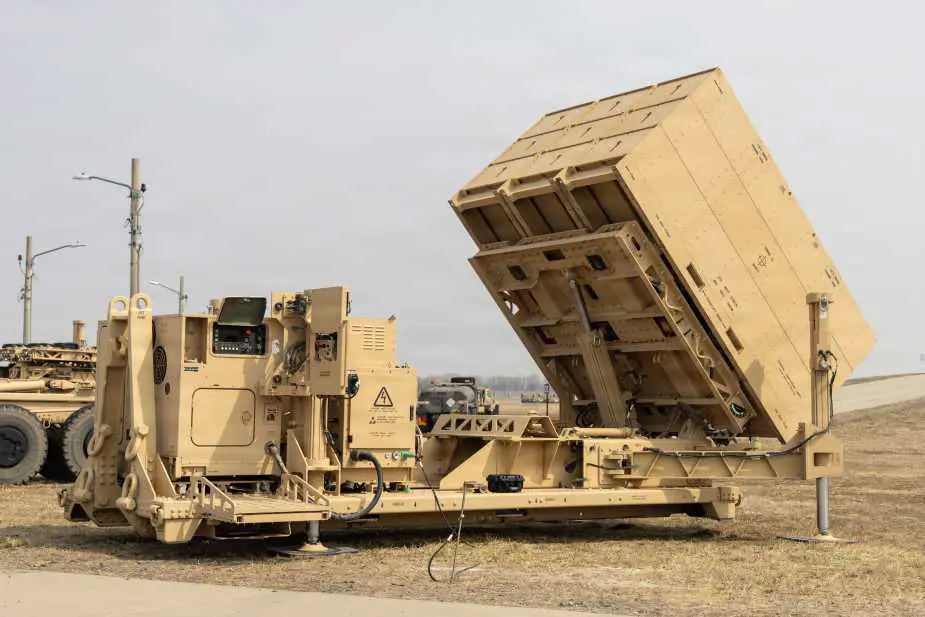
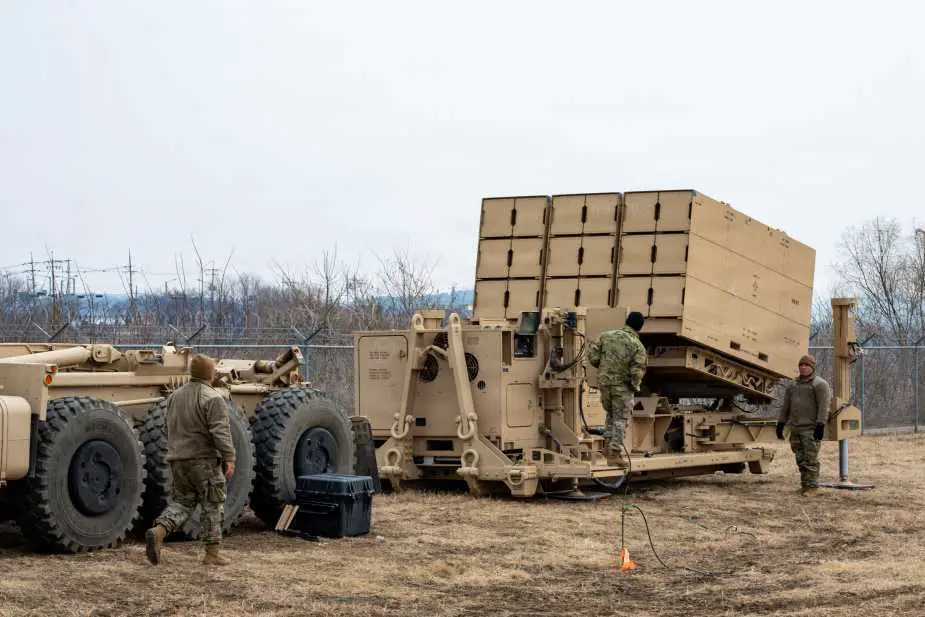
The U.S. Army’s Indirect Fire Protection Capability Increment 2 (IFPC Inc 2) is a transportable, ground-based air-defense system designed to protect fixed and semi-fixed sites. It combines the Dynetics Enduring Shield launcher with the AIM-9X Block II Sidewinder interceptor, Sentinel radar and the U.S. Army’s Integrated Air and Missile Defense Battle Command System (IBCS). The U.S. Army developed it to fill a gap between tactical short-range air defense and higher-tier systems such as Patriot and THAAD.
Country users:
- United States: The U.S. Army is the only publicly confirmed operator. The Army identifies the 1st Battalion, 51st Air Defense Artillery Regiment as its first IFPC battalion. U.S. Army prototypes are deployed to South Korea in FY2025. The Republic of Korea has no confirmed IFPC Inc 2 order or operator status. The Army has also announced fielding plans for Guam.
Key Tactical Insights:
• IFPC Main Roles and Missions: The system provides fixed and semi-fixed site defense against subsonic cruise missiles and uncrewed aircraft systems, while the U.S. Army includes rockets, artillery, and mortars within the wider operational requirement. Public test results currently cover a subset of these intended aerial threats.
• IFPC Firepower: Raytheon’s AIM-9X Block II Sidewinder missile serves as the first documented interceptor in the U.S. Army operational configuration, launched from a multi-tube mobile launcher designed to engage maneuvering airborne targets.
• IFPC Sensors and Survivability: The AN/MPQ-64 Sentinel radar supplies external air surveillance tracks to the launcher. Sentinel A3 served as the primary radar in the prototype configuration documented by the Pentagon’s operational test office, while the Government Accountability Office identifies the upgraded Sentinel A4 as the radar for the follow-on production configuration.
• IFPC Digital Architecture: Integration with the U.S. Army’s Integrated Battle Command System (IBCS) brings external radar tracks and launcher status into a common fire-control network. Leidos engineered the launcher’s open interfaces to accommodate future interceptor types and command-system options.
• IFPC Key Technical Specifications: Towed/mobile multi-cell air defense launcher | Coverage: 360-degree engagement azimuth (manufacturer specification) | Primary interceptor: Supersonic AIM-9X Block II Sidewinder | Ground-launched engagement envelope: Not publicly verified.







Key Technical Specifications
-
Launcher Unit
The IFPC is built around the Dynetics Enduring Shield launcher, a palletized unit that combines interceptor magazines, onboard power, a local operator interface and network equipment. The prototype carries up to three self-contained All-Up-Round Magazines. Reported launcher capacity is up to 18 interceptors. Each magazine houses a set of interceptors as a replaceable unit. This modular arrangement lets the Army handle the magazine as a single assembly and makes it a distinct item for transport and support. The onboard generator powers the launcher at its emplacement. A local interface supports setup and initialization, while the networking equipment connects the launcher to the Army’s engagement operations center. The prototype also incorporates GPS equipment for positioning, navigation and timing. The launcher uses open interfaces to accommodate future interceptor and command-system options. The launcher uses the AIM-9X Block II interceptor and connects to IBCS.
-
Missile
The IFPC is equipped with the Raytheon AIM-9X Block II Sidewinder. The AIM-9X was developed for air-to-air use and is also suitable for surface launch. The missile combines a solid-propellant rocket motor, an imaging infrared seeker and a conventional annular blast-fragmentation warhead. The passive seeker forms a thermal image of the target and supplies the missile’s own tracking information during terminal homing. The Block II data link allows the missile to receive updated track information in flight, a separate function from infrared homing. Block II also introduced updated electronics, a redesigned fuze and a digital ignition safety device. The fuze and safety-device changes improve handling and in-flight safety. The conventional warhead weighs approximately 9.4 kg (20.8 lb). Its annular design disperses fragments around the missile when the warhead detonates. The figure describes the full warhead assembly. The missile is supersonic. Its exact speed is classified. IFPC successfully intercepted uncrewed aircraft and cruise-missile test targets during trials. The Army also lists rockets, artillery and mortars among the system’s intended threats. Demonstrated effectiveness covers only a subset of those threats. Minimum and maximum engagement ranges and altitudes for the ground-launched configuration remain publicly unverified. AIM-9X Block II is the first interceptor integrated with the Army launcher. Longbow Hellfire compatibility has been reported, and Tamir has been tested. Neither missile is confirmed as standard equipment in the Army’s Enduring Shield configuration. The Army’s second-interceptor effort remains in development.
-
Mobility
The IFPC is transported on an Oshkosh M1075 Palletized Load System (PLS) truck. The M1075 is a five-axle, 10×10 heavy tactical cargo truck with full-time all-wheel drive. The original M1075 and M1074 trucks have 500-horsepower diesel engines and central tire inflation. Central tire inflation allows the crew to adjust tire pressure for paved roads or softer surfaces. The PLS truck family has a nominal road speed of about 89 km/h (55 mph) and cross-country speeds of about 8–24 km/h (5–15 mph). Those are general vehicle figures. Equivalent mobility figures with the IFPC launcher aboard remain publicly unverified. The M1075 has an integral hydraulic load-handling system that can load and set down a demountable platform. For IFPC, the load is the launcher assembly on a Container Roll-Out Platform. The launcher can remain on that platform at the site, leaving the truck available for transport duties. The M1074 is the crane-equipped truck in the same PLS family. It shares the 10×10 heavy-truck layout and adds a material-handling crane. The M1074 and M1076 PLS trailer transport and handle additional All-Up-Round Magazines. The M1076 is a three-axle drawbar trailer with a demountable load bed. It is rated to carry about 15 metric tonnes of cargo in addition to the flatrack. That rating describes the trailer’s general cargo capacity.
-
Command and Control Systems
The IFPC is part of the Army’s Integrated Air and Missile Defense architecture. The AN/MPQ-64 Sentinel detects, tracks, and classifies airborne objects and supplies digital track data. The prototype’s Sentinel A3 uses a passive electronically scanned array, while the follow-on Sentinel A4 uses an active electronically scanned array. Both are rotating three-dimensional X-band radars. Sentinel A3 has a nominal instrumented range of 75 km. This figure describes the radar’s measurement span. Detection distance varies with the target and conditions. Sentinel A4 extends instrumented range and improves track accuracy. The A4’s absolute instrumented range remains unconfirmed. The Integrated Air and Missile Defense Battle Command System (IBCS) combines data from connected sensors into a common air picture and provides fire-control functions. The Engagement Operations Center houses the IBCS operator workstations and gives crews a common view of tracks and connected equipment. The Integrated Air and Missile Defense Fire Control Network links the radar, operations center and launchers, while network relays connect those elements across separate sites. The launcher’s network equipment exchanges data with the operations center, and its onboard GPS provides position and timing information.
-
Combat Use
The IFPC is designed to protect fixed and semi-fixed sites against subsonic cruise missiles and uncrewed aircraft, including Group 2 and Group 3 systems. The system intercepted uncrewed aircraft and cruise-missile test targets during trials in 2024. Rockets, artillery and mortars are also part of the intended threat set, with effectiveness against that full set still to be established. The reported engagement range for the ground-launched AIM-9X Block II is approximately 16 km (10 miles), with no public confirmation of that figure as the system’s maximum. The maximum interception altitude has not been publicly disclosed. Prototypes deployed to South Korea in FY2025, and combat use remains unverified.

AN/MPQ-64 Sentinel Radar

IFPC Command Post Container

M1074 Crane Truck

M1075 PLS Launcher Carrier

M1076 PLS Magazine Trailer

Photo Gallery