Air Defense Vehicles.

BARAK MX Integrated Air and Missile Defence System.

BARAK MX Integrated Air and Missile Defence System IAI Israel specifications technical review data fact sheet interceptor missiles radar pictures video

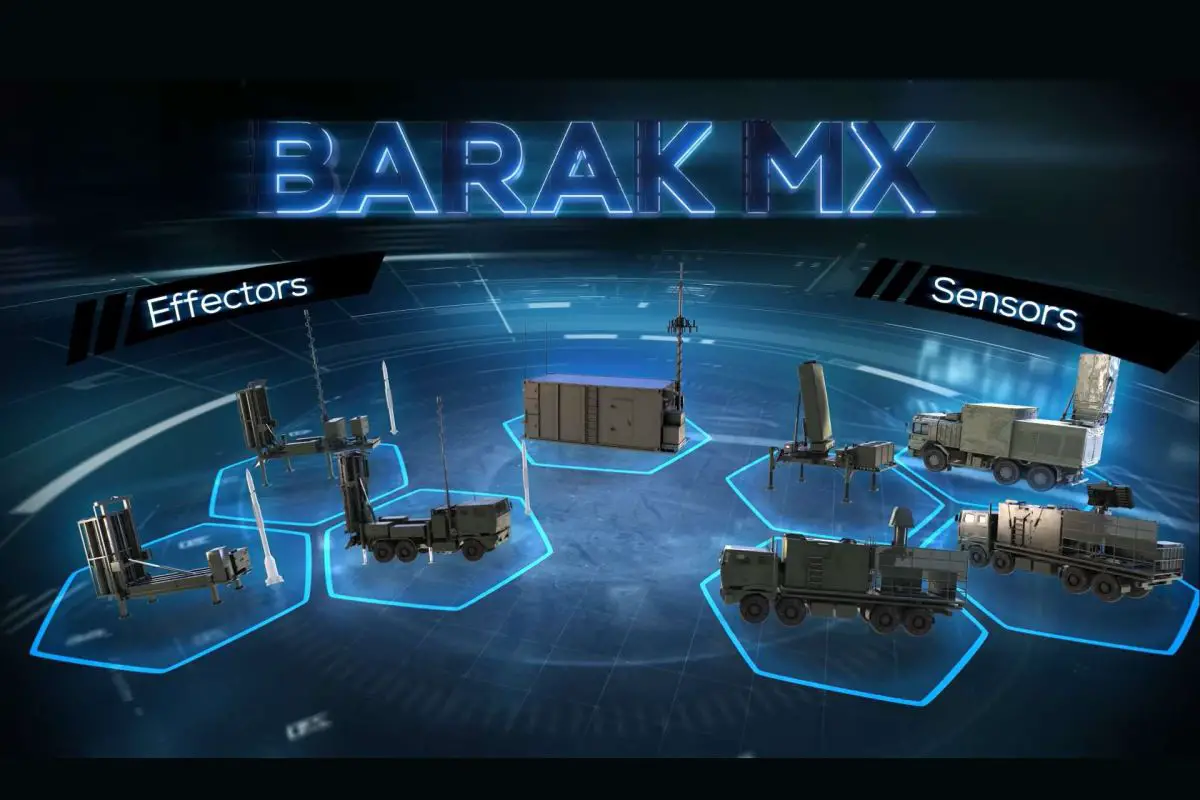
BARAK MX is a modular, network-centric integrated air and missile defence system developed by Israel Aerospace Industries (IAI) for land and naval applications. It integrates vertically launched surface-to-air interceptors, IAI/ELTA AESA radars, command-and-control and battle-management functions into a scalable layered defence architecture designed to counter aircraft, helicopters, UAVs, loitering munitions, sea-skimming and cruise missiles, glide bombs, rockets and tactical ballistic missile threats. The established core interceptor family provides engagement ranges from 15 km to 150 km, while newer IAI capability information also depicts the BARAK EA interceptor extending coverage to 250 km.

Country users : Israel, Morocco, Cyprus, Slovakia

Description

BARAK MX is an integrated air and missile defence system developed and manufactured by Israel Aerospace Industries (IAI) to provide point, area and extended-range protection for military forces, strategic infrastructure and naval formations. The system uses an open, modular and software-defined architecture that connects sensors, battle-management systems, launchers and interceptors into a unified network. Multiple BARAK MX fire units can be interconnected so that sensors and engagement assets can be shared across the defended area, while land-based and naval elements can operate as part of the same multi-layered air-defence network.

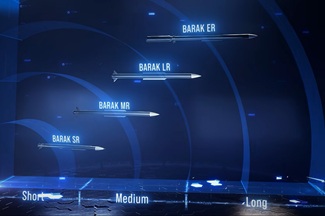
BARAK MX employs a layered interceptor family consisting of BARAK SR, BARAK MR, BARAK LR and BARAK ER. BARAK SR provides a range of 15 km and engagement altitude of 9 km; BARAK MR reaches 35 km and 20 km altitude; BARAK LR reaches 70 km and 20 km altitude; and BARAK ER extends the engagement envelope to 150 km and approximately 30 km altitude. MR uses a single-pulse rocket motor, LR uses a dual-pulse rocket motor, and ER combines a dual-pulse propulsion system with an additional booster. MR, LR and ER are rated by IAI for maneuverability of up to 50 g, while vertical launch provides 360-degree engagement coverage.

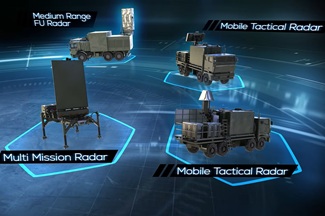
BARAK MX incorporates integrated battle management and can operate with multiple IAI/ELTA AESA radar families, including MMR, MF-STAR and ALPHA. Its network-centric architecture enables sensor sharing, coordinated engagements, mixed interceptor loads and automatic interceptor selection based on the threat and engagement requirements. The modular architecture also permits integration with customer-selected sensors and external command-and-control networks, allowing BARAK MX to be adapted to national, expeditionary or naval air-defence architectures. IAI identifies air-breathing targets, subsonic and supersonic cruise missiles, tactical ballistic missiles and hypersonic missile threats among the system's intended target set.

BARAK MX is operational and combat-proven. The Israeli Navy's naval configuration, designated Barak Magen, conducted its first operational interception with the LRAD/BARAK LR interceptor on 16 June 2025 against an Iranian UAV during Operation Rising Lion, while the Israeli Air Force recorded the first operational interception by its land-based Barak system on 20 June 2025. IAI subsequently stated that BARAK MX successfully intercepted threats while operated by both the Israeli Navy and Air Force and reported that the system is operational with multiple customers worldwide. Slovakia received BARAK MX in 2026, Thailand has contracted the system, and Greece selected BARAK MX as a component of its Achilles Shield multi-layer air-defence programme in August 2026.

BARAK MX variants:

  • BARAK SR: BARAK SR is the short-range member of the family, providing an engagement range of up to 15 km and an altitude of up to 9 km. It uses vertical launch with 360-degree coverage and an active seeker and is intended for threats including fighter aircraft, UAV swarms, loitering munitions, sea-skimming missiles and cruise missiles. IAI specifies eight missiles per naval launcher and up to 15 missiles per land launcher.
  • BARAK MR: BARAK MR is the medium-range interceptor, providing an engagement range of up to 35 km and an altitude of up to 20 km. It uses a single-pulse rocket motor, active RF seeker, BMC-to-missile data link and vertical launch and is capable of maneuvering at up to 50 g. A launcher carries eight MR interceptors.
  • BARAK LR: BARAK LR is the long-range interceptor, providing an engagement range of up to 70 km and an altitude of up to 20 km. It uses a dual-pulse rocket motor, active RF seeker and two-way data link and is designed to counter fighters, helicopters, UAVs, cruise and sea-skimming missiles, glide bombs and tactical ballistic missiles. Maneuverability is rated at up to 50 g, with eight interceptors per launcher.
  • BARAK ER: BARAK ER is the extended-range interceptor, providing an engagement range of up to 150 km and an altitude of approximately 30 km. It combines a dual-pulse rocket motor with an additional booster, active radar seeker and BMC-to-missile data link and provides enhanced anti-tactical-ballistic-missile capability. IAI specifies maneuverability of up to 50 g and eight missiles per launcher.
  • BARAK EA: BARAK EA is a newly disclosed extension of the BARAK family shown by IAI with an engagement range of approximately 250 km and an engagement altitude exceeding 35 km. IAI has not yet publicly released the same level of detailed propulsion, guidance, launcher-capacity or operational-status information available for SR, MR, LR and ER; it should therefore be treated as an emerging member of the family rather than assigned unverified technical characteristics.
Back to top

Technical Data

  • Launcher Unit

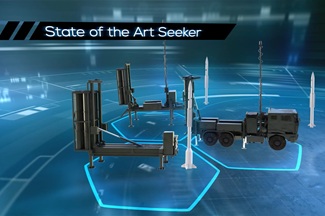
    BARAK MX uses vertical-launch systems providing 360-degree engagement coverage. IAI describes its smart launchers as capable of launching and managing different interceptor combinations, with the battle-management system assigning the appropriate interceptor according to the threat. BARAK MR, LR and ER configurations carry eight interceptors per launcher, while the dedicated BARAK SR configuration carries up to 15 missiles on land and eight in naval applications. The architecture supports mixed missile loads, allowing different layers of the BARAK family to operate within the same integrated defence system.

  • Missiles

    The BARAK MX interceptor family includes BARAK SR, MR, LR, ER and the newly disclosed EA. SR covers threats to 15 km; MR to 35 km; LR to 70 km; ER to 150 km; and IAI's newer capability information depicts EA reaching approximately 250 km. The established interceptors use active seeker technology and vertical launch, with propulsion increasing in capability from single-pulse on MR to dual-pulse on LR and dual-pulse plus booster on ER. Unlike air-to-air missiles adapted for surface launch, IAI states that BARAK MX interceptors were designed from the outset as surface-to-air weapons, allowing their dimensions, seekers, warheads and propulsion systems to be optimized for the air-defence mission.

  • Mobility

    BARAK MX is designed for land-mobile, deployed land and naval operations rather than around a single standardized vehicle chassis. In the land configuration supplied to the Royal Thai Air Force, IAI identifies a Command and Control unit, Multi-Mission Radar, missile launchers, missile reloading vehicle and logistic support vehicle, with all components mounted on high-mobility platforms to support rapid deployment and operational readiness. MR and LR are specifically offered for both mobile and deployed land operations, while the modular architecture permits vehicle and system configuration to be adapted to customer requirements.

  • Command and Control Systems

    BARAK MX employs an integrated Battle Management Center / Command and Control system connecting radar sensors, fire units, launchers and interceptors within a network-centric architecture. The system supports threat detection and classification, engagement management, weapon assignment, interceptor selection and communication with missiles through data links. Multiple BARAK MX units can share sensor and engagement resources, allowing one fire unit to exploit assets belonging to another and enabling coordinated land and naval defence. Automatic interceptor selection is designed to match the weapon to the threat while optimizing the cost and effectiveness of each engagement.

  • Combat Use

    BARAK MX achieved confirmed combat use during Operation Rising Lion in June 2025. On 16 June 2025, the Israeli Navy operationally employed the Barak Magen system and its LRAD long-range interceptor for the first time aboard a Sa'ar 6-class vessel during interceptions of UAVs launched from Iran. On 20 June 2025, the Israeli Air Force's Aerial Defense Array recorded the first operational interception by its land-based Barak system when it destroyed a UAV that entered Israeli territory. IAI later confirmed successful BARAK MX interceptions by both the Israeli Navy and Air Force and subsequently reported that the system intercepted dozens of threats during its initial operational deployment.

Back to top

Specifications

  • Designer Country

    Israel

  • Manufacturer

    Israel Aerospace Industries (IAI)

  • Type

    Integrated multi-layer air and missile defence system; land-based, mobile and naval

  • Country users/customers

    Israel, Morocco, Cyprus, Slovakia

  • Armament

    BARAK SR; BARAK MR; BARAK LR; BARAK ER; BARAK EA

  • Destruction Capabilities Missile

    Fighter aircraft; helicopters; UAVs; UAV swarms; loitering munitions; sea-skimming missiles; anti-ship missiles; subsonic cruise missiles; supersonic cruise missiles; glide bombs; rockets; tactical ballistic missiles; hypersonic missile threats

  • Guidance Systems

    Active RF radar seeker; BMC-to-missile data link; LR two-way data link; networked fire-control guidance

  • Interception Range

    BARAK SR — 15 km; BARAK MR — 35 km; BARAK LR — 70 km; BARAK ER — 150 km; BARAK EA — approximately 250 km, newly disclosed capability

  • Radars

    IAI/ELTA MMR; MF-STAR; ALPHA AESA radar families; customer-selected sensors supported

  • Engagement Altitude

    BARAK SR — 9 km; BARAK MR — 20 km; BARAK LR — 20 km; BARAK ER — 30 km; BARAK EA — above 35 km

  • Missiles per Launcher

    BARAK SR — 15 land / 8 naval; BARAK MR — 8; BARAK LR — 8; BARAK ER — 8; BARAK EA — not publicly disclosed by IAI

  • Propulsion

    BARAK MR — single-pulse rocket motor; BARAK LR — dual-pulse rocket motor; BARAK ER — dual-pulse rocket motor with additional booster; BARAK SR — detailed propulsion specification not publicly stated on IAI's current product page; BARAK EA — detailed propulsion specification not publicly disclosed by IAI

  • Maneuverability

    BARAK MR — 50 g; BARAK LR — 50 g; BARAK ER — 50 g; BARAK SR — not publicly specified by IAI; BARAK EA — not publicly specified by IAI

  • System Components

    Command and Control unit; Battle Management Center; AESA radar; vertical-launch units; surface-to-air interceptors; missile reloading vehicle; logistic support vehicle; communications and data-link network

  • Mobility

    High-mobility land platforms; deployed land configuration; naval installation

Back to top

Details View

Back to top

Photo Gallery

Back to top
Copyright © 2019 - 2024 Army Recognition | Webdesign by Zzam