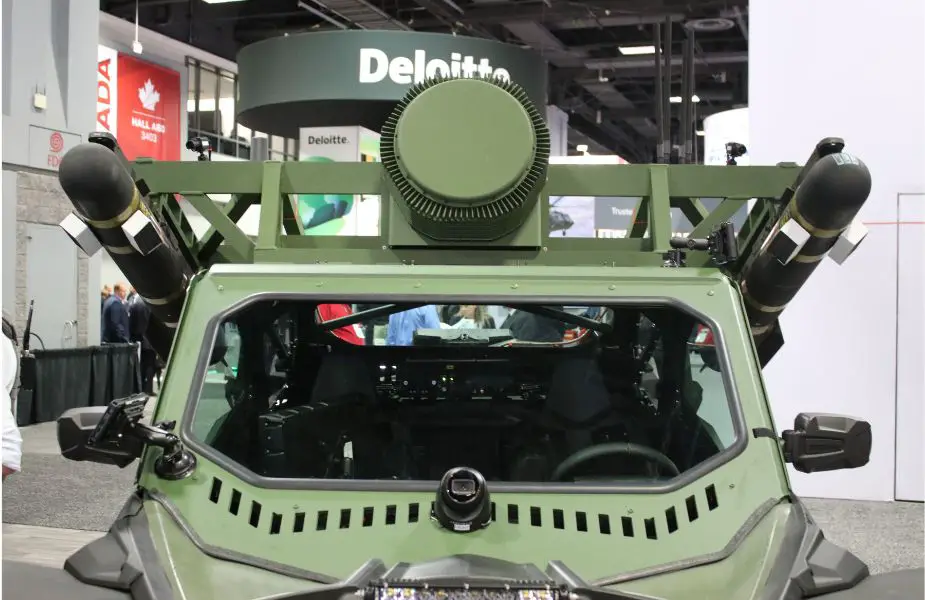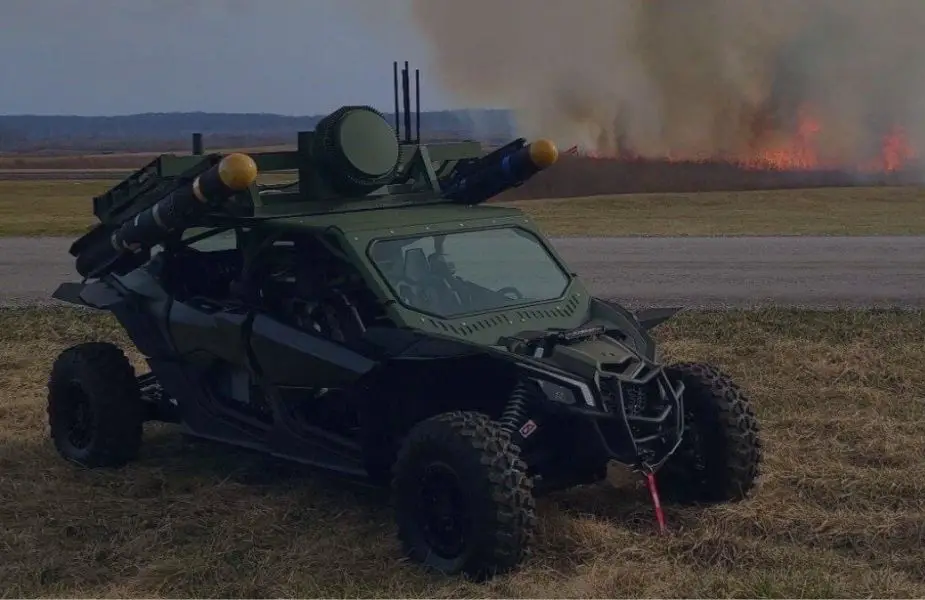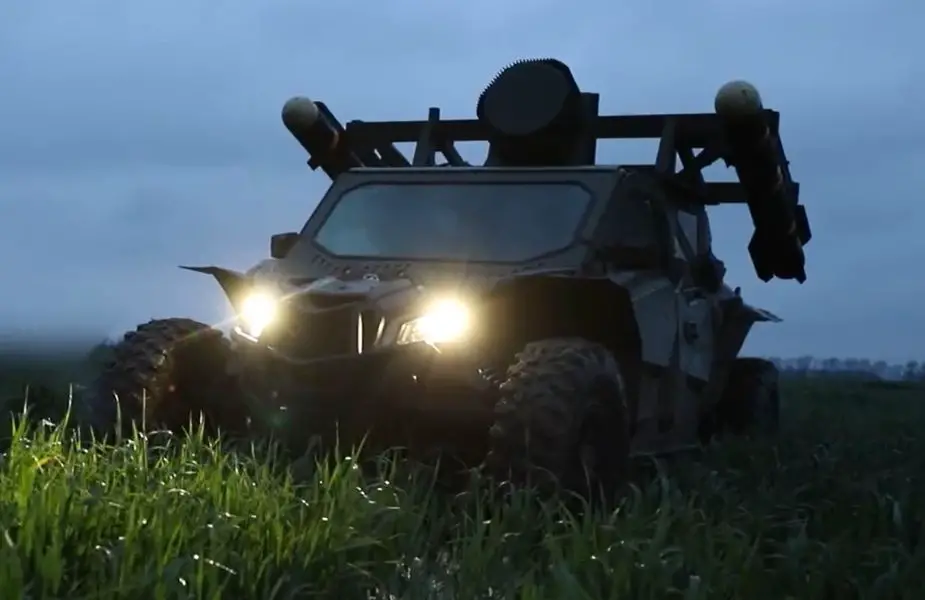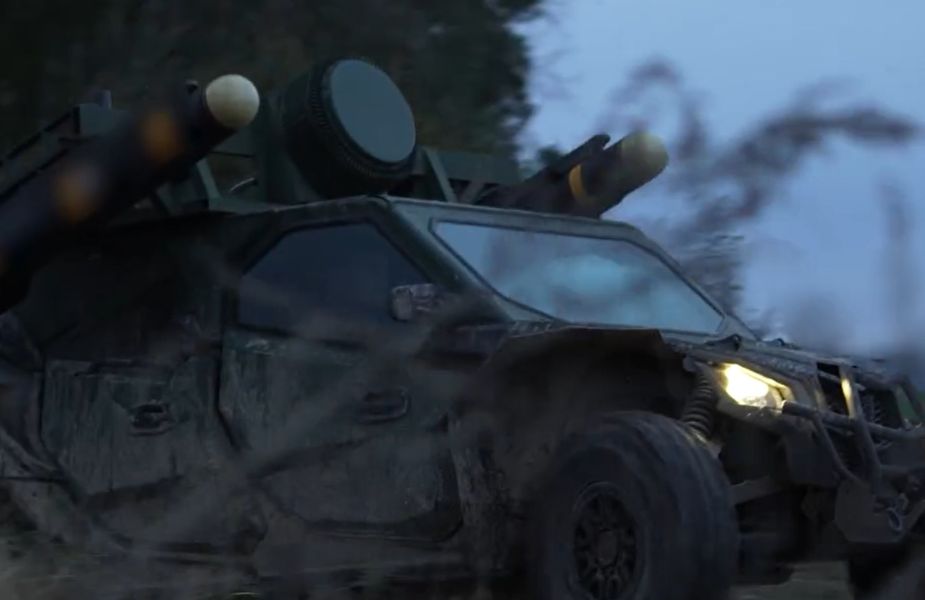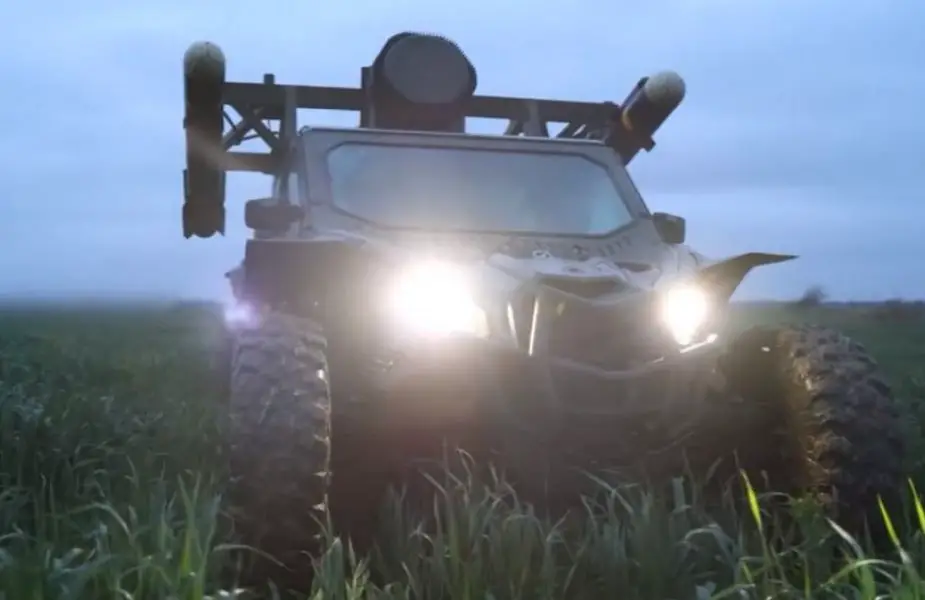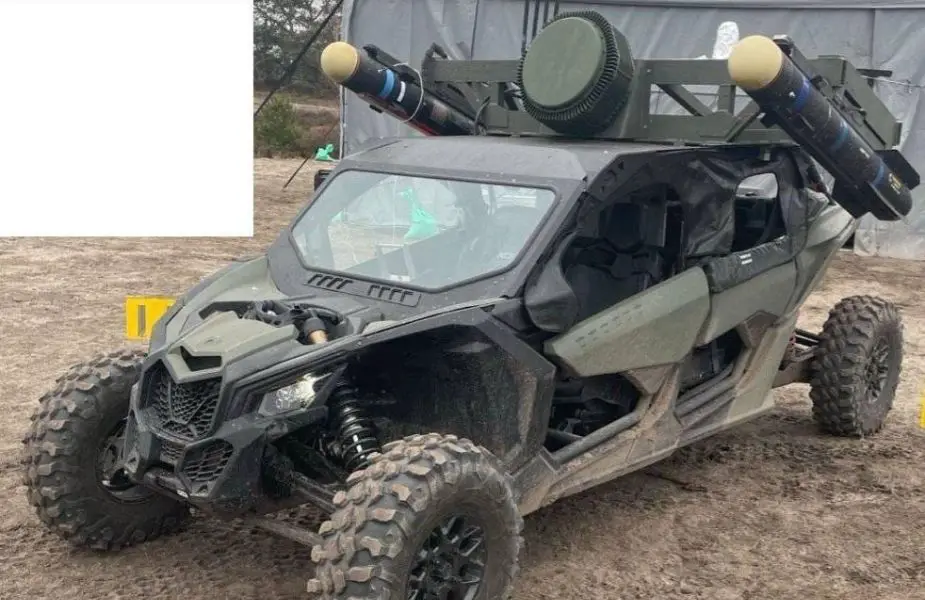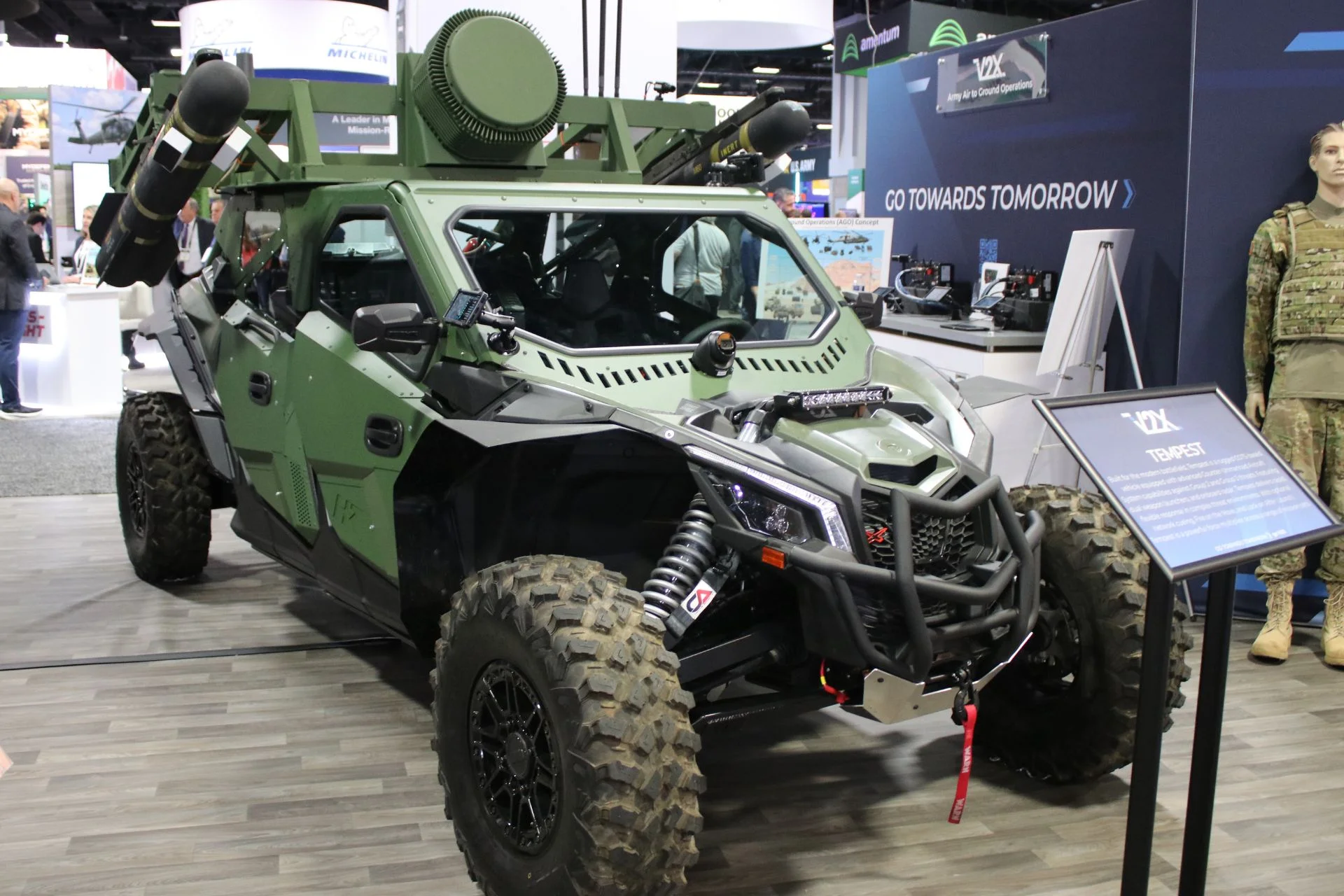
The V2X Tempest is a lightweight, highly mobile Counter-UAS system developed in the United States to detect, track, and kinetically engage Class 2 and Class 3 unmanned aerial systems. Based on a commercial off-the-shelf architecture, the system combines a Can-Am 4x4 all-terrain vehicle, two AGM-114L Longbow Hellfire missiles, and a RADA RPS-42 MHR radar to provide a mobile interception capability suited to shoot-and-scoot operations.
Country users: Ukraine, United States







Technical Data
-
Design
Tempest is primarily designed as a highly mobile carrier for the AGM-114L Longbow Hellfire missile in Counter-UAS missions against Class 2 and Class 3 drones. The platform is based on a commercial Can-Am side-by-side vehicle. According to Jim Simon, V2X specifically selected this baseline because of the capabilities provided by the vehicle. The use of a COTS platform also reduces acquisition and development timelines compared with designing an entirely new military chassis. The vehicle uses a lightweight, open configuration that prioritizes mobility over ballistic protection. Two launch rails are installed on the upper section of the platform, each carrying one AGM-114L Longbow Hellfire missile. The RADA RPS-42 MHR primary radar is mounted above the vehicle. This arrangement places the main sensor and effectors required for an engagement on a compact platform. Additional antennas are visible on the rear of the vehicle and may correspond to a passive radio-frequency detection capability. The vehicle's compact profile and mobility are directly linked to the Tempest operational concept. The system is intended to remain in a protected position before an engagement, conduct a short sortie to launch its missile, and then immediately leave the exposed area.
-
Armament
Tempest carries two AGM-114L Longbow Hellfire missiles, each mounted on an independent launch rail located on either side of the upper portion of the vehicle. The configuration therefore provides two missiles ready for immediate engagement. The AGM-114L Longbow Hellfire is the system's primary weapon. Originally developed as an anti-armor missile for the AH-64 Apache attack helicopter, it differs from the other main Hellfire variants through the use of an active millimeter-wave radar seeker. The missile is approximately 1.76 m long, has a diameter of 178 mm, and weighs around 49 kg. The two ready-to-fire missiles therefore account for approximately 98 kg, excluding the launch rails and their interfaces. The two rails visible on Tempest belong to the Hellfire-family launch architecture. V2X has not publicly disclosed the precise launcher model or its dimensions. The M299 used on other Hellfire-equipped platforms is available in a two-rail configuration, but there is no confirmation that Tempest uses the standard M299 launcher.
The missile guidance architecture supports fire-and-forget operation. According to V2X, the Longbow can achieve target lock before launch, known as Lock-on Before Launch or LOBL, as well as after launch, known as Lock-on After Launch or LOAL. Once the missile has been fired, Tempest does not need to remain stationary to provide continuous laser illumination or guidance. The vehicle can begin leaving the engagement area while the missile continues toward the target autonomously. According to U.S. Army data, the AGM-114L has an engagement range of approximately 0.5 to 8 km. These figures describe the missile's performance and do not necessarily represent a guaranteed Tempest engagement envelope under all operating conditions. Actual performance depends on factors including target altitude, speed, trajectory, detection conditions, and engagement geometry. The missile carries a warhead weighing approximately 9 kg. Although initially developed for use against armored vehicles, the AGM-114L is also used in an air defense role against unmanned systems, supported by its active radar seeker. Tempest is specifically intended to engage Class 2 and Class 3 UAS. Its target set includes reconnaissance drones, attack drones, and loitering munitions considered significant enough to warrant the use of a Hellfire missile. With only two missiles ready to fire, the system is better suited to engaging priority threats than independently countering mass attacks involving large numbers of small drones.
-
Sensors, Radar, and Targeting Systems
The primary Tempest sensor is the RADA RPS-42 MHR, or Multi-Mission Hemispheric Radar, installed on the upper section of the vehicle. The RPS-42 is part of the MHR family of tactical radars developed by RADA Electronic Industries, now part of Leonardo DRS. On Tempest, it serves as the main sensor for detecting and tracking aerial threats and providing the data required to support Longbow missile engagements. The observed configuration carries a single radar panel. It therefore provides coverage oriented toward a particular sector rather than an architecture using several distributed radar panels to maintain continuous 360-degree surveillance.
-
Mobility and Survivability
Tempest uses a commercial Can-Am 4x4 all-terrain side-by-side vehicle. V2X particularly emphasizes the vehicle's speed and its ability to conduct short-duration sorties from a protected position. The Tempest survivability concept relies primarily on mobility rather than substantial armored protection. The vehicle is intended to minimize the amount of time spent in an exposed position. After receiving an engagement mission, it can leave a protected area, move to a firing position, launch one of its missiles, and immediately begin withdrawing. This is enabled by the AGM-114L active seeker, which removes the requirement for continuous guidance from the launch vehicle after firing. The objective is for the missile to leave the rail while the vehicle begins withdrawing from the hazardous area within a short period of time. No substantial armor package has been identified on the vehicle. The platform instead relies on speed, its compact profile, dispersion, and frequent repositioning to reduce vulnerability.
-
Command, Control, and Operational Integration
Tempest has an organic radar sensor that allows it to contribute directly to target detection, tracking, and engagement. Its lightweight architecture and single radar panel also mean that the platform can benefit from information supplied by a broader air defense network. The vehicle can therefore operate as a distributed effector, receiving an alert or target cue from other radars or command-and-control systems before completing final acquisition with its own radar. This approach is consistent with the Tempest operating concept, which seeks to limit the time during which the platform is exposed or transmitting with its radar. The U.S. Marine Corps contract awarded in August 2026 includes software management, indicating that digital integration, software support, and interoperability within the Marine Corps operational environment form part of the procurement.


Photo Gallery