







Breaking News






U.S. MK 54 Torpedo Sale Gives New Zealand a Sharper Edge Against Growing Pacific Submarine Threats.
New Zealand is moving to close a critical gap in its undersea warfare capability after the United States approved a potential $69 million sale of MK 54 lightweight torpedoes on June 5, 2026, providing Wellington with the weapon needed to turn submarine detection into combat-ready engagement. The decision comes as strategic competition expands across the Indo-Pacific and signals a clear effort to strengthen New Zealand’s ability to counter increasingly sophisticated submarine activity across the South Pacific and Southern Ocean.
The MK 54 would equip the backbone of New Zealand’s emerging anti-submarine warfare architecture, linking P-8A Poseidon maritime patrol aircraft and future MH-60R Seahawk helicopters with a proven allied-standard engagement weapon. Beyond the torpedoes themselves, the package delivers the training, sustainment, and operational support required to build a fully functional ASW kill chain, reinforcing regional deterrence and deeper interoperability with partners such as Australia and the United States.
Related Topic: Australian Army Creates New Littoral Manoeuvre Group for Indo-Pacific Amphibious Operations
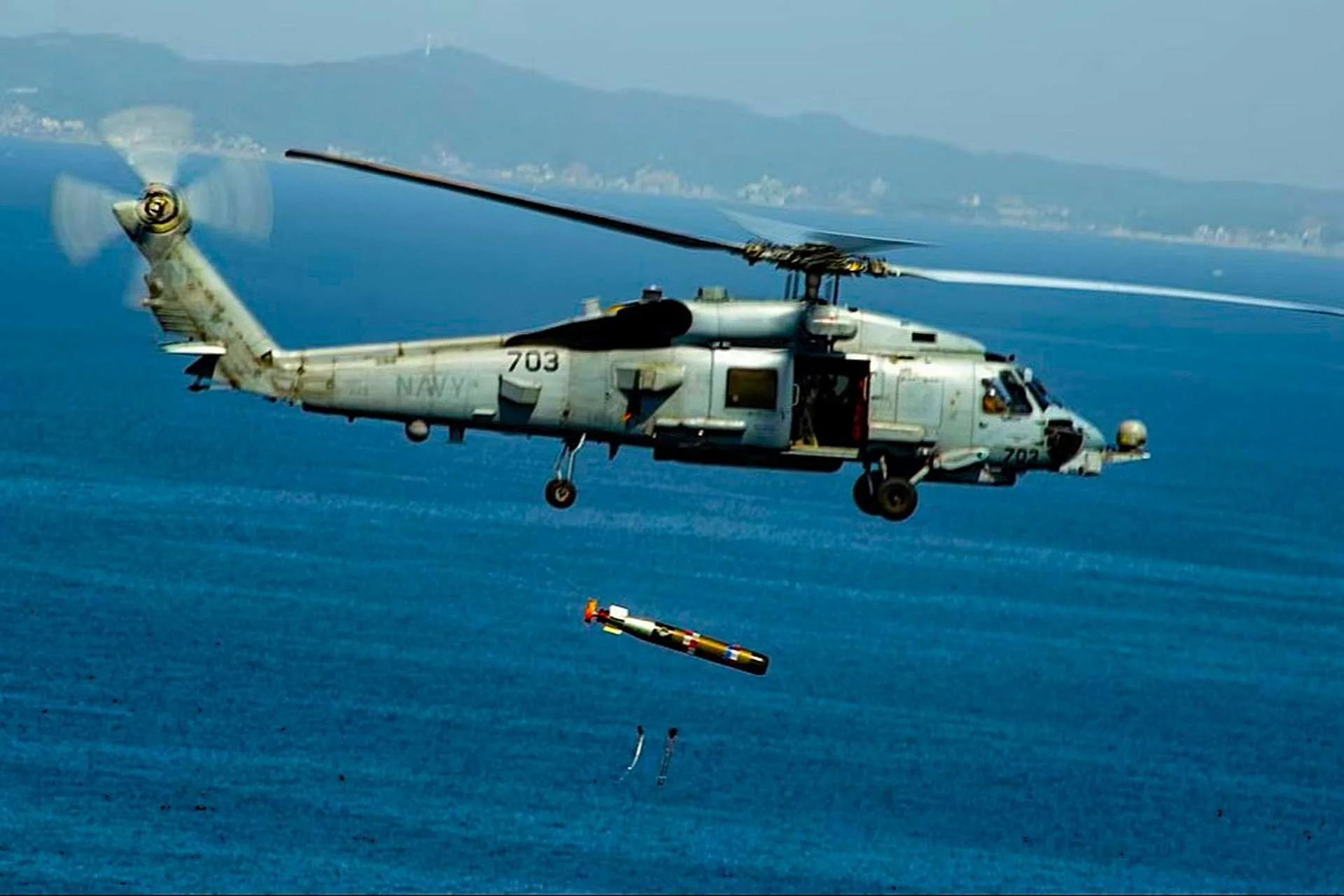
The U.S. has approved a $69 million sale of MK-54 lightweight torpedoes to New Zealand, strengthening the country's anti-submarine warfare capability by providing the key engagement weapon for its P-8A Poseidon fleet and future MH-60R Seahawk helicopters (Picture Source: U.S. 7th Fleet)
On June 5, 2026, the U.S. Department of State approved a possible Foreign Military Sale to New Zealand for MK 54 MOD 0 lightweight torpedoes and related equipment, with an estimated value of $69 million. The announcement comes as Wellington is rebuilding its maritime combat architecture around long-range patrol aircraft, future shipborne helicopters, and a renewed focus on anti-submarine warfare. While the package is modest in scale, it is strategically relevant because it strengthens the weapon layer of New Zealand’s undersea warfare posture at a time when the South Pacific is becoming more exposed to wider Indo-Pacific naval competition.
The proposed sale covers 20 MK 54 MOD 0 Lightweight Torpedoes in all-up-round configuration, together with recoverable exercise torpedoes, air-launch accessories, classified and unclassified spare parts, containers, support and test equipment, training, technical assistance, infrastructure support, exercise firing assistance, and logistics services. This composition shows that the package is not limited to the transfer of ammunition. It also includes the elements required to train crews, support live and exercise firings, maintain weapon readiness, and integrate the torpedo into New Zealand’s anti-submarine warfare procedures. For a country with limited naval mass but extensive maritime responsibilities, the sustainment and training framework around the weapon is as important as the torpedo itself.
The MK 54 is a lightweight anti-submarine torpedo designed for launch from surface ships and aircraft. Developed as the Lightweight Hybrid Torpedo, the MK 54 MOD 0 combines elements from the earlier MK 46 and MK 50 torpedo programs with commercial off-the-shelf digital signal-processing technology. The U.S. Navy describes it as a surface ship and aircraft-launched anti-submarine weapon equipped with an advanced guidance and control section and tactical software improvements intended to increase performance in challenging scenarios. The torpedo measures 106.9 inches in length, has a diameter of 12.75 inches, weighs approximately 607 pounds, and carries a 100-pound high-explosive warhead. Its purpose is not to search the ocean independently, but to serve as the terminal engagement weapon once a submarine has been detected, classified, tracked, and localized by a wider network of sensors.
The U.S. notification does not officially identify the launch platform for New Zealand’s MK 54 torpedoes. However, the reference to air-launch accessories and New Zealand’s current force modernization provide a clear operational context. The Royal New Zealand Air Force operates four Boeing P-8A Poseidon maritime patrol aircraft from RNZAF Base Ohakea, replacing the former P-3K2 Orion fleet. In anti-submarine warfare, the P-8A provides the wide-area search and tracking layer, using sensors, sonobuoys, mission systems, and tactical data processing to build a recognized maritime picture and localize underwater contacts. In this context, the MK 54 gives the maritime patrol force a credible air-delivered engagement option if a submarine contact must be prosecuted.
A second relevant platform is the MH-60R Seahawk, which New Zealand has selected as the preferred replacement for its SH-2G(I) Seasprite maritime helicopters. The New Zealand Ministry of Defence identifies the MH-60R as a maritime helicopter able to carry the Mk 54 anti-submarine torpedo, as well as AGM-114 Hellfire missiles, crew-served machine guns, and Advanced Precision Kill Weapon System rockets. If acquired, the MH-60R would give Royal New Zealand Navy surface combatants an embarked ASW prosecution capability, allowing a frigate to extend its sensor and weapon reach beyond the limits of its own hull-mounted systems. In operational terms, a shipborne MH-60R can move quickly toward a contact area, deploy sensors, refine target localization, and deliver a lightweight torpedo from a position selected to maximize engagement probability while keeping the host ship outside the immediate threat zone.
The strategic value of the MK 54 sale lies in its contribution to a complete anti-submarine warfare kill chain. New Zealand has long maintained maritime surveillance capabilities for search and rescue, fisheries protection, regional presence, and patrol of the South Pacific and Southern Ocean. The acquisition of modern lightweight torpedoes adds a harder military edge to that posture. It supports a detect-classify-track-engage sequence in which the P-8A provides long-range surveillance and initial localization, the future MH-60R could conduct shipborne prosecution and close-in localization, and the MK 54 serves as the common engagement weapon against submarine targets. This shifts New Zealand’s maritime posture from awareness alone toward a more credible ability to respond to underwater threats.
The geostrategic context explains why such a capability matters. New Zealand sits across vast maritime approaches linking the South Pacific, the Southern Ocean, Australia, Antarctica, and wider Indo-Pacific sea lanes. Its security depends on open sea lines of communication, protected undersea cables, reliable maritime trade routes, and the ability to monitor activity across a large exclusive economic zone. The South Pacific is no longer a peripheral maritime space isolated from strategic competition. Submarine operations, seabed infrastructure vulnerability, long-range naval deployments, and the activities of extra-regional powers are increasing the importance of undersea surveillance and anti-submarine warfare for countries that do not possess large fleets but still need to secure critical maritime approaches.
The sale also strengthens interoperability with New Zealand’s closest defense partners. The MK 54 is part of a U.S.-aligned anti-submarine warfare ecosystem used by allied navies and air forces, including operators of the P-8A Poseidon and MH-60R Seahawk. For Wellington, common weapons and platforms reduce the burden of training, logistics, tactics development, and exercise integration. This is especially relevant with Australia, which also operates the P-8A and MH-60R and remains New Zealand’s most important regional defense partner. A shared ASW architecture makes it easier for both countries to conduct coordinated maritime patrols, combined exercises, and coalition undersea surveillance missions across the wider Pacific.
The acquisition should also be read within New Zealand’s broader defense modernization effort. Wellington has acknowledged that distance no longer provides the same strategic insulation it once did, and recent defense planning has placed greater emphasis on readiness, infrastructure protection, maritime security, and the ability to operate with allies. The MK 54 does not give New Zealand a large offensive naval strike capability, nor does it alter the regional balance of power by itself. Its significance is more specific: it provides the terminal weapon needed to make New Zealand’s ASW surveillance network operationally credible.
The possible sale of 20 MK 54 MOD 0 torpedoes carries more weight than its limited quantity suggests. It links New Zealand’s P-8A maritime patrol fleet, its planned MH-60R helicopter capability, and its naval surface force into a more coherent undersea warfare architecture. The official notification does not assign the torpedoes to a specific platform, but the wider procurement context shows that Wellington is building the key layers of a modern ASW system: long-range detection, localized prosecution, allied interoperability, and a common lightweight torpedo for engagement. In a maritime region where strategic competition increasingly extends below the surface, this sale marks a measured but important step in New Zealand’s effort to protect its approaches, infrastructure, and role within the Indo-Pacific security network.
Explore More Defense News
• Land Defense News
• Naval Defense News
• Defense Aerospace News
Written by Teoman S. Nicanci – Defense Analyst, Army Recognition Group
Teoman S. Nicanci holds degrees in Political Science, Comparative and International Politics, and International Relations and Diplomacy from leading Belgian universities, with research focused on Russian strategic behavior, defense technology, and modern warfare. He is a defense analyst at Army Recognition, specializing in the global defense industry, military armament, and emerging defense technologies.