






Breaking News






New Nuclear Submarine Knyaz Pozharsky Projects Russian Nuclear Power into Arctic.
According to information published by The Jamestown Foundation on May 30, Russia is set to reinforce its strategic deterrent in the Arctic with the planned commissioning of the Knyaz Pozharsky, the newest Borei-A class nuclear-powered ballistic missile submarine (SSBN), in June 2025. This vessel will be added to the Northern Fleet, the primary component of Russia's naval presence in the Arctic. The Knyaz Pozharsky represents a new phase in the modernization of Russia’s strategic submarine forces and reflects the rising military and economic tensions in the polar region, where access to natural resources and control over emerging maritime routes are becoming key geopolitical stakes.
Follow Army Recognition on Google News at this link
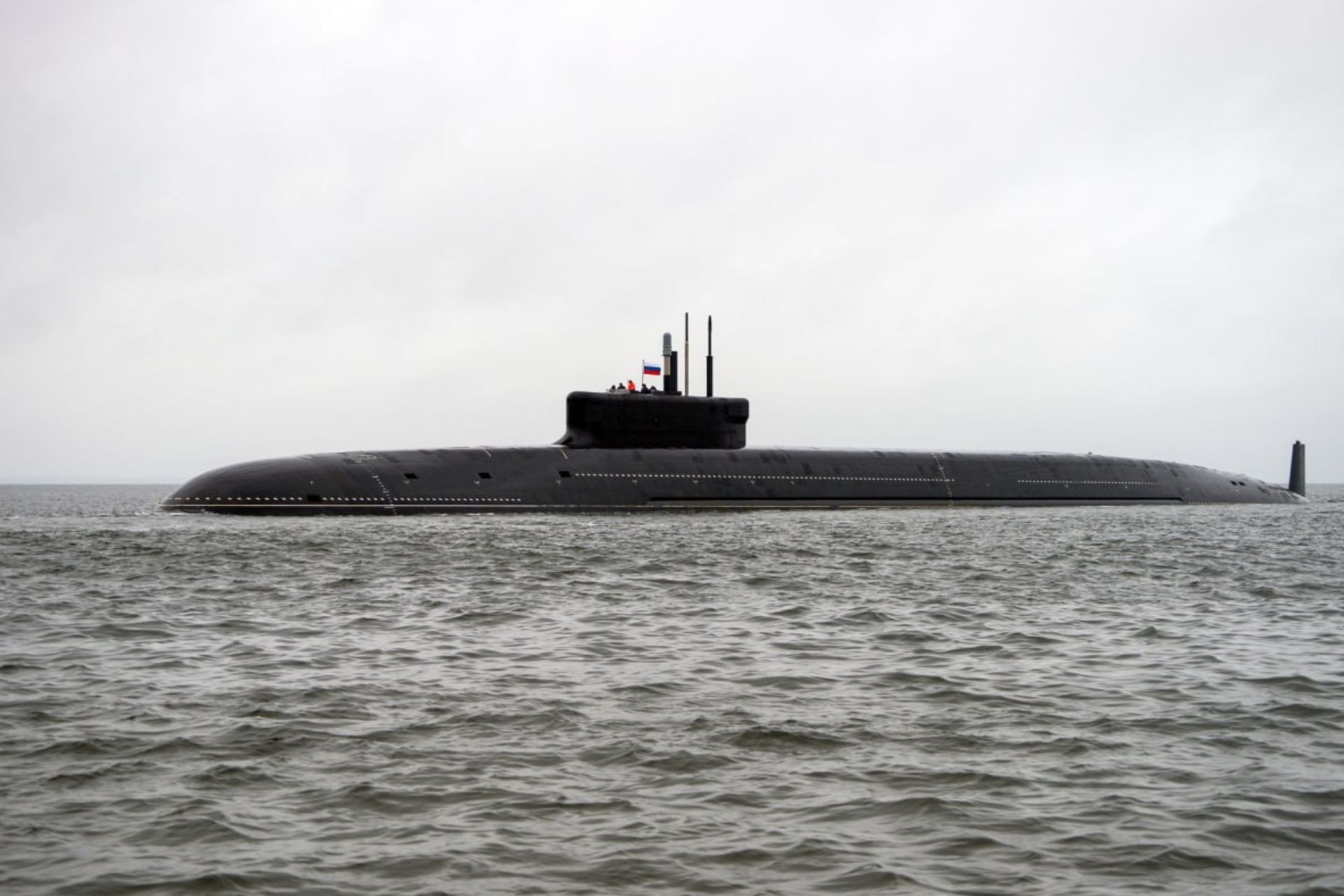
The strategic nuclear submarine K-555 Prince Pozharsky is the fifth Borey-A and eighth overall in the Borey class(Picture source: Oleg Kuleshov)
Construction of the Knyaz Pozharsky began on December 23, 2016, at the Sevmash shipyard in Severodvinsk, Russia's sole facility for building nuclear-powered submarines. The submarine was launched on February 3, 2024, and is reportedly undergoing ballistic missile testing in preparation for its scheduled entry into service in June. This new vessel is the eighth in the Borei series and the fifth built to the upgraded Borei-A (Project 955A) specification, designed to replace the aging Delta III, Delta IV, and Typhoon-class submarines. It is part of a strategic effort to strengthen Russia’s deterrent posture in the northern maritime theater, particularly in the face of NATO activities and Western Arctic security initiatives.
Described by President Vladimir Putin as “our most powerful fleet,” the Northern Fleet currently operates approximately 31 submarines, representing nearly 40 percent of Russia’s total submarine force. This fleet is central to Russia’s national defense strategy and its Arctic naval presence. The Borei-A class features water-jet propulsion, which reduces acoustic signature and enhances stealth. Each submarine is capable of carrying up to 16 RSM-56 Bulava ballistic missiles, each with four to six nuclear warheads, significantly boosting Russia’s second-strike capability. Technically, the Borei-A is powered by a VM-5 pressurized water nuclear reactor and an OK-650 steam generator, producing up to 190 megawatts of thermal energy. At 170 meters long and displacing 24,000 tons, it is significantly heavier than the U.S. Navy’s Ohio-class (18,750 tons), despite similar length.
Beyond military considerations, the expansion of the Northern Fleet is part of a broader competition for control over the Arctic, a region increasingly central to global strategic rivalries. Rapid ice melt is opening up new shipping routes such as the Northern Sea Route (NSR) and unlocking access to vast hydrocarbon reserves. Russia is asserting its sovereignty over the region and aiming to limit external influence. In response, the United States, Canada, Denmark, and Norway have stepped up military coordination and naval deployments. NATO has intensified joint Arctic exercises, while China, though not an Arctic nation, is advancing its polar strategy through scientific and economic initiatives, adding further complexity to the regional geopolitical equation.
The Knyaz Pozharsky's commissioning is part of a fast-tracked naval modernization campaign launched in 2024, including the appointment of Nikolai Patrushev to lead the new Maritime Collegium overseeing strategic naval development, Arctic security, and maritime affairs. Russia has allocated nearly 8.4 trillion rubles (about $100 billion) over the next decade to expand its naval fleet, including both Borei-A and Yasen-M class submarines. According to official data, 49 vessels, including four Borei-A and four Yasen-M submarines, have been commissioned over the past five years. The latest Yasen-M, Perm, launched in March, is expected to be the first equipped with Zircon hypersonic missiles and will join the Pacific Fleet in 2026.
Russia is also exploring unconventional concepts, including the use of nuclear submarines to transport liquefied natural gas (LNG). This project, supported by energy giants Gazprom and NOVATEK, aims to circumvent Western sanctions and showcase Russian scientific innovation. The Malakhit Design Bureau, under the Kurchatov Institute, is developing a new class of submarines capable of transporting LNG year-round through the Arctic without the need for icebreaker support. However, experts such as exiled nuclear specialist Aleksandr Nikitin have questioned the project’s technological, economic, and industrial feasibility.
Russia’s forthcoming naval strategy to 2050 is expected to place strong emphasis on Arctic operations, in line with the 2022 Maritime Doctrine. This doctrine prioritizes four key goals in the Arctic: resource exploitation, development of the NSR, national defense through naval presence, and global economic and military competition. The integration of the Knyaz Pozharsky into the Northern Fleet exemplifies Moscow’s strategic intent to secure a dominant role in Arctic waters as geopolitical tensions escalate in the region.
Ultimately, the commissioning of the Knyaz Pozharsky signals a major step in Russia’s bid to solidify its strategic position in the Arctic through enhanced naval capabilities and nuclear deterrence. This development is fueling a renewed power race in the High North, with the U.S., Canada, and several European nations quietly ramping up their military readiness and Arctic logistics. China’s growing involvement in a region historically dominated by North Atlantic powers adds another layer of complexity. As sea routes open and resources become more accessible, the Arctic is likely to emerge as a central theater of strategic confrontation in the 21st century, marked by rising militarization and enduring geopolitical friction among major powers.