






Breaking News






French and Tunisian navies conduct joint exercise to improve boarding tactics in Mediterranean waters.
On July 15, 2025, a joint PASSEX maritime exercise was conducted between a French Navy stealth frigate and the Tunisian Navy’s offshore patrol vessel Jugurtha. The French frigate had departed from its port visit to Tunis, which took place between July 12 and 15, to participate in this coordinated operation. Based on multiple public sources, Navy Recognition identified the French frigate involved as the Guépratte (F714), part of the La Fayette-class.
Follow Army Recognition on Google News at this link

The exercise concluded with joint tactical maneuvers at sea, focusing on ship handling coordination and communication between the two navies. (Picture source: French Embassy in Tunisia)
The PASSEX began with an asymmetric threat simulation, involving the deployment of fast boats to enact repeated attacks by armed individuals against the warships, testing the defensive responses of both vessels. A cross-visit phase was then conducted, during which boarding teams from each ship inspected the partner vessel, exchanging practices for flag verification procedures. The exercise concluded with joint tactical maneuvers at sea, focusing on ship handling coordination and communication between the two navies. According to the French Ministry of Armed Forces, this activity was aimed at reinforcing interoperability between the French and Tunisian navies, especially given their roles in the Western Mediterranean, where maritime security is challenged by trafficking and other illicit activities.
The La Fayette-class (FLF) stealth frigates were developed by France in the post-Cold War period to provide cost-efficient, mid-displacement warships adapted to overseas deployment, patrol duties, and limited-intensity conflict environments. Built by DCNS, these ships were designed with stealth in mind, using radar-absorbing composites, internal fittings, and inclined surfaces to reduce radar cross-section. With a standard displacement of 3,200 tonnes and full-load displacement of 3,600 tonnes, the vessels measure 125 meters in length with a 15.4-meter beam and a 4.8-meter draught. Propulsion is provided by four SEMT Pielstick 12PA6V280 STC2 diesel engines generating a total of 21,000 horsepower, allowing speeds up to 25 knots. Endurance is 7,000 nautical miles at 15 knots or 9,000 nautical miles at 12 knots, with a food autonomy of up to 50 days. France ordered five ships: La Fayette, Surcouf, Courbet, Aconit, and Guépratte, all of which were commissioned between 1996 and 2001.
These ships are designed to carry one Panther or NH90 helicopter and can support special operations with small teams. Their armament includes eight MM40 Exocet anti-ship missiles, a 100 mm main gun, two 20 mm cannons, and the Crotale CN2 naval surface-to-air system, though only three ships, La Fayette, Courbet, and Aconit, were later modernized with upgraded Exocet Block 3c missiles, SADRAL launchers with Mistral Mk 3 missiles, and KingKlip sonar systems. The Guépratte and Surcouf did not receive these upgrades and retained the older Crotale system. The FLF class was succeeded by the Frégate de Défense et d’Intervention (FDI) class beginning in 2024, but the Guépratte and Surcouf were retained in service as frigates despite having been previously designated for reassignment to offshore patrol roles. The class's modular design was based on preassembled hull sections, enabling shorter construction time and greater maintainability.
The Guépratte (F714) is the last ship of the La Fayette-class. She was laid down in October 1998, launched in March 1999, and commissioned into service in October 2001. Homeported in Toulon, the ship is named after Admiral Émile Guépratte, a French naval officer noted for his role in the Dardanelles campaign. The vessel has an estimated crew of 164 and remains in active service, with a planned retirement scheduled for 2031. Unlike her sister ships, Guépratte has not received a sonar upgrade and retains the legacy Crotale CN2 system, which reduces her anti-submarine and air-defense capabilities compared to the upgraded units. The ship’s radar and electronic warfare systems include the DRBV-15C surveillance radar, ARBR-21 radar interceptor, ARBG-1 radio interceptor, and Dagaie Mk2 decoy launchers. She carries an onboard Panther or NH90 helicopter and is equipped for operations with boarding parties and limited aerial support.
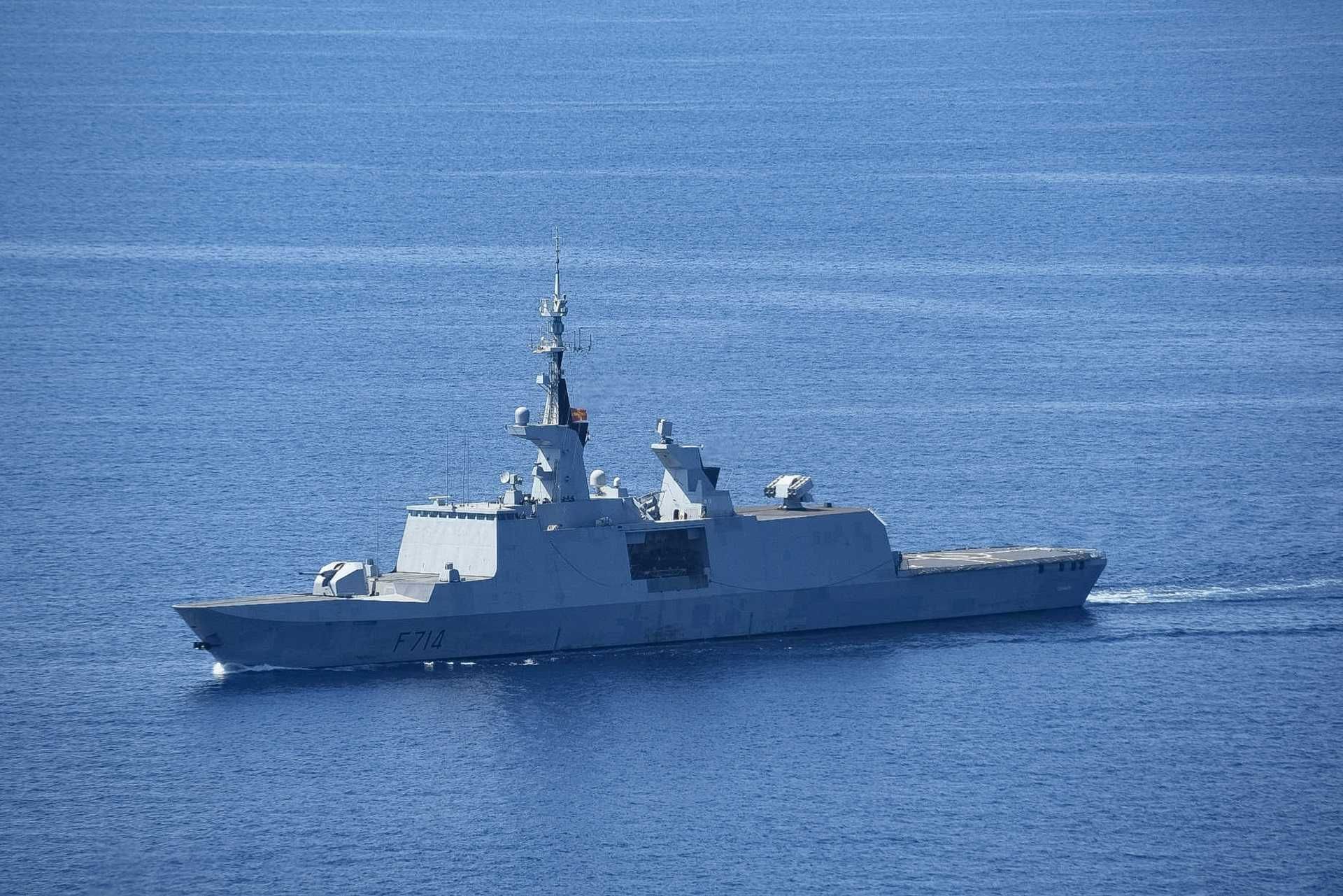
Unlike her sister ships, Guépratte has not received a sonar upgrade and retains the legacy Crotale CN2 system, which reduces her anti-submarine and air-defense capabilities. (Picture source: French Navy)
Operationally, Guépratte has participated in a number of international missions. These include Operation Corymbe in the Gulf of Guinea in 2009, Operation Atalanta in the Indian Ocean across several years, Operation Harmattan off Libya in 2011, and Operation Résilience in the Indian Ocean in 2020, where she assisted in medical supply transport during the COVID-19 pandemic. The vessel also took part in the Jeanne d’Arc deployment and supported Combined Task Force 150 in 2022 and 2023, during which it conducted drug seizures and interdictions in the Arabian Sea. In early 2023, she was involved in the seizure of an Iranian vessel allegedly transporting weapons to Yemen. During 2024, Guépratte escorted the amphibious assault ship Tonnerre on a deployment that included ports in South America and North America. She is also noted as the only FLF to have included a female commanding officer and has operated with mixed-gender crews. Despite earlier plans for reassignment, the ship remains classified as a frigate.
The Jugurtha-class offshore patrol vessels were acquired by Tunisia under a 2016 contract with Damen Shipyards, using the MSOPV 1400 design. Built in Galați, Romania, the ships were delivered between 2018 and 2019. The design incorporates Damen’s Sea Axe hull form, which improves stability and fuel efficiency in rough sea conditions. Each ship is approximately 75 meters long, 12.7 meters wide, and draws 3.75 meters of water. They have a standard displacement of 1,284 tonnes and a full load displacement of 1,877 tonnes. Four Caterpillar 3512C diesel engines deliver 9,600 horsepower, allowing speeds up to 20.5 knots. Operational endurance is estimated at 4,000 nautical miles at 12 knots, with a typical crew of 35 and capacity for up to 12 additional personnel. Each ship is equipped with two navigation radars and carries two 9-meter RHIBs for inspection and interdiction tasks.
A notable feature of the class is the Multi-Mission Bay under the helicopter deck, allowing the storage of containers, RHIBs, or mission-specific equipment. The ships also include a small hangar for UAVs or light helicopters and a helicopter deck, although a full hangar is not present on all units. Armament includes two 12.7 mm guns, and firefighting systems such as water cannons are fitted. The class includes four ships: Jugurtha (P610), Siphax (P611), Hannon (P612), and Sophonisbe (P613). The lead ship, Jugurtha, was laid down on December 13, 2016, launched on March 5, 2018, and entered service in 2019. The remaining ships were launched and commissioned between May and late 2019. The vessels replaced aging Tunisian platforms such as the Galite-class and Kondor-II patrol boats and now constitute the main offshore patrol element of the Tunisian Navy.
The Jugurtha (P610) has participated in multiple bilateral and multinational operations since entering service. These have included escort missions with U.S. Coast Guard vessels Robert Goldman and Charles Moulthrope in April 2021 and a PASSEX with the Hellenic Navy in August 2022. Jugurtha has also taken part in Phoenix Express, a recurring multinational maritime exercise hosted in the Mediterranean, focused on interoperability and maritime security. The ship regularly supports cadet training programs and exercises held by Tunisia’s Naval Academy, particularly during summer deployments. Jugurtha was involved in the July 2025 PASSEX with the French Navy frigate Guépratte, where it participated in asymmetric threat simulations, reciprocal boarding exercises, and tactical maneuvering. The vessel plays a central role in Tunisia's maritime security posture, contributing to coastal monitoring, interdiction missions, and regional cooperation. Jugurtha and her sister ships are Tunisia’s most modern patrol vessels, representing the country’s effort to develop a modular and flexible offshore patrol capability within its naval strategy.
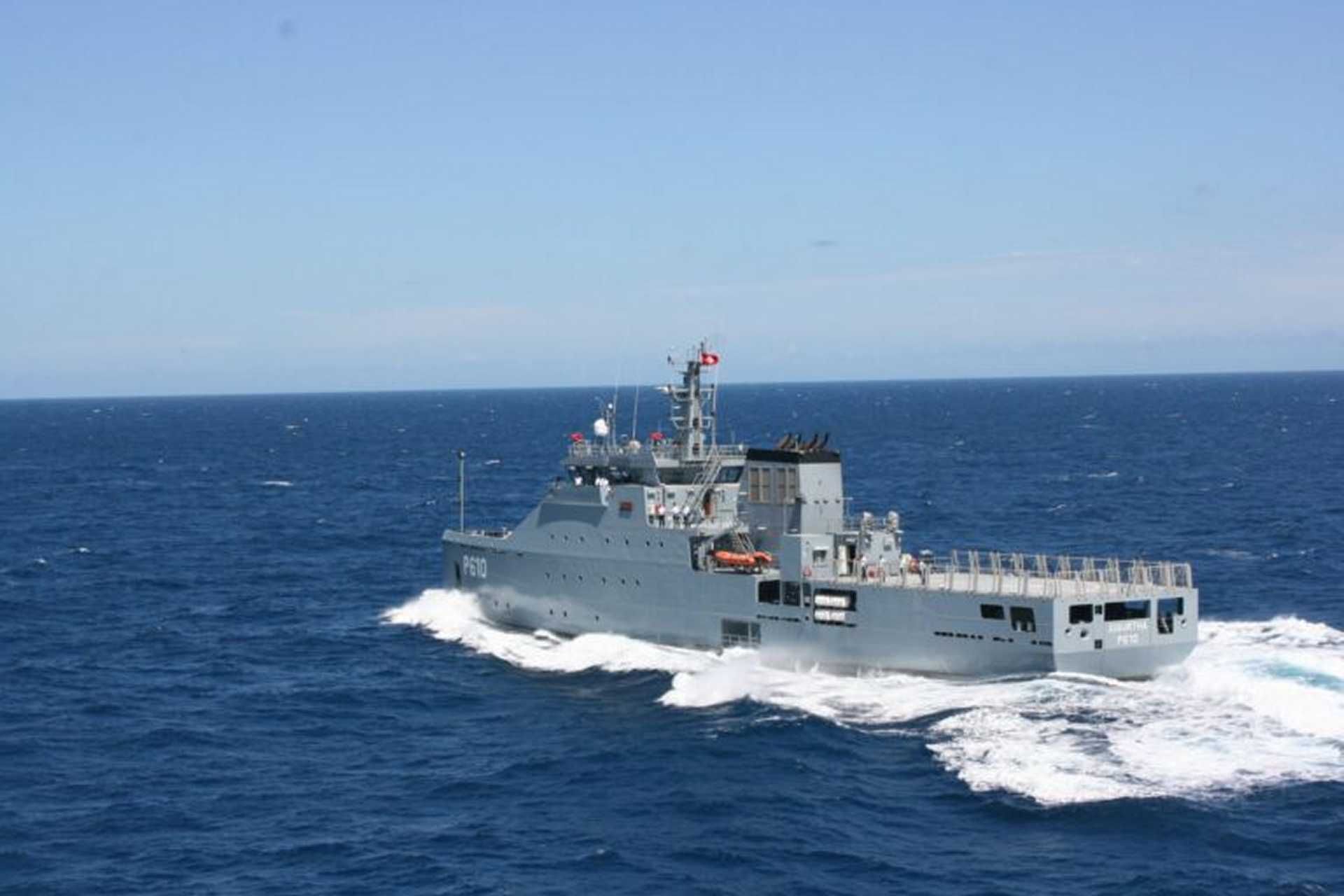
The Jugurtha (P610) has participated in multiple bilateral and multinational operations since entering service, including escort missions with U.S. Coast Guard vessels Robert Goldman and Charles Moulthrope in April 2021 and a PASSEX with the Hellenic Navy in August 2022. (Picture source: Hellenic Armed Forces)