
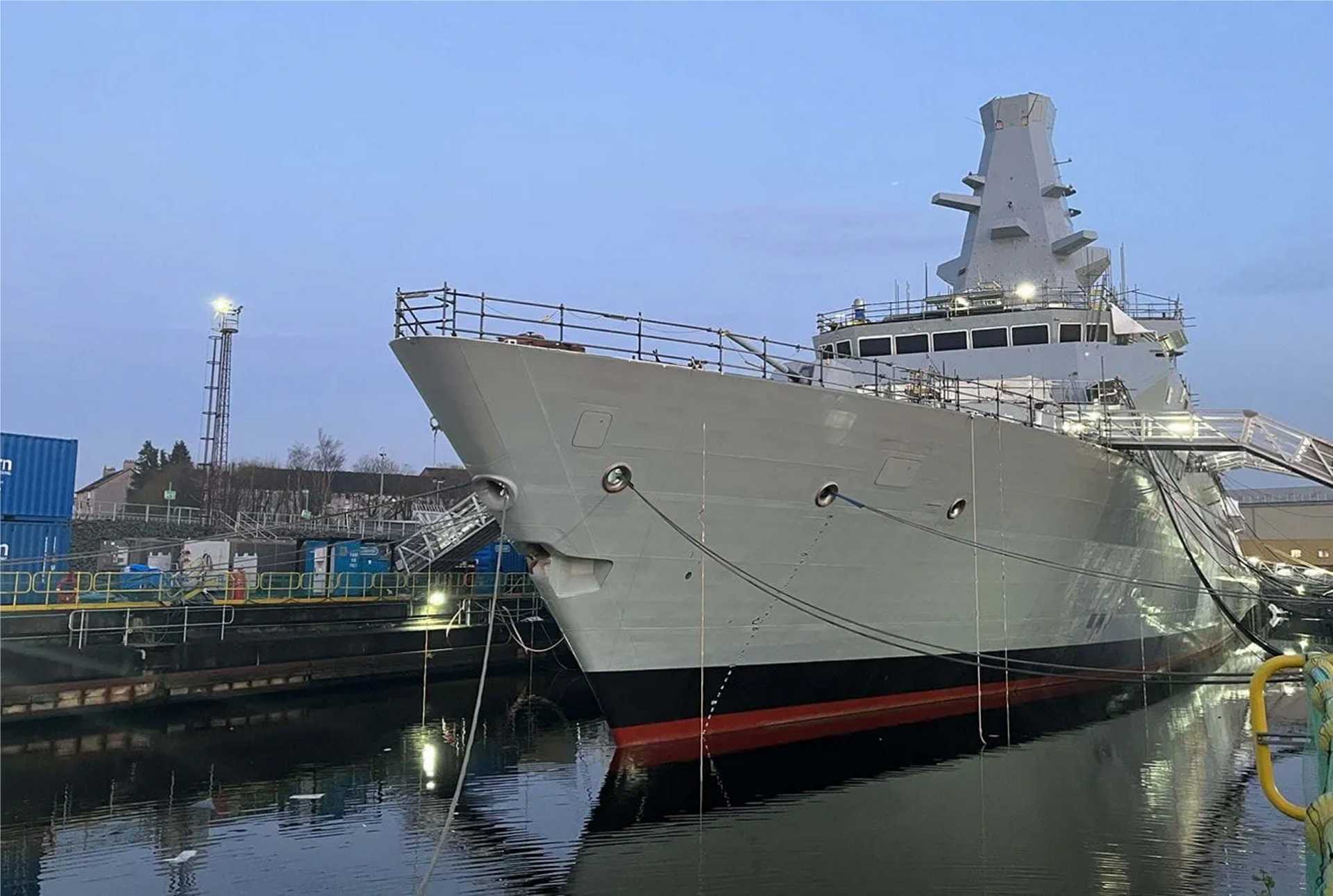










British Navy activates first MTU generator on new HMS Glasgow Type 26 anti-submarine frigate.
The British Royal Navy announced on December 18, 2025, that engineers had successfully activated the first diesel generator aboard HMS Glasgow, the lead ship of the Type 26 frigate program. The milestone signals a critical transition from structural construction to full systems integration for the British Royal Navy’s next-generation anti-submarine warfare fleet.
According to information released by the British Royal Navy on December 18, 2025, engineers at BAE Systems’ Scotstoun shipyard on the River Clyde have powered up the first of four MTU diesel generators installed on HMS Glasgow. The achievement marks the first time electrical power has flowed through the hull of the Type 26 frigate. This foundational step enables testing of propulsion, combat systems, and onboard networks as the ship moves closer to sea trials.
Follow Army Recognition on Google News at this link
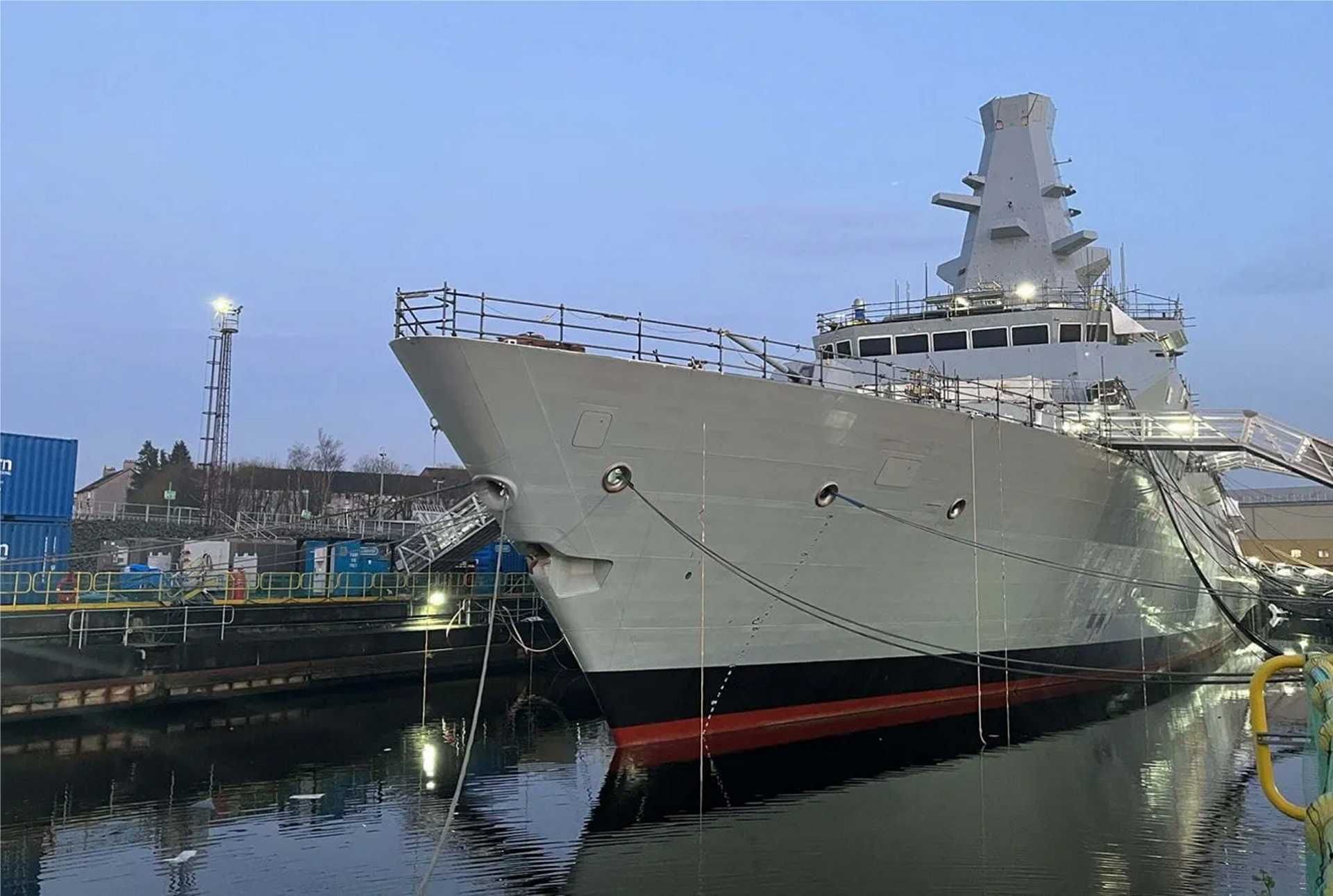
HMS Glasgow, the British Royal Navy’s first Type 26 anti-submarine warfare frigate, pictured during advanced stages of construction. The ship recently entered a new phase with the activation of its first MTU diesel generator, marking a major milestone ahead of sea trials. (Picture source: British Royal Navy)
The Type 26 program, officially known as the Global Combat Ship, is one of the United Kingdom’s most significant naval procurement efforts in decades. Managed by the UK Ministry of Defence and executed by BAE Systems, the program involves the construction of eight advanced anti-submarine warfare frigates for the Royal Navy. The initial contract, valued at £3.7 billion, was signed in June 2017 for the first three ships: HMS Glasgow, HMS Cardiff, and HMS Belfast. A second tranche covering the remaining five ships was awarded in November 2022 for £4.2 billion, bringing the total investment to nearly £8 billion. All vessels are scheduled to be built in Glasgow, reinforcing the strategic importance of the Clyde shipbuilding corridor.
The Type 26 is designed to replace the ageing Type 23 Duke-class frigates, which have been the Royal Navy’s backbone for anti-submarine warfare since the early 1990s. Each Type 26 vessel will displace approximately 8,000 tonnes and measure 149.9 meters in length, making it significantly larger and more capable than its predecessor. The design emphasizes acoustic stealth, modular flexibility, and global deployability, with a primary mission focus on tracking and neutralizing submarine threats in contested waters.
One of the ship’s defining features is its integrated electric propulsion system, which combines four MTU 20V 4000 M53B diesel generators with a Rolls-Royce MT30 gas turbine. This configuration offers both endurance and speed, with the diesel generators providing over 12MW of power for sustained cruising and the MT30 delivering 36MW for high-speed sprints. The propulsion system is supported by two electric motors that reduce underwater radiated noise, a critical attribute for anti-submarine operations.
In terms of armament, the Type 26 will be equipped with a 5-inch (127mm) Mk 45 naval gun, Sea Ceptor short-range air defense missiles, and a flexible vertical launch system capable of hosting Tomahawk land attack missiles or anti-ship weapons in future configurations. The ship’s modular mission bay and hangar are designed to deploy a range of assets, including helicopters, unmanned vehicles, and humanitarian supplies, enabling rapid role adaptation during crises or conflicts.
Sensor systems include a towed-array sonar for long-range submarine detection, a bow-mounted sonar, and a comprehensive radar suite, including the Artisan 3D surveillance radar. The combat management system integrates all weapons, sensors, and data links, allowing the vessel to operate autonomously or within a NATO task group.
The Type 26’s crew complement is expected to be around 157 personnel, with accommodations for up to 208, enabling flexibility for embarked forces or additional mission modules. Life support and habitability features include advanced HVAC systems, redundant power generation, and integrated data networks throughout the ship.
In addition to its role in the Royal Navy, the Type 26 design has been selected by Australia for its nine-ship Hunter-class frigate program and by Canada for its fifteen-ship Canadian Surface Combatant fleet, making it a cornerstone of future NATO and allied surface combat capabilities. This export success underscores the design’s appeal in terms of interoperability, technological sophistication, and long-term upgrade potential.
With HMS Glasgow reaching this key milestone, the Type 26 program is entering a new phase of systems integration and sea trial preparation. The ship is expected to conduct its first sea trials in 2026, followed by operational handover to the Royal Navy in the years to come. The program remains central to the UK's maritime strategy, ensuring undersea dominance, global reach, and alliance interoperability well into the 2040s and beyond.
Written by Alain Servaes – Chief Editor, Army Recognition Group
Alain Servaes is a former infantry non-commissioned officer and the founder of Army Recognition. With over 20 years in defense journalism, he provides expert analysis on military equipment, NATO operations, and the global defense industry.