





Breaking News






Norway approves $1.9 billion purchase of K239 Chunmoo MLRS from South Korea for long-range strikes.
Norway’s parliament has approved the funding of 19 billion Norwegian kroner, approximately $1.91 billion, for the acquisition of a long-range precision fire system from South Korea, identified as the K239 Chunmoo.
On January 16, 2026, NRK, the state-owned public service broadcaster in Norway, announced that a parliamentary majority cleared the political path for the Norwegian government’s proposed financing for the acquisition of a long-range precision fire system with ranges of up to 500 kilometers from South Korea, identified as the K239 Chunmoo. The decision authorizes a 19 billion kroner procurement package covering launchers, munitions, training, and logistical support. The approval enables the government to proceed toward contract execution.
Follow Army Recognition on Google News at this link
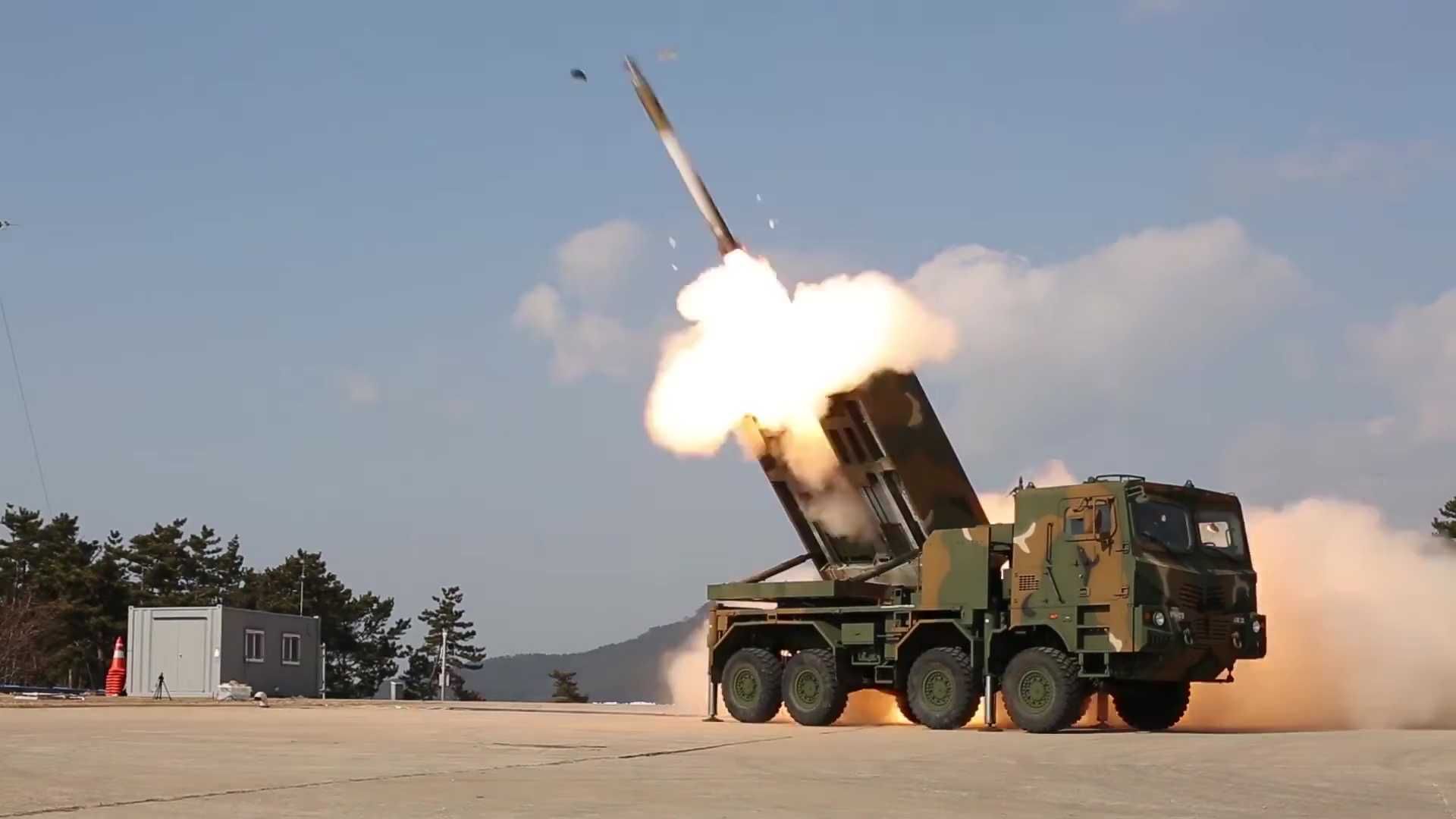
The K239 Chunmoo, first commissioned by South Korea in 2014, has gained Norway's attention for its modular design and capability to fire a range of munitions, including 130 mm, 227 mm, and guided 239 mm rockets, as well as tactical missiles such as the KTSSM. (Picture source: South Korean MoD)
Norway’s move toward long-range precision fires is rooted in structural changes to its land forces since the end of the Cold War and the gradual removal of legacy rocket artillery from its inventory. The Norwegian Army previously operated the M270 MLRS, but this capability was phased out during force restructuring in the 1990s and 2000s, leaving Norway without an active heavy multiple rocket launcher force for more than a decade. By the early 2020s, this absence had become a recognized capability gap, particularly as the security environment in Eastern Europe and the Arctic deteriorated following Russia’s full-scale invasion of Ukraine in 2022. In response, long-range precision fires were redefined as a core Army requirement intended to restore the ability to strike targets at extended distances with accuracy, support NATO deterrence objectives, and reinforce national defense across peace, crisis, and conflict.
This led to the creation of the Long Range Precision Fire System program, which aimed to reintroduce a modern MLRS capability supported by training, sustainment, and integration from the outset. As the program took shape, Norway assessed multiple candidate systems capable of delivering long-range and precision effects, reflecting both operational and industrial considerations. The U.S. M142 HIMARS entered the process through a Foreign Military Sales pathway that included authorization for up to 16 launchers, while European solutions such as EuroPULS were also examined during earlier phases before being set aside. South Korea’s K239 Chunmoo, offered by Hanwha Aerospace, emerged as a prominent option as Norway evaluated cost, delivery timelines, missile range, and adaptability. The Chunmoo’s relevance was reinforced by existing defense cooperation between Norway and South Korea, notably through the earlier acquisition of K9 VIDAR self-propelled howitzers and K10 ammunition resupply vehicles.
Within this competitive context, the Norwegian debate centered on how quickly a credible long-range fire capability could be fielded, how resilient the supply chain would be in a crisis, and whether diversification beyond traditional U.S. and European suppliers could strengthen overall defense readiness. Several considerations shaped the political debate during program development. Some parties emphasized supplier geography, resilience of supply chains, and the value of Northern European industrial cooperation. Others stressed delivery timelines and the need to field the capability without reopening lengthy evaluations. The Conservative Party highlighted a separation of responsibilities where parliament approves financing while the government conducts procurement and selects suppliers.
This framing supported moving forward once funding was authorized. The resulting majority, formed by the government with support from the Green Party and the Conservative Party, reflected acceptance of speed and readiness as priorities. The debate focused on how quickly the Army could gain credible deep-strike capacity. The outcome allowed the government to now proceed toward contract execution. Opposing parties argued for reopening the process in favor of a Norwegian-European cooperation path. The acquisition of the MLRS is handled alongside other large defense investments, including submarines.
The K239 Chunmoo originated from South Korea’s requirement to replace the aging K136 Kooryong multiple rocket launcher, which had entered service in the late 1970s to counter North Korean artillery threats. By the 2000s, the Kooryong faced growing limitations due to component obsolescence and insufficient range against newer multiple launch rocket systems (MLRS) fielded by North Korea. In response, South Korea launched a replacement effort in 2009 aimed at restoring balance in counter-battery and deep-fire missions. The program sought a system capable of higher accuracy, longer reach, and compatibility with modern command and fire control architectures. The Chunmoo's development concluded in late 2013 after four years of work. Initial production followed in 2014, with operational deployment beginning in 2015. The system was designed primarily to suppress enemy artillery and strike hardened targets in wartime scenarios.
The development process marked a shift in South Korea’s defense-industrial approach, as the Chunmoo became the first major artillery program led primarily by domestic private defense companies rather than a purely state-directed model. The launcher architecture was designed to leverage lessons from operating the M270 MLRS while transitioning to a wheeled configuration to reduce acquisition, operating, and lifecycle costs. Over time, the K239 evolved from an unguided rocket launcher into a modular long-range precision fire system integrating guided rockets and tactical ballistic missiles. Improvements focused on automated fire control, reduced reaction times, and faster reload cycles compared with earlier tracked systems. Subsequent upgrades expanded missile integration options, including compatibility with new tactical surface-to-surface missiles. Research efforts since the early 2020s have also concentrated on extended-range rockets and improved propulsion concepts, in order to position the K239 Chunmoo as a scalable rocket system.
Speaking of which, in terms of rockets and missiles, the Chunmoo supports a wide range of calibers and mission profiles through containerized launch pods. Standard loads include K33 131 mm unguided rockets with a range of 36 km and KM26A2 230 mm rockets derived from the M26 family with a 45 km range. The CGR-080 239 mm guided rocket provides precision strike capability out to 80 km using GPS-aided inertial navigation and can carry either a high-explosive penetrator warhead or a submunition payload. At the upper end, the launcher system integrates tactical missiles such as the CTM-MR and CTM-290, with maximum ranges of 160 km and 290 km respectively. Accuracy values are stated at 15 m CEP for CGR-080 and 9 m CEP for CTM-290. Ongoing development aims to extend 239 mm rocket ranges toward 200 km using ducted rocket propulsion.
The Chunmoo launcher is mounted on a Korean K239L 8x8 wheeled chassis, with a combat weight of about 31 tonnes and a three-person crew. The vehicle is powered by a 450 hp HD Hyundai Infracore DV11K diesel engine coupled to an Allison 4500SP automatic transmission, enabling road speeds up to 80 km/h and an operational range of 450 km. Protection is provided by an armored cab rated to STANAG 4569 Level 2, offering resistance to small arms fire and shell fragments, along with NBC protection. The rear-mounted launcher carries two interchangeable pods and is integrated with digital fire control and GPS/INS navigation. Six 239 mm rockets can be fired within 30 seconds, with a full salvo of 12 rockets in about one minute, while reloading two pods takes roughly seven minutes using a dedicated ammunition support vehicle.
Currently, the K239 Chunmoo is operated by South Korea’s Army, Navy, and Marine Corps, with more than 200 systems in service and additional units planned. Export variants have broadened its footprint, most notably Poland’s Homar-K, which combines an improved Chunmoo launcher module with a Jelcz 8x8 chassis and Polish TOPAZ battle management system. Poland has ordered 290 launchers, with over 100 already in active service. The United Arab Emirates operates 12 systems delivered in 2021, while Saudi Arabia fields 36 units in service. Estonia has contracted for six launchers with associated missiles for delivery over several years. Additional discussions or industrial agreements have involved countries such as Norway, Egypt, Romania, and the Philippines.
Written by Jérôme Brahy
Jérôme Brahy is a defense analyst and documentalist at Army Recognition. He specializes in naval modernization, aviation, drones, armored vehicles, and artillery, with a focus on strategic developments in the United States, China, Ukraine, Russia, Türkiye, and Belgium. His analyses go beyond the facts, providing context, identifying key actors, and explaining why defense news matters on a global scale.