




Breaking News







Australia considers US variant of Israel's Iron Dome to protect military bases from missile attacks.
The Australian Department of Defence has requested pricing and delivery schedules for the U.S. Marine Corps' Medium Range Intercept Capability (MRIC), based on Israel's Iron Dome, Patriot, and land-based Aegis systems, to meet its Project LAND 6504 requirement. This potential A$10 billion acquisition aims to bridge critical air defense gaps against cruise missiles, drones, and high-speed ballistic threats by integrating foreign interceptors with domestic CEA Technologies radars. The initiative prioritizes low-cost, high-volume engagement options like the Iron Dome-derived SkyHunter interceptor to complement Australia’s existing short-range NASAMS coverage.
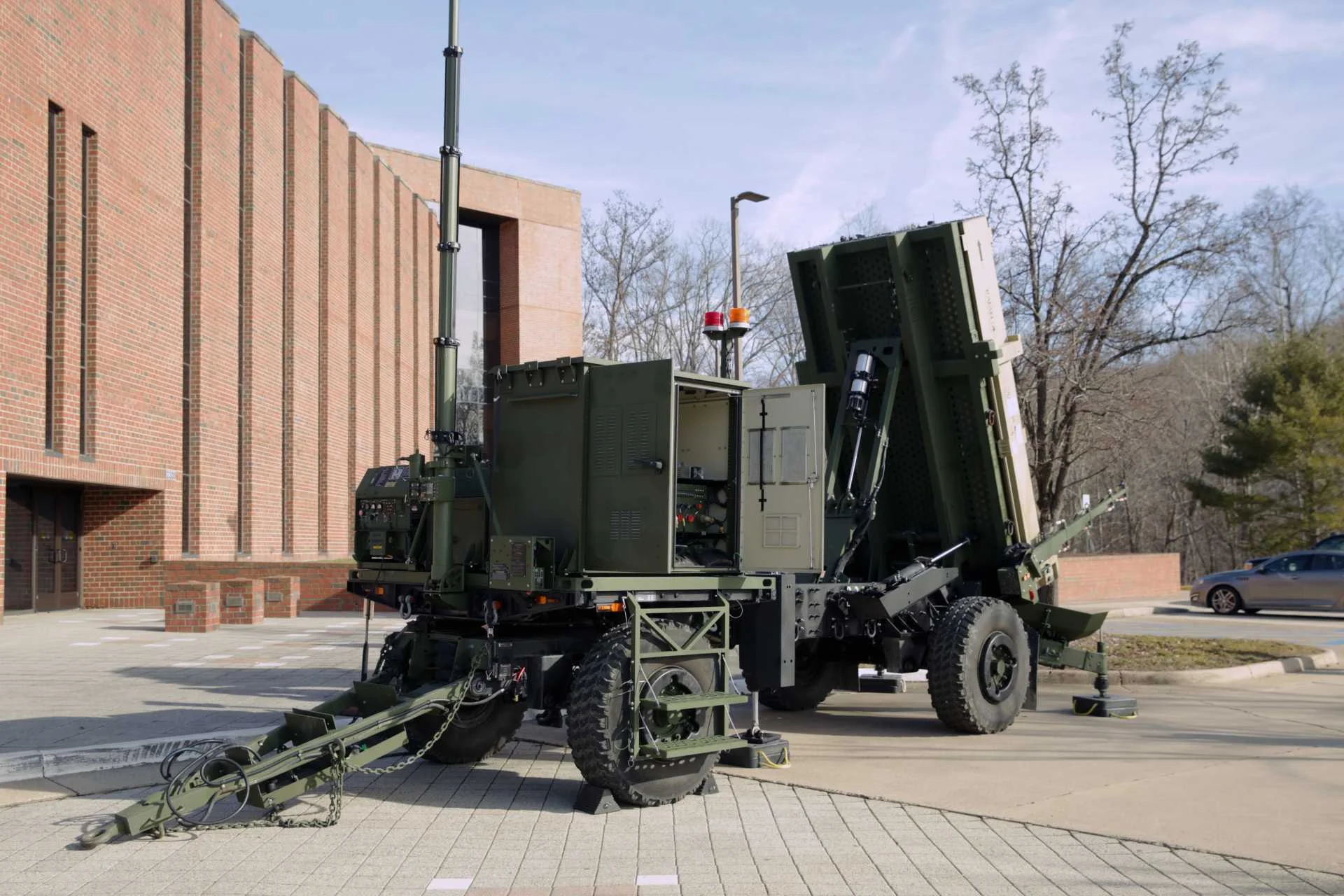
The Medium Range Intercept Capability (MRIC) is the U.S. Marine Corps' adaptation of Israel's Iron Dome air defense system, combining American AN/TPS-80 G/ATOR radar and CAC2S command equipment with Iron Dome-derived launchers. (Picture source: US DoD)
On October 29, 2026, The Australian revealed that Australia is considering the U.S. Marine Corps' Medium Range Intercept Capability (MRIC), derived from Israel's Iron Dome, for its medium-range ground-based air defence program, potentially worth A$10 billion. The Department of Defence has requested prices and delivery schedules for the MRIC, Patriot, and a land-based Aegis configuration, with NASAMS, South Korea's L-SAM, and Rafael also potential contenders. The October 13 tender targets selection by December 2027, live firing during Talisman Sabre 2029, initial capability in the early 2030s, and full capability by the mid-2030s. The MRIC combines U.S. radars and command systems with 20-round SkyHunter launchers, providing a nominal engagement envelope between 4 and 70 km.
Its appeal lies in intercepting cruise missiles and drones with less expensive ammunition than the Patriot, although long-range and medium-range ballistic missiles (such as those fired from Iran) fly much higher and faster outside the Iron Dome's engagement envelope. LAND 6504 replaces a procurement initiative launched in 2021 and subsequently delayed by budget constraints. By April 2026, Australia had approved only A$210 million, or 2.1% of the potential A$10 billion acquisition ceiling, while Lockheed Martin Australia's separate battle management program had received A$190 million against a projected A$4.2 billion. The selected missile system must integrate CEA Technologies radars, replacing or supplementing the AN/TPS-80 used by the MRIC, the EL/M-2084 used by Iron Dome, or the native sensors of other candidates.
Related topic: US Defense Department plans first Golden Dome space interceptor tests before end of 2026
This requires compatible target-tracking, engagement-calculation, launch-authorization, and missile-guidance interfaces, with additional demands for ballistic-missile interception. Lockheed Martin demonstrated one integration approach in June 2026 by firing an SM-2 from a trailer launcher using Aegis and a CEA radar. The remaining acquisition candidates include Kongsberg's NASAMS with AMRAAM-ER, Hanwha's L-SAM, and a possible direct Rafael proposal. The MRIC combines the AN/TPS-80 G/ATOR active electronically scanned array radar, the Common Aviation Command and Control System (CAC2S), and Iron Dome-derived launchers. CAC2S connects surveillance tracks with engagement coordination and the Marine Corps' wider aviation command network. Each launcher carries 20 SkyHunter missiles, giving four launchers 80 ready-to-fire rounds, eight launchers 160, and 16 launchers 320.
MRIC architecture and SkyHunter missile capabilities
Against a cruise missile flying at 250 m/s, every 60 seconds of detection or engagement delay allows the target to travel another 15 km, making radar coverage and reaction time critical. The MRIC underwent live-fire validation with III Marine Expeditionary Force during Valiant Shield on Guam on June 30, 2026, and has been deployed with Marines in Okinawa. The planned Marine Corps’ three-battery inventory comprises 44 launchers and 1,840 missiles, equivalent to 880 initially loaded interceptors and 960 additional rounds. The SkyHunter retains a 95-99% design commonality with Rafael's Tamir interceptor, measuring 3 m long, 160 mm in diameter, and weighing 90 kg. Its maximum speed is Mach 2.2, equivalent to 755 m/s at standard sea-level sound speed, while electro-optical sensors, aerodynamic steering fins, and a proximity-fuzed fragmentation warhead support engagements without direct impact.
The missile family can engage rockets, artillery, mortars, cruise missiles, drones, and selected aircraft, but is not an established interceptor against high-speed medium- or intermediate-range ballistic missiles. RTX and Rafael invested US$33 million in a production facility at East Camden, Arkansas, beginning construction in February 2024. In April 2026, Marine Corps Col. Andrew Konicki expected missile and launcher production within 12 months, following earlier delays. Estimated Tamir and SkyHunter prices of US$180,000-US$314,000 per missile compare with US$4 million for certain Patriot interceptors, although these figures are not standardized procurement prices. Iron Dome entered Israeli service on March 27, 2011, and completed its first operational interception on April 7 against a Grad rocket approaching Ashkelon. A conventional battery combines an EL/M-2084 radar, mPrest battle management equipment, and three or four launchers with 20 Tamir missiles each, providing 60 to 80 ready-to-fire interceptors.
Iron Dome development and air defense capabilities
Its command system calculates projected impact points and can disregard rockets expected to land outside protected areas, conserving ammunition during large salvos. Launchers communicate through secure wireless links and can be dispersed from the radar and command element. A battery's nominal defended footprint of 100-150 km² corresponds to a circular radius of 5.6-6.9 km, not the missile's 70 km maximum engagement distance. Iron Dome consequently protects defined areas against shorter-range threats, while David's Sling and Arrow address higher-speed and longer-range ballistic missiles. The Marine Corps completed MRIC rapid prototyping in October 2025 and had fielded one platoon by April 2026. Its FY2027 request allocates US$233.6 million to MRIC, including US$157.6 million for 16 launchers and 410 SkyHunter missiles, sufficient to load 320 missiles and retain 90 additional rounds.
An earlier US$25 million award covered 16 all-up-round magazines containing 80 missiles and associated equipment, followed by a US$380 million modification supporting full-rate production. The broader ground-based air defense funding request rose from US$620 million appropriated in FY2026 to US$1.27 billion for FY2027, an increase of 104.8%. The planned 44-launcher inventory would hold 880 loaded missiles and 960 additional rounds, equivalent to 1.09 reload missiles per initial position. At two missiles per target, the initial load would support 440 theoretical engagements across the force, excluding misses, launcher losses, and reserve requirements. Iron Dome's combat record illustrates both its interception capabilities and ammunition demands. During Operation Pillar of Defense in November 2012, it completed 421 interceptions with an estimated 85% success rate against engaged threats.
During Operation Protective Edge in 2014, 4,594 rockets and mortars were launched, but only approximately 25% threatened protected areas; Iron Dome intercepted 735 projectiles with an estimated 90% success rate against selected targets. In May 2021, more than 4,300 rockets were launched, including 470 during the first 24 hours, while approximately 680 fell short and Iron Dome intercepted an estimated 90% of threatening rockets. The U.S. Army purchased two batteries for US$373 million, comprising 12 launchers, 480 missiles, two radars, and two command posts. After activating the system at Fort Bliss in November 2020, the Army intercepted eight cruise missile surrogate targets during August 2021 testing and evaluated a battery on Guam.
Australian missile defense requirements and MRIC limitations
It nevertheless abandoned additional purchases after difficulties integrating Iron Dome with its Integrated Battle Command System, illustrating a specific integration risk for Australia's CEA radar requirement. Australia's operational requirement is broader than MRIC's established engagement capabilities: LAND 6504 must address terminal-phase ballistic missiles and subsonic air-breathing threats, while interception of maneuvering hypersonic weapons and faster cruise missiles is also desirable. MRIC could intercept suitable cruise missiles and drones while Patriot or another ballistic missile defense system handles higher-speed targets, but that division requires coordinated tracking, classification, and engagement control.
Four SkyHunter launchers provide 80 missiles, enough for 40 theoretical engagements at two interceptors per target; eight launchers provide 160 missiles for 80 engagements under the same assumption. An illustrative attack involving 24 cruise missiles and 16 drones would consume all 80 missiles in a four-launcher configuration if every target required two interceptors, leaving no loaded rounds for a subsequent salvo. Coverage is another constraint: a nominal 100-150 km² Iron Dome footprint cannot simultaneously protect military installations separated by hundreds of kilometres, regardless of the interceptor's maximum range.
Australia currently relies on a regiment equipped with NASAMS for Army ground-based air defense, leaving substantial gaps in ballistic missile interception and geographic coverage. With selection scheduled for 2027, firing trials in 2029, and full capability in the mid-2030s, the decisive procurement variables remain the number of batteries purchased, the ballistic missile threats they can defeat, and the interceptor stocks available to sustain repeated attacks.
Explore More Defense News
• Land Defense News
• Naval Defense News
• Defense Aerospace News
Written by Jérôme Brahy
Jérôme Brahy is a defense analyst and documentalist at Army Recognition. He specializes in naval modernization, aviation, drones, armored vehicles, and artillery, with a focus on strategic developments in the United States, China, Ukraine, Russia, South Korea, Türkiye, and Belgium. His analyses go beyond the facts, providing context, identifying key actors, and explaining why defense news matters on a global scale.