






Breaking News






US Army Advances Its Tactical Surveillance Architecture with Deployment of the Commander 3XL Drone.
On July 22, 2025, the North American company Draganfly announced the signing of a strategic contract with the United States Department of Defense for the supply of multirotor drones of the Commander 3XL type. This acquisition reflects the rapid evolution of Western ISR doctrines and the growing role of lightweight UAVs in contemporary military systems. It also highlights a deeper trend: the emergence of the tactical drone as an essential tool for information and logistical superiority on modern battlefields.
Follow Army Recognition on Google News at this link
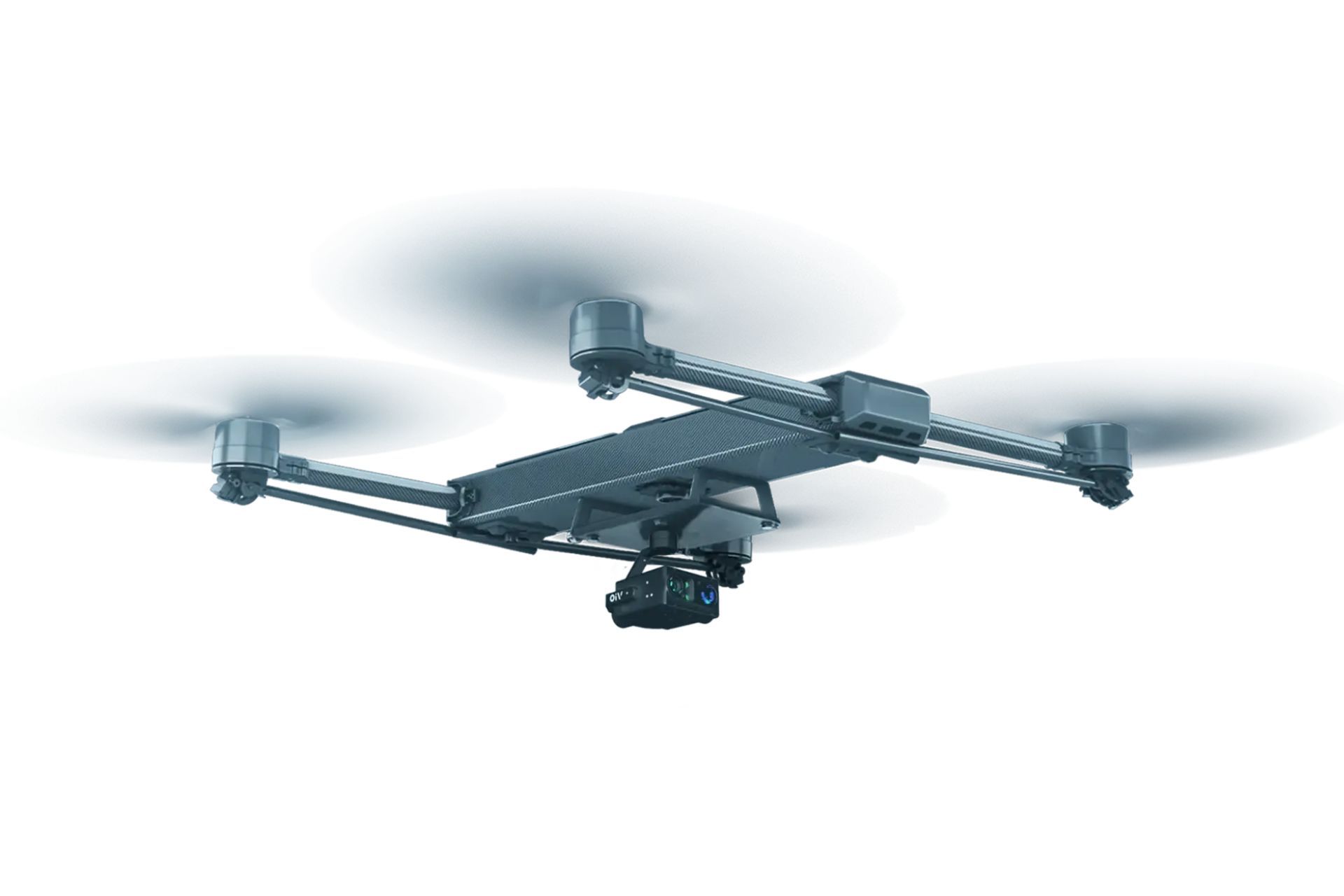
The Draganfly Commander 3XL is a high-endurance multirotor UAV engineered for rapid deployment and tactical versatility (Picture source: DraganFly)
Since 2022, the war in Ukraine has acted as an unprecedented accelerator in the spread of small- and medium-sized drones. Their systematic use for both intelligence and strike missions has significantly altered operational dynamics. Russian and Ukrainian forces have demonstrated that quadcopters weighing just a few kilograms, equipped with cameras or light payloads, can disrupt armored units, interfere with logistics chains, or adjust artillery fire in real time. These lessons, widely observed by military staff around the world, have extended beyond Europe. In Syria, Iraq, as well as in Thailand, Cambodia, and Myanmar, both regular forces and non-state actors are now exploiting the tactical potential of these inexpensive, easy-to-deploy, adaptable, and scalable systems. The tactical drone is no longer a technological advantage—it has become a baseline requirement in any modern combat operation.
In response to this proliferation, most regional powers have initiated their own development programs with tangible results. Türkiye has established a competitive industrial base around its light fixed- and rotary-wing drones. Iran, despite sanctions, offers rugged but effective models adapted to asymmetric warfare. Israel, China, India, Poland, and even Thailand now design modular, often export-oriented UAVs intended to equip both conventional forces and special units. This broad trend is reshaping the capability landscape, where the value of a system is no longer assessed solely by its power or endurance, but by its ability to integrate into fast decision-making loops, its interoperability, and its deployability on the ground.
In this context, the Pentagon's choice of the Commander 3XL is driven by two primary objectives: first, to acquire autonomous tactical ISR capabilities aligned with emerging multi-domain doctrines; second, to strengthen U.S. industrial sovereignty by eliminating critical components of foreign, particularly Chinese, origin. The Draganfly drone meets these requirements: Blue UAS-certified, NDAA-compliant, fully designed and assembled in North America, and in line with U.S. Department of Defense criteria for security, cybersecurity, and strategic integration. It also sends a political signal in favor of mid-sized domestic manufacturers, at a time when Washington seeks to diversify its dual-use technology supply chain.
The Commander 3XL is a high-endurance multirotor drone intended for ISR missions, light logistics, and advanced reconnaissance. With an empty weight of 13.2 kg and a maximum takeoff weight of 25 kg, it can carry up to 10 kg of payload. Its flight time ranges from 50 to 55 minutes depending on payload and environmental conditions. It cruises at 72 km/h with an operational range of 38 kilometers. Designed for modularity and rapid deployment, it features foldable arms, retractable landing gear, semi-permanent batteries with automatic connection, and a universal mounting system compatible with EO/IR sensors, LiDAR, logistical payloads, or winch systems. It supports multiple secure radio modules (Herelink Blue, Doodle Labs Helix, Microhard, DTC BluSDR), all compliant with AES/FIPS encryption standards, allowing encrypted transmission up to 10 kilometers with mesh capability.
This type of system is not intended to replace MALE or HALE drones, but rather to complement them at the tactical level, where responsiveness, discretion, and resilience are decisive. It can support infantry units in securing strongpoints, monitor the real-time movement of mechanized columns, deliver equipment to forward positions, observe extended front lines, or transmit live 3D imagery to targeting cells. This level of operational flexibility is now essential to meet the requirements of multi-domain environments, where the density of threats calls for continuous and distributed situational awareness. The drone thus becomes a mobile, discreet, and near-disposable sensor embedded within a broader tactical information network.
The integration of the Commander 3XL into the U.S. military reflects both a doctrinal and industrial shift. As China focuses on the mass deployment of autonomous drone swarms, Russia multiplies theater-level loitering munitions, and asymmetric conflicts escalate across multiple regions, the United States is accelerating its transition toward connected, distributed warfare built on real-time information dominance. This is not merely a matter of technological advancement. It represents an operational paradigm shift, in which micro-drones become the key sensors of modern maneuvers, capable of linking tactical units with strategic decision-making processes.