






Breaking News






Poland receives two more leased U.S. AH-64E Apache helicopters to prepare purchase of 96.
Poland’s 1st Land Forces Aviation Brigade has received two additional AH-64E Apache attack helicopters from the United States under a fast-track lease program. The move supports training and integration ahead of Poland’s planned purchase of 96 new Apaches from Boeing.
Warsaw, Poland, October 30, 2025 - Two more AH-64E Apache helicopters from the United States have arrived in Poland, the Polish Minister of Defense confirmed on October 30, 2025. The aircraft joined the 1st Land Forces Aviation Brigade in Inowrocław, bringing the total number of leased Apaches to seven. The temporary fleet of eight will support pilot conversion and tactical training as Poland prepares to acquire 96 new-build Apache attack helicopters through a long-term Foreign Military Sales agreement with the United States.
Follow Army Recognition on Google News at this link
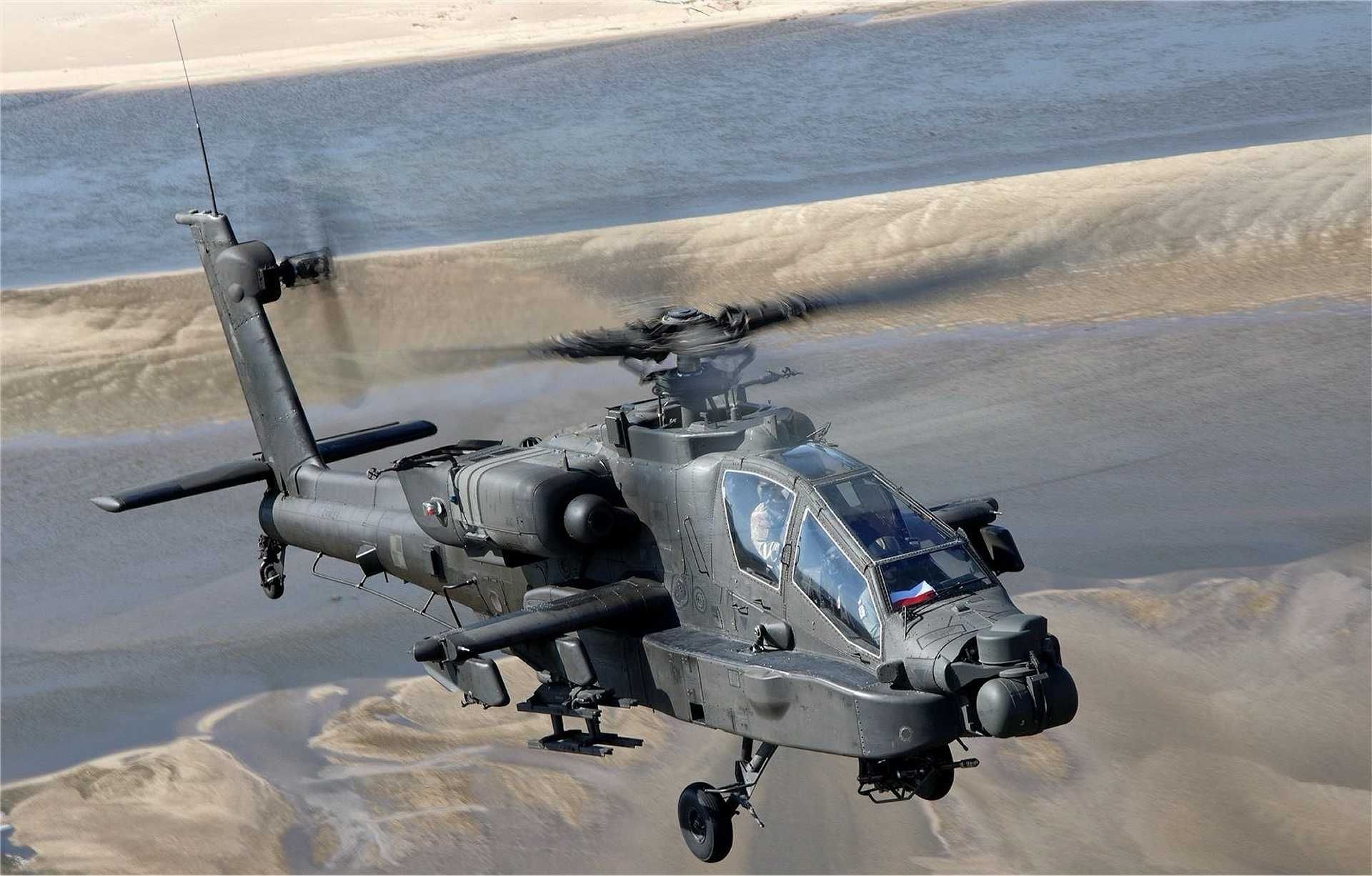
Poland has recently received two additional AH-64E Apache helicopters from the United States under a leasing agreement, bringing the total to seven and advancing pilot training ahead of full fleet delivery. (Picture source: Polish MoD)
This temporary lease arrangement, negotiated directly between Poland and United States in mid-2023, was designed as a strategic stopgap to ensure that Polish military personnel could begin hands-on training well before the full delivery of Poland’s 96 newly ordered AH-64E Apache Guardians begins. The U.S. Defense Security Cooperation Agency (DSCA) cleared the foreign military sale to Poland in August 2023, marking one of the largest Apache exports in the program’s history and cementing the AH-64E’s role as a pillar of NATO’s eastern flank deterrence strategy.
Polish Defense Minister Władysław Kosiniak-Kamysz emphasized that the program is proceeding "on schedule and in full compliance with contractual terms." With these latest arrivals, Apache pilot and maintainer training at Inowrocław has now reached critical momentum. U.S. Army Aviation and Boeing contractors are embedded with the Polish brigade, offering direct support in the instruction of flight operations, weapons systems integration, and maintenance procedures.
The leased Apaches, drawn from U.S. Army inventory, are fully mission-capable AH-64Es equipped with the latest avionics, communications systems, and Longbow radar. They feature the advanced TADS/PNVS targeting suite, integrated Link 16 for NATO interoperability, and can deploy a mix of AGM-114 Hellfire missiles, Hydra 70 rockets, and 30mm chain gun firepower. Each aircraft also comes with embedded electronic warfare capabilities tailored for contested airspace—a crucial asset as Poland continues to fortify its eastern defense posture in light of Russia's ongoing aggression in Ukraine.
These helicopters are already being used in live training sorties across central Poland. In a recent flight exercise near Toruń, Polish pilots executed simulated close air support missions under joint U.S.-Polish command, testing battlefield integration with forward observers and armored ground units operating Leopard 2PL tanks. According to an officer within the 1st Brigade who spoke to Army Recognition under condition of anonymity, “The Apache’s sensor fusion and battlefield awareness far surpass anything we’ve had before. This is a quantum leap in our attack aviation capability.”
This accelerated leasing and training program is not just about transitioning to a new platform—it signals Poland’s broader ambition to become the leading NATO attack aviation hub in Eastern Europe. The full delivery of 96 AH-64Es, expected to begin in late 2026, will eventually phase out the legacy Mi-24 Hind fleet, a Cold War-era relic now increasingly unsuited to modern combat environments.
Defense analysts point out that this Apache integration reflects a shift in Poland’s military doctrine: from reactive defense to proactive deterrence. With the AH-64E’s ability to operate in networked combat environments, provide real-time ISR to frontline units, and execute precision strikes, the Polish Land Forces will possess a scalable, lethal asset designed to match the speed and complexity of modern warfare.
The AH-64E Apache, often referred to as the “Guardian,” is the latest and most advanced variant of the world’s most battle-proven attack helicopter. Developed by Boeing, the AH-64E builds upon the combat legacy of the earlier AH-64D Longbow, adding new levels of performance, connectivity, and survivability. Key enhancements include a more powerful General Electric T700-GE-701D engine, composite rotor blades for greater speed and agility, and full interoperability with unmanned aerial systems. The AH-64E also features advanced network-centric warfare capabilities, allowing it to share targeting data with ground forces and other aircraft in real time, creating a more integrated and lethal battlespace environment.
With Poland joining the ranks of AH-64E operators, the Apache's footprint in Europe continues to expand. The United Kingdom has long operated the AH-64E variant as part of its Army Air Corps modernization, transitioning from the legacy WAH-64D model to the upgraded AH-64E since 2022. The Netherlands, another early Apache user in NATO, is currently in the process of upgrading its fleet of AH-64Ds to the Echo standard, with deliveries expected to complete in 2026. Elsewhere, Germany finalized its procurement process for AH-64Es earlier this year, selecting the platform as a replacement for its aging Tiger UHT attack helicopters. The U.S. Army, which fields the largest Apache fleet globally, has forward-deployed AH-64Es to Europe under Atlantic Resolve rotations, further enhancing NATO interoperability.
Beyond tactical capabilities, the arrival of the Apaches also strengthens the industrial and political ties between Poland and the United States. Boeing has committed to exploring industrial offsets with the Polish defense industry, including potential service hubs and localized maintenance facilities that could support not only Polish Apaches but those of regional allies.
With seven of eight leased helicopters now operational, and full-scale pilot training underway, Poland is already integrating the Apache into its future force structure. The program is on track to transform the Polish Army into one of the most advanced land-based aviation forces in Europe by the end of the decade.