






Breaking News






Ireland to Invest €500 Million in French Radar Network to Enhance National Airspace Security.
Ireland has approved the preliminary business case for its Military Radar Programme, opening talks with France on a €500 million primary radar system to secure national airspace. The move marks a significant shift in Ireland’s defense posture as it prepares for its 2026 EU presidency and faces growing concerns over unmonitored air activity.
On, 17 December 2025, Ireland signalled a decisive shift in its airspace security posture after the Department of Defence confirmed approval of the preliminary business case for the Military Radar Programme. The decision opens immediate government-to-government negotiations with France, identified as the preferred partner to deliver the primary radar capability Ireland says it needs to sustain a complete recognised air picture. The announcement lands as Dublin prepares for the EU presidency starting in July 2026, alongside a parallel push to field counter-drone measures in advance of the presidency period. The move was reported by The Irish Times and The Journal on 16 December, and was detailed in the Department of Defence statement published on 17 December.
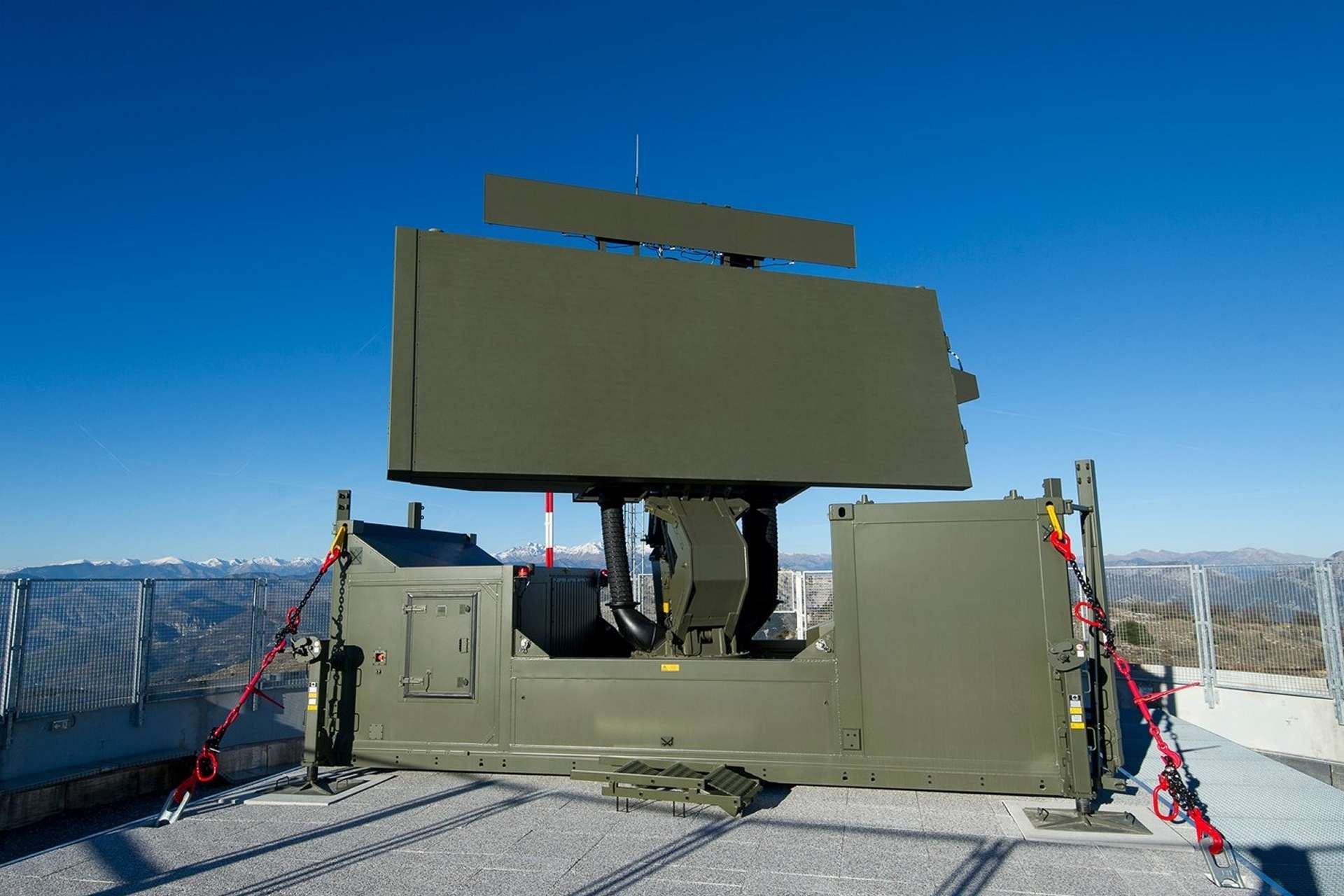
Ireland has approved negotiations with France on a €500 million military radar system to strengthen national airspace security, with the accompanying image being purely illustrative and showing Thales’s Ground Master 400 Alpha (GM400A) long-range air surveillance radar (Picture Source: Thales)
At the core of the programme is a “suite” of capabilities rather than a single sensor purchase. The Department of Defence describes three elements: land-based long-range primary radar, ground-based air defence systems including a counter-unmanned aerial system component, and maritime (ship-borne) radar for the Naval Service. The stated operational objective is to sustain a complete “Recognised Air Picture”, including the ability to detect aircraft traversing Irish airspace even if transponders are switched off. While the Department says the overall cost will only be determined later in the process, The Irish Times reports a proposed value of about 500 million euros, and The Journal recalls earlier estimates from military sources that the figure could exceed 300 million euros.
The operational mechanism is just as significant as the hardware itself. According to the Department of Defence, France’s proposals are being coordinated by the Direction Générale de l’Armement (DGA), the country’s defence procurement agency. Ireland is now set to enter detailed negotiations with France on a potential agreement aimed at meeting the programme’s capability requirements, with procurement to proceed under EU defence procurement regulations. The Irish Times describes this process as effectively outsourcing a substantial portion of Ireland’s defence procurement to Paris, noting that French state shareholdings in major defence firms, such as Thales and Dassault, make French-owned companies likely industrial partners. Likewise, The Journal reports that the supplier has yet to be confirmed but highlights Ireland’s recent contract with Thales for naval sonar systems, as well as Thales’s role in radar manufacturing.
The radar programme signals a shift from limited surveillance to a more structured air and maritime picture, combined with ground-based defensive measures. Minister Helen McEntee presents the primary radar track as essential to national security planning and to strengthening defence capabilities under the Programme for Government, and she links the programme to the 1.7 billion euro Defence Forces allocation referenced in the National Development Plan. Taken together, the stated design (land, maritime, and air defence layers) points to an attempt to create a coherent national air picture and a limited ability to respond to low altitude, small signature threats that conventional airspace monitoring can struggle to address.
The political impetus behind the accelerated focus on counter-drone capabilities is made clear in recent reporting. According to The Journal, the decision to fast-track anti-drone measures was prompted by a drone incursion observed during the recent visit of Ukrainian President Volodymyr Zelenskyy to Ireland. In response, the Department of Defence has confirmed that it is in the final stages of negotiations to conclude a counter-unmanned aerial systems contract before the end of the year. The objective is to provide the Defence Forces with the capability to detect, track and neutralise hostile or unauthorised drones, while also enabling support to An Garda Síochána in advance of Ireland assuming the EU Council presidency in July 2026.
The approved business case does not yet lock in a specific radar model or prime contractor, but it does lock in direction: a government-to-government path with France, run through the DGA, to deliver a multi-part architecture designed to make Ireland’s airspace and maritime approaches harder to exploit. With first rollout expected to begin next year and full delivery targeted for the end of 2028, the immediate test will be whether Dublin can translate an accelerated procurement approach into early counter-drone capacity and a credible, persistent recognised air picture on the timeline its own government has now set.