






Breaking News






U.S. Navy Advances FF(X) Frigate Program to Serve as a Critical Component of Trump’s Golden Fleet.
The U.S. Navy is moving to acquire a new FF(X) small surface combatant derived from a proven American ship design, according to an announcement by Secretary of the Navy John C. Phelan on December 19, 2025. The effort aligns with President Donald Trump’s Golden Fleet initiative and prioritizes speed, domestic shipbuilding, and rapid delivery of combat power.
According to information published by Secretary of the Navy John C. Phelan on X on December 19, 2025, the U.S. Navy is moving to acquire a brand-new frigate class for President Donald Trump’s Golden Fleet, built on a proven American design in American shipyards with an American supply chain and driven by one priority: getting combat power to sea fast. In his video announcement, Phelan framed the new FF(X) small surface combatant as a smaller, more agile frigate that will complement the fleet’s larger multi-mission warships and serve as a critical component of the Navy’s “fleet of the future,” explicitly tied to the Golden Fleet initiative already endorsed at the highest political level. The Navy states that the class will be derived from Huntington Ingalls Industries’ Ingalls-built Legend-class National Security Cutter design, emphasizing that this is a proven American-built hull that has been protecting U.S. interests at home and abroad rather than an untested paper concept.
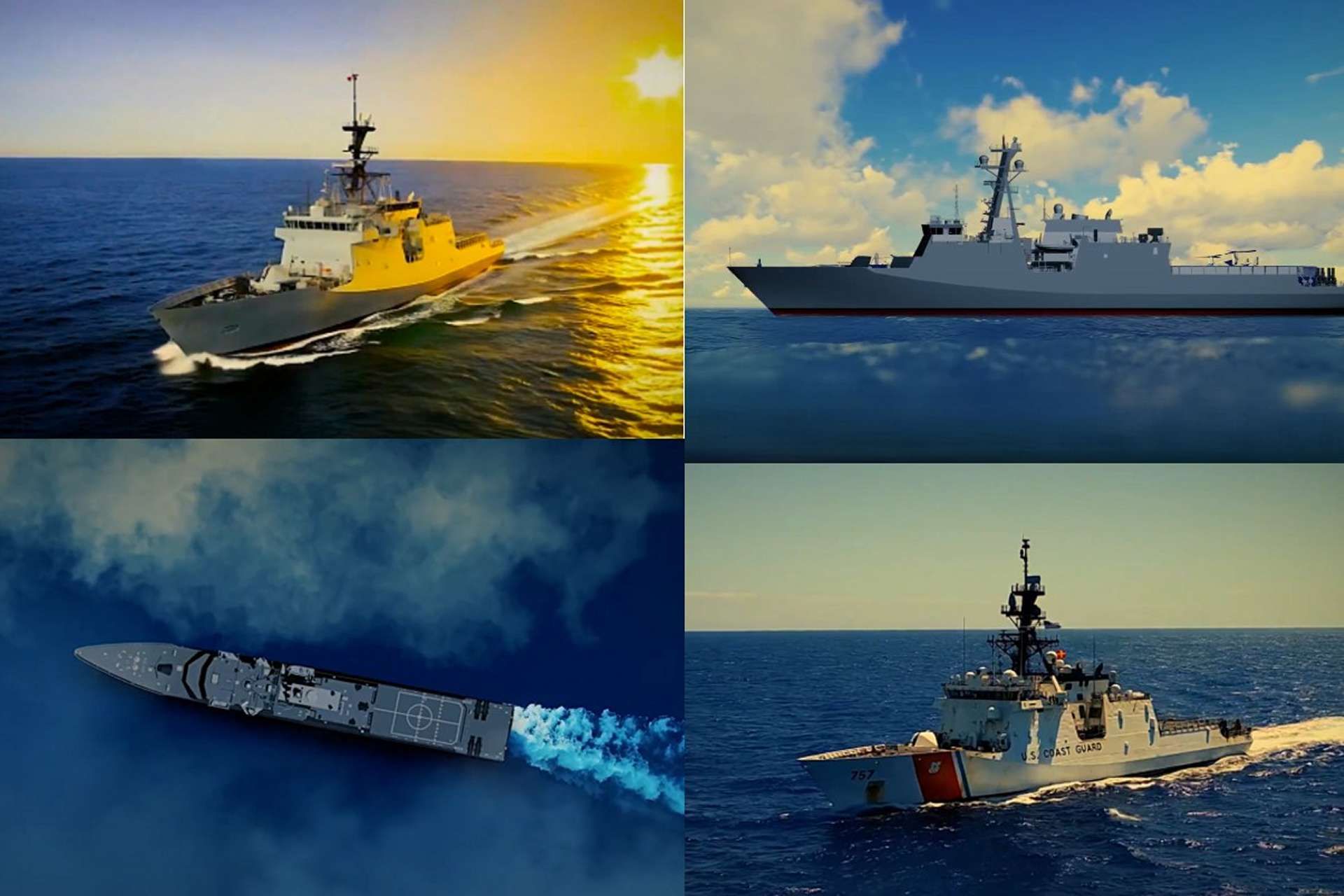
The U.S. Navy announced plans to acquire a new FF(X) frigate derived from a proven American cutter design, with Secretary of the Navy John C. Phelan tying the move to President Donald Trump’s Golden Fleet push to deliver combat power to sea faster using U.S. shipyards and suppliers (Picture Source: Secretary of the U.S. Navy)
The announcement lands only weeks after the Navy cut back the troubled Constellation-class effort, a program battered by design churn, schedule slips, and ballooning cost pressure, and it immediately puts Huntington Ingalls Industries’ Ingalls Shipbuilding in Pascagoula, Mississippi at the center of the service’s small surface combatant reset. Stars and Stripes recalls that the Constellation-class contract, originally valued at about $22 billion for 20 frigates, has been plagued by cost overruns, worker shortages and dozens of design changes, and is now effectively capped at two ships, USS Constellation and USS Congress, after a Navy report found the project roughly 36 months behind schedule. In official language, the new ship is the FF(X), a smaller, more agile combatant meant to complement large multi-mission warships and expand operational flexibility worldwide, with a target of getting the first hull into the water in 2028. Phelan has made clear that Ingalls’ 800-acre facility at Pascagoula will build the lead FF(X) using the Coast Guard cutter design to fast-track hulls to sea by 2028, with Navy statements repeatedly stressing that the new frigate is intended to enhance operational flexibility around the globe rather than replace high-end destroyers one-for-one.
Ingalls’ role extends beyond production into program execution, with the Navy relying on a mature design baseline and a streamlined acquisition approach to shorten development and delivery timelines. The Navy has stated it will designate a lead yard for the first ship and then shift to competitive follow-on awards to enable multi-yard construction, while reporting indicates the lead ship may be awarded directly to Ingalls to accelerate initial delivery, with competition introduced as soon as feasible. Phelan and HII both underline that Ingalls will apply the same sequence of construction used for the National Security Cutters, reusing tooling, workflows and experienced shipbuilders rather than standing up an entirely new line, and that other American shipyards will be invited into an open competition once the lead yard has demonstrated the design in steel. That mirrors what Navy acquisition leaders have been signaling in Washington, pointing to minimal design changes and a build-to-print methodology intended to let additional yards replicate production rather than reinvent it. In his public remarks, Phelan has gone so far as to say that shipyards will be measured on one outcome only, delivering combat power to the fleet as fast as possible, echoing the Arleigh Burke model of building an initial flight and upgrading step by step over time instead of trying to perfect a design before the first keel is laid.
Technically, the Navy is anchoring FF(X) on the Coast Guard’s Legend-class National Security Cutter hullform, a 418-foot cutter design with roughly 4,000 to 4,500 tons of displacement, a 28-knot top speed, and endurance measured in 60- to 90-day patrol cycles with transoceanic range. HII describes the existing NSC design as stable and producible, arguing that reusing this baseline for FF(X) should allow predictable schedules and lower technical risk compared with the heavily modified European-derived Constellation hull that struggled under the weight of successive design changes. The Coast Guard designed the platform around persistent presence, aviation support, and modern command-and-control, attributes that translate cleanly into escort, maritime security, and distributed operations roles for a Navy frigate. Navy renderings released alongside the announcement hint at a frigate-shaped combatant with visible missile launchers and point-defense fittings, and artist’s impressions carried in the defense press show an extended superstructure, canister launchers aft and close-in weapon mounts, but officials have not yet published a definitive combat system or sensors fit, leaving the exact lethality package and anti-submarine configuration as the next shoe to drop once the basic hull is locked in.
Operational credibility is the real selling point in the Pentagon’s messaging, and it is hard to miss the subtext: the Navy wants ships it already knows how to operate, sustain, and deploy, not another paper program that collapses under its own engineering appetite. Ingalls built and delivered 10 Legend-class cutters to the Coast Guard over nearly two decades, with the final delivery in October 2023, giving the yard a living production memory it can reactivate without reopening every design argument for the new frigate. Phelan has framed the cutter lineage as proof of performance “at home and abroad,” and Navy leadership has explicitly cited lessons from real-world tempo, including Red Sea and Caribbean operations, as a driver for restructuring procurement toward faster, smaller, more reliable hulls.
HII underlines that the small surface combatants will be constructed on the same waterfront where Ingalls is simultaneously turning out DDG 51 Flight III destroyers, America-class LHAs and San Antonio-class LPD Flight II amphibious ships, while also modernizing Zumwalt-class destroyers with Conventional Prompt Strike missiles, reinforcing the idea that FF(X) is being folded into an active high-end shipbuilding ecosystem rather than built in isolation. The company also points to more than $1 billion in recent investments at Ingalls and the use of 23 outsourcing partners and international manufacturing links as evidence that the industrial base is being positioned to scale up quickly if and when the Navy moves from a lead-yard arrangement to multi-yard production later in the decade.
FF(X) is being presented as a way to ease pressure on the surface fleet, as destroyers have increasingly been tasked with missions traditionally handled by smaller combatants. The Navy describes the ship as adaptable and surface warfare focused, with modular payload space and the ability to control unmanned systems, aligning with distributed maritime operations. Navy leaders have also tied the requirement to lessons drawn from recent Red Sea and Caribbean operations, emphasizing the need for faster delivery and more reliable hulls.
Strategically, the decision is framed as an industrial resilience measure as much as an operational one, reducing reliance on foreign supply chains and ensuring logistics support is backed by U.S. industry. Navy leadership has emphasized an American design built by American shipyards with American suppliers, linking the effort to the Golden Fleet concept and contrasting it with Constellation’s modified foreign baseline. HII has underscored the industrial commitment, citing more than $1 billion invested at Ingalls, work shared across 23 outsourcing partners, and evaluations of added U.S. shipyard capacity alongside ongoing destroyer, amphibious, and Zumwalt modernization work.
The shift also reflects lessons from Constellation’s cost and schedule turbulence, where a $22 billion plan for 20 ships narrowed to two hulls amid significant delays and extensive design changes. A Navy report placed the program roughly three years behind schedule, and USS Constellation is now projected for delivery around 2029, while the broader program has been terminated. With the Navy still seeking a much larger small surface combatant force, FF(X) is intended to restore momentum through a lower-risk approach based on an established U.S. design and production model.