






Breaking News





South Korea launches Philippines' new offshore patrol vessel BRP Rajah Lakandula.
The South Korean shipbuilder HD Hyundai Heavy Industries launched the Philippine Navy’s second Rajah Sulayman-class offshore patrol vessel, the BRP Rajah Lakandula (PS-21), at its Ulsan shipyard on November 20, 2025.
On December 1, 2025, the Philippine Embassy in Seoul announced that South Korea’s HD Hyundai Heavy Industries launched the Philippine Navy’s second Rajah Sulayman-class offshore patrol vessel, the BRP Rajah Lakandula (PS-21), at its Ulsan shipyard on November 20, 2025. The ship forms part of a six-vessel program scheduled for delivery through 2028 that expands Manila’s patrol coverage, constabulary capacity, and presence across the country’s maritime zones.
Follow Army Recognition on Google News at this link
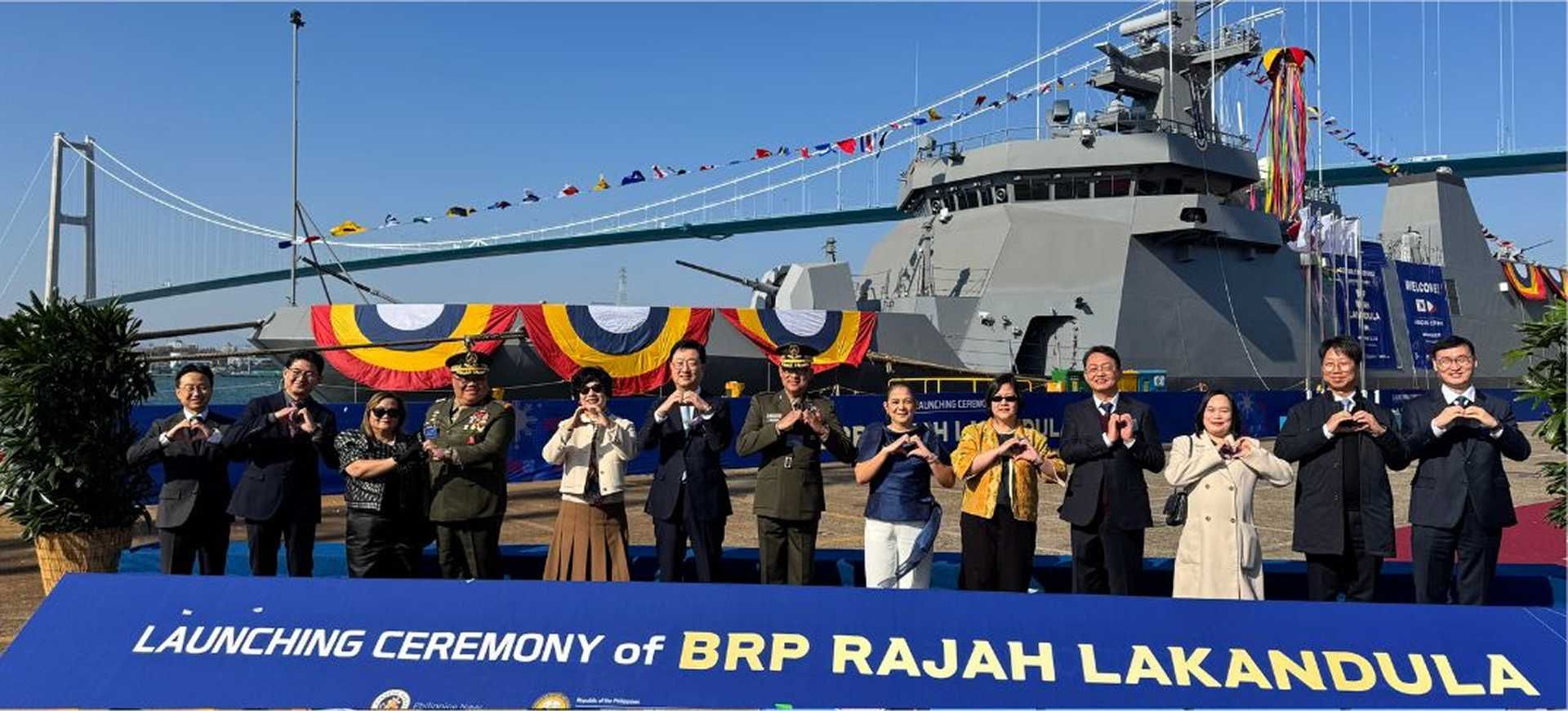
Once in service, the BRP Rajah Lakandula will conduct long-range and sustained missions to extend the Philippine Navy's reach across its maritime zones, including areas of heightened activity such as the South China Sea and the Luzon Strait. (Picture source: Philippine Embassy in Seoul)
The launch ceremony in Ulsan gathered senior Philippine and Korean representatives from defense, diplomacy, and industry. The Philippine delegation was led by Ambassador-designate Bernadette Therese Fernandez and included Navy Vice Commander MGen Edwin E. Amadar, AFP Vice Chief of Staff LtGen Jimmy D. Larida, and Defense Procurement Service Chief Atty. Effie R. Agsaoay, personnel from the embassy, and the Philippine Defense Attaché to South Korea, Col. Don Templonuevo. On the Korean side, HD Hyundai Heavy Industries was represented by Joo Wonho, President and Chief Operating Officer of the Naval and Medium Size Shipbuilding Business Unit. In his speech, Vice Commander Amadar stated that the vessel is intended to help the Philippine Navy develop into a more modern, credible, and self-reliant force capable of contributing to national and regional stability. He also connected the offshore patrol vessel program to the long-term objective of maintaining peace and security in the region through closer cooperation with partners such as South Korea.
The BRP Rajah Lakandula is the second vessel in a six-ship class ordered under a contract worth about $573 million, signed on June 27, 2022, which calls for delivery between 2025 and 2028 and for the ships to be “fitted for but not with” additional weapons such as point-defense missiles or close-in weapon systems. The remaining four vessels are to be named BRP Rajah Humabon (PS-22), BRP Sultan Kudarat (PS-23), BRP Datu Marikudo (PS-24), and BRP Datu Sikatuna (PS-25), continuing the practice of using historical leaders and figures. The name Rajah Lakandula was previously carried by the PF-4, a former U.S. Navy destroyer escort (DE) that later served as a Philippine Navy frigate and flagship until its decommissioning in 1988. The Rajah Sulayman-class follows earlier Philippine–Korean naval programs that produced two Jose Rizal-class frigates and two Miguel Malvar-class frigates, all built by Hyundai. Hyundai has also established a subsidiary at Subic Bay and uses the Philippines as a regional construction and maintenance hub, while Manila plans to invest around 2 trillion pesos, roughly $35 billion, over the next decade to combine military objectives with industrial and economic effects.
Once in service, the BRP Rajah Lakandula is planned to conduct long-range and sustained missions that extend the reach of the Philippine Navy across its maritime zones, including areas of heightened activity such as the South China Sea and the Luzon Strait. The ship will be assigned to maritime patrol, anti-smuggling and anti-piracy operations, fisheries protection, search and rescue, and disaster relief, thanks to its ability to stay at sea for up to 30 days. The Rajah Sulayman-class is expected to take over many constabulary and patrol tasks that are currently carried out by older vessels that were originally built as destroyer escorts or other surface combatants. With six new offshore patrol vessels entering service, the Offshore Patrol Force is planned to expand from 11 to 17 ships, allowing a gradual replacement of World War II-era vessels and a more standardized fleet.
The Rajah Sulayman-class is based on HD Hyundai’s HDP-2200+ offshore patrol vessel design, which displaces about 2,400 to 2,450 tonnes at full load and measures roughly 94.4 meters in length, with a beam of 14.3 meters and a draft of around 3.7 meters. Propulsion uses a combined diesel and diesel (CODAD) arrangement with two MTU-STX diesel engines driving Kongsberg Maritime Kamewa 86 A/5 D-B controllable-pitch propellers, providing a maximum speed of about 22 knots at 85 percent of maximum continuous rating and a cruising speed of 15 knots. The class offers a patrol range of approximately 5,500 nautical miles and is configured for an endurance of up to 30 days, with a standard crew of around 72 personnel, supported by a layout that favors automation and long-duration deployments. The hull form is optimized for sea-keeping and reduced signatures, which is relevant for operations in rough weather and busy sea lanes. At the stern, a ramp allows the launch and recovery of a 9.5-meter rigid-hulled inflatable boat, while two additional 7.2-meter RHIBs are housed in side bays to support boarding, interception, and rescue activities.
The main armament of the BRP Rajah Lakandula consists of a Leonardo OTO Melara 76 mm Super Rapid naval gun in the forward position, supported by two Aselsan SMASH 30 mm remote-controlled weapon systems and two 12.7 mm heavy machine guns for close-range defense. The combat system is centered on a Hanwha combat management system that networks a Leonardo SPS-732 X-band two-dimensional air and surface search radar, a Safran PASEO XLR electro-optical system for identification and fire control, and a Hensoldt UK SharpEye Mk.11 navigation radar integrated through an Anschütz Synapsis NX bridge. Electronic warfare and survivability features include radar electronic support measures and two Terma C-Guard DL-6T launchers for 130 mm infrared and radio-frequency decoys. A flight deck and hangar can accommodate a 10-tonne naval helicopter and unmanned aerial vehicles, while a mission bay in the stern is designed to receive containerized payloads such as towed sonar equipment or other specialized modules.
Three of the six vessels will receive modular towed-array sonar systems to provide an initial anti-submarine warfare capability. The Philippine Navy intends to acquire these systems under a separate program valued at 2.40 billion pesos, about $41 million, which comes on top of the roughly 30 billion peso construction contract for the ships. Canadian company GeoSpectrum Technologies Inc., a subsidiary of Elbit Systems, will supply three TRAPS (Towed Reelable Active Passive Sonar) systems after being selected by HD Hyundai for integration on the Philippine units. The TRAPS, selected instead of the CAPTAS sonar offered by Thales, is a towed active and passive sonar that can be deployed and recovered at different speeds and depths to detect submarines and other underwater targets, extending the detection range beyond hull-mounted sensors. Until now, the first-of-class BRP Rajah Sulayman (PS-20) is expected to be delivered in early 2026 after completing its sea trials, with Rajah Lakandula and the remaining four ships delivered progressively until 2028 as the sonar and other systems are installed.
Written by Jérôme Brahy
Jérôme Brahy is a defense analyst and documentalist at Army Recognition. He specializes in naval modernization, aviation, drones, armored vehicles, and artillery, with a focus on strategic developments in the United States, China, Ukraine, Russia, Türkiye, and Belgium. His analyses go beyond the facts, providing context, identifying key actors, and explaining why defense news matters on a global scale.