







Breaking News




France orders 5 more Falcon 2000LXS Albatros to complete 12 jet maritime surveillance fleet.
France’s defense procurement agency (DGA) ordered five additional Falcon 2000LXS “Albatros” aircraft for the French Navy, bringing the AVSIMAR fleet to 12. The jets replace the aging Falcon 50M and Falcon 200 Guardian and aim to reach initial operational capability in late 2026, following testing and certification.
The Directorate General of Armaments (DGA) confirmed a new order for five Falcon 2000LXS Albatros maritime surveillance aircraft on Sept. 26, 2025, advancing the AVSIMAR program to its planned total of 12 aircraft. This follow-on award builds on the initial 7 ordered in 2020 and follows the type’s first flight on Jan. 24, 2025, with testing led by the DGA Flight Test Center at Istres and IOC targeted for late 2026. It matters because the Albatros will replace the legacy Falcon 50M and Falcon 200 Guardian fleets, strengthening maritime domain awareness across French and allied sea lanes.
Follow Army Recognition on Google News at this link
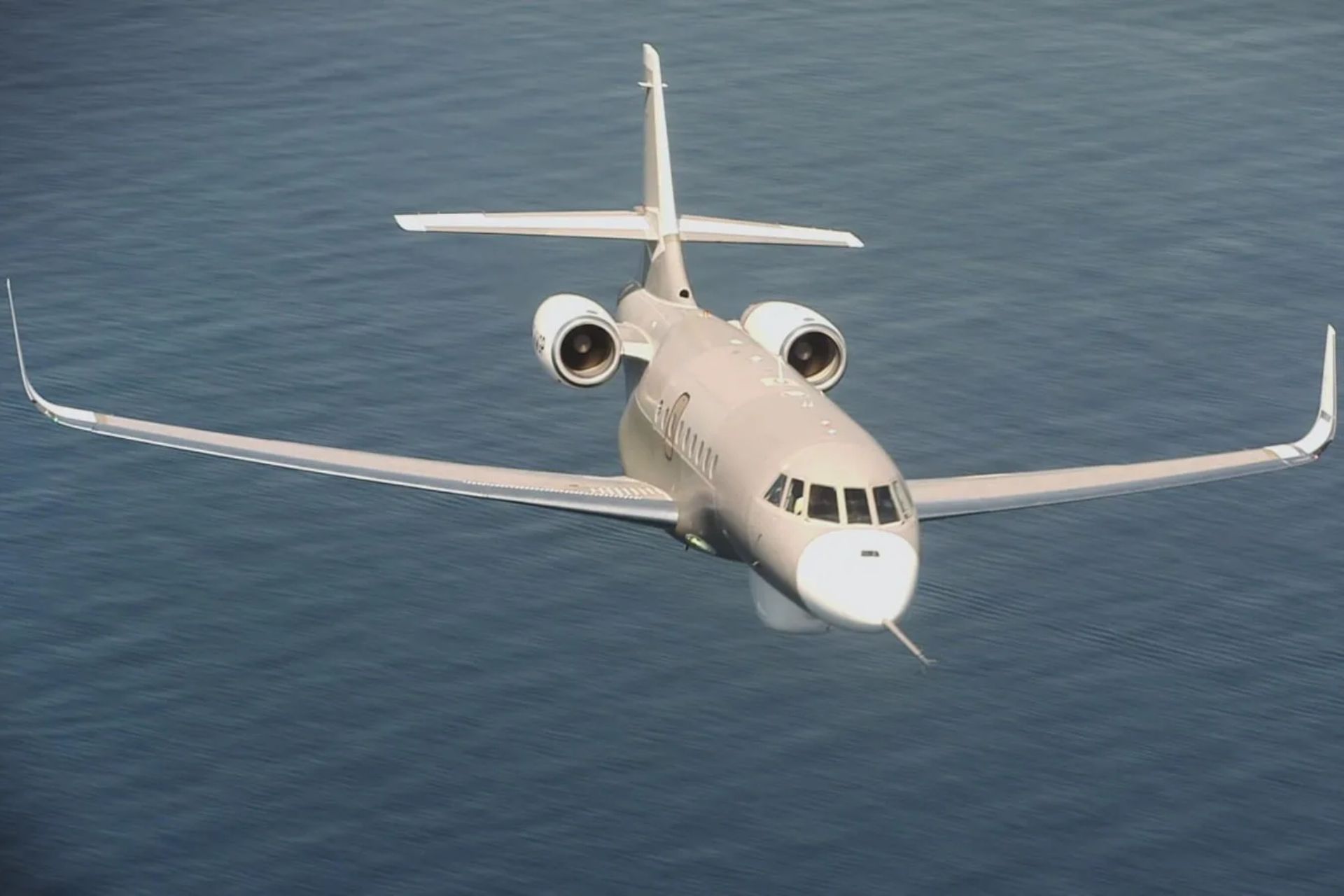
The Albatros, derived from the Falcon 2000 LXS, keeps the original jet’s long range, high availability and fuel efficiency while adding the specialized mission systems, sensors, and communications needed for maritime patrol and intervention. (Picture source: Dassault Aviation)
Derived from the Falcon 2000LXS and adapted for maritime operations, the Albatros retains the range, availability, and fuel efficiency of the baseline platform while integrating the mission equipment required for patrol duties. The DGA states the new aircraft will provide a radius of action about 10 to 30 percent greater than current maritime surveillance types, a relevant factor given France’s large exclusive economic zone and overseas territories. Dassault’s militarization of the platform sustains roughly one hundred jobs tied to the conversion work.
The core capability relies on a coherent set of sensors and communications. The main radar is the Thales SearchMaster, an X-band AESA designed for wide-area surface surveillance and mapping, with the accuracy needed to hand tracks to the optronic turret. Safran’s stabilized Euroflir 410 provides day-night identification and imagery collection. Integration is handled by a mission system developed by Naval Group, which supports aeromaritime interoperability and real-time information sharing through communications links including SATCOM. The airframe features large observation windows, operator stations with multifunction consoles and automated processing, and a search-and-rescue kit comprising a smoke-marker launcher and a life-raft release system.
Designed for a small crew and light logistics, the Albatros is powered by two PW308C engines with FADEC, enabling fast transit, on-station endurance, and low fuel consumption. Depending on requirements, the aircraft can integrate additional data links, electronic warfare equipment, and a self-protection suite; underwing stations allow installation of training or simulation pods and other stores relevant to state action at sea. Flight qualities inherited from the Falcon family remain an asset, including takeoff performance at maximum weight, a high ceiling useful in adverse weather, low-altitude maneuverability, and reduced transit times.
In French naval aviation service, the mission spectrum is broad. Daily tasks include patrolling sea lanes, monitoring the EEZ and maritime traffic, controlling fishing activities, contributing to anti-pollution efforts, and protecting critical offshore infrastructure. The aircraft will also support maritime security in approaches and detection of suspicious shipping, with rapid classification through radar modes and immediate visual confirmation via the optronic system. In major events, it can shift to humanitarian support and search and rescue, conduct damage assessment, relay communications, and drop survival equipment. The combination of long range, modern sensors, and reliable data links enables this versatility without imposing heavy support demands.
The procurement follows a phased plan. AVSIMAR’s first phase aims to field twelve aircraft to cover all intervention missions and part of the surveillance requirement, which is why the replacement of eight Falcon 50M and five Falcon 200 Gardian is being staggered from 2025 to allow aircrew and maintainers to transition. A second phase provides for complementary assets, including drones, to meet 100 percent of surveillance objectives. The approach points to a mixed fleet in which persistent unmanned systems feed the maritime picture that the crewed aircraft exploits and refines, with the Albatros acting as an agile node to verify, coordinate, and conduct interventions.
On the industrial side, Dassault’s role extends beyond supplying the airframe. Thales, Safran, and Naval Group provide the radar, optronics, and mission system respectively, reflecting the decision to retain core capability within the national defense industrial base. This also facilitates configuration control across sensors and mission computing as feedback from operations and software updates are incorporated.
Finally, the schedule aligns with a heavier operational load in the Atlantic, the Mediterranean, and the Indo-Pacific. Illicit trafficking routes are evolving quickly and unplanned maritime events are increasing, from migrant rescues to pollution response. France’s overseas presence adds distance and complexity. In this context, a patrol aircraft able to cover more water on a single sortie, transmit exploitable data to shore immediately, and carry equipment to assist people in distress offers a concrete response to sovereignty missions. With twelve aircraft now funded, testing under way in Istres, and initial operational capability targeted for late 2026, the transition beyond the Falcon 50M and Gardian follows a clear path focused on sensors, links, and timely action when alerts occur.