






Breaking News






British Navy Deploys HMS Stirling Castle to Modernize Minehunting and Protect Critical Infrastructure.
The Royal Navy has officially added a new warship to its fleet with the designation of HMS Stirling Castle, a vessel specialized in underwater minehunting operations. This decision, announced by the UK Ministry of Defence on 21 July 2025 via an official statement on the Royal Navy’s website, represents a notable development in the UK’s maritime defence strategy as the ship prepares for front-line operations to secure the country’s territorial waters against submerged threats. The vessel, previously known as RFA Stirling Castle under the Royal Fleet Auxiliary (RFA) banner, underwent a formal status change during a ceremony held in Birkenhead. Follow Army Recognition on Google News at this link
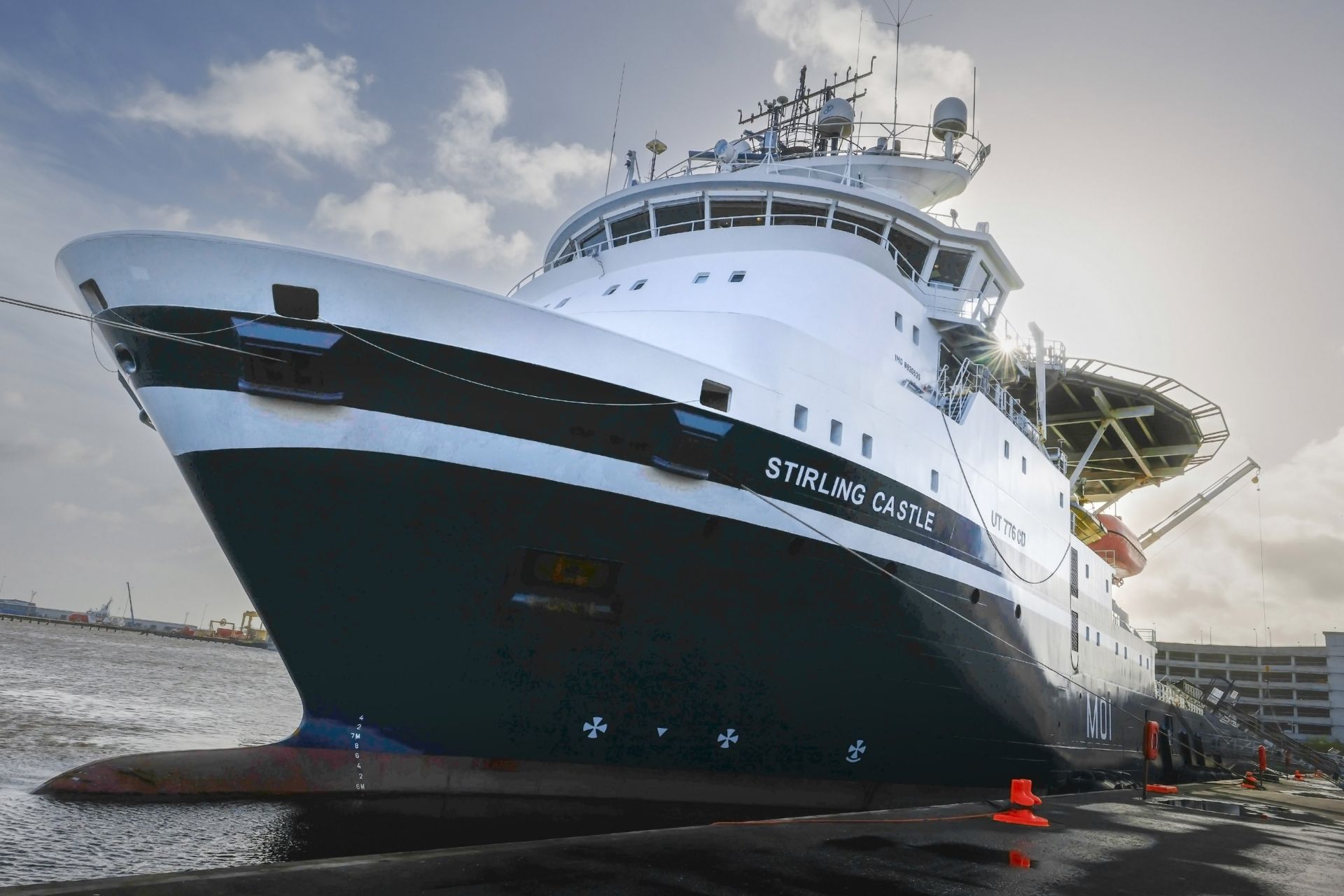
HMS Stirling Castle (M01) is a Royal Navy ship dedicated to mine countermeasure operations and symbolizes the British Navy’s strategic transition to employing autonomous and remotely-operated systems (Picture source: UK MoD)
Acquired in 2023 to bolster the Royal Fleet Auxiliary’s capabilities, the ship has since been converted and prepared for its new role within the Royal Navy. This reallocation remains relatively uncommon and reflects a strategic repositioning within the British naval forces. Now classified as a fully commissioned warship, HMS Stirling Castle will be fully committed to front-line duties. This operational shift justified the transfer of the ship’s command and crew to the Royal Navy, allowing the RFA to focus on its core logistical missions, such as operating tankers and support vessels.
HMS Stirling Castle (M01) is a Royal Navy ship dedicated to mine countermeasure operations and symbolizes the British Navy’s strategic transition to employing autonomous and remotely-operated systems. Originally built in 2013 as Island Crown for the offshore industry, the ship was purchased by the Ministry of Defence in 2023 for £40 million and converted into a platform for Maritime Autonomous Systems for mine countermeasures (MCM MAS). Measuring 96.8 metres in length with a displacement of 6,000 tonnes, it features a helicopter deck, four Bergen diesel engines delivering a total of 8,000 kW, and Kongsberg azimuth and bow thrusters that provide high manoeuvrability. The vessel is equipped with surface and underwater drones, as well as a crane capable of handling loads up to 10 tonnes, designed for deploying and recovering these systems.
HMS Stirling Castle plays a central role in securing British and allied waters against underwater threats, particularly mines. Initially assigned to the Royal Fleet Auxiliary, it was transferred in 2025 to the Royal Navy to address personnel shortages within the RFA and enhance its operational use. Designed to store, prepare, deploy, and recover autonomous systems, the ship represents a significant step in the UK’s naval strategy to remove crews from mined areas and to reinforce the protection of critical subsea infrastructure.
The White Ensign was hoisted for the first time on Stirling Castle during the official ceremony, attended by the ship’s crew now composed of 45 Royal Navy sailors and officers. The vessel is currently berthed at the Cammell Laird facility on the banks of the Mersey. Recognizable by its blue and white livery, HMS Stirling Castle is set to undertake maritime security missions equipped with advanced technologies, including autonomous vehicles capable of detecting and neutralizing mines. The deployment of such technologies reflects the Royal Navy's intent to modernize its minehunting capabilities at a time when underwater threats remain a concern in European and global waters.
The ship’s Commanding Officer, Commander Phil Harper, emphasized the unprecedented nature of this transition, noting that it is the first time in recent memory that Royal Navy personnel have taken over a ship directly from the Royal Fleet Auxiliary. He acknowledged the preparatory work carried out by the RFA, which facilitated the ship’s rapid commissioning as a warship, and stated that this provided a solid foundation for Stirling Castle’s operational deployment.
Commander Harper also confirmed that the ship would soon begin launching and recovering autonomous minehunting vehicles. These activities will be essential in safeguarding warships and allied merchant vessels amid an increasingly unstable international maritime environment.
With HMS Stirling Castle entering service, the Royal Navy strengthens its resources against underwater threats to its territorial waters. This status change also illustrates the strategic complementarity between the Royal Fleet Auxiliary and the Royal Navy, each focusing on their respective areas of expertise. The Birkenhead ceremony formalized Stirling Castle’s integration into the British combat fleet, marking another step in the modernization and adaptation of naval forces to contemporary challenges.