






Breaking News





US armed forces test new defenses against small drone attacks in Falcon Peak 25.2 exercise.
On September 15, 2025, the US Northern Command announced Falcon Peak 25.2, a counter-unmanned aerial systems experiment conducted at Eglin Air Force Base, Florida, under the leadership of the North American Aerospace Defense Command and US Northern Command. The exercise runs throughout September 2025 and is designed to evaluate technologies and procedures to detect, track, identify, and defeat small drone threats to military installations.
Follow Army Recognition on Google News at this link
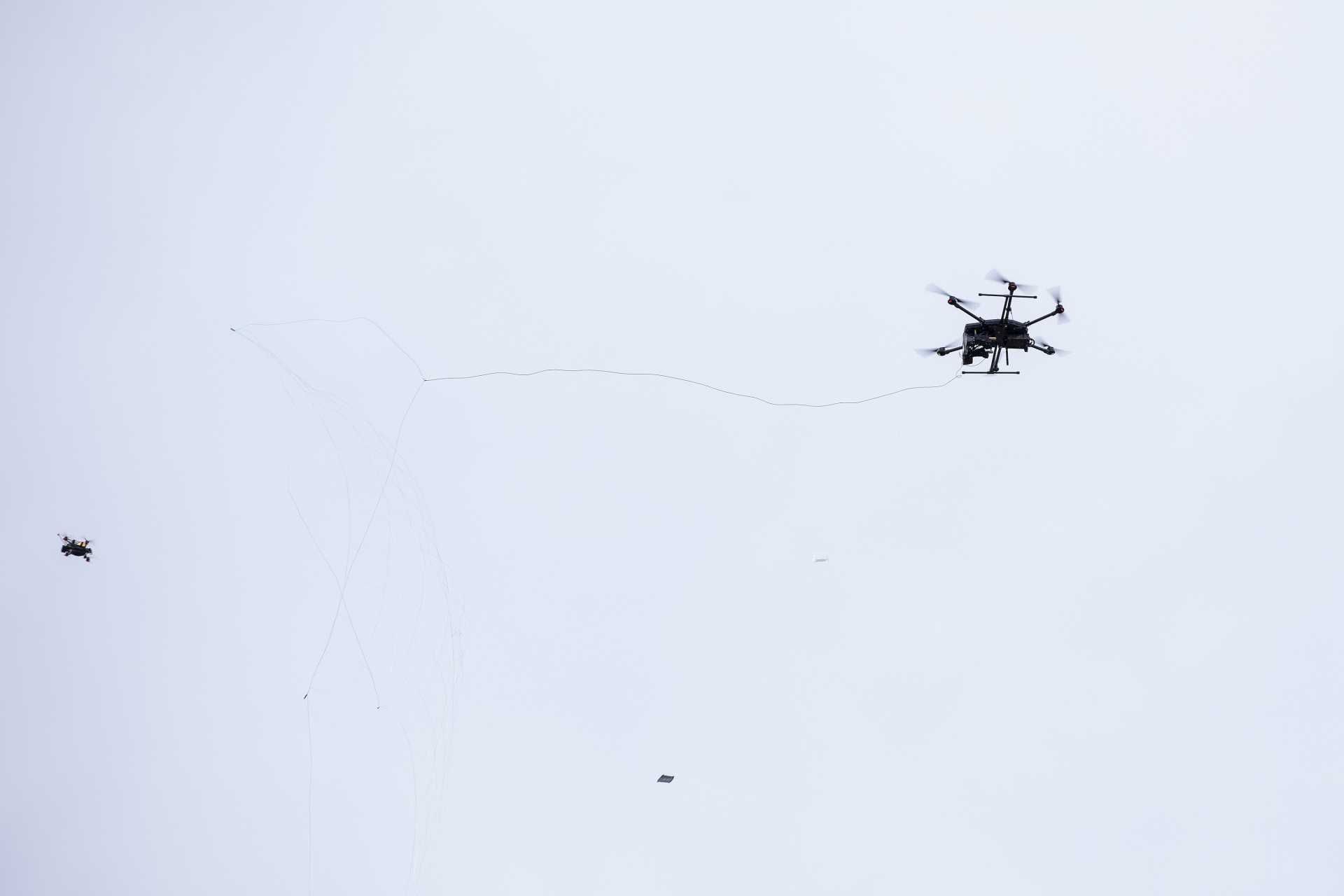
Falcon Peak 25.2 is an experiment led by the North American Aerospace Defense Command and U.S. Northern Command to examine how to detect, track, identify, and defeat small drone threats to military installations. (Picture source: US DoD)
US Northern Command announced publicly that the experiment had begun on 8 September and highlighted a planned DVIDS livestream for wider observation. Officials describe Falcon Peak 25.2 as part of an ongoing series of experiments, each iteration building on the previous one to implement the Department of Defense Strategy for Countering Unmanned Systems. This emphasis places the exercise within a structured policy framework in which US Northern Command is designated as the lead synchronizer for counter-small UAS measures inside the United States. Between 3 and 19 September, Falcon Peak 25.2 uses unmanned aircraft launches from Santa Rosa Island to generate controlled scenarios for layered base-defense responses.
Public notices direct mariners to avoid specified hazard areas and to follow advisories transmitted on VHF Channel 16 and HF upper sideband 2182 kHz by the Eglin Joint Test and Training Operations Control Center. The 96th Test Wing has been designated as the point of contact for information and range safety, reflecting its responsibilities in coordinating operations and ensuring safety in the Gulf area. These measures establish repeatable and instrumented conditions for measuring sensor detection ranges, data handoff between operators, and the effectiveness of defeat systems. Specific models of drones used as aggressors during the exercise are not disclosed publicly, keeping the focus on representative small UAS profiles rather than on individual platforms.
NORAD and US Northern Command describe Falcon Peak 25.2 as an operationally focused event rather than a demonstration. The exercise integrates detection and defeat technologies into layered defense constructs that include active and passive radar, radio-frequency analysis, optical and infrared imaging, and acoustic sensors. Defeat options assessed include electronic attack against control and navigation links, directed-energy techniques, and short-range kinetic interceptors sized for small drones. Daily launches provide the stimulus for these systems, ensuring repeatable conditions under which performance data can be collected. A key component of Falcon Peak 25.2 is the Defense Innovation Unit’s Low-Cost Sensing challenge, which selected ten finalists from 118 applicants to conduct live demonstrations. The finalists include BLUEiQ, CHAOS 1, Fortem Technologies, Guardian RF, Hidden Level, MatrixSpace, REVOBEAM, Squarehead Technology, Teledyne FLIR Defense, and Thalrix. The challenge aims to identify scalable, affordable architectures that complement higher-end systems and can be deployed widely around large perimeters, with evaluation results feeding into prize awards and potential procurement agreements.
Falcon Peak 25.2 builds directly on the inaugural Falcon Peak exercise held at Fort Carson, Colorado, in October 2024. That earlier event concentrated on detecting and mitigating incursions at US installations and provided baseline data and operational experience for subsequent planning. Imagery and releases from Fort Carson documented leadership participation and test scenarios, while reports in early 2025 anticipated a larger follow-on with broader industry involvement. The present Eglin iteration incorporates those expectations, expands vendor participation, and integrates the DIU Low-Cost Sensing challenge into its framework. The sequence from Fort Carson to Eglin illustrates a deliberate test-to-transition approach where successive experiments add complexity, engage additional stakeholders, and preserve instrumented evaluation aligned to installation defense problem sets defined by the Department of Defense.
The development of small unmanned aircraft systems in the US military traces back to late Cold War planning documents that envisioned close-range systems deployable in large numbers at low cost. By the early 2000s, programs such as the AeroVironment RQ-11 Raven provided hand-launched surveillance at the platoon level, and by 2010 nearly 4,000 Ravens had been fielded. Success with the Raven led to lighter systems like the RQ-12 Wasp and heavier company-level assets such as the RQ-20 Puma. The Marine Corps introduced “Quads for Squads” to test commercial quadcopters for infantry use, while the Army launched a Soldier Borne Sensor initiative and selected the FLIR Black Hornet nano-UAV in 2018. Concerns about cybersecurity, particularly with Chinese-made drones such as those produced by DJI, led to Pentagon bans between 2017 and 2018. This drove the establishment of the Defense Innovation Unit’s “Blue UAS” list of approved secure systems from US and allied manufacturers, with Skydio’s RQ-28A quadcopter becoming the Army’s Short Range Reconnaissance program of record.
Small UAS now play multiple roles across combat and peacetime operations. In combat, systems such as the AeroVironment Switchblade provide loitering strike options for small units, while first-person-view drones adapted for attack have demonstrated precision strike capabilities at low cost. In intelligence, surveillance, and reconnaissance, hand-launched Ravens, Wasps, and Pumas are deployed across Army and Marine units for over-the-hill awareness, route clearance, and battle damage assessment, with Navy and Coast Guard units employing Pumas for maritime surveillance. Training increasingly integrates small UAS as both tools and opposing force surrogates, with Air National Guard and security units using quadcopters to practice base defense, and counter-drone exercises incorporating drone swarms as adversary simulations. Trials have also explored drones for logistics such as resupply of ammunition or medical materials, while domestic support missions see National Guard and Coast Guard units employing drones for disaster assessment, search and rescue, and maritime law enforcement in coordination with the FAA.
Each armed service employs small UAS within its doctrinal framework. The Army distributes drones from the squad to the brigade level, with oversight by the Aviation branch and Army Futures Command, and also leads the Joint Counter-sUAS Office established in 2020. The Marine Corps integrates reconnaissance drones and one-way attack drones into its Force Design 2030 concept, establishing new positions such as Systems Operators and the Marine Corps Attack Drone Team to develop tactics, techniques, and procedures. The Navy incorporates Puma and similar systems into its Small Unit Remote Scouting System program, while establishing the Robotics Warfare Specialist rating to develop a cadre skilled in unmanned systems, including sUAS. The Air Force uses drones primarily for base security, explosive ordnance disposal, special operations, and training as adversary surrogates, while emphasizing larger unmanned programs such as Collaborative Combat Aircraft for strategic missions. The Coast Guard fields drones on National Security Cutters, transitioning from ScanEagle to V-BAT, and has established a Robotics and Autonomous Systems program office to coordinate unmanned integration across its missions.
Modernization efforts across the services reflect an expectation of larger numbers of autonomous, interoperable small drones and rapid acquisition methods to keep pace with adversary use. The Army is retiring the Raven and moving to the RQ-28A as part of a structured Short Range Reconnaissance program, with Medium and Long Range Reconnaissance systems in development alongside tethered and swarm-capable drones. The Marine Corps is issuing Switchblade loitering munitions under its OPF-I program, experimenting with FPV drones, and promoting interoperability through shared data links and control systems. The Air Force is equipping base Security Forces with Skydio drones and linking lessons to broader swarm initiatives such as the Replicator project, while continuing to use small drones for training and security. The Navy and Coast Guard are expanding drone deployments across additional vessels and focusing on integrating feeds into cooperative engagement systems, while also pursuing counter-drone measures for ship defense.
Written by Jérôme Brahy
Jérôme Brahy is a defense analyst and documentalist at Army Recognition. He specializes in naval modernization, aviation, drones, armored vehicles, and artillery, with a focus on strategic developments in the United States, China, Russia, Türkiye, and Belgium. His analyses go beyond the facts, providing context, identifying key actors, and explaining why defense news matters on a global scale.