






Breaking News






Report: Canada Faces US Pressure Over F-35A Fighters Purchase as Final Decision Nears.
The United States government has issued a direct warning to Canada: withdrawing from the F-35A program could have serious consequences for bilateral cooperation and for the future of the North American Aerospace Defense Command (NORAD). According to U.S. Ambassador to Ottawa Pete Hoekstra, if Canada were to opt for a different aircraft than the one used by American forces, interoperability between the two countries would be compromised, potentially undermining NORAD. This position is shared by part of the Canadian military, which views the purchase of the F-35 as a way to preserve strategic integration with Washington. These warnings place the Canadian debate over the F-35 within a much broader framework than the simple acquisition of a new fighter jet.
Follow Army Recognition on Google News at this link
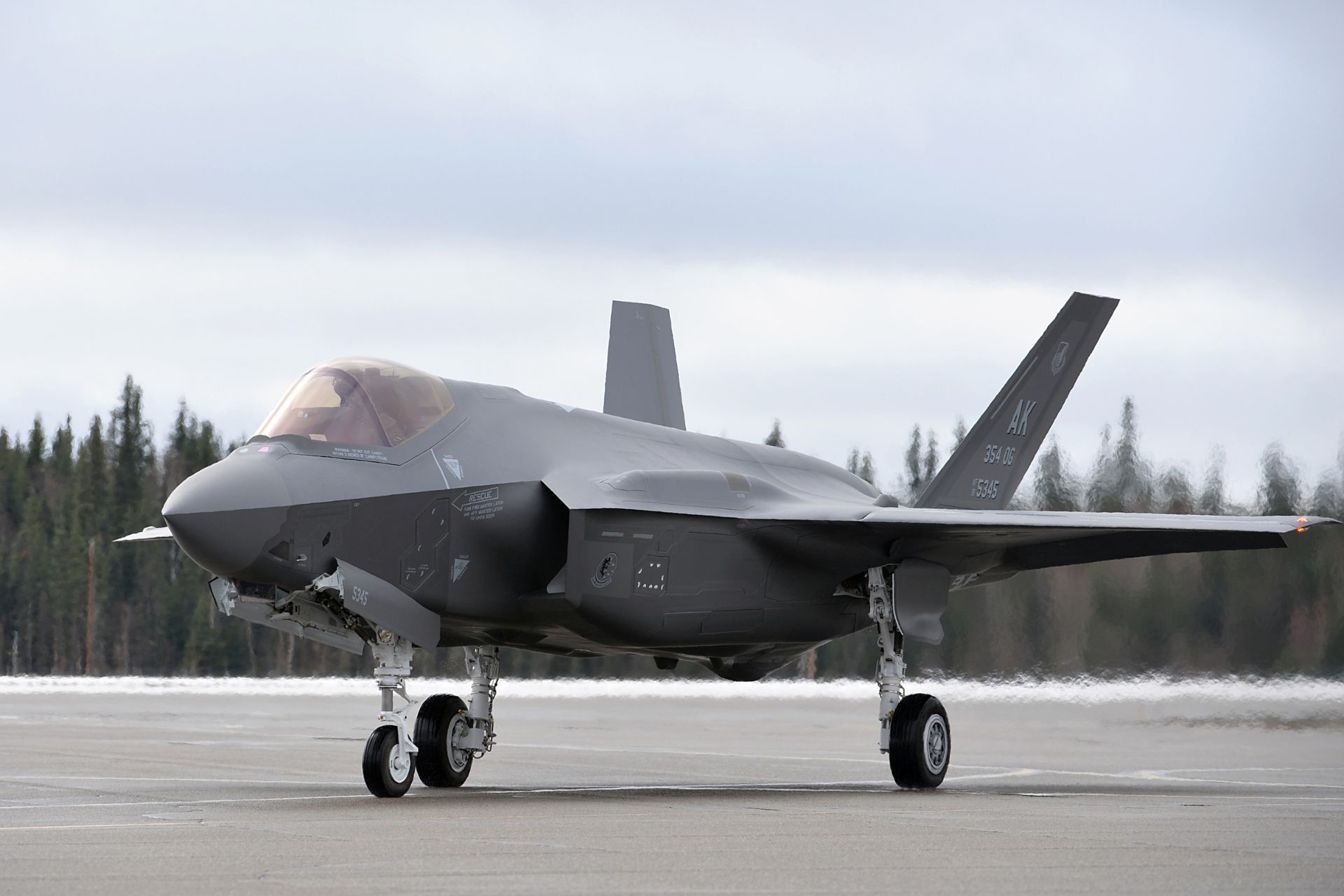
In March 2022, the Canadian government officially announced its intention to acquire 88 F-35A Lightning II fighters to replace its aging CF-18 Hornet fleet, following a competitive process in which the Swedish Gripen was also considered (Picture source: US DoD)
NORAD, established in 1958, is a unique binational organization responsible for defending North American airspace. Based in Colorado, with its operational center at Cheyenne Mountain, it relies on the complete integration of U.S. and Canadian surveillance and response capabilities. Its main missions are aerospace warning, air control, and, since 2001, maritime warning. For the system to function effectively, operational homogeneity is essential. From Washington’s perspective, if Canada were to operate a fleet based on a different aircraft than the F-35, this would complicate maintenance, training, and joint operations, with a direct impact on the command’s effectiveness.
Defense Minister David McGuinty has promised that the conclusions of the review will be made public before the end of the calendar summer. The review, ordered by Prime Minister Mark Carney, follows mounting pressure from Washington and growing tensions between Ottawa and the Trump administration, marked by direct threats against Canadian sovereignty and attempts at economic coercion.
According to Reuters, the Canadian military recommends maintaining the acquisition project, a position that does not surprise observers. The armed forces have long favored the F-35 because of its interoperability with U.S. systems, an argument considered central given the increasing integration between the two militaries. Canada’s senior military leadership also maintains close ties with its U.S. counterparts, reinforcing the logic of strategic alignment.
In March 2022, the Canadian government officially announced its intention to acquire 88 F-35A Lightning II fighters to replace its aging CF-18 Hornet fleet, following a competitive process in which the Swedish Gripen was also considered. The decision was confirmed in January 2023, when Washington gave its approval through the Foreign Military Sales (FMS) mechanism, with the U.S. State Department authorizing the sale and notifying Congress. The contract, estimated at 19 billion Canadian dollars, provides for the progressive delivery of the aircraft starting in the second half of the 2020s, with the first batch expected around 2026–2027.
The F-35A Lightning II is the conventional takeoff and landing (CTOL) variant of the Joint Strike Fighter program developed by Lockheed Martin for the U.S. Air Force. Single-seat and single-engine, it was designed to carry out a wide range of missions, from air superiority to precision strike, as well as electronic warfare and reconnaissance. Having entered operational service in 2016, it has since been adopted by many U.S. allies, including Canada, making it one of the most widely deployed multirole stealth fighters.
In terms of performance, the aircraft can reach a maximum speed of Mach 1.6, operate above 15,000 meters, and has a range of over 2,200 kilometers with its internal fuel. Its stealth is ensured by a fuselage designed to reduce radar signature and an internal weapons bay. The F-35A is powered by a Pratt & Whitney F135 turbofan engine producing up to 43,000 pounds of thrust with afterburner, giving it sufficient power to operate in contested environments.
The F-35A is armed with an internal M61A2 Vulcan 20 mm cannon and can carry, in its weapons bay, AIM-120 AMRAAM and AIM-9X Sidewinder air-to-air missiles, as well as guided munitions such as JDAM and SDB bombs and the AGM-88 HARM anti-radiation missile. Its advanced sensors include the AN/APG-81 AESA radar, the electro-optical targeting system (EOTS), and the Distributed Aperture System (DAS), providing 360-degree situational awareness. Combined with its Helmet-Mounted Display System (HMDS) and electronic warfare capabilities, these systems allow the F-35A to detect, engage, and survive against advanced threats.
Washington is also concerned about a scenario in which Ottawa might attempt to diversify its acquisitions by combining the F-35 with a European aircraft, such as Sweden’s Saab Gripen. U.S. officials consider this option unrealistic, due to the high costs of operating two separate fleets. They also regard the review process itself as a major irritant in ongoing trade discussions between the two countries.
Supporters of the Gripen point out, however, that the aircraft was designed for austere environments and short runways, a valuable asset for operations in Canada’s Arctic. Furthermore, Prime Minister Carney’s commitment to significantly increase the defense budget theoretically opens the possibility of financing multiple fighter fleets, a strategy that could allow Ottawa to reduce its dependence on Washington.
The controversy is further fueled by persistent difficulties with the F-35 program itself. The U.S. Government Accountability Office (GAO), a congressional watchdog, released a highly critical report in early September: the Block 4 version, the one Canada plans to buy, is over budget by more than $6 billion and at least five years behind schedule. The report emphasized that, two decades after its launch, the program “continues to overpromise and underdeliver.”
In Ottawa, the Department of National Defence indicated that it was closely monitoring the situation. Royal Canadian Air Force officers nevertheless argue that the F-35 remains essential for operational integration with the United States. However, this integration also reinforces Canada’s dependence, since software updates and spare parts are entirely controlled by Washington.
As the final decision approaches, Ottawa faces a strategic dilemma. Maintaining the purchase of the F-35 would preserve alignment with Washington and ensure the coherence of the NORAD framework, but at the cost of increased dependence and a program marred by overruns. Exploring an alternative, such as the Gripen would provide greater autonomy and better adaptation to Canadian conditions, but would risk provoking political, economic, and military retaliation from the United States.
The review, expected by September 22, will settle a question that goes well beyond the simple acquisition of fighter jets: it represents a strategic choice for Canada, between maintaining the continuity of the North American alliance and seeking greater national autonomy.