






Breaking News






Mobile and Hybrid SWS3 System Equips China with Powerful Defense Against Drone Swarms.
China has recently developed a new anti-aircraft missile and cannon system designed to address the growing threat posed by drones. Referred to as WS-3 or SWS3 depending on the source, this weapon system represents a new generation of mobile short-range air defense intended to intercept low-altitude aerial targets, including drones, cruise missiles, and precision-guided munitions. In a context of increasing asymmetric threats and the proliferation of combat drones, this development meets a critical strategic need for Beijing: ensuring rapid and effective protection of deployed forces, sensitive infrastructure, and military installations against swift, low-cost, and hard-to-detect attacks.
Follow Army Recognition on Google News at this link
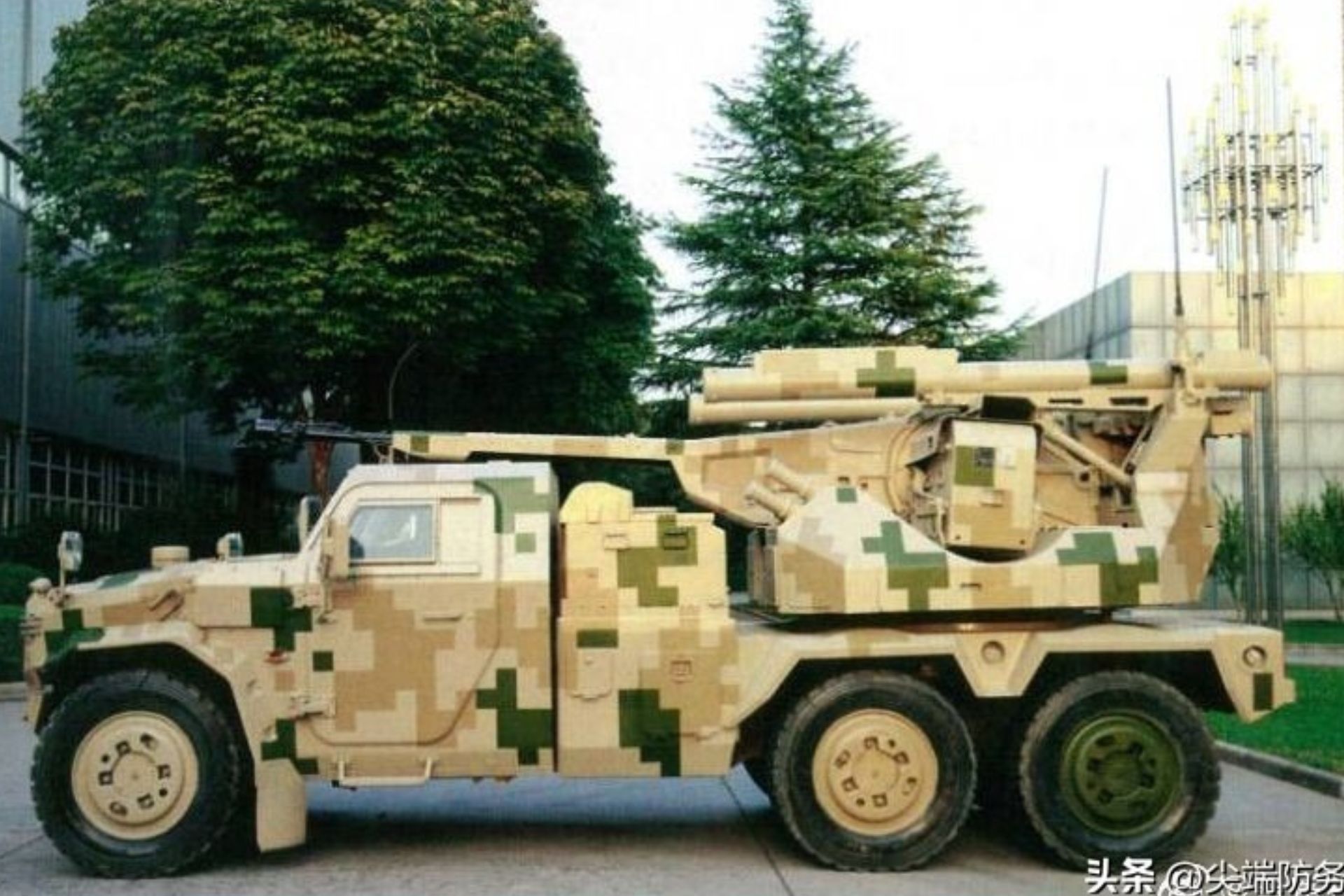
The SWS3 combines twin 35 mm automatic cannons with surface-to-air missile pods, enabling a layered engagement capability against multiple and fast aerial threats (Picture source: Weibo Channel @尖端防务)
The SWS3 is mounted on 6×6 or 4×4 wheeled armored vehicles, providing tactical mobility across varied terrain. It combines twin 35 mm automatic cannons with surface-to-air missile pods, enabling a layered engagement capability against multiple and fast aerial threats. This combination of weaponry allows the system to intercept both individual targets and swarm attacks, where drones are deployed in large numbers to overwhelm enemy defenses.
Among its advanced technical features, the system includes a modular radar and an electro-optical targeting suite, allowing it to detect and track targets with high accuracy. It can operate autonomously or as part of a broader air defense network, supporting synchronized responses through integrated operations. This configuration enhances overall responsiveness and situational coverage.
The “1+1” interception concept promoted by the system’s developers combines the simultaneous use of cannons and missiles against a single target to increase the likelihood of a successful hit. This approach is designed to counter complex threats, especially during saturation attacks involving projectiles at varied speeds and altitudes. The system is also intended to maintain effectiveness in electronic warfare environments due to its modular structure and redundant targeting capabilities.
According to specialized sources, the SWS3 draws on established international systems such as the Russian Pantsir-S1, the German MANTIS, and the US Army’s M-SHORAD. However, it is characterized by domestic adaptations that reflect specific operational requirements, particularly the need to rapidly neutralize small drones, which have become increasingly common in recent conflicts. This focus indicates China's intent to develop independent short-range air defense capabilities while aligning with global technological standards.
The WS-3 or SWS3 system represents a significant step in the modernization of China’s air defense forces. Its combination of weapon systems, mobility, network integration capabilities, and operational versatility against a wide range of aerial threats reinforces its strategic relevance within China’s military doctrine. As modern conflicts increasingly involve widespread use of drones, this platform addresses an urgent operational requirement and contributes to the broader evolution of China’s ground-based air defense.