







Breaking News




Lockheed Martin tests new JR3 training rocket to strengthen US Army's live-fire practice.
On August 25, 2025, Lockheed Martin carried out the first successful test of its new Joint Reduced Range Rocket (JR3), a training round and reusable pod system designed to replace the current Low-Cost Reduced Range Practice Rocket used by the U.S. Army and its partners. The demonstration, held at White Sands Missile Range in New Mexico, involved firing the JR3 rocket and reloading the same tube with another round to prove reusability.
Follow Army Recognition on Google News at this link
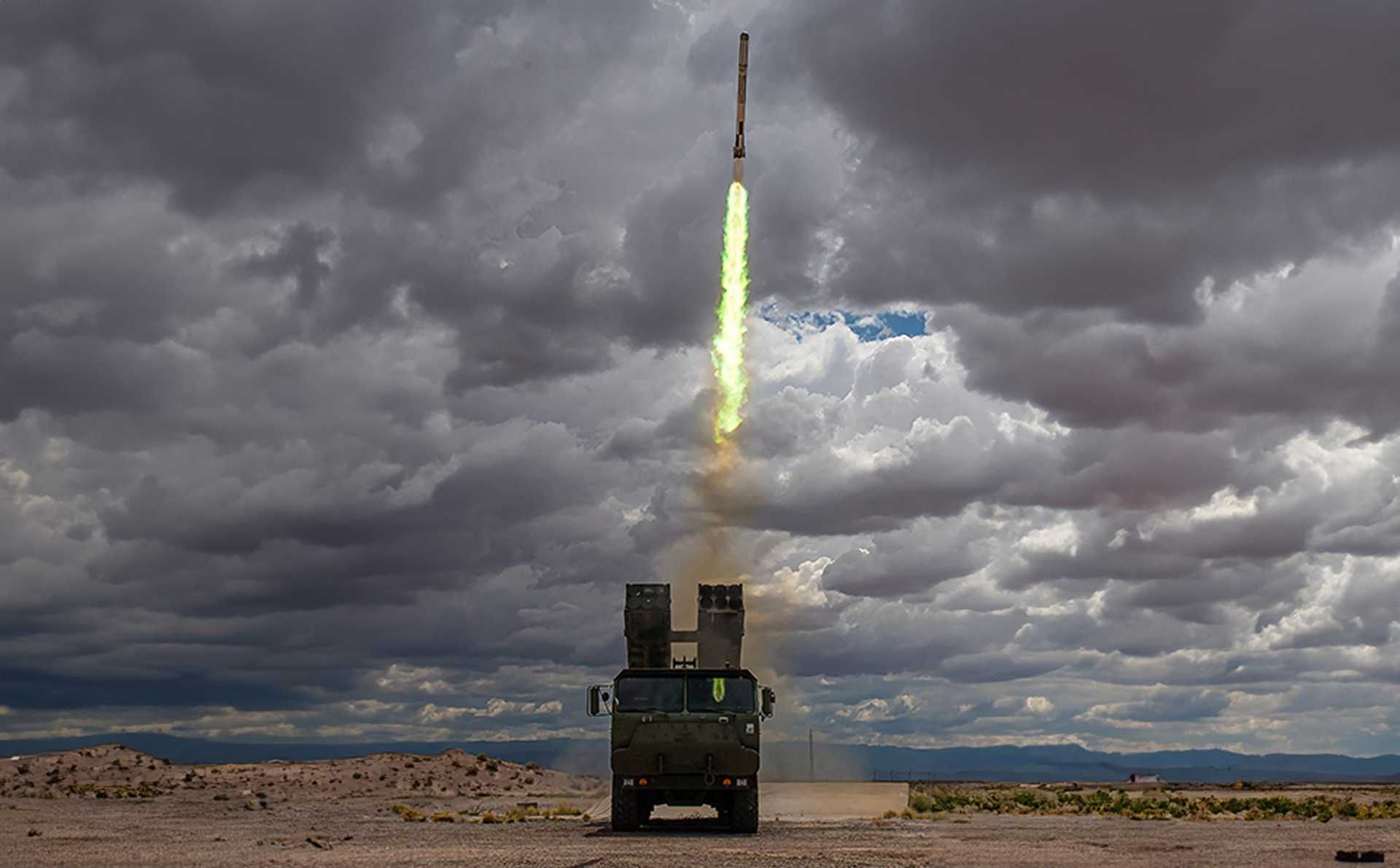
Each JR3 pod is planned to carry more than 20 rockets, which increases training volume per reload and supports constrained-range live-fire events for both M142 HIMARS and M270 MLRS units. (Picture source: US Army)
The company described the system as a solution that would provide more training rockets per pod while reducing time and resource requirements for artillery training. According to Lockheed Martin, the rocket is compatible with the High Mobility Artillery Rocket System and the M270 Multiple Launch Rocket System, and it is intended to allow training under varied conditions, day or night, at different facilities.
The US Army’s rationale for developing JR3 is tied to the limited availability of current practice rockets. The Low-Cost Reduced Range Practice Rocket is based on M28A2 rocket motors last produced in the mid-1990s, and Army planning documents note that inventories will be exhausted by fiscal year 2032, with production feasible only through 2030. To maintain compliance with the Standards in Training Commission requirement for annual qualifications and pre-deployment training for HIMARS and MLRS crews, the Army initiated JR3 in fiscal year 2025. The Research, Development, Test and Evaluation request allocated $13.565 million to begin work on JR3, which is a new start program. Army documentation specifies that JR3 development will run from 2025 through 2028, with production to begin by 2029 to sustain artillery crew training as LCRRPR stocks decline.
The Army acquisition plan outlines key milestones for JR3. Initial system design is scheduled between the third quarter of fiscal year 2025 and the first quarter of fiscal year 2026, followed by a completed system design by the fourth quarter of 2026. Component testing is planned from late 2026 through the third quarter of 2028, while system flight testing will occur in the third and fourth quarters of 2028. The program is structured to award an Other Transaction Authority contract in the second quarter of fiscal year 2025, with the Aviation and Missile Center tasked to support system analysis, trade studies, and prototyping of fire control software. FY2025 budget details include $0.866 million for government program management at Redstone Arsenal, $11.244 million for joint reduced range rocket contracting, and $1.455 million for additional government agency support. These funding lines are part of the total $13.565 million development budget allocated for that year.
Lockheed Martin described JR3 as a pod system with capacity for more than 20 rockets, providing higher training volume compared to current pods that use LCRRPRs. The test at White Sands demonstrated that the rocket tube could be reloaded in the field, reinforcing the design’s intended practicality for soldiers conducting repeated training firings. The company stressed that the rocket uses mature motor technologies and is intended to be a scalable solution without compromising training effectiveness. Lockheed Martin also linked JR3 to the U.S. Army’s Direct Support Fires Technology initiative, which is focused on low-cost, mass-producible rockets that remain compatible with HIMARS and M270. The company indicated that its infrastructure and experience in producing precision fires systems position it to support future programs should JR3 evolve beyond its training role.
Parallel to the JR3 effort, the Army continues to procure Reduced Range Practice Rockets to address near-term needs. Procurement documents for fiscal year 2025 indicate 540 and 1,968 units, with production taking place at Lockheed Martin’s Camden, Arkansas, facility and at the Letterkenny Munitions Center in Pennsylvania. The Reduced Range Practice Rocket has a maximum range of 15 kilometers, carries a non-explosive payload, and is used for live-fire training at constrained ranges. The budget request for fiscal year 2025 includes $30.2 million for this program, which covers procurement of inert warheads, igniters, packaging, and refurbishment or acquisition of launch pod containers. Army documentation notes that these measures aim to mitigate shortfalls in inventory while ensuring readiness for HIMARS and MLRS units until JR3 enters production. The MLRS Reduced Range Practice Rocket program has already produced thousands of training rounds across multiple years of deliveries.
The Army has also emphasized broader objectives for rocket artillery capacity that provide context for JR3. Leadership from Army Futures Command has stated a desire to increase the number of rockets per pod, with proposals for 50 to 100 smaller rockets in a Guided MLRS pod under certain conditions. Current HIMARS and MLRS pods carry six 227 mm rockets, one ATACMS, or two Precision Strike Missiles, and the Army is examining new pod designs capable of holding up to 30 smaller rockets with ranges between 30 and 40 kilometers. JR3, identified in some reporting as a five-inch (127 mm) class rocket, has been tested in Army Project Convergence exercises and fired from crewed and uncrewed launchers, including the Autonomous Multi-domain Launcher and a Raytheon system developed with Oshkosh Defense. Although designed as a training rocket, JR3’s modular design has been noted as adaptable for operational use in the future. These developments are framed by the cost differential of current munitions, with 227 mm guided rockets averaging $160,000 per unit and Precision Strike Missiles or the latest ATACMS costing around $1.5 million, which underscores the importance of affordable training rounds to maintain readiness without overreliance on tactical stocks.
Emerging launcher concepts further highlight potential applications for smaller rockets. Lockheed Martin has presented a palletized launcher mounted on a 10×10 Logistics Vehicle System Replacement truck capable of carrying four pods, each with up to 30 smaller rockets, for a total of 120 rounds. The Marine Corps’ JLTV-based ROGUE-Fires launcher, already in service with other missile payloads, is being adapted to fire MLRS and HIMARS pods. These developments suggest a trajectory where crewed and uncrewed launchers equipped with smaller, shorter-range rockets could provide high-volume firepower for both land and coastal operations. Reports have noted their potential role in engaging amphibious targets, supporting saturation strikes, and providing a lower-cost alternative for certain missions. Against this backdrop, JR3 development represents both a response to the depletion of existing training stocks and a potential pathway toward expanding the operational flexibility of U.S. rocket artillery.