






Breaking News






Latvia Signs €50 Million Deal with Germany’s DND for Skorpion 2 Mine Laying System.
Latvia has signed a €50 million contract with Germany’s Dynamit Nobel Defence to acquire the Skorpion 2 remote mine laying system and AT2+ anti-tank mines. The deal strengthens NATO’s eastern flank and enhances Latvia’s capacity for rapid defensive operations near its borders.
The Latvian Ministry of Defence announced on October 22, 2025, that it has finalized a contract with Germany’s Dynamit Nobel Defence GmbH for the purchase of the Skorpion 2 remote mine laying system. Valued at roughly €50 million, the agreement covers not only the delivery of Skorpion 2 platforms and AT2+ anti-tank mines but also includes training, logistical support, and technical materials. Latvian defense officials described the move as a significant step toward modernizing the nation’s combat engineering capabilities and reinforcing NATO deterrence in the Baltic region.
Follow Army Recognition on Google News at this link
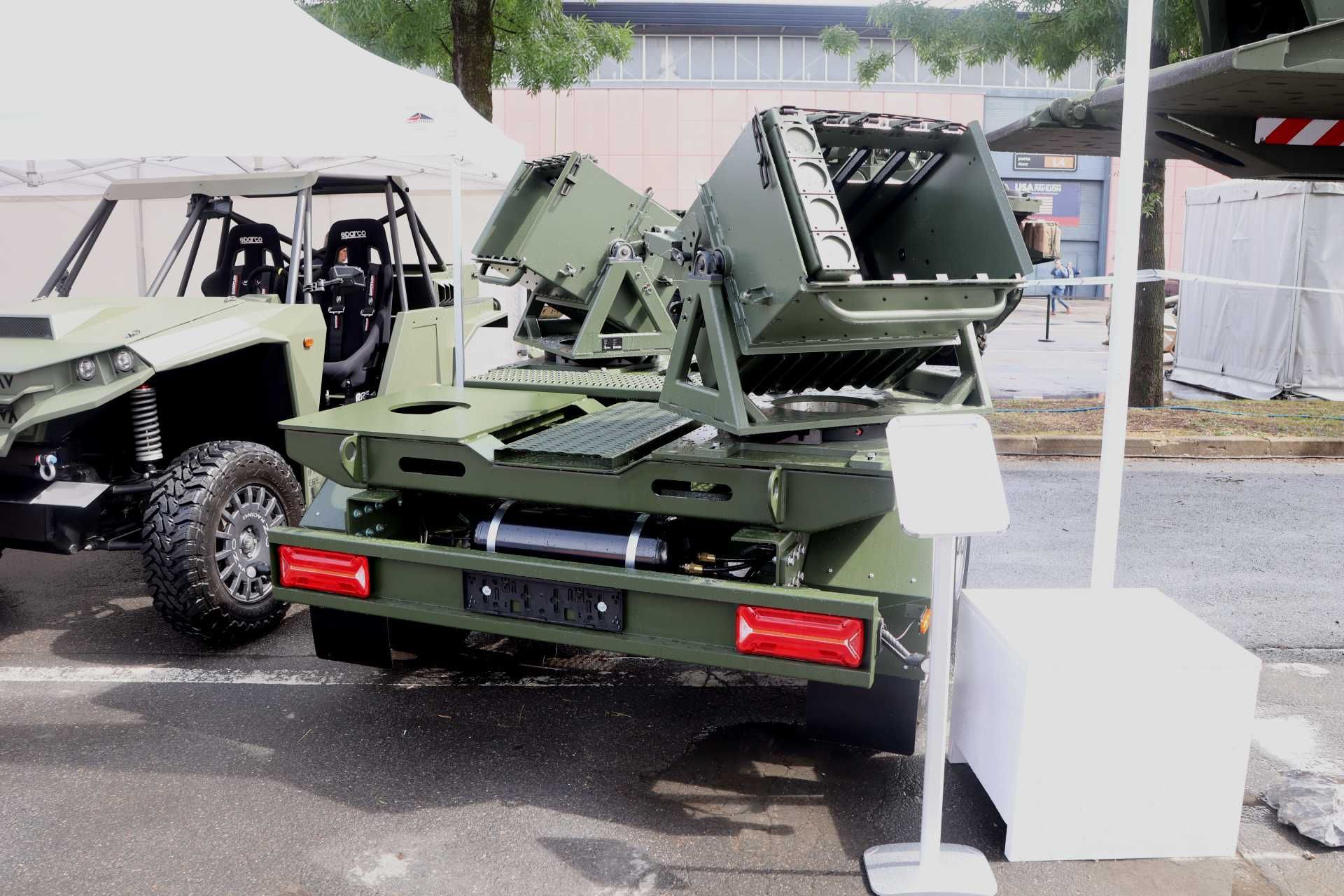
German-made Dynamit Nobel Defence anti-tank mine-laying system Skorpion 2 mounted on a trailer. (Picture source: Army Recognition Group)
Latvia's Defence Minister Andris Sprūds described the acquisition as a strategic step in strengthening Latvia’s defense posture, emphasizing that it forms part of a broader plan to enhance security along the country’s eastern border. The agreement also includes provisions for industrial participation by Latvian companies, reinforcing local supply chain resilience and allowing for potential joint procurement by partner nations.
This procurement marks a significant advancement in Latvia’s operational capabilities, particularly at a time when the security environment in the Baltic region continues to evolve rapidly. The Skorpion 2 system introduces a remote, high-mobility mine laying solution that enables rapid deployment of minefields to restrict or block enemy movements.
Technically, the Skorpion 2 is capable of dispersing hundreds of scatterable AT2+ mines in a matter of minutes. It can create area denial barriers extending up to 2,000 meters in length. The AT2+ mines are equipped with advanced fuzing technology that uses magnetic, seismic, and pressure sensors to detect and engage armored vehicles. Unlike traditional legacy systems, the Skorpion 2 mines feature programmable self-destruct mechanisms, which reduce post-conflict hazards and align with NATO safety protocols.
Latvia’s adoption of the Skorpion 2 reflects a broader shift toward layered, technologically advanced defenses along NATO’s eastern front. With the ability to shape the battlefield dynamically and reinforce positions quickly, the system offers a force-multiplying capability for Latvian forces and increases interoperability within NATO formations operating in the region.
This investment is also aligned with Latvia's increased defense spending, which is expected to reach €2.2 billion in 2026. The country plans to dedicate up to 5 percent of GDP to defense by 2027. According to Latvian defense officials, roughly 30 percent of the contract value will involve domestic industrial participation, ensuring both economic benefits and improved logistical sustainability.
Strategically, the agreement supports not only Latvia’s national defense objectives but also regional cooperation. The contract structure includes options for allied countries to join the procurement, which could lead to shared logistics, cost efficiencies, and increased standardization among NATO partners.
Despite the clear benefits, some operational questions remain. The Ministry of Defence has not yet disclosed the full delivery timeline, nor has it detailed when training will be completed and the system will reach operational readiness. Additionally, integrating a new capability of this scale into existing force structures will require doctrinal adjustments and coordination with NATO's mobility and counter-mobility planning.
Ethical and legal considerations also factor into the deployment of remote mine laying systems. Although the AT2+ mines are anti-tank and feature safety mechanisms, international norms continue to place scrutiny on the use of any type of landmine, especially near civilian areas. Latvia must ensure that deployment is carefully managed under strict rules of engagement and humanitarian law.
Latvia’s acquisition of the Skorpion 2 remote mine laying system significantly boosts its ground defense capabilities. With the ability to rapidly establish complex minefields in response to operational threats, the Latvian National Armed Forces are taking a clear step toward a more flexible and modern defense posture. This development also reinforces NATO’s broader efforts to deter aggression along its eastern border and sends a firm message about Latvia’s commitment to national and regional security.
Written by Alain Servaes – Chief Editor, Army Recognition Group
Alain Servaes is a former infantry non-commissioned officer and the founder of Army Recognition. With over 20 years in defense journalism, he provides expert analysis on military equipment, NATO operations, and the global defense industry.