







Breaking News




Canada Turns to US JLTV A2s from AM General to Strengthen Army Mobility and Readiness.
According to CBC News, the United States has approved Canada’s request to acquire new light tactical off-road troop transport vehicles, in a deal valued at approximately $220 million. The announcement, made Friday by the U.S. State Department’s Defense Security Cooperation Agency, is part of a broader program to re-equip the Canadian Army. This authorization comes just over a year after the Department of National Defence purchased 90 of these open-top, open-sided vehicles for Canadian forces deployed in Latvia as part of NATO commitments.
Follow Army Recognition on Google News at this link
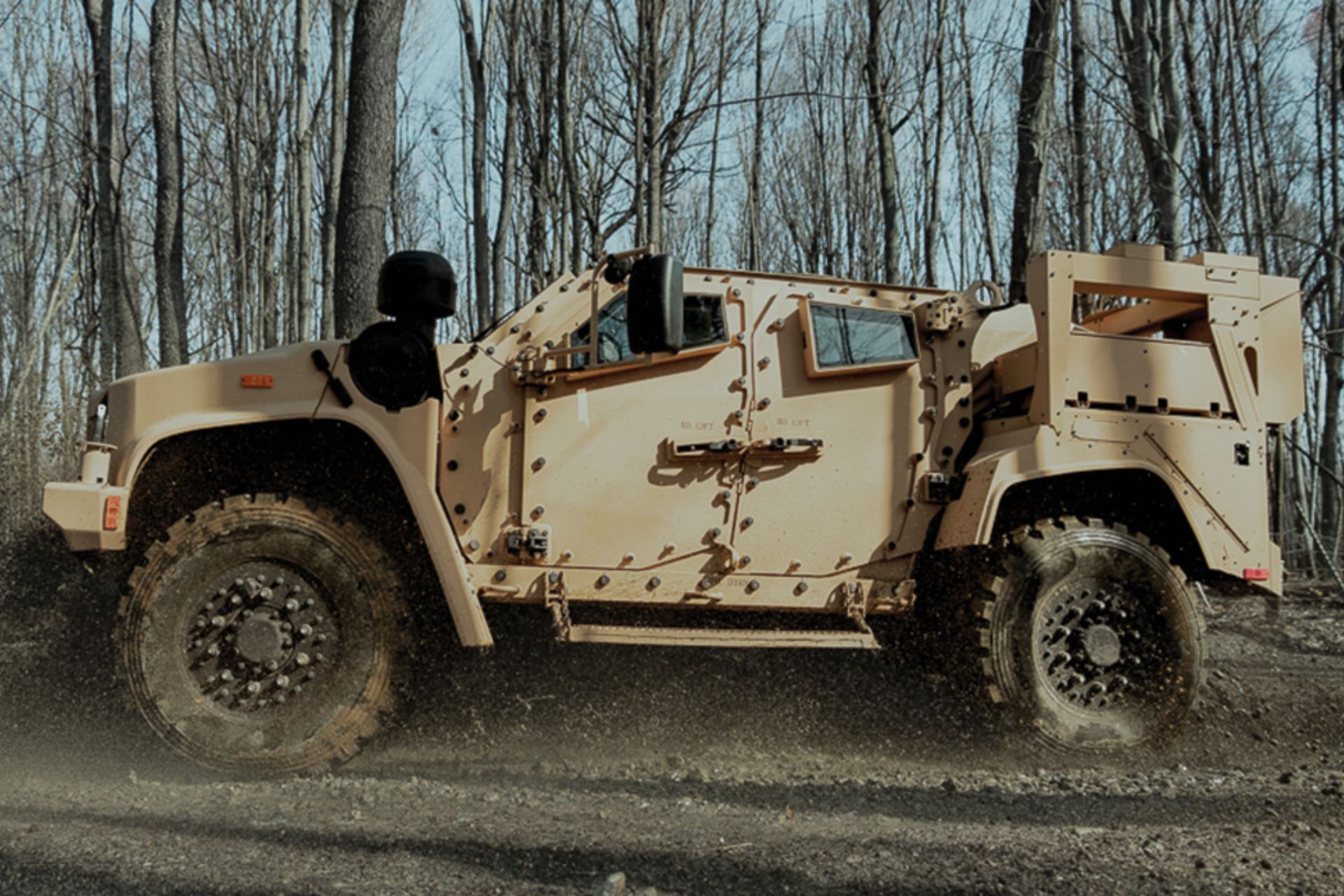
The contract covers a new batch of Joint Light Tactical Vehicle A2 models, manufactured by AM General LLC in Auburn Hills, Michigan, and Mishawaka, Indiana. (Picture source: AM General)
The contract covers a new batch of Joint Light Tactical Vehicle A2 models, manufactured by AM General LLC in Auburn Hills, Michigan, and Mishawaka, Indiana. This latest version marks a significant upgrade from the previous A1 generation, featuring a MY 2024 L5P Duramax engine paired with an Allison 2500 Gen 6 transmission, improving fuel efficiency and range without reducing performance. It also incorporates a modernized electrical system with a single lithium-ion battery and an intelligent power distribution unit, preparing the vehicle for potential hybridization. Enhanced corrosion protection has been added to extend operational life, while a modular integration kit and redesigned interior increase cargo space and ease of maintenance. Noise reduction measures further improve operational discretion and comfort.
These vehicles, planned for several years, are being procured under the Light Forces Enhancement program, which originated from the 2017 defence policy. The project is expected to deliver between 150 and 300 units in total, according to the Department of National Defence. Designed to transport personnel and equipment while providing ballistic and mine protection, they can be configured with various weapons systems, sensors, and mission modules. This flexibility enables their use in logistical support, armed patrols, or integration into mechanized and rapid-reaction units.
The approval comes in a politically sensitive context for the Liberal government, which has emphasized its intention to reduce Canada’s dependence on U.S. defence purchases in favor of diversifying toward other partners. Prime Minister Mark Carney notably stressed during last spring’s election campaign the need to reassess the $27.7 billion contract to acquire F-35 fighter jets from U.S. manufacturer Lockheed Martin. On Friday, while announcing a military pay increase, he stated that no final decision had been made on the program and that the review by the Royal Canadian Air Force was still ongoing.
The issue is further complicated by other planned U.S. acquisitions, including P-8 maritime patrol aircraft and multiple rocket launcher systems for the army. These procurements, part of a wider modernization and rearmament effort, could generate political debate, especially given ongoing trade tensions with U.S. President Donald Trump’s administration.
For senior military officials, these light tactical vehicles are a key element in transforming the Canadian Army. In February, Lieutenant-General Mike Wright, the army’s commander, stated that “the army we have today is not the army we need for the future,” highlighting the need for substantial modernization. The introduction of these upgraded all-terrain platforms, with their technical improvements and adaptability, is consistent with that objective, enhancing the army’s capacity to meet future operational requirements.
The U.S. authorization marks a notable step toward the implementation of a modernization program launched several years ago. It reflects Canada’s capability planning decisions while reopening the political debate over reliance on U.S. suppliers. The matter, still in the approval and planning stages, is likely to remain a prominent issue in Canadian defence discussions in the coming months, alongside other procurement programs currently under consideration.