
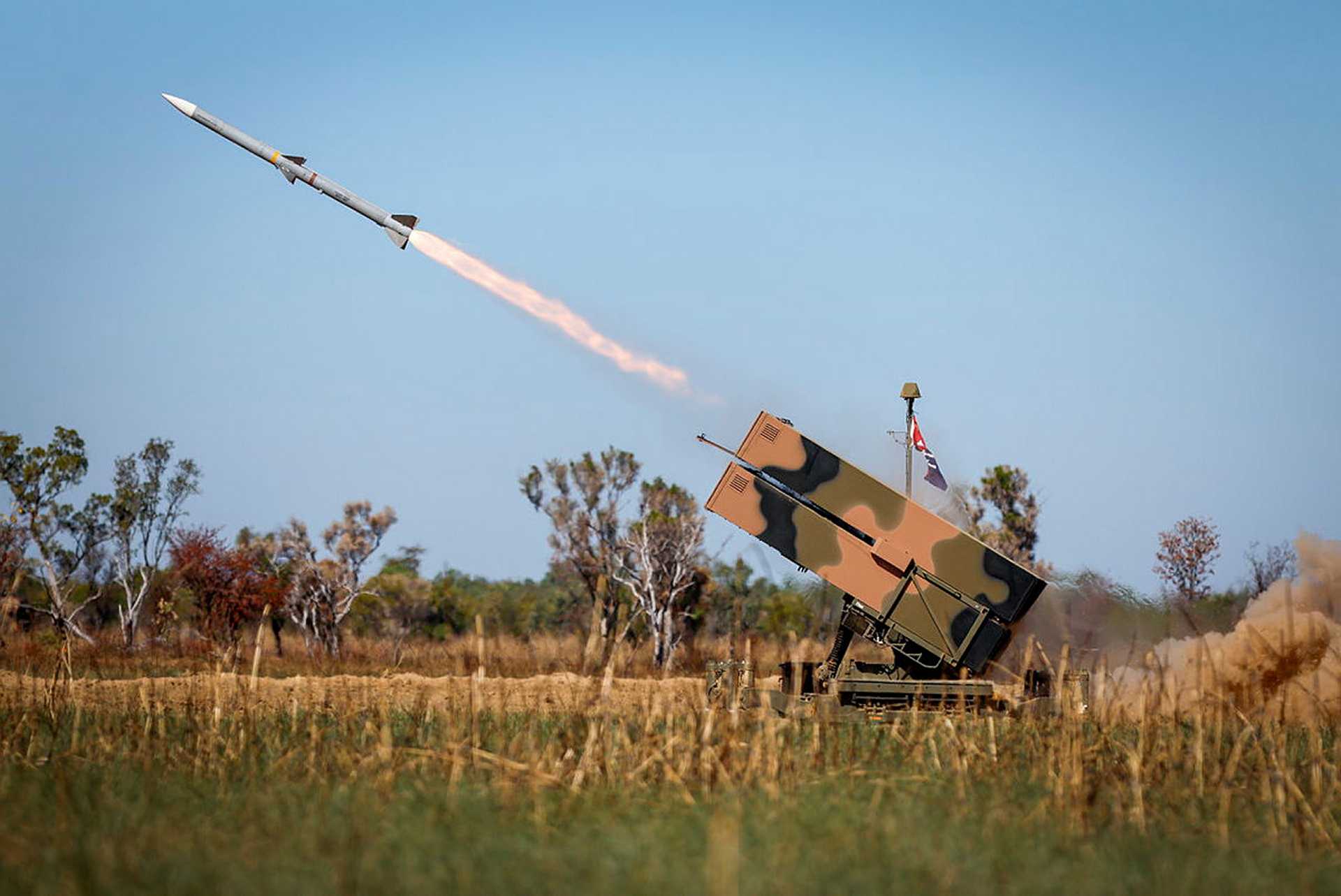










Breaking News: Australia fires NASAMS air defense system for first time during Talisman Sabre 2025.
Australia has achieved a significant milestone in its ground-based air defense modernization with the successful first live-fire of the National Advanced Surface-to-Air Missile System (NASAMS) during Exercise Talisman Sabre 2025. Conducted between July 13 and August 4, this historic firing marks the first operational use of NASAMS by the Australian Defense Force and demonstrates the system’s full integration into the country’s layered air defense architecture. The live-fire engagement confirmed the capability of NASAMS to detect, track, and destroy aerial threats under real-world joint operational conditions, validating both technical performance and tactical deployment concepts.
Follow Army Recognition on Google News at this link
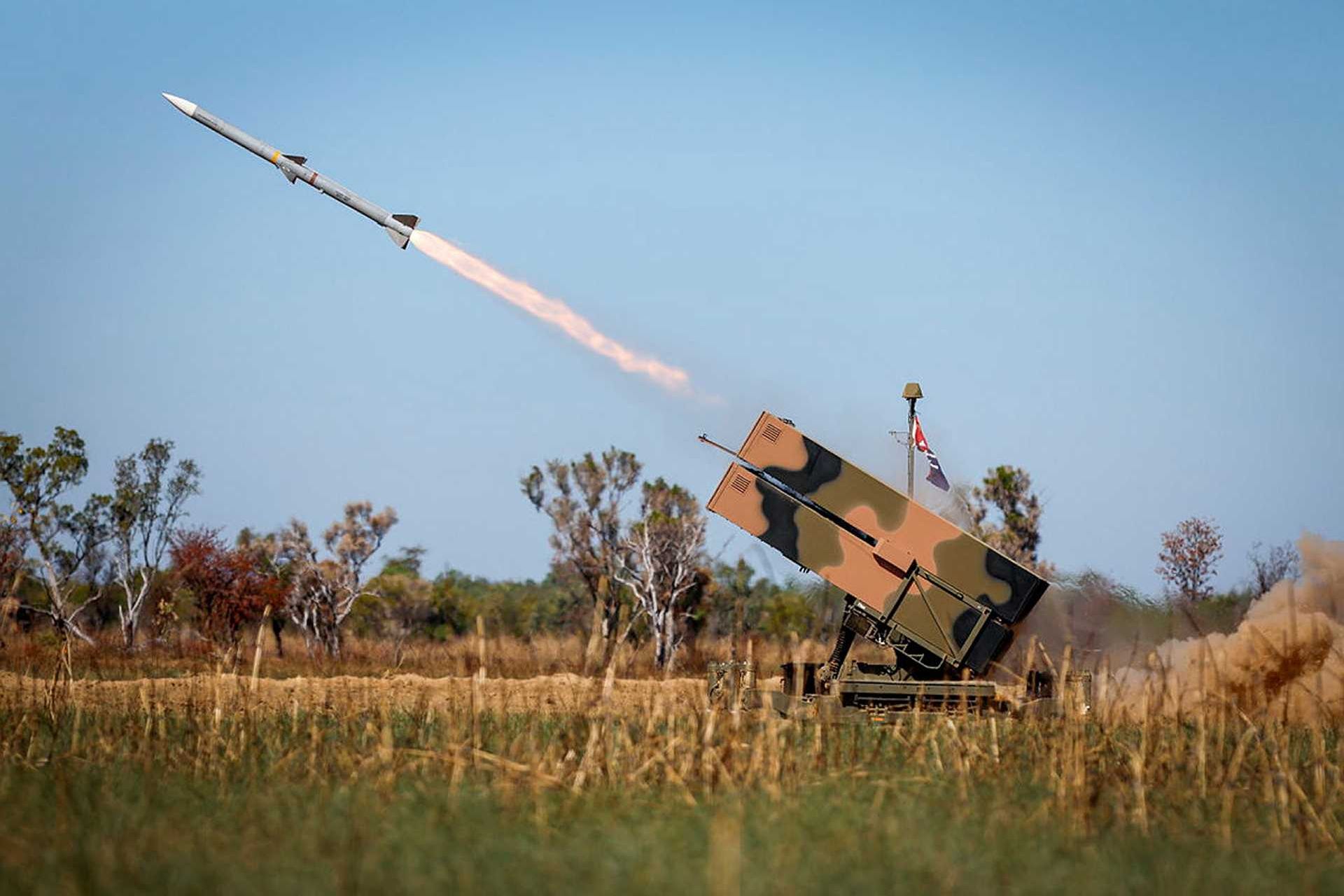
An Australian Army National Advanced Surface to Air Missile System (NASAMS) from the 16th Regiment, Royal Australian Artillery firing an AIM-120 missile during Exercise Talisman Sabre 2025 at Bradfield Training Area. (Picture source: Australia MoD)
The introduction of the NASAMS air defense missile system into Australian service began in late 2023 under Project LAND 19 Phase 7B. Managed by Raytheon Australia in collaboration with Norway’s Kongsberg Defense & Aerospace, the program aimed to deliver a deployable and highly networked Short Range Ground Based Air Defense (SRGBAD) capability to the Australian Army. The system is now operational with the 16th Regiment, Royal Australian Artillery, based at Woodside, South Australia. Australia currently operates two NASAMS batteries, providing coverage against a broad range of aerial threats including aircraft, unmanned aerial systems, cruise missiles, and other precision-guided munitions.
The NASAMS is a flexible and modular medium-range air defense system designed to deliver 360-degree protection in all weather and terrain conditions. The system is capable of engaging multiple airborne threats simultaneously with high precision and rapid target-switching capacity. NASAMS uses the AIM-120 AMRAAM missile as its primary interceptor, offering an effective engagement range of up to 25 to 30 kilometers and an altitude of up to 15,000 meters, depending on the missile variant and threat profile. When equipped with the AMRAAM-ER, the system extends its range beyond 40 kilometers, providing a significantly expanded engagement envelope and increased standoff protection for high-value assets.
NASAMS can engage a variety of threats including fixed-wing aircraft, rotary-wing platforms, unmanned aerial vehicles, loitering munitions, cruise missiles, and precision-guided weapons. Its advanced sensor suite, including active electronically scanned array (AESA) radar such as the CEAFAR tactical radar, is paired with electro-optical systems and passive detection tools, offering comprehensive situational awareness and robust target acquisition capabilities. The fire distribution center (FDC) manages the command-and-control network, ensuring seamless data fusion and rapid decision-making across all launch units. The system’s distributed architecture allows for remote launcher deployment over large distances, enhancing survivability and coverage in dispersed combat zones.
The successful live-fire of NASAMS took place as part of Exercise Talisman Sabre 2025, the eleventh iteration of the biennial Australia-US led multinational military exercise. Running from July 13 to August 4, the event is taking place across multiple regions of Australia including Queensland, Western Australia, the Northern Territory, and New South Wales. For the first time, the exercise also extends into Papua New Guinea, reflecting a wider regional scope and strategic intent. With more than 35,000 military personnel from 19 countries involved, including Canada, France, Germany, India, Indonesia, Japan, the Netherlands, Norway, Republic of Korea, the United Kingdom and others, Talisman Sabre 2025 represents the largest-ever edition of this key training event.
The deployment and operational use of NASAMS in this environment underscore Australia’s commitment to enhancing joint interoperability and multi-domain warfighting capabilities. Talisman Sabre provides a unique platform to integrate advanced systems like NASAMS into real-time coalition operations, strengthening coordination with key regional and global partners. The system’s performance during the exercise demonstrates its role as a critical enabler for modern air and missile defense within the Indo-Pacific theater and highlights the maturity of Australia’s defense technology base in line with its strategic objectives.
As geopolitical dynamics in the region continue to evolve, the operational debut of the NASAMS air defense missile system by the Australian army sends a clear message about Australia's defense readiness and technological advancement. The system enhances the Army’s ability to protect high-value assets and forces against increasingly complex and lethal aerial threats, ensuring greater resilience, operational agility, and tactical superiority in future joint and combined operations.