






Breaking News





Australian DroneShield Expands U.S. AI Hub to Tackle Rising Counter-Drone Challenges.
DroneShield announced it will more than double its U.S. research and development workforce in Warrenton, Virginia.
DroneShield confirmed on September 22, 2025, that it is expanding its U.S. research and development operations, more than doubling its local workforce. The move will focus heavily on artificial intelligence and software development, reflecting both soaring global demand for counter-drone technology and the company’s commitment to the U.S. defense industrial base. It matters because the U.S. military and security agencies face growing threats from uncrewed aerial systems, driving demand for advanced countermeasures.
Follow Army Recognition on Google News at this link
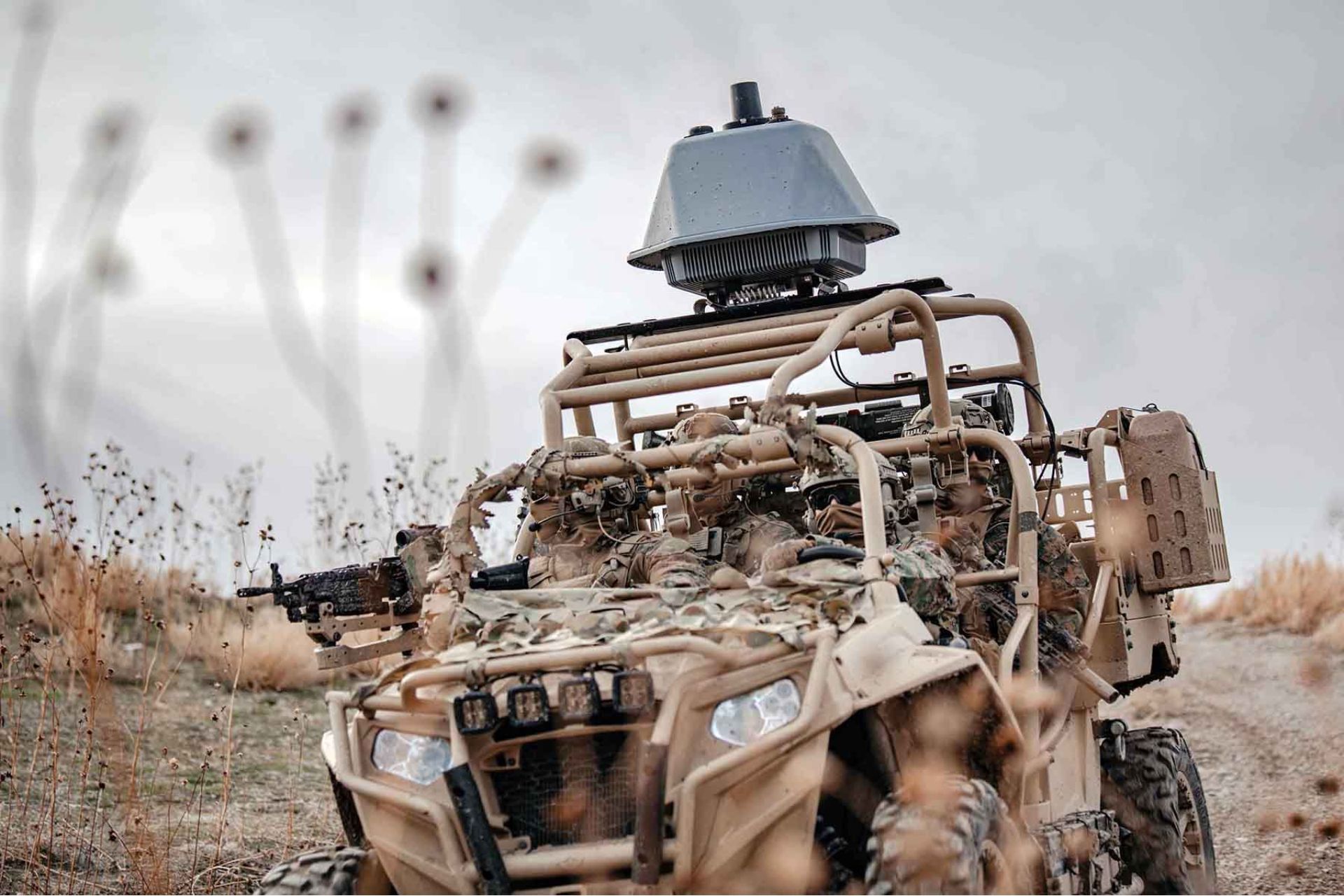
DroneShield offers integrated systems such as the DroneSentry-X Mk2. Designed for vehicle mounting, it combines multiple sensors and jammers to protect convoys or mobile units (Picture source: DroneShield)
The announcement comes at a time when the counter-drone market is rapidly expanding. Conflicts in Ukraine and the Middle East have demonstrated the disruptive role of loitering munitions, commercially adapted drones used for military purposes, and long-range reconnaissance UAVs. Systems capable of detecting, tracking, and neutralizing such threats have become essential for armed forces, security agencies, and operators of critical infrastructure. DroneShield has developed modular and scalable systems that combine radio frequency detection, radar, electro-optical sensors, and electronic warfare functions. Its range includes portable rifle-type jammers such as the DroneGun Tactical, as well as fixed-site integrated systems deployed around military bases and government facilities.
Among its key products, the DroneGun Mk4 represents DroneShield’s approach to portable solutions. Shaped like a rifle, this jammer disables hostile drones by cutting their control link or GPS signal, forcing them either to land or return to their operator. Lightweight and designed for rapid tactical use, the DroneGun can be deployed by military or police patrols without extensive training. It is suited for protective missions during sensitive public events or for operations in contested areas.
The RfPatrol Mk2 is a discreet and wearable detection system. Worn on the body, it passively intercepts signals emitted by drones and their controllers, providing the user with immediate alerts without detectable active emission. Its simplicity makes it suitable for law enforcement, close protection units, or intelligence services, which can anticipate a threat before it escalates.
For more demanding requirements, DroneShield offers integrated systems such as the DroneSentry-X Mk2. Designed for vehicle mounting, it combines multiple sensors and jammers to protect convoys or mobile units. Capable of operating while on the move, it provides extended coverage in dynamic environments, particularly for ground forces operating in contested areas.
The DroneSentry-C2 software platform forms the command and control core of DroneShield’s systems. It integrates inputs from RF, radar, and optical sensors into a single interface that allows operators to detect, track, and counter threats. Incorporating artificial intelligence, it provides automated classification, reduced false alarms, and provides a clear picture of the airspace. The software is designed to remain adaptable, following the rapid evolution of adversary tactics and new drone models.
The technological foundation of DroneShield products is based on sensor fusion and electronic warfare. Detection units intercept drone control signals across wide frequency ranges, while radar extends coverage beyond line of sight. Combined with electro-optical cameras and acoustic sensors, operators gain layered situational awareness. Neutralization is carried out through electronic countermeasures that disrupt command links or satellite navigation, forcing drones to land or return. Recent systems integrate artificial intelligence to enhance classification, lower false positives, and adapt to evolving threats. The emphasis placed on AI in this expansion shows the importance of rapid software adaptation and machine learning for maintaining relevance against increasingly autonomous systems.
Operationally, DroneShield solutions have been deployed in diverse environments. In urban areas, portable jammers provide immediate protection against surveillance drones or quadcopters carrying explosives. On the battlefield, networked detection and defeat systems create protective bubbles around forward positions, convoys, and artillery units. Critical infrastructure operators, from airports to energy facilities, also rely on these systems to guard against espionage or sabotage. The scalable architecture of DroneShield’s systems allows them to address both tactical unit needs and higher-level strategic requirements. The strengthening of R&D capacity in Virginia will accelerate product development cycles, support prototype testing with US users, and align more closely with Pentagon acquisition mechanisms, which now emphasize rapid fielding of counter-drone capabilities.
From a geopolitical perspective, the timing of this expansion is significant. The United States has placed counter-drone technology high among urgent operational needs, with the Department of Defense calling for faster acquisition of effective CUxS solutions. DroneShield’s decision to reinforce its presence in the US market corresponds with Washington’s stated priorities. At the same time, the company is pursuing a balanced global approach, increasing production capacity in Australia and opening an office in the European Union. This three-continent footprint is not limited to sales but also includes development, testing, and support functions close to key theaters of use. For US allies, particularly NATO members, the expansion demonstrates DroneShield’s intent to provide interoperable and regularly updated solutions.
The broader context highlights how the CUxS sector illustrates the adaptability required of the defense industry. Drones proliferate at a speed that traditional acquisition cycles struggle to match. A commercial quadcopter can be weaponized in weeks, while state actors are producing and exporting loitering munitions on a large scale. Faced with this asymmetry, companies like DroneShield must maintain constant agility in design and deployment. The expansion in Virginia goes beyond corporate growth; it reflects a wider transformation in how Western defense ecosystems respond to rapidly shifting threats. With new teams dedicated to AI development, expanded facilities for integration and testing, and closer ties to US decision-makers, DroneShield positions itself as one of the few actors capable of reducing the gap between urgent operational demand and deployed capacity.
By taking this step, DroneShield strengthens its role as a provider of counter-drone technologies. The move is expected to reinforce its relationships with US customers, from the Department of Defense to homeland security agencies, and enable faster adaptation of its systems to operational feedback. Over the longer term, this expansion illustrates how counter-drone warfare is becoming one of the defining areas of defense innovation in the twenty-first century.