






Breaking News





Australia invests in US Javelin anti-tank missiles to deepen precision strike capability.
According to information published by the DSCA on August 19, 2025, the U.S. Department of State has approved a possible Foreign Military Sale to Australia involving 161 Javelin Lightweight Command Launch Units (LwCLUs), valued at $97.3 million. The package includes comprehensive support services such as training systems, simulated rounds, battery coolant units, spare parts, manuals, integration services, and logistical support, reinforcing Australia’s strategic alignment with the United States and its operational preparedness in the Indo-Pacific region.
Follow Army Recognition on Google News at this link
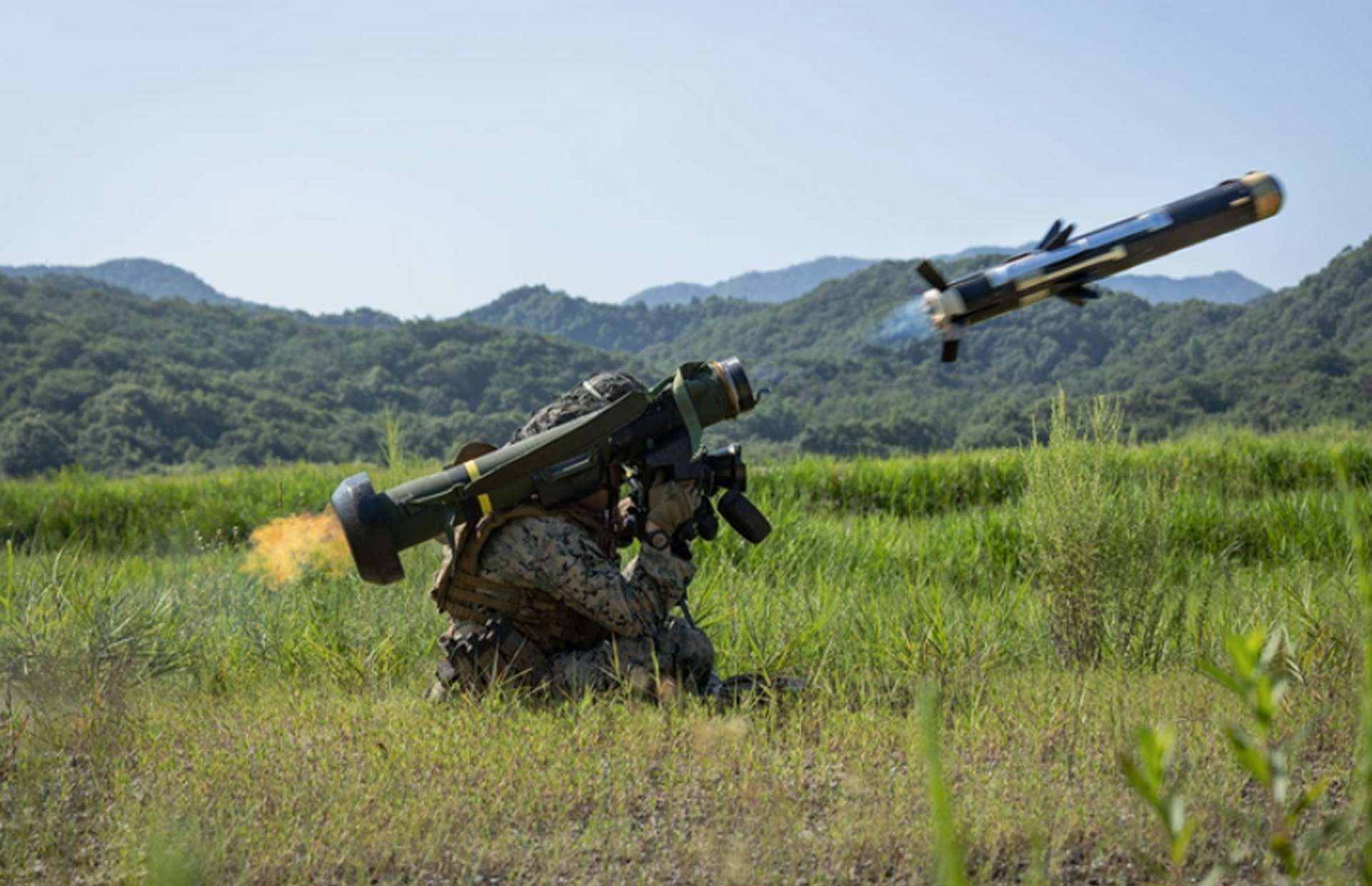
The Javelin anti-tank missile system offers fire-and-forget precision, top-attack capability, and day-night targeting with advanced thermal imaging, enabling dismounted infantry to neutralize armored vehicles and fortified positions at ranges up to 4 km (Picture source: U.S. DoD).
The Javelin Lightweight Command Launch Unit is the most advanced launcher variant for the FGM-148 Javelin anti-tank guided missile (ATGM) system. Designed as a man-portable, fire-and-forget solution, the LwCLU weighs approximately 5.7 kg and is 30 percent lighter than its predecessor. It integrates next-generation optics including a high-definition uncooled infrared sensor, a color day camera, and extended recognition ranges of up to 4,000 meters under optimal conditions. These capabilities not only increase the lethality and engagement envelope of Javelin missiles but also enable the LwCLU to function independently as a reconnaissance asset, providing infantry with improved situational awareness, targeting precision, and all-weather surveillance capability.
Australia’s acquisition of the LwCLUs is operationally driven by its need to modernize and diversify anti-armor capabilities in line with contemporary battlefield requirements. The Javelin system fills a critical gap in the Australian Army’s close-combat arsenal, offering rapid, precision engagement against armored vehicles, fortified positions, and even low-flying rotary-wing threats. Its portability and low-signature firing mechanism make it especially suited for decentralized combat scenarios such as jungle warfare, urban combat, and littoral operations. These environments align with Australia’s evolving doctrine focused on dispersed, expeditionary operations. These systems will likely equip infantry, special operations forces, and forward-deployed units in Australia’s northern defense posture, ensuring rapid response and survivability against mechanized threats.
Geopolitically, Australia faces an increasingly complex and contested Indo-Pacific theater marked by escalating military competition, particularly in maritime and littoral domains. The People’s Republic of China continues to expand its naval footprint and anti-access and area-denial capabilities across the South China Sea and Western Pacific while deepening military ties with regional actors like Russia and Iran. Australia's close proximity to critical sea lanes and its strategic role as a U.S. ally within the AUKUS framework has elevated its defense posture from continental defense to forward deterrence. This shift is evident in recent force structure reviews which prioritize missile systems, long-range fires, and enhanced ground mobility. In this context, the Javelin system serves not only as a tactical weapon but as a component of broader deterrence architecture capable of denying enemy armor or amphibious incursions at key choke points.
This latest sale follows Australia’s December 2024 procurement of 350 FGM-148F Javelin missiles valued at $100 million, underscoring a consistent trend toward building layered, agile anti-armor capabilities. In contrast, other nations like Ireland have also pursued Javelin systems in recent months, albeit on a smaller scale and for fundamentally different purposes. Ireland’s April 2025 acquisition of 36 LwCLUs and 44 missiles reflected modernization within a peacekeeping and homeland defense framework. Australia’s far larger acquisition is part of a regional hardening strategy, preparing for high-end conflict scenarios and ensuring credible deterrence across maritime and terrestrial approaches. The LwCLU systems will be produced and delivered by the Javelin Joint Venture, a partnership between Raytheon and Lockheed Martin.
In the broader context of regional defense transformation, the Javelin system reinforces Australia’s shift toward mobile, networked ground forces with increased anti-access potential. As the security environment in the Indo-Pacific continues to deteriorate, Canberra’s investment in proven systems like the Javelin reflects both strategic urgency and doctrinal clarity to deny armored threats swiftly, from the first shot, and from any terrain.