






Breaking News






AMPHIBEX Military Exercise Enhances U.S.-Asian Armed Forces' Interoperability Amid Regional Tensions.
On March 3, 2025, the AMPHIBEX amphibious exercise, a significant component of the ongoing Cobra Gold 2025 joint military drills, underscored its strategic importance in the Asia-Pacific region. Taking place from February 26 to March 8, 2025, in Hat Yao, Thailand, this exercise involved the military forces of the United States, Thailand, Republic of Korea, and Singapore, with a focus on enhancing amphibious capabilities in a rapidly evolving security environment.
Follow Army Recognition on Google News at this link
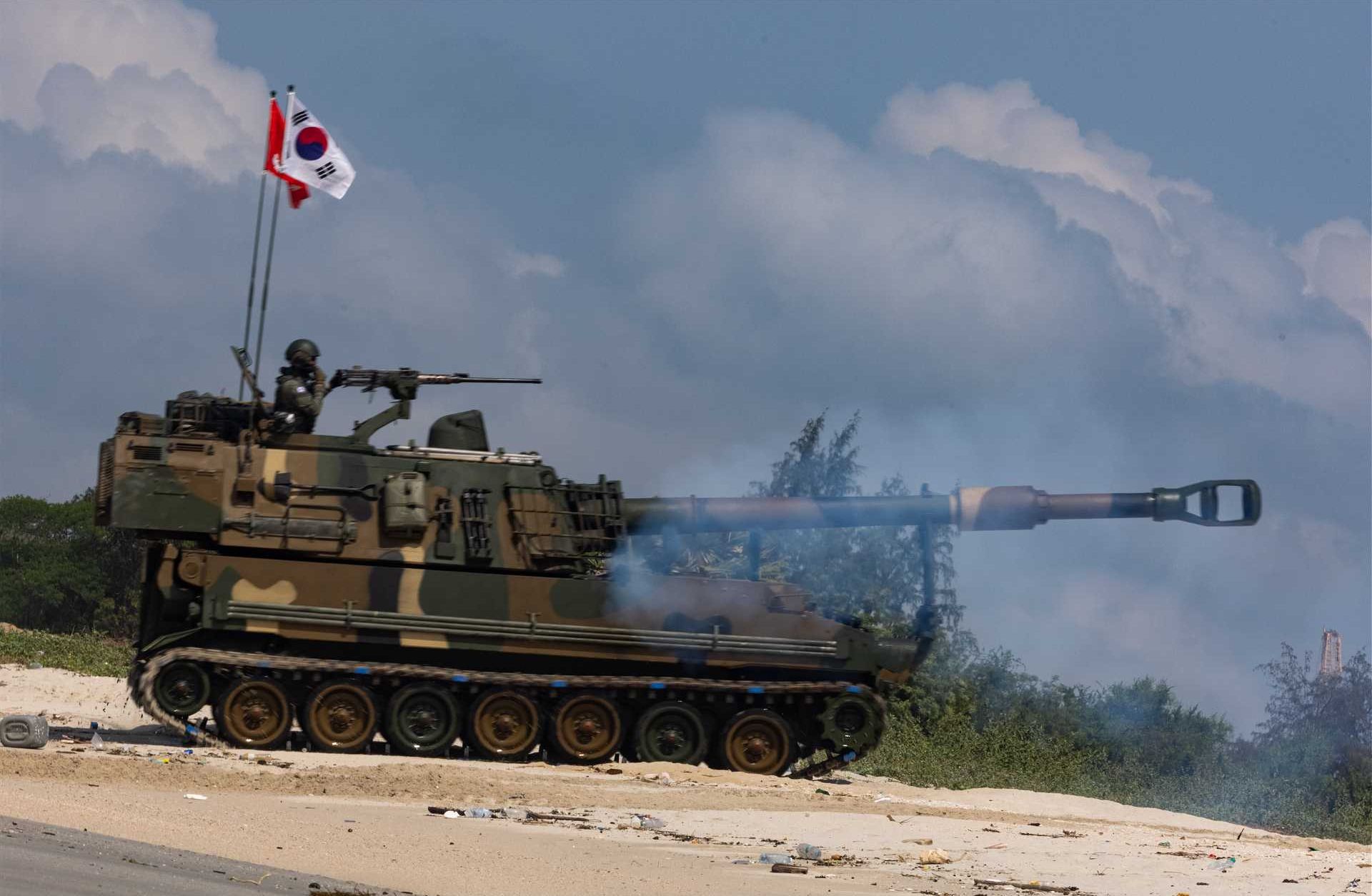
A South Korean Army K-55, 155mm tracked self-propelled howitzer advances ashore during an amphibious exercise in Hat Yao, Thailand, on March 3, 2025, as part of Cobra Gold. The exercise, known as AMPHIBEX, involved the U.S., Thai, Republic of Korea, and Singaporean armed forces. (Picture source: U.S. DoD)
AMPHIBEX, the amphibious assault phase of Cobra Gold edition 2025, is designed to strengthen interoperability and readiness among the participating countries, simulating complex beach landings and military operations under austere conditions. The Republic of Korea Army's K-55, a 155mm tracked self-propelled howitzer, exemplified this integration during a dramatic beach landing on March 3, 2025, as the forces conducted live-fire drills and field operations aimed at preparing for large-scale operations in coastal and littoral environments.
The Asia-Pacific region is home to some of the world's most contested and dynamic maritime environments. Strategic waterways such as the South China Sea, East China Sea, and the Strait of Malacca play a critical role in global trade and security. As a result, amphibious operations — which combine sea, land, and air elements — are essential for ensuring regional stability, especially in the face of rising maritime tensions and potential conflicts.
AMPHIBEX is an integral exercise in this context, serving as a testbed for multinational cooperation and military coordination. Through realistic amphibious landings, it allows allied forces to refine their tactics and enhance the interoperability required for responding to regional threats. This exercise is also particularly important given the strategic partnerships it promotes, especially between the United States and Thailand, as well as with regional allies like South Korea and Singapore.
Cobra Gold, the largest joint exercise in mainland Asia, serves as a symbol of the longstanding U.S.-Thailand partnership. The exercise not only focuses on conventional military operations but also emphasizes humanitarian missions and disaster relief, both of which are critical to addressing the needs of the region's diverse populations. This holistic approach enhances the military readiness of the countries involved while deepening their cooperation with civilian agencies to better respond to humanitarian crises and natural disasters — challenges that are especially relevant in a region prone to tsunamis, typhoons, and earthquakes.
In addition, AMPHIBEX represents a significant opportunity for the United States to reinforce its commitment to the Indo-Pacific region. As tensions rise in places like the Taiwan Strait and the South China Sea, maintaining a strong presence and fostering partnerships with regional allies has become a top priority. Exercises like Cobra Gold offer a tangible demonstration of military support and the ability to execute complex operations across various terrains, ensuring regional stability and enhancing collective defense.
One of the central themes of AMPHIBEX is the enhancement of interoperability between different military forces. Each participating nation brings its unique capabilities and equipment, making coordination vital. For example, the Republic of Korea Army’s K-55 howitzer, which was showcased in the amphibious exercise, is a key asset for providing indirect fire support during amphibious landings. Its integration into the exercise exemplifies how modern military platforms, despite coming from different countries, can work together seamlessly.
Moreover, Thailand's naval and air forces, combined with the U.S. Marines' amphibious assault vehicles and the Singaporean artillery support, demonstrate the importance of multinational coordination in operations that could involve large-scale humanitarian aid or military intervention in conflict zones. This is particularly important in a region that remains vulnerable to flashpoints, ranging from territorial disputes to larger power struggles.
The interoperability forged in exercises like Cobra Gold is not limited to military engagements. These drills also foster a deeper understanding between armed forces, enabling more effective disaster relief operations in the event of natural disasters, which are frequent in the region. This multifaceted collaboration enhances not only military capability but also collective resilience to non-combat challenges.
The Asia-Pacific region is facing increasing geopolitical and security challenges, particularly with respect to territorial disputes in the South China Sea and the broader competition for influence between global powers. Exercises such as AMPHIBEX and Cobra Gold are key to strengthening military alliances and enhancing the ability of U.S. and regional forces to respond to aggressive actions and humanitarian crises alike.
The region's reliance on maritime trade makes it a strategic crossroads for the global economy and security. For this reason, ensuring that regional partners can perform joint amphibious operations effectively is paramount. The U.S. military's presence in the region, underscored by exercises like AMPHIBEX, reinforces its commitment to deterrence and stability while fostering positive relations with Southeast Asian nations.
AMPHIBEX, part of Cobra Gold 2025, is a vital training ground for improving military capabilities and multinational cooperation in the Asia-Pacific. Through realistic drills involving complex amphibious assaults and humanitarian operations, participating forces are better prepared for the challenges of modern warfare and regional crises. As tensions rise in the Indo-Pacific, exercises like AMPHIBEX not only enhance interoperability but also send a clear message of strength, unity, and readiness among the U.S. and its allies in the region.
For nations facing a volatile security environment, AMPHIBEX plays a critical role in ensuring that the forces of Asia’s military powers are prepared to respond quickly and effectively — not just for combat, but for humanitarian efforts and disaster relief that are essential for the region’s long-term peace and stability.