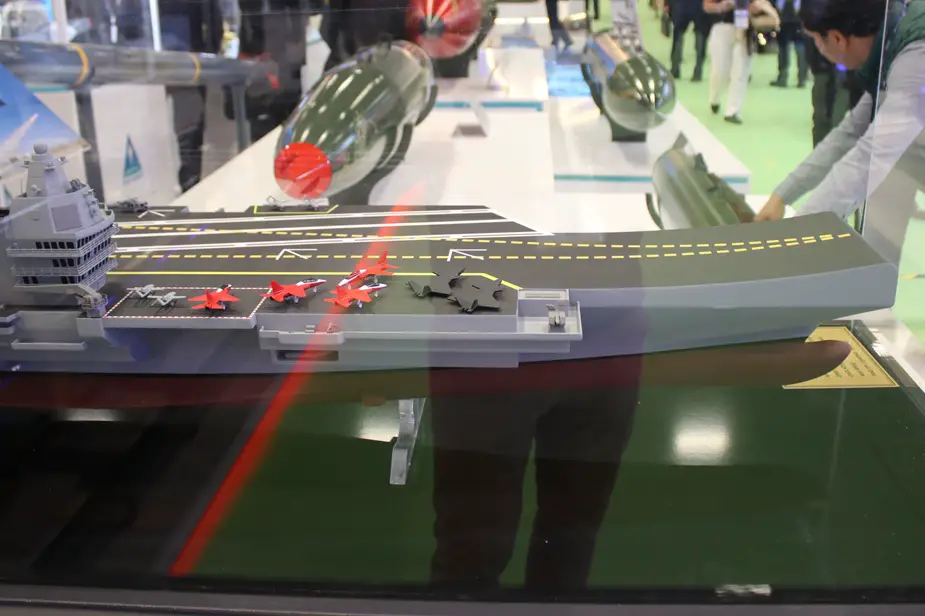
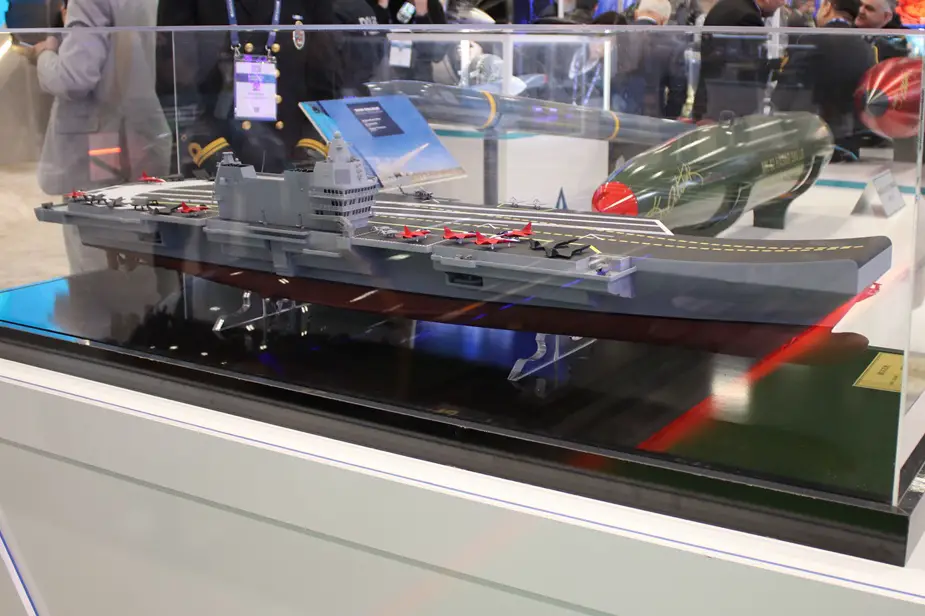
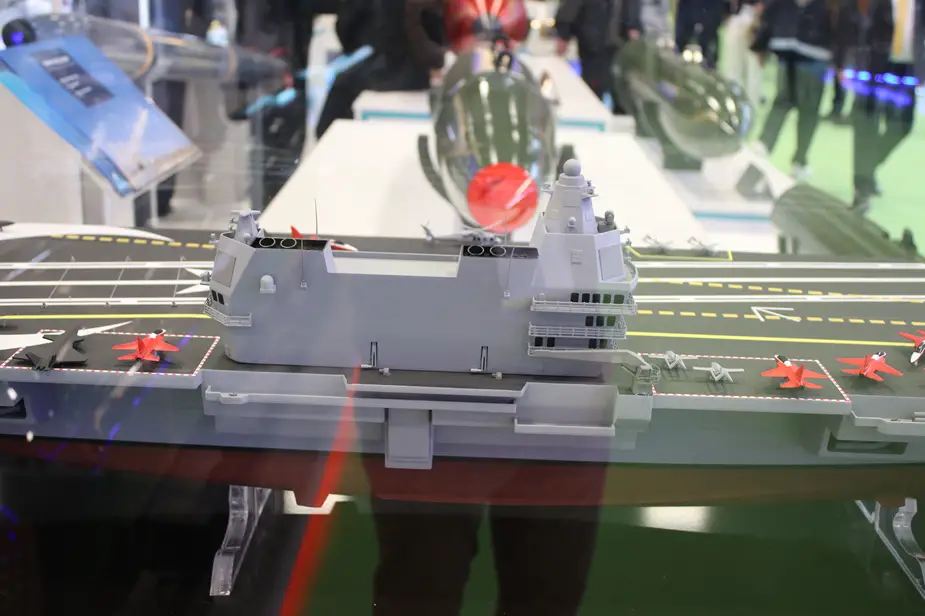
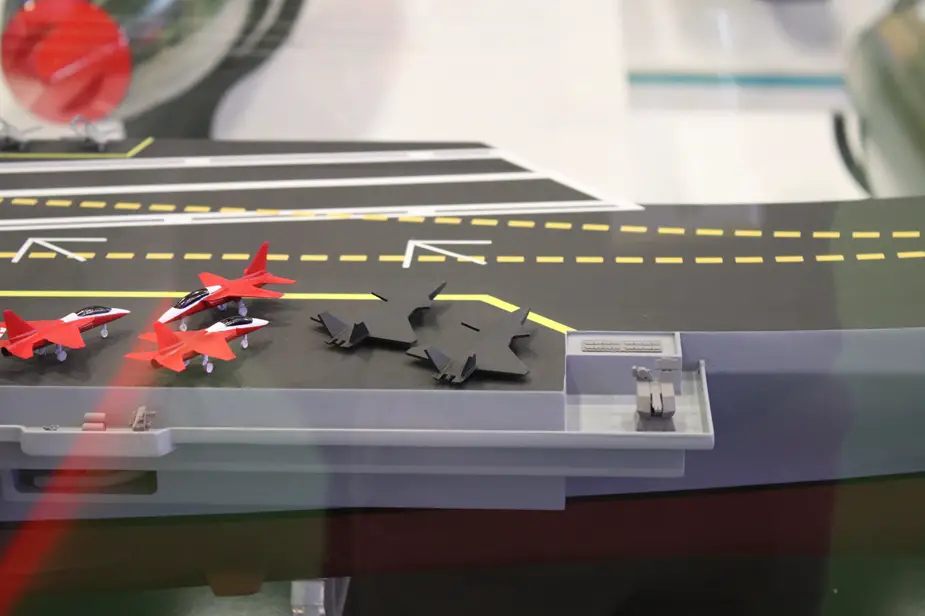
MUGEM (Milli Uçak Gemisi) is Türkiye’s indigenous aircraft carrier project, conceived as a large conventionally powered naval aviation platform capable of operating a combined force of manned aircraft, unmanned combat aerial vehicles and supporting rotary-wing assets. Designed under the responsibility of the Turkish Naval Forces and under construction at Istanbul Naval Shipyard, the approximately 60,000-tonne carrier represents a significant expansion of Türkiye’s sovereign naval design, shipbuilding, combat-systems integration and carrier-aviation capabilities. The latest publicly disclosed configuration combines a 285-metre hull, STOBAR flight operations, capacity for 52 aircraft, nationally developed sensors and combat systems, and provisions for operating unmanned surface and underwater vehicles. The Turkish Naval Forces have announced a planned launch date of 27 September 2027, while programme delivery is targeted for 2032.
Country users : Türkiye







Technical Data
-
Weapons Systems and Protection Systems on Board
MUGEM Milli Uçak Gemisi is planned to incorporate an integrated nationally developed self-defence architecture intended to provide layered protection against airborne, missile, unmanned and close-range threats while operating as part of a naval task group. The 2026 publicly presented combat-system layout includes two 16-cell MİDLAS vertical-launch modules providing a total of 32 VLS cells, three close-in weapon systems, four remotely controlled weapon stations and two point-defence missile systems. Its surveillance and protection architecture is planned to include ÇAFRAD multifunction and long-range radars, low-probability-of-intercept radar, infrared tracking, electro-optical directors, electronic-support measures, electronic-attack systems and a laser electronic-attack capability. These systems are planned to operate through the indigenous ADVENT combat management system, providing integrated surveillance, threat evaluation, weapons coordination and command-and-control functions.
-
Design and Features
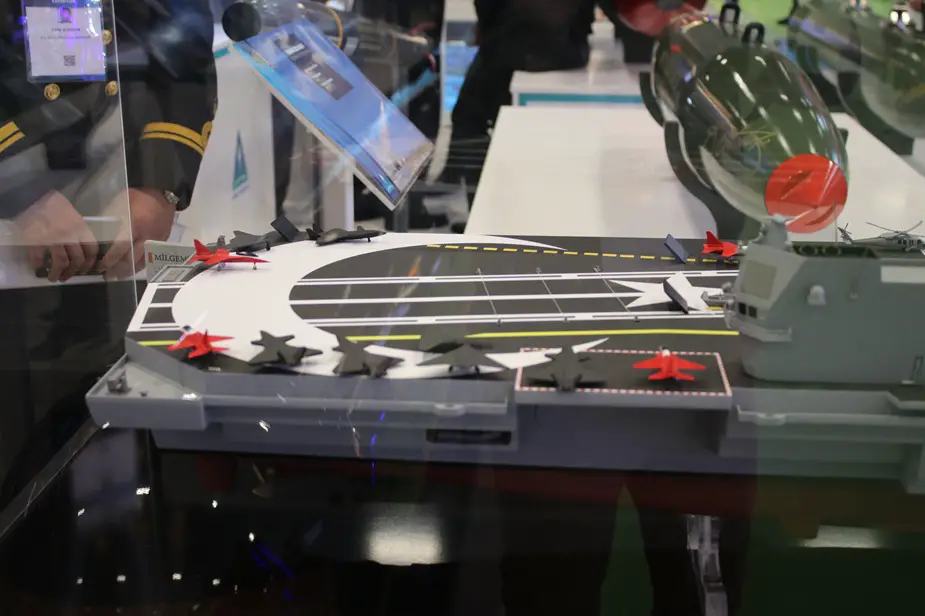
MUGEM Milli Uçak Gemisi features a Turkish-developed hull form optimized through indigenous engineering tools, computational-fluid-dynamics analysis, physical model testing and towing-tank trials to improve resistance, stability, manoeuvrability and seakeeping performance. The carrier measures approximately 285 metres in overall length, 72 metres in maximum beam and 10.1 metres in draught, with a displacement of approximately 60,000 tonnes. Hydrodynamic work has included bow-wave optimization and indigenous propeller development focused on efficiency and reduced underwater acoustic signature. The flight deck incorporates a 12-degree ski-jump and dedicated launch and arrested-recovery areas, while stern and starboard-side loading arrangements are included to support vehicle, equipment and logistics operations.
-
Engine and Propulsion
MUGEM Milli Uçak Gemisi is being developed with a conventionally powered twin-shaft propulsion architecture whose detailed configuration remains subject to programme refinement. A CODLAG configuration presented in 2026 comprises two gas turbines, four electric motors and two controllable-pitch propellers (CPP), emphasizing efficiency, cost-effectiveness and redundancy. Alternative four-gas-turbine configurations have also been reported during the design process, with separate construction reporting indicating plans involving four GE LM2500 gas turbines. The latest Turkish Navy performance figures specify a maximum speed exceeding 26 knots, a cruising speed of approximately 14 knots, and a range of approximately 10,000 nautical miles at 14 knots.
-
Onboard Equipment
MUGEM Milli Uçak Gemisi is designed with extensive command, surveillance, communications, medical and logistics equipment appropriate for sustained carrier operations. Publicly disclosed equipment includes ÇAFRAD multifunction and long-range radars, X-, Ku- and Ka-band satellite communications, IFF and HF communications equipment, low-probability-of-intercept radar, infrared tracking equipment, electro-optical directors, electronic-support measures and electronic-attack systems. The vessel is planned to incorporate the indigenous ADVENT combat management system and command-and-control capabilities for manned and unmanned platforms operating in the air, surface and subsurface domains. Medical infrastructure is designed to meet Role 2 Enhanced standards, while the design also incorporates loading facilities and dedicated arrangements for handling unmanned surface and underwater vehicles.
-
Flight Capabilities
MUGEM Milli Uçak Gemisi is being designed around an integrated manned-unmanned carrier air wing. Turkish programme information specifies a minimum capacity of 50 manned and unmanned aircraft, while the updated 2026 configuration indicates capacity for 52 aircraft. Principal fixed-wing platforms publicly associated with the programme include the Baykar Bayraktar TB3, Baykar KIZILELMA, TUSAŞ ANKA-3 and a naval version of the HÜRJET, with rotary-wing aircraft able to complement the embarked aviation group according to operational requirements. Flight operations will use the STOBAR concept, employing a 12-degree ski-jump for short take-offs and arresting equipment for fixed-wing recovery. The carrier is being designed to support unrestricted flight operations through Sea State 6.


Photo Gallery