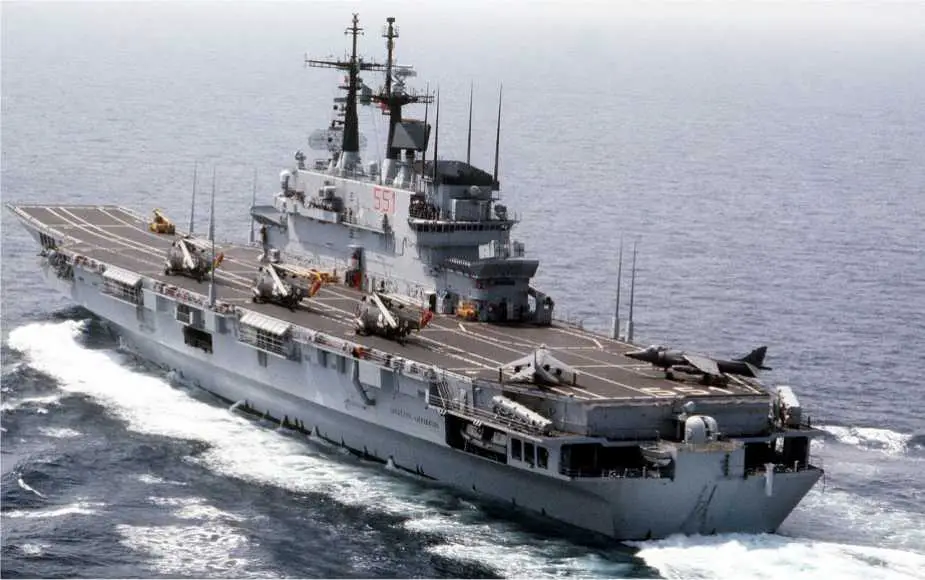
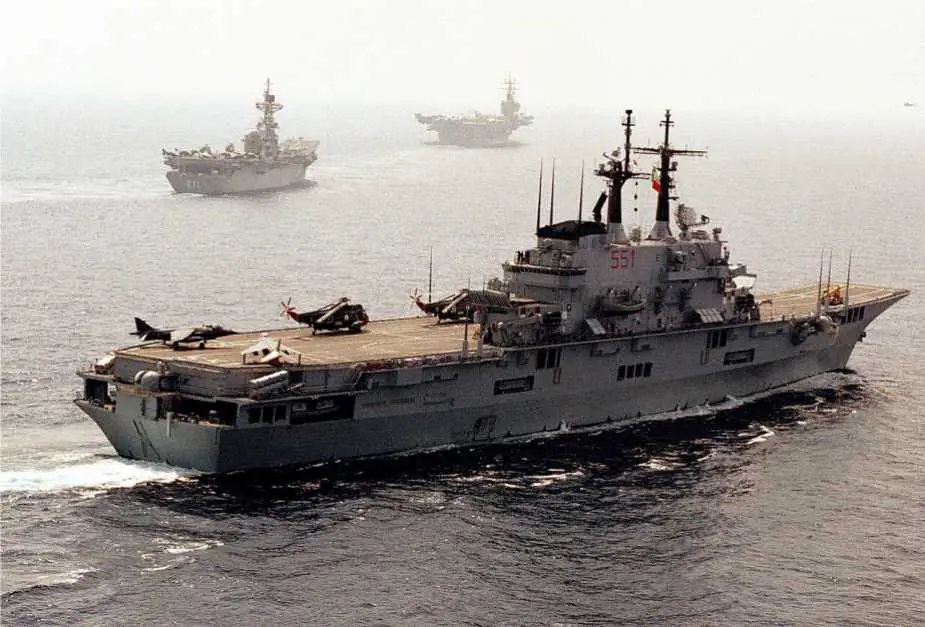
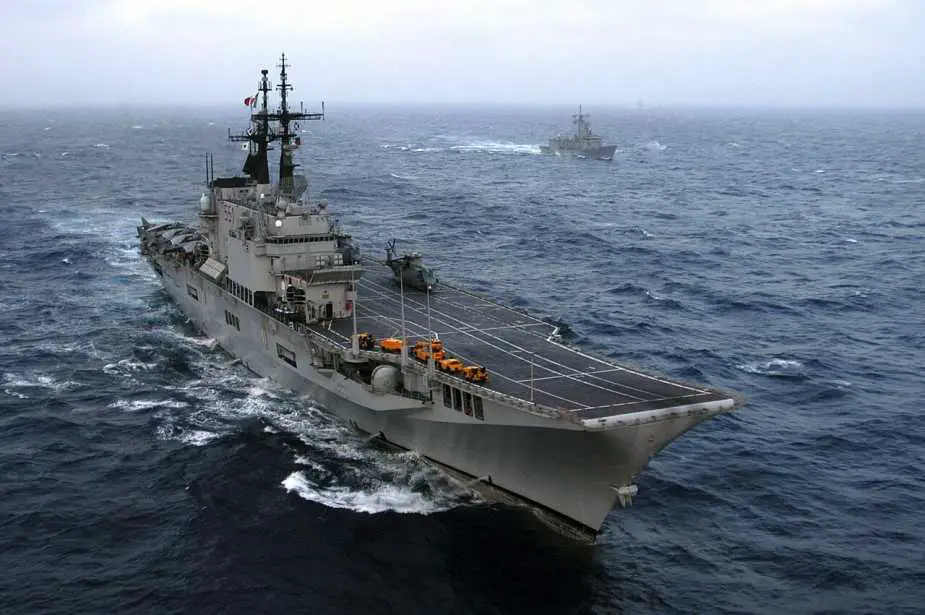
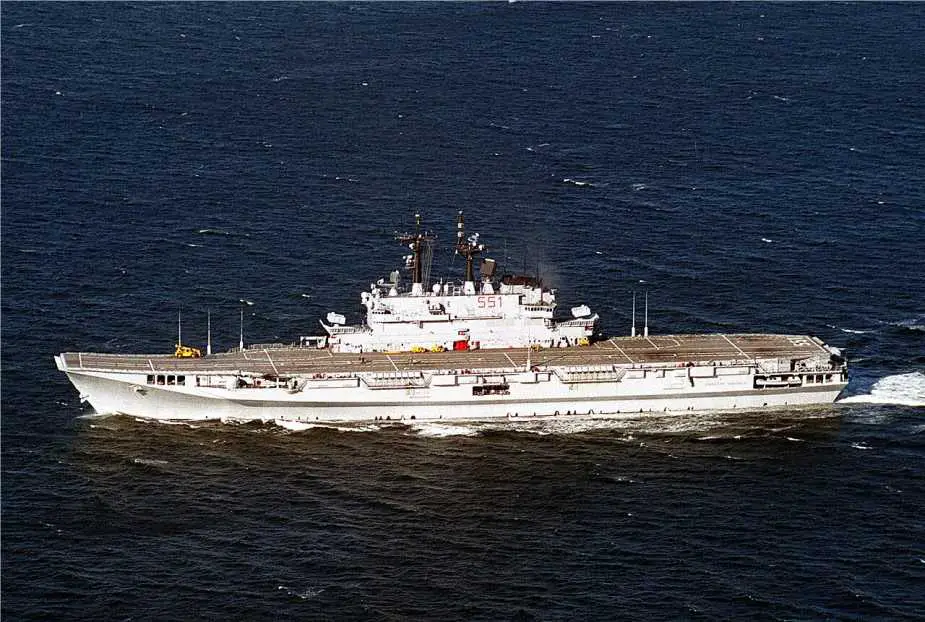
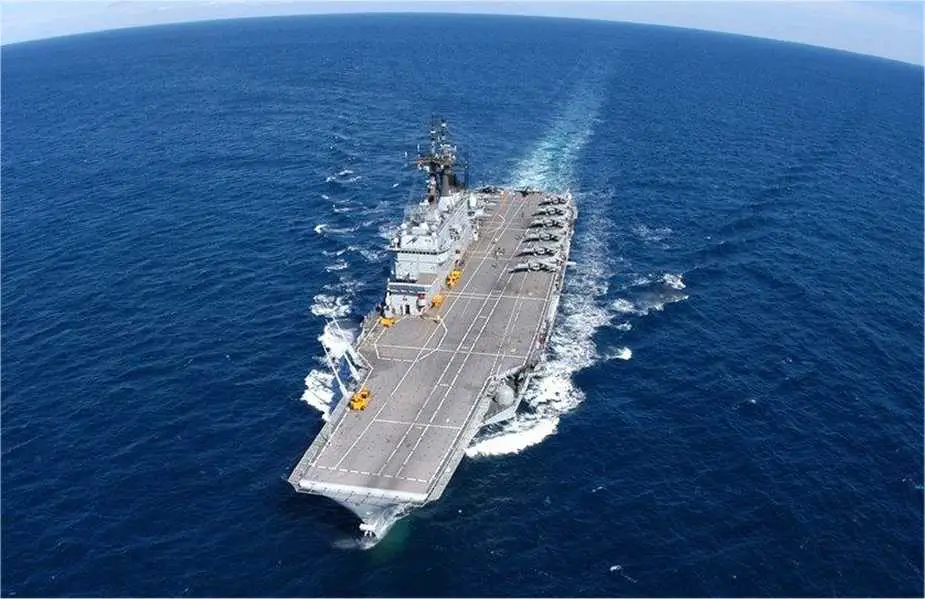
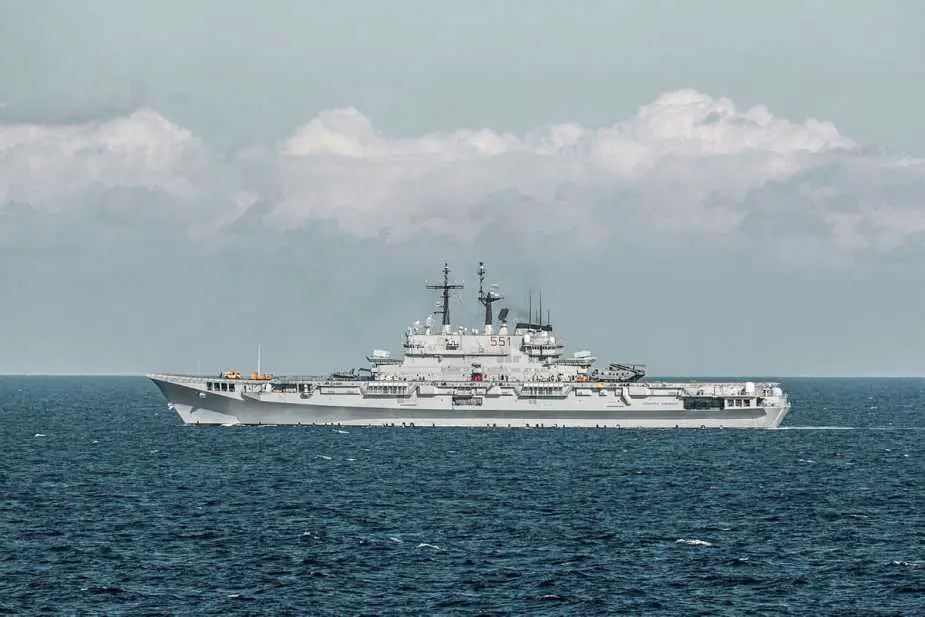
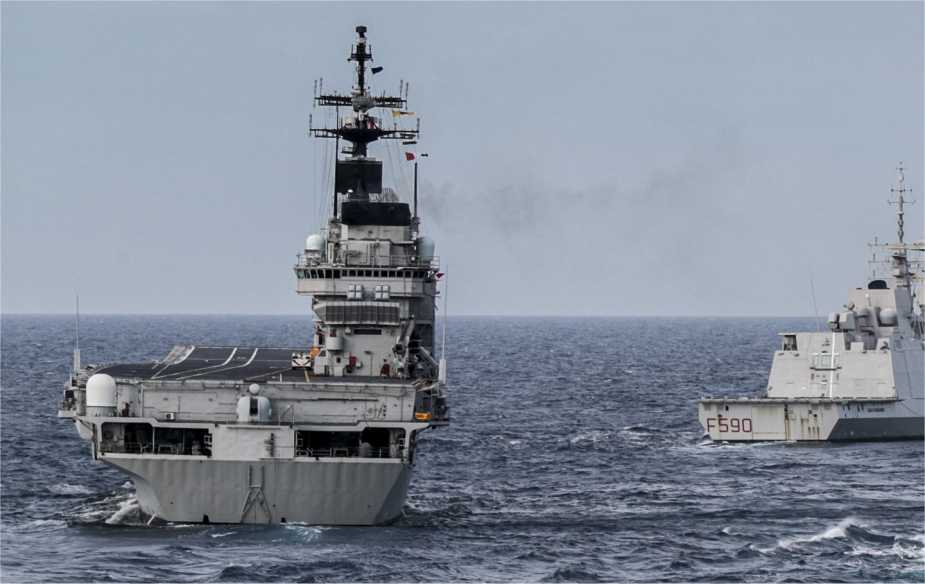
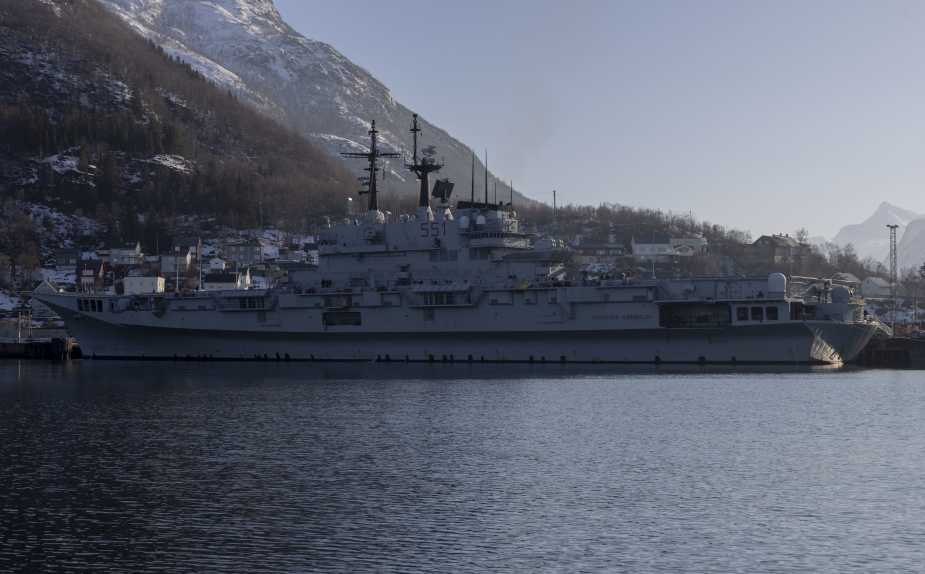
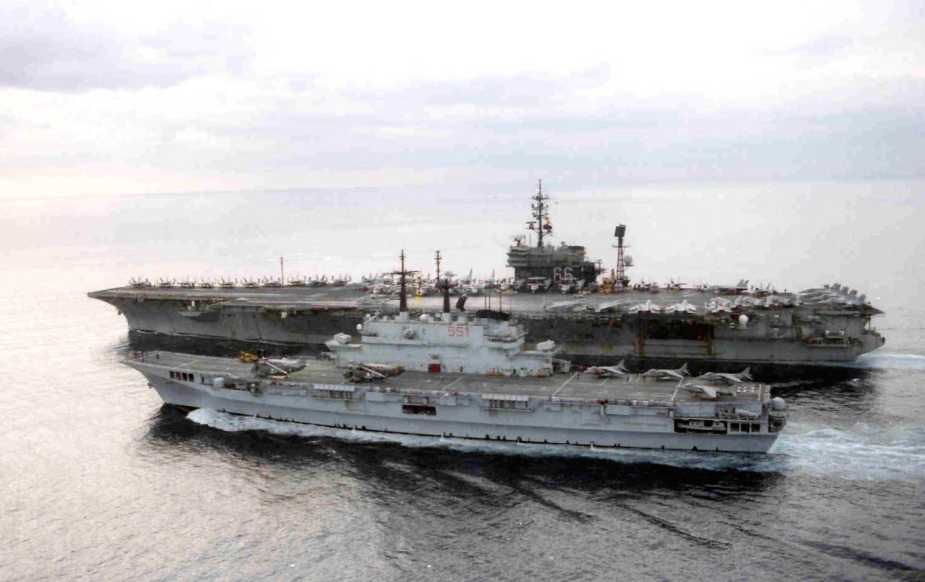
The Giuseppe Garibaldi (C 551) is a light aircraft carrier originally developed for the Italian Navy (Marina Militare) as a compact aviation cruiser capable of supporting anti-submarine helicopters and, following changes to Italian naval aviation legislation, fixed-wing STOVL combat aircraft. Built in Italy and commissioned in 1985, the ship combines a full-length flight deck, forward ski-jump, enclosed aircraft hangar, high-output gas-turbine propulsion and an unusually substantial defensive weapons suite for a carrier of its displacement.
Country users: Italy, possible transfer to Indonesia







Technical Data
-
Design
The Giuseppe Garibaldi aircraft carrier is based on a compact carrier hull measuring 180.2 m overall, with a beam of approximately 23.4 m at the waterline, approximately 30.4 m across the flight deck, a draft of 6.7 m and an official full-load displacement of approximately 13,850 tonnes. The continuous flight deck extends approximately 173.8 m and occupies almost the entire upper surface of the hull, while a compact island positioned to starboard accommodates the navigation bridge, flight-control spaces, sensor installations and exhaust arrangements without excessively reducing usable aviation area. The bow incorporates a pronounced ski-jump designed to improve STOVL aircraft departure performance by directing the aircraft upward as it leaves the deck, providing additional time to accelerate and develop aerodynamic lift. Unlike CATOBAR carriers, the vessel has neither catapults nor conventional arresting wires, making fixed-wing operations dependent upon short take-off and vertical landing aircraft. Aircraft movement between the flight deck and enclosed hangar is accomplished by elevators, while aviation-support spaces include maintenance areas, fuel installations, weapons-handling facilities and technical workshops. Considerable internal volume is devoted to command and communications functions, reflecting the carrier's parallel use as a fleet flagship and task-group command platform. Hull subdivision, duplicated services and distributed machinery arrangements contribute to resistance against flooding, fire and localized damage, giving the vessel a survivability standard closer to a purpose-designed combatant than to a commercial-derived aviation platform.
-
Engine and Propulsion Capabilities
The Giuseppe Garibaldi aircraft carrier is powered by a COGAG – Combined Gas And Gas – propulsion installation comprising four FIAT/General Electric LM2500 marine gas turbines producing a combined output of approximately 60,400 kW, or about 81,000 horsepower, with power transmitted through two Tosi reversing reduction gearboxes to two shafts fitted with fixed-pitch propellers. The LM2500 installation gives the relatively compact carrier a high power-to-displacement ratio and allows a maximum speed of approximately 30 knots, an important characteristic for both tactical repositioning and flight operations. Different turbine combinations can be used to match propulsion demand, allowing reduced machinery operation during economical cruising while the full installation can be brought online when maximum power is required. High ship speed is particularly advantageous during STOVL operations because sailing into the prevailing wind increases airflow across the flight deck and improves aircraft launch margins. The carrier has an official endurance of approximately 7,000 nautical miles, providing sufficient operational reach for prolonged Mediterranean deployments and extended out-of-area missions. Auxiliary electrical power is supplied separately for radar, combat systems, navigation equipment, aviation facilities, pumps, communications, accommodation services and other shipboard consumers, while the compartmentalized machinery arrangement provides redundancy against individual equipment failures or combat damage.
-
Flight Capabilities
The Giuseppe Garibaldi aircraft carrier is configured around an embarked aviation component of approximately 18–20 aircraft, with the precise air-group composition varying according to fighter, anti-submarine, transport, amphibious-support or maritime-security requirements. Its principal fixed-wing combat aircraft during Italian service was the AV-8B Harrier II, including the improved AV-8B Plus, whose vertical/short take-off and landing characteristics allowed fixed-wing carrier operations without catapults or arresting gear. The AV-8B Plus incorporated the AN/APG-65 multimode radar, providing substantially improved air-search, interception and all-weather combat capability compared with earlier Harrier configurations. Rotary-wing types associated with the carrier included the EH101/AW101, SH90A/NH90, Agusta-Bell AB212 and earlier SH-3D Sea King, supporting anti-submarine warfare, maritime surveillance, utility transport, search and rescue and command-support duties. The axial flight deck, ski-jump, internal hangar and aircraft elevators allow embarked aircraft to be prepared, serviced, transferred and stored while maintaining an operational flight cycle, while aviation-fuel systems, maintenance workshops and weapons-support spaces allow sustained deployment rather than temporary helicopter staging. Under the proposed Indonesian concept, the ship's aviation role is expected to shift toward helicopter and UAV operations, providing a potential platform for maritime reconnaissance, vertical lift, troop transport, humanitarian support, persistent unmanned surveillance and future armed unmanned-aircraft operations.
-
Onboard Equipment
The Giuseppe Garibaldi aircraft carrier is fitted in its Italian configuration with an extensive sensor, combat-direction and electronic-warfare architecture designed to support air surveillance, surface detection, aviation control, anti-submarine operations and self-defence. Historical sensor fits included the Hughes AN/SPS-52C three-dimensional air-search radar, Italian MM/SPS-768 RAN-3L and SPS-774/RAN-10S surveillance radars, the SPS-702 surface-search radar and SPN-series navigation and aircraft-control equipment. Dedicated weapon-control radars included RTN-30X directors associated with the Albatros/Aspide missile system and RTN-20X-family fire-control equipment connected with the Breda 40 mm gun installations. Tactical information from the ship's sensors was integrated through a SADOC-series combat-direction system, allowing the carrier to establish a consolidated tactical picture and operate as a command node within Italian, NATO and multinational formations. The original underwater detection fit included a Raytheon DE 1160 hull-mounted sonar, reflecting the vessel's strong anti-submarine orientation during its early career. Electronic warfare equipment included an Elettronica Nettuno/SLQ-732-family system for electronic support and countermeasures, supplemented by SCLAR decoy launchers capable of deploying expendable countermeasures against missile seekers. Anti-torpedo protection historically included the AN/SLQ-25 Nixie towed acoustic decoy, intended to seduce acoustic homing torpedoes away from the ship. Collectively, radar warning, electronic jamming, decoy deployment, missile interception, gun defence and acoustic countermeasures provided a layered survivability system rather than reliance upon a single defensive mechanism.
-
Armament
The Giuseppe Garibaldi aircraft carrier is armed in its late Italian configuration with a self-defence weapons suite derived from its original conception as an aircraft-carrying cruiser. Air defence was centered upon the Albatros naval surface-to-air missile system employing Aspide missiles, with the official late-service Italian Navy specification listing one eight-cell Albatros launcher. Close-range defence was provided by three DARDO weapon systems, each employing a twin Breda 40 mm/70-calibre gun mounting under radar-directed fire control. The comparatively heavy 40 mm projectiles provide greater destructive effect per hit than smaller-calibre CIWS ammunition and were intended for engagement of aircraft, anti-ship missiles and fast surface targets. In its earlier configuration, the carrier additionally carried Otomat/Teseo anti-ship missiles, giving it an organic over-the-horizon anti-surface warfare capability unusual among aviation ships, together with 324 mm lightweight torpedo tubes associated with its original anti-submarine role. The Otomat installation was later removed as Italian doctrine increasingly treated the carrier as the aviation center of an escorted naval task group rather than as an independently armed surface-strike combatant. The definitive Indonesian weapons fit has not yet been publicly finalized, and future refurbishment may result in the replacement or removal of ageing Italian systems in favor of weapons, combat-management equipment and countermeasures compatible with Indonesian Navy logistics and operational doctrine.


Photo Gallery