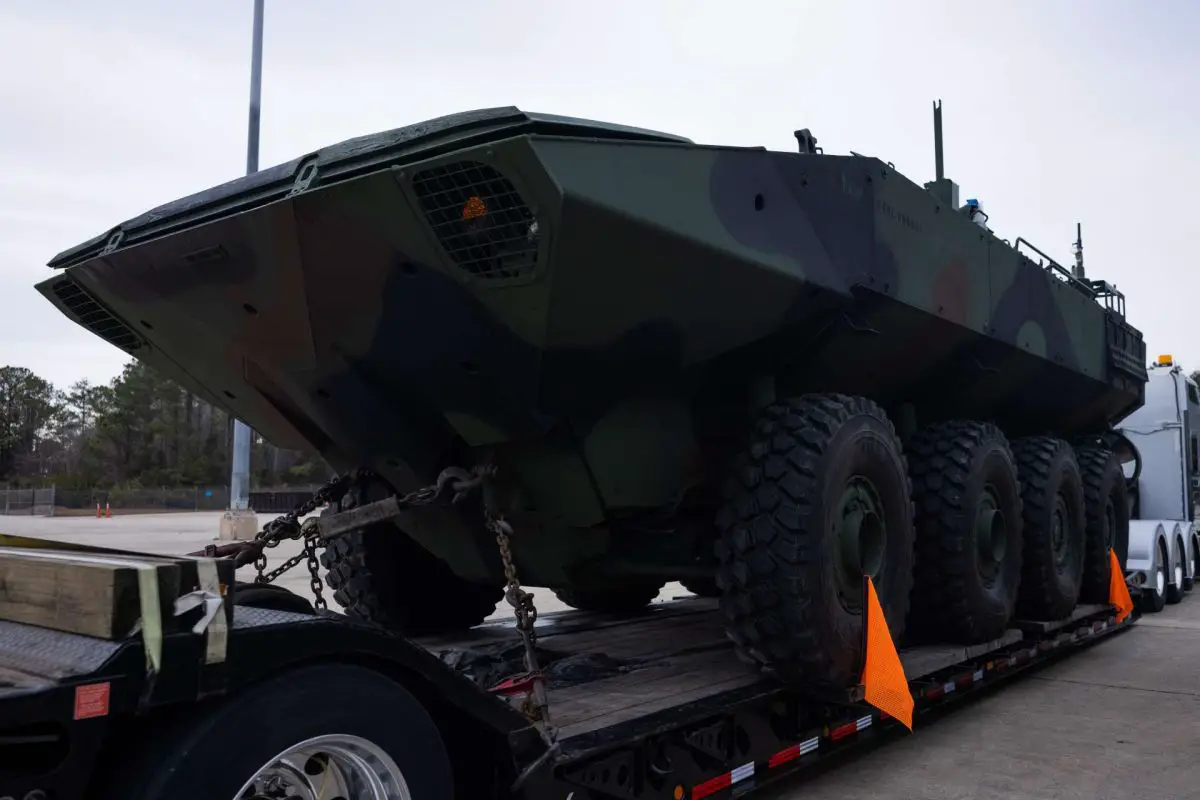
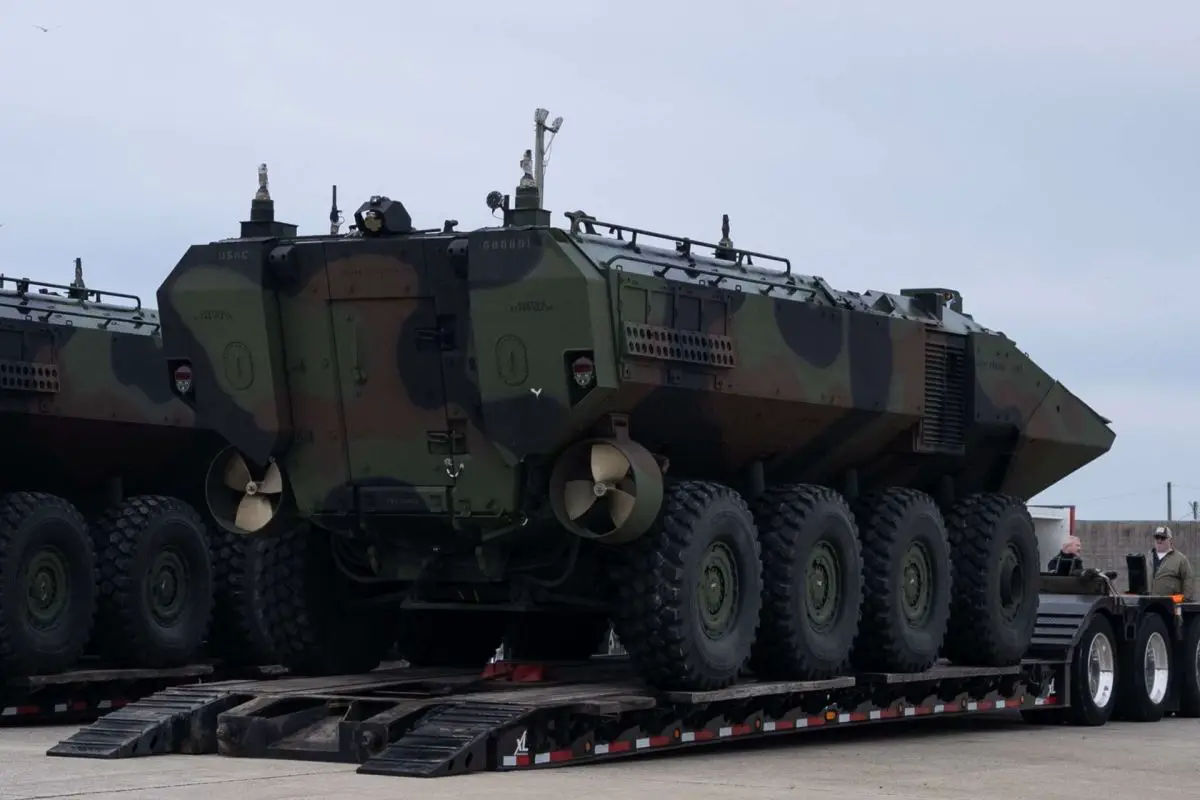
Amphibious All-Terrain Vehicles.

ACV-P Amphibious Combat Vehicle – Personnel.

ACV-P Amphibious Combat Vehicle Personnel BAE Systems United States specifications technical review data fact sheet pictures

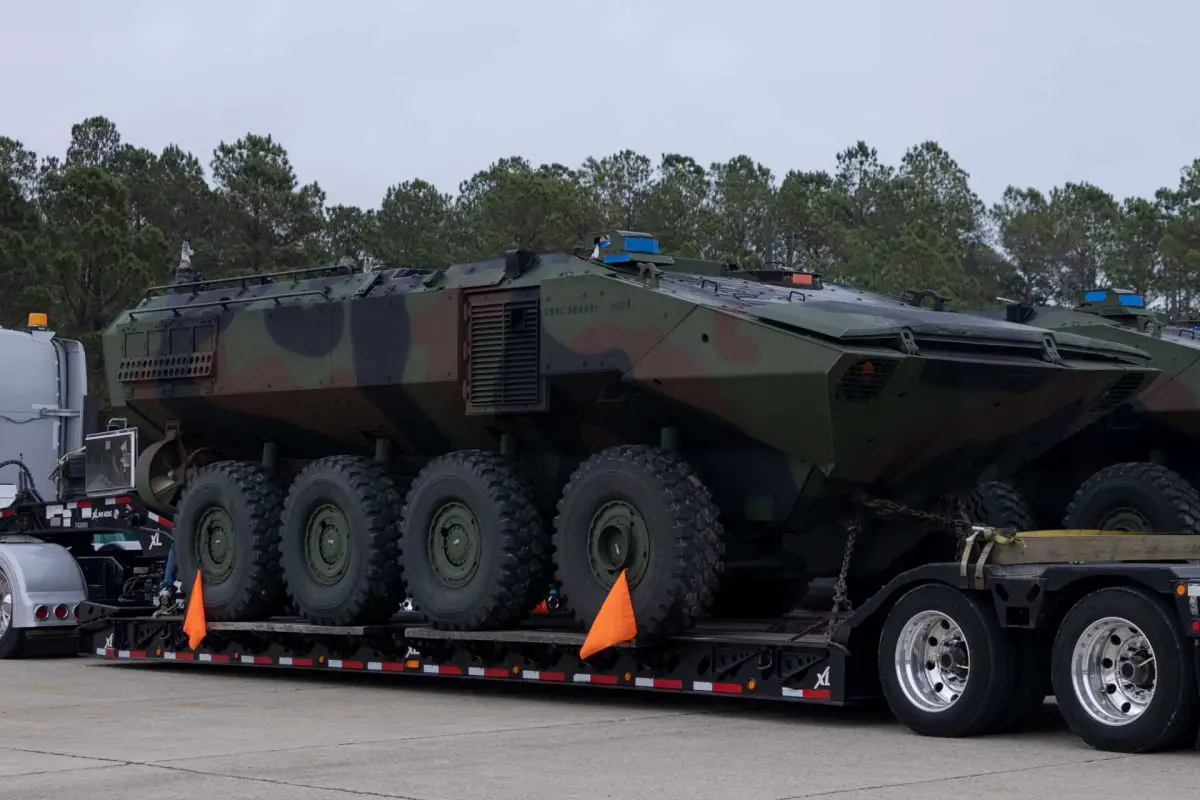
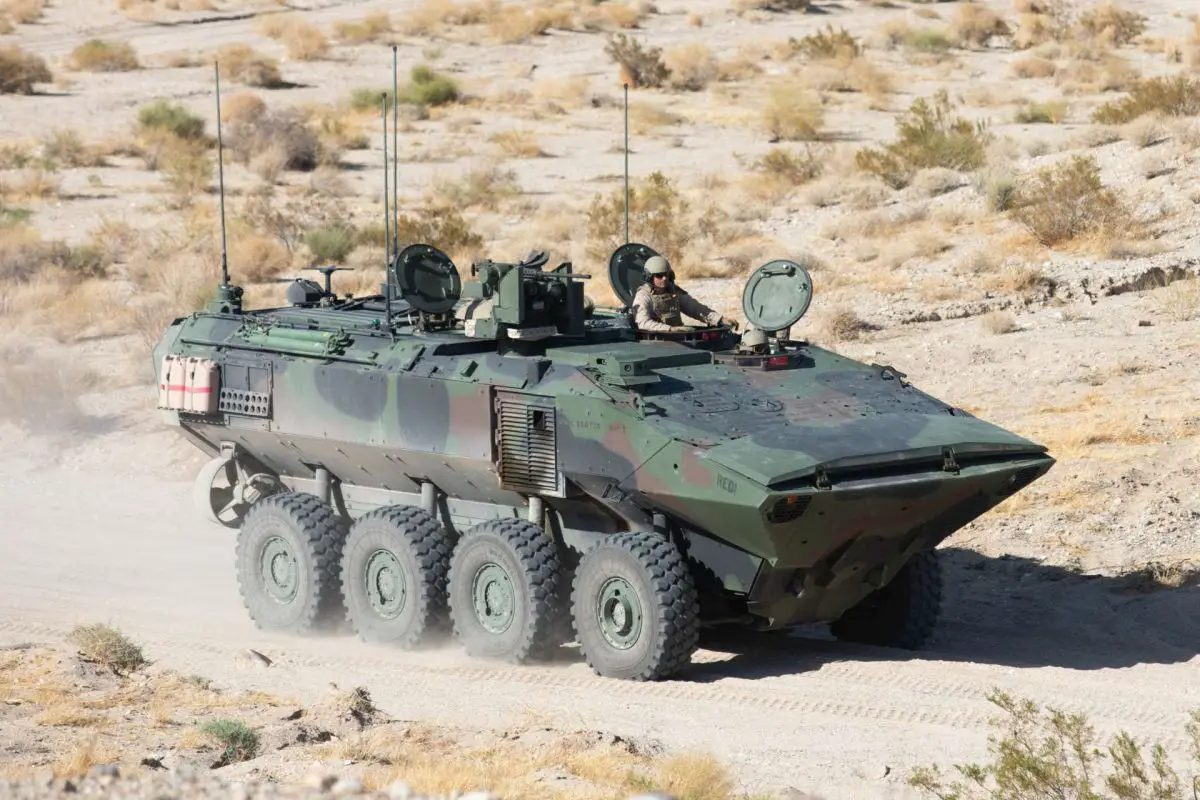
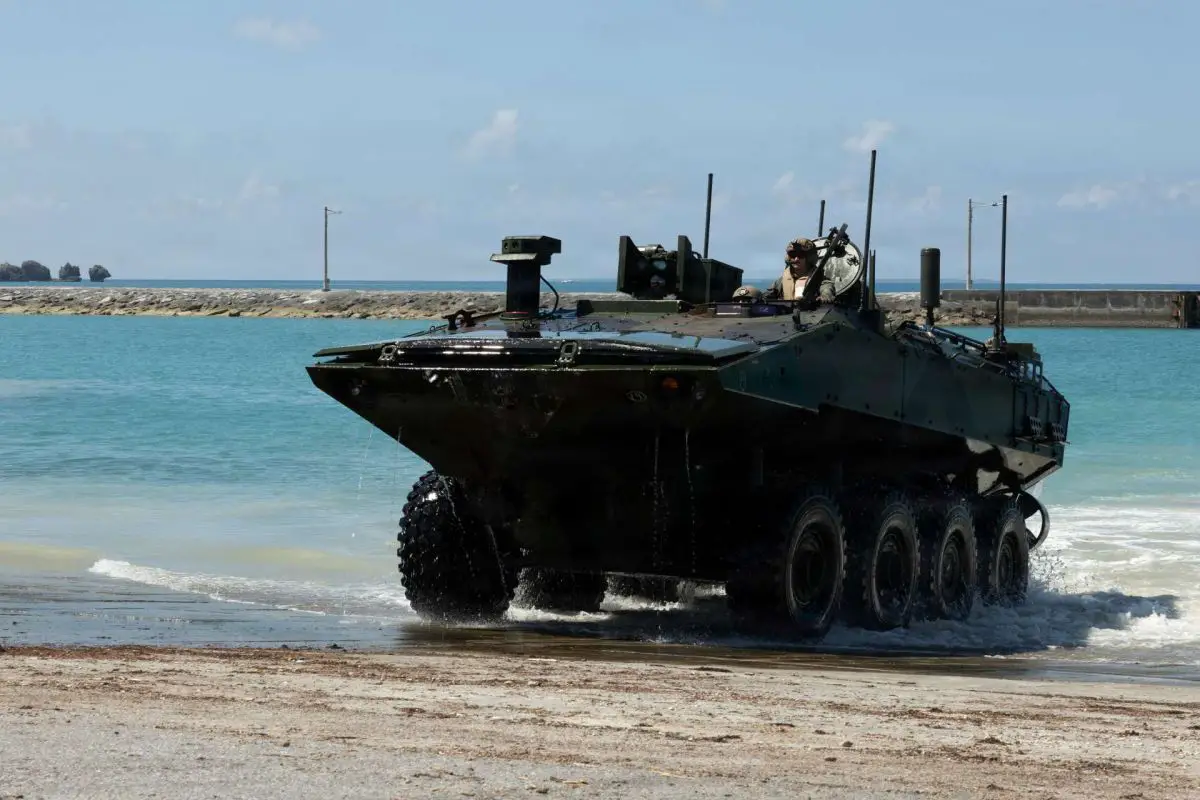
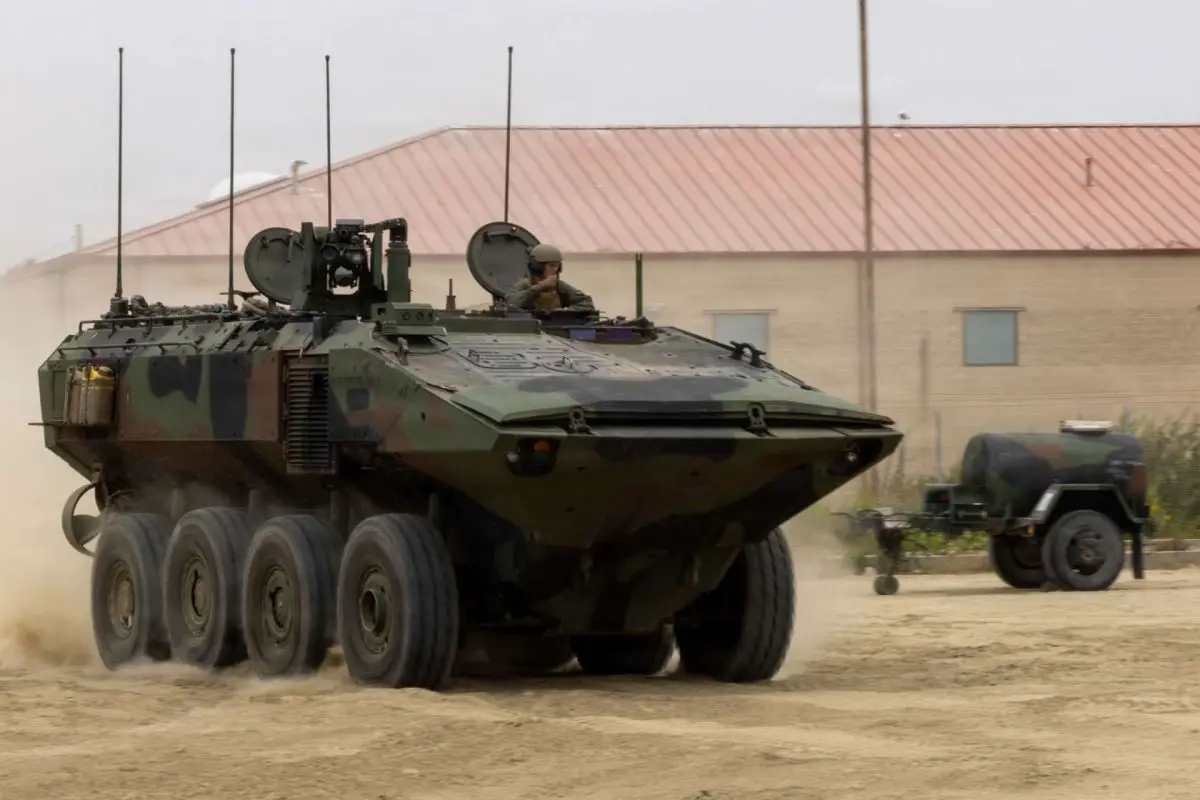
The Amphibious Combat Vehicle – Personnel (ACV-P) is the troop-carrying member of the U.S. Marine Corps’ ACV family, developed by BAE Systems in cooperation with Iveco Defence Vehicles as the successor to the AAV7A1 Assault Amphibious Vehicle. The 8×8 platform carries 13 combat-loaded Marines and a crew of three, combining open-ocean ship launch and recovery, high road mobility, blast-resistant protection, and a modular architecture intended to support future weapons, sensors, communications equipment, and specialized mission payloads.

Country users : United States — U.S. Marine Corps.

Description

The ACV-P provides the Marine infantry battalion with protected tactical mobility from amphibious shipping to the operational objective and during subsequent land maneuver. It was designed to replace the tracked AAV7A1 with a wheeled vehicle offering substantially improved road performance, crew survivability, internal capacity, and growth potential while retaining the ability to operate independently through open-ocean and surf-zone conditions. BAE Systems describes the vehicle as the primary ship-to-objective and return mobility platform for embarked Marine infantry.

The vehicle is based on an 8×8 architecture developed by BAE Systems and Iveco Defence Vehicles. Its full-time H-Drive system distributes traction across all eight wheels, supporting movement over paved roads, beaches, soft ground, broken terrain, and restricted shipboard spaces. The ACV-P can exceed 65 mph on land and 6 knots in open water, while its 44 ft curb-to-curb turning radius provides comparatively tight maneuverability for a vehicle of its size and weight.

Survivability is centered on a blast-resistant armored hull, energy-absorbing seating, protection against mines, improvised explosive devices, kinetic-energy threats, and overhead effects, together with an automatic fire-suppression system. The arrangement is intended to protect the three-person crew and 13 embarked Marines during amphibious assault, littoral maneuver, and sustained inland operations.

The ACV was engineered as a family rather than as a single-purpose carrier. Its modular design provides payload, volume, and integration margins for command systems, medium-caliber weapons, recovery equipment, reconnaissance payloads, electronic warfare systems, unmanned-aircraft integration, precision fires, air-defense functions, naval-strike capabilities, and future logistics configurations. These growth provisions allow the basic automotive platform to be adapted without creating an entirely separate vehicle fleet.

ACV-P variants:

The ACV-P forms part of the broader Amphibious Combat Vehicle family, whose members share a common 8×8 automotive platform and amphibious architecture:

  • ACV-P – Personnel: Baseline armored personnel carrier for a three-person crew and 13 combat-loaded Marines. It is the principal tactical-mobility variant for Marine infantry units.
  • ACV-C – Command: Command-and-control version fitted with multiple staff workstations, communications networks, and equipment for maintaining and managing battlefield situational awareness.
  • ACV-30 – 30 mm Cannon: Direct-fire variant equipped with a stabilized 30 mm medium-caliber cannon system, providing greater lethality while retaining troop and payload capacity.
  • ACV-R – Recovery: Armored recovery and maintenance vehicle intended to provide repair, recovery, and field-support capabilities to Assault Amphibian companies and battalions.
Back to top

Technical Data

  • Armament

    The ACV-P personnel variant is equipped with a Kongsberg M153 Common Remotely Operated Weapon Station (CROWS) mounted on the roof, allowing the crew to engage targets while remaining protected inside the vehicle. Depending on mission requirements, the remote weapon station can be armed with either a 12.7 mm M2HB heavy machine gun or a 40 mm Mk 19 Mod 3 automatic grenade launcher. The fully stabilized weapon station provides accurate fire on the move and integrates a day television camera, thermal imaging system, laser rangefinder, and automatic target tracking capability, enabling effective target engagement in day and night conditions. The ACV-P's modular electrical and structural architecture also provides the capacity to accommodate future weapon systems and mission-specific payloads as operational requirements evolve.

  • Design and protection

    The ACV-P uses a large armored 8×8 hull configured around a forward driving position, protected crew stations, and a rear troop compartment for 13 combat-loaded Marines in addition to a crew of three. Its survivability package includes a blast-resistant hull, energy-absorbing seats, protection against mines, improvised explosive devices (IEDs), kinetic-energy threats, and overhead blast effects, as well as an automatic fire-suppression system. The vehicle has a gross weight of approximately 35 U.S. short tons (about 32 metric tonnes) and can carry a payload of up to 7,280 lb (3,302 kg).

  • Mobility

    The ACV-P is powered by an Iveco H-Drive permanent all-wheel-drive system that provides traction to all eight wheels. It exceeds 65 mph (105 km/h) on roads and reaches speeds of more than 6 knots (11 km/h) in open water. Maximum quoted road range is 325 miles (523 km) when traveling at 55 mph (89 km/h), while its amphibious operational profile allows missions of up to 12 nautical miles at sea followed by more than 250 miles (402 km) on land. The vehicle can negotiate gradients exceeding 60%, side slopes greater than 30%, operate in Sea State 3 conditions, and traverse plunging surf of up to 9 ft (2.7 m), providing true over-the-horizon ship-to-shore capability.

  • Combat Equipment

    The ACV-P incorporates a modular open electronic architecture designed to support modern battlefield networking and future capability growth. The vehicle can integrate secure communications systems, digital command-and-control equipment, GPS-based navigation, battle management systems, and 360-degree situational-awareness sensors. Its scalable architecture also allows the future integration of reconnaissance payloads, electronic warfare systems, counter-unmanned aircraft technologies, precision-fire applications, air-defense equipment, autonomous systems, and additional mission-specific electronic packages. The precise communications suite, battle-management software, and sensor configuration may vary according to operational unit, production batch, and modernization standard.

Back to top

Specifications

  • Armament

    Remotely operated defensive weapon installation; exact weapon-station model and standard ammunition configuration are not specified in the supplied manufacturer documentation.

  • Country users

    United States — U.S. Marine Corps

  • Designer Country

    United States and Italy — BAE Systems in cooperation with Iveco Defence Vehicles.

  • Combat Equipment

    Modular electronic architecture with provisions for tactical communications, command-and-control systems, navigation, situational-awareness equipment, future weapon systems, reconnaissance payloads, electronic warfare equipment, and unmanned-system integration.

  • Crew

    Three crew members.

  • Armor

    Blast-resistant armored hull with energy-absorbing seating, mine and IED protection, kinetic-energy protection, overhead protection, and automatic fire suppression.

  • Weight

    Gross vehicle weight: approximately 35 U.S. short tons, or 32 metric tonnes.
    Maximum payload: up to 7,280 lb, or 3,302 kg.

  • Speed

    Paved road: more than 65 mph, or 105 km/h.
    Open ocean: more than 6 knots.

  • Range

    Road range: up to 325 miles, or 523 km, at 55 mph.
    Combined sea-and-land profile: up to 12 nautical miles at sea followed by more than 250 miles on land.

  • Troop Capacity

    13 combat-loaded Marines; total onboard capacity of 16 personnel including crew.

  • Dimensions

    Length: 361 in, or 9.2 m.
    Width: 124 in, or 3.1 m.
    Hull height: 114 in, or 2.9 m.
    Turning radius: 44 ft curb-to-curb.

Back to top

Details View

ACV-P Amphibious Combat Vehicle Personnel BAE Systems United States specifications technical review data fact sheet pictures
Back to top

Photo Gallery

Back to top
Copyright © 2019 - 2024 Army Recognition | Webdesign by Zzam