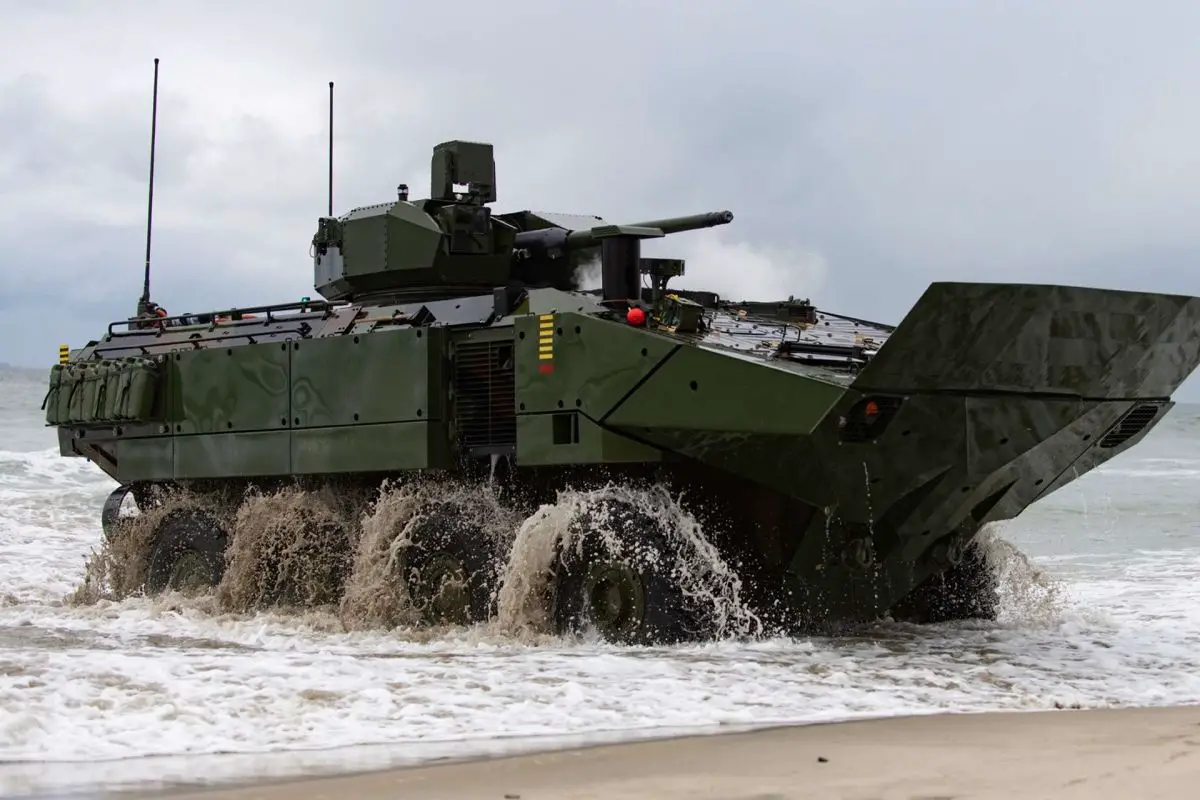
Amphibious All-Terrain Vehicles.
ACV-30 Amphibious Combat Vehicle – 30 mm Cannon.

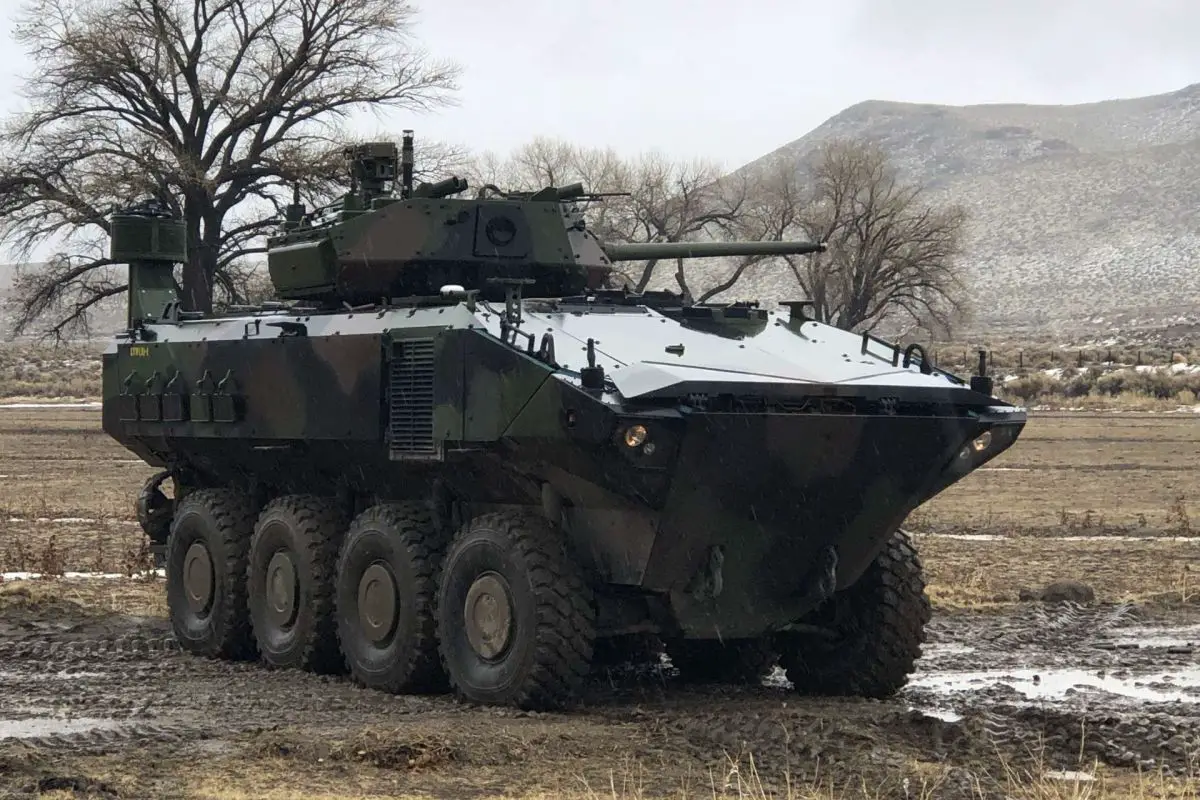
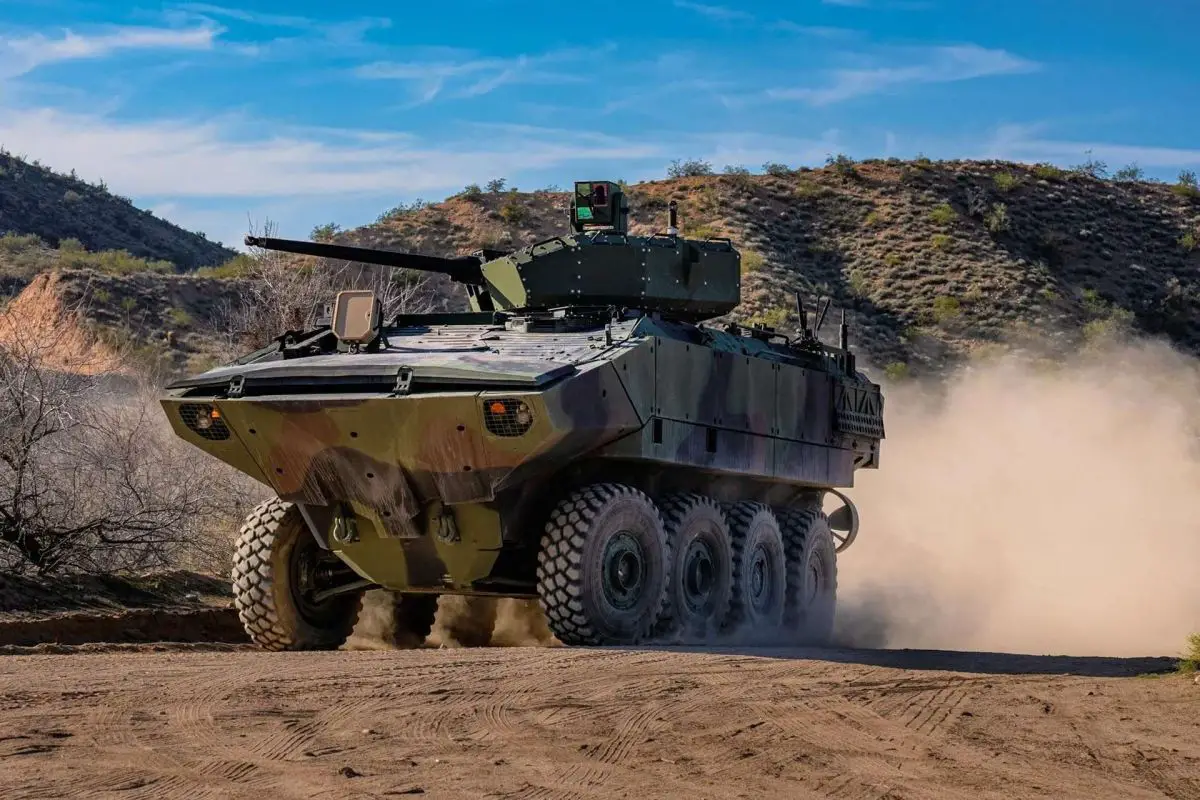
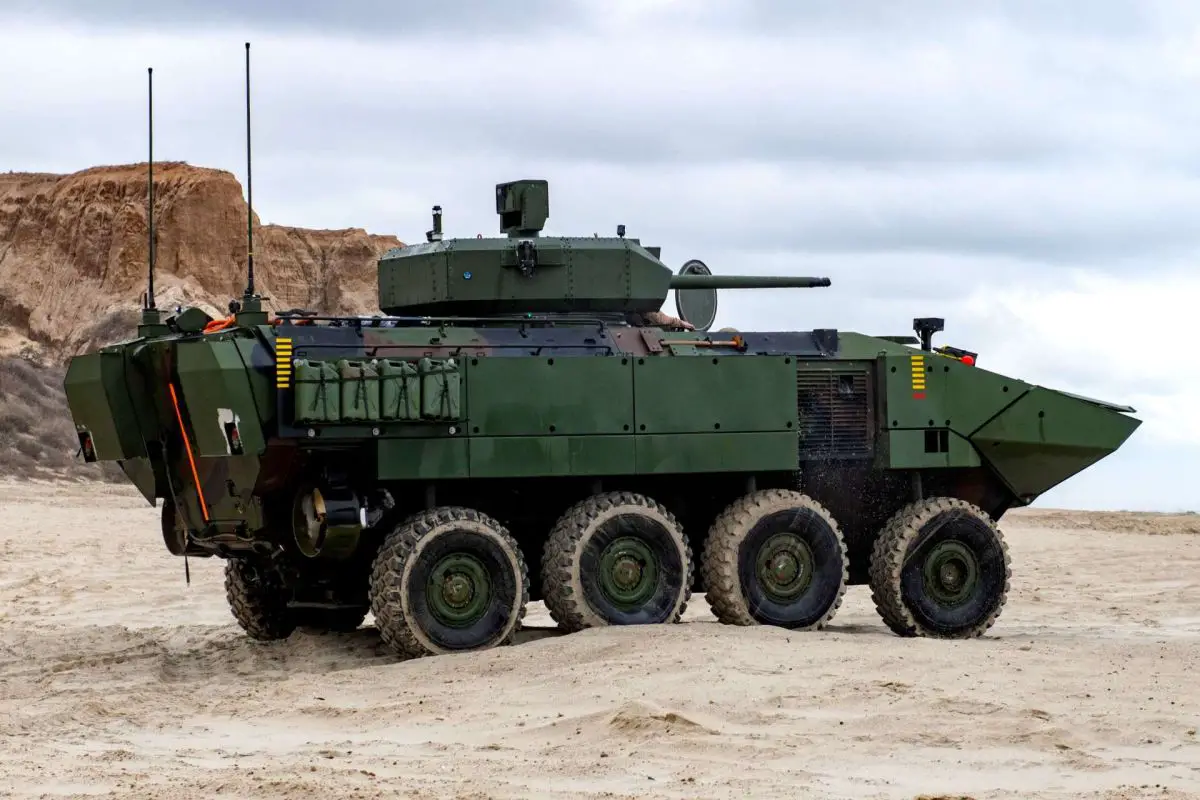
The Amphibious Combat Vehicle – 30 mm Cannon (ACV-30) is the medium-caliber fire-support variant of the U.S. Marine Corps Amphibious Combat Vehicle family. Developed by BAE Systems and Iveco Defence Vehicles as an engineering change to the ACV-P, the vehicle retains the common 8×8 ACV powertrain, drivetrain, amphibious propulsion, communications, navigation and survivability architecture while incorporating a modified upper hull and a Kongsberg RT20 remotely operated turret.
The RT20 installation is centered on the Northrop Grumman XM813 30×173 mm chain gun, backed by a coaxial 7.62 mm machine gun, independent commander and gunner electro-optical sights, digital fire control and two-axis stabilization. The ACV-30 carries a crew of three and up to eight embarked Marines, with ammunition stowage for up to 300 cannon rounds and 800 machine-gun rounds. Its primary role is to provide protected medium-caliber direct fire in support of dismounted Marine infantry while retaining the ship-to-shore mobility and fleet commonality of the ACV family.
Country users : United States — U.S. Marine Corps.

Description
The ACV-30 is the direct-fire and infantry-support member of the U.S. Marine Corps Amphibious Combat Vehicle family. It was developed as an engineering change proposal to the ACV-P, rather than as a separate vehicle design, allowing the Marine Corps to introduce medium-caliber lethality without creating a new automotive or amphibious support chain. The vehicle therefore retains the ACV-P’s common powertrain, drivetrain, water-propulsion system, navigation and communications equipment, and survivability architecture.
The principal change is concentrated in the upper hull and fighting system. The ACV-30 uses a Kongsberg Defence & Aerospace RT20 remotely operated turret, mounted above a modified ACV hull structure and configured around a stabilized, dual-feed 30 mm cannon system. The turret is unmanned in the conventional sense: the commander and gunner remain below the roofline and control the weapon through digital crew stations, electro-optical sights and fire-control interfaces. The main armament is the Northrop Grumman XM813 Bushmaster-family chain gun, chambered for 30×173 mm NATO-standard ammunition. The XM813 is an externally powered weapon derived from the Mk 44 Bushmaster II architecture and optimized for vehicle integration, high first-round hit probability and rapid switching between ammunition natures. Its dual-feed arrangement allows two ammunition types to remain available to the gun simultaneously, permitting the crew to transition between anti-armor and high-explosive effects without manually reconfiguring the feed system.
The cannon is supported by a coaxial medium machine gun for use against exposed personnel, soft-skinned vehicles and other targets not requiring 30 mm ammunition. The ACV-30 carries up to 300 rounds for the main cannon and up to 800 rounds for the coaxial machine gun, figures confirmed in U.S. operational-test documentation. The fire-control architecture is one of the most important differences between ACV-30 and the personnel variant. Both the vehicle commander and gunner have independent thermal and visible-light sighting systems, allowing separate observation sectors and reducing dependence on a single shared sight head. The driver is also provided with an enhanced vision system. This arrangement supports rapid target acquisition, target hand-off and engagement in daylight, darkness and degraded visibility.
The turret is fully stabilized, allowing the sight line and weapon axis to remain controlled during vehicle movement. Combined with laser ranging, digital ballistic computation and powered traverse and elevation, the system is designed to deliver accurate fire while accompanying maneuvering Marine formations rather than operating only from static firing positions. Internally, the ACV-30 is configured for a three-Marine crew consisting of driver, gunner and vehicle commander. Behind and around the turret-related equipment, the vehicle retains seating for up to eight embarked Marines. The Marine Corps specifically defines the variant as supporting dismounted maneuver while still carrying infantry, distinguishing it from a pure fire-support carrier.
The eight-man embarked capacity is lower than the ACV-P’s 13 Marines because the turret installation, ammunition racks, electronics and associated structural modifications occupy part of the personnel and payload volume. Even with this reduction, the vehicle remains a combined troop-and-fire-support platform rather than a dedicated gun vehicle. The ACV-30 also carries two days of supply, including food, water and ammunition. This is an important operational requirement because the vehicle is intended to continue supporting Marine formations after the initial ship-to-shore movement rather than functioning only during the amphibious approach.
Its tactical role is explicitly centered on infantry support. U.S. Marine Corps and DOT&E descriptions state that the medium-caliber weapon system is optimized to support dismounted maneuver while providing sufficient lethality to defeat hostile vehicles, including armored targets. Within an ACV-equipped Assault Amphibian company, the ACV-30 is planned at a density of six vehicles per company. This gives the company an organic medium-caliber direct-fire component that can maneuver through the same amphibious and terrestrial environments as its personnel and command variants.
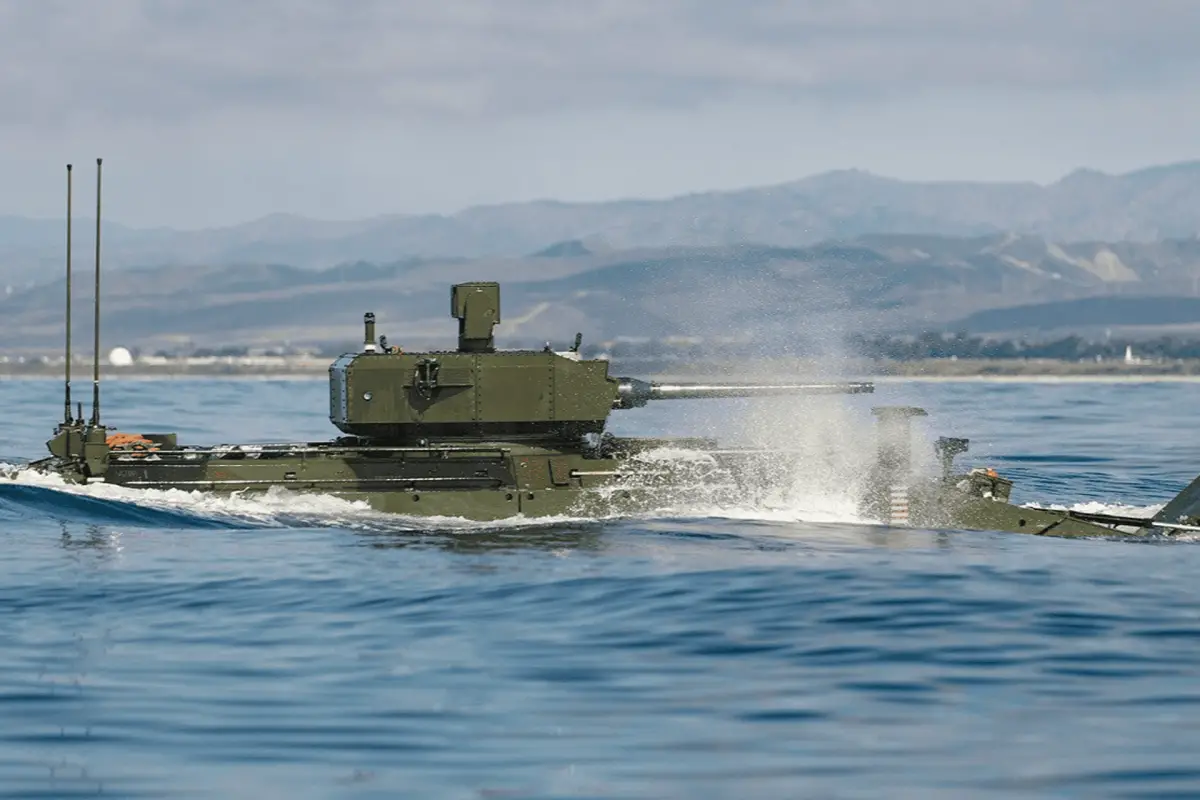
The common ACV chassis remains central to the design. Its 8×8 configuration uses the Iveco-derived H-Drive architecture, distributing propulsion through the wheel stations while preserving high ground clearance and internal protection volume. The platform is designed for road movement, soft ground, beach exits, cross-country maneuver and transition through surf zones. The vehicle retains the ACV family’s amphibious propulsion and ship-to-shore capability. Marine Corps program material identifies 12 nautical miles ship-to-shore as a program capability, allowing ACV formations to launch from amphibious shipping beyond the immediate littoral and proceed directly to inland objectives.
The ACV family was also conceived with substantial electronic and payload growth margin. BAE Systems identifies future integration areas including reconnaissance systems, electronic warfare, air-defense functions, precision fires, naval strike, logistics applications and unmanned-aircraft-system integration. These provisions are part of the broader platform architecture rather than baseline ACV-30 equipment. The ACV-30 completed live-fire testing in December 2024 and operational testing in May 2025. DOT&E reported that the completed operational, live-fire and cyber test program was adequate to support assessment of operational effectiveness, suitability and survivability. Production contracting followed in 2025, with the base-vehicle production contract awarded in March and the turret production contract in August.
ACV-30 variants:
The Amphibious Combat Vehicle family consists of four principal production variants based on the common ACV automotive and amphibious architecture.
- ACV-P – Personnel: Baseline troop-carrying variant configured for a crew of three and up to 13 embarked Marines. It provides ship-to-shore and inland tactical mobility and normally employs a remotely operated weapon station capable of mounting a .50-caliber machine gun or Mk 19 automatic grenade launcher.
- ACV-C – Command: Command-and-control variant fitted with additional battle-staff workstations, communications networks and command systems. It serves as a mobile combat-operations-center platform for mechanized Marine formations.
- ACV-30 – 30 mm Cannon: Direct-fire variant fitted with the Kongsberg RT20 remotely operated turret and XM813 30×173 mm cannon. It carries a three-man crew and up to eight embarked Marines and is optimized for infantry support and engagement of hostile vehicles.
- ACV-R – Recovery: Armored maintenance and recovery variant equipped to recover similar or smaller vehicles and provide field-support maintenance while retaining the ACV family’s amphibious mobility.
Technical Data
-
Armament and Turret System
The ACV-30 is equipped with the Kongsberg RT20 remotely operated turret, a low-profile medium-caliber weapon station designed to preserve internal troop volume while keeping the commander and gunner below armor. Its principal armament is the XM813 30 mm chain gun, chambered for 30×173 mm ammunition and operating through the externally powered Bushmaster chain-drive mechanism, which provides controlled cycling, high reliability, and consistent performance across a broad firing envelope.
The cannon is fed by a dual-feed ammunition system, allowing two ammunition types to remain immediately available for selection according to the target. The ACV-30 carries up to 300 rounds of 30 mm ammunition and up to 800 rounds for the coaxial machine gun. The 30×173 mm ammunition family includes armor-piercing and high-explosive projectile types, while the XM813 architecture can also accommodate advanced programmable ammunition subject to Marine Corps qualification and mission requirements. A coaxial 7.62 mm medium machine gun provides secondary firepower against personnel, unarmored vehicles, and close-range targets.
The RT20 turret is fully stabilized in azimuth and elevation and integrates digital fire-control equipment, laser ranging, and independent electro-optical sighting systems for the commander and gunner. This configuration supports accurate target engagement while the vehicle is moving and allows both operators to conduct surveillance, target acquisition, and weapon employment entirely from protected positions inside the armored hull.
-
Hull, Crew Arrangement and Survivability
The ACV-30 retains the common ACV 8×8 armored hull while incorporating a modified upper structure to accommodate the Kongsberg RT20 turret, ammunition-handling equipment, and associated electronics. It preserves the ACV-P’s core powertrain, drivetrain, water-propulsion system, navigation and communications architecture, and survivability features, maintaining a high degree of commonality across the vehicle family. The standard crew consists of a driver, gunner, and vehicle commander, while up to eight embarked Marines can be carried, giving a maximum onboard complement of 11 personnel.
Protection is based on the ACV family’s blast-resistant hull, energy-attenuating seating, mine and IED protection, ballistic and fragmentation resistance, and automatic fire-suppression systems. The remotely operated turret enhances crew survivability by allowing the commander and gunner to remain inside the protected hull rather than occupying a conventional manned turret basket. The vehicle also carries two days of supplies, including food, water, and ammunition, supporting sustained operations beyond the initial ship-to-shore assault phase.
-
Mobility and Amphibious Performance
The ACV-30 retains the same core automotive and amphibious mobility architecture as the ACV-P, using an 8×8 H-Drive configuration derived from Iveco Defence Vehicles’ SuperAV design lineage. Power is distributed across all eight wheel stations to maintain traction on paved roads, beaches, soft ground, and broken cross-country terrain. The vehicle is powered by a high-output diesel engine in the approximately 690 hp class, providing the reserve needed for a combat mass above 30 tonnes, amphibious propulsion, and the added weight of the medium-caliber turret. Maximum road speed exceeds 65 mph (105 km/h), while water speed is more than 6 knots (11 km/h). Road range is approximately 325 miles (523 km), and the platform supports ship-to-shore movement from 12 nautical miles.
The mobility system is designed for the full amphibious assault profile, including steep beach exits, loose sand, uneven terrain, and repeated transition between water and land. The ACV family is engineered for operation in Sea State 3 conditions and for negotiating demanding surf zones while preserving the high road speed, endurance, and cross-country mobility expected from a modern wheeled combat vehicle.
-
Fire Control, Sensors and Combat Equipment
The ACV-30 employs independent observation systems for the commander and gunner, allowing both crew members to conduct surveillance and target acquisition without relying on a shared sighting channel. Each position is equipped with dedicated thermal and visible-light optics, while the driver uses an enhanced vision system to support vehicle operation in darkness, degraded visibility, and complex terrain. This arrangement improves situational awareness and enables rapid target hand-off between commander and gunner.
The turret fire-control system combines a stabilized line of sight, laser rangefinder, digital ballistic computer, weapon stabilization, ammunition selection, powered traverse and elevation, and firing-on-the-move capability. These functions are integrated with the common ACV electronic architecture, which also supports tactical communications, digital navigation, crew intercom, vehicle diagnostics, and command-and-control connectivity.
The Marine Corps modernization roadmap identifies additional growth areas for the ACV family, including autonomous target tracking, improved sensing and threat awareness, target prioritization, enhanced water-mode maneuverability, advanced driver aids, counter-UAS protection, and improved overhead protection. These capabilities represent planned modernization objectives and should not be interpreted as standard equipment on current baseline ACV-30 vehicles.
Specifications
-
Armament
XM813 30 mm chain gun (30×173 mm), dual-feed, 300 rounds; coaxial 7.62 mm machine gun, 800 rounds; Kongsberg RT20 remotely operated, fully stabilized turret.
-
Country users
United States — U.S. Marine Corps.

-
Designer Country
United States
-
Combat Equipment
Kongsberg RT20 remote turret; XM813 30 mm dual-feed cannon; coaxial medium machine gun; independent commander thermal/visible sight; independent gunner thermal/visible sight; driver's enhanced vision system; digital fire-control system; laser rangefinder; weapon stabilization; tactical communications; navigation system; crew intercom; vehicle diagnostics and digital command-and-control interfaces.
-
Crew
3 + 11
-
Armor
The ACV-30 uses a blast-resistant armored hull with energy-attenuating seating, mine and IED protection, ballistic and fragmentation protection, and automatic fire-suppression systems.
-
Weight
Combat-weight class: approximately 32 metric tonnes / 35 U.S. short tons.
-
Speed
Road: more than 65 mph / 105 km/h.
Water: more than 6 knots / 11 km/h. -
Range
Ship-to-shore: 12 nautical miles.
Road-range reference: approximately 325 miles / 523 km. -
Dimensions
Length: 9.2 m; width: 3.1 m; hull height: 2.9 m; turning circle: 13.4 m; overall height greater due to RT20 turret and electro-optical sighting system.