



Air - Air Force in the world
-
Exclusive Report: UK Operation CHESSMAN reinforces NATO air security amid regular Russian aircraft intercepts Baltic Sea
 {loadposition bannertop}{loadposition sidebarpub}
An exclusive report by Army Recognition, published on July 22, 2025, reveals in-depth details about Operation CHESSMAN, a high-impact trilateral air policing deployment that began in May 2024 and is currently led by the United Kingdom from the 22nd Tactical Air Base in Malbork, Poland. This ongoing NATO mission plays a frontline role in defending allied airspace over Eastern Europe, ensuring persistent vigilance and immediate intercept capability against unidentified or aggressive military aircraft approaching NATO borders.
Follow Army Recognition on Google News at this linkA British RAF Royal Air Force Eurofighter Typhoon FGR4 fighter jet from II(AC) Squadron takes off at 22nd Tactical Air Base in Malbork during its deployment for UK Operation CHESSMAN. (Picture source: UK MoD)
Developed in direct response to escalating Russian air activity in the Baltic region, Operation CHESSMAN integrates real-time air surveillance, multinational interoperability, and combat-ready air assets from the Royal Air Force, Swedish Air Force, and Polish Air Force under one coordinated operational structure. This mission serves as a visible deterrent and a tactical assurance to member nations at NATO’s most exposed frontier.
The air policing component of Operation CHESSMAN is built upon the integration of three frontline fighter platforms from the participating nations. The United Kingdom leads the air component with Eurofighter Typhoon FGR4 aircraft from II(AC) Squadron, supported by the full operational infrastructure of 140 Expeditionary Air Wing. Sweden, for the first time since joining NATO in 2024, contributes its JAS 39 Gripen C/D fighters, marking a major step in its transformation from a neutral defense actor to a fully interoperable NATO contributor. Poland, as the host nation and key regional air power, deploys its upgraded MiG-29 Fulcrum fighters from its national air defense inventory. Each nation provides not only aircraft but also logistical teams, maintenance crews, command elements, and intelligence staff, creating a cohesive multinational force capable of sustaining continuous Quick Reaction Alert (QRA) readiness in one of NATO’s most contested air corridors.
The British RAF’s (Royal Air Force) Eurofighter Typhoon FGR4 is the most advanced air superiority fighter in the UK inventory. Designed for high-tempo air defense operations, the Typhoon is equipped with the Captor-M radar, PIRATE infrared search and track sensor, and a powerful electronic warfare suite for threat detection and countermeasures. The aircraft routinely operates armed with a combination of AIM-132 ASRAAM and AIM-120 AMRAAM air-to-air missiles, enabling both close and beyond-visual-range engagement. The FGR4 variant also includes enhanced navigation and targeting software and is fully compatible with NATO’s Link 16 system for real-time data sharing and tactical coordination. The Typhoon’s twin-engine configuration and high thrust-to-weight ratio allow it to scramble and intercept unknown aircraft within minutes, a critical capability under the QRA mandate of Operation CHESSMAN.
Sweden’s JAS 39 Gripen C and D variants bring a modern, flexible combat solution to NATO’s air policing efforts. With advanced avionics, fly-by-wire controls, and a digital backbone optimized for network warfare, the Gripen is well-suited for joint missions requiring seamless communications and rapid reaction. Its PS-05/A radar enables simultaneous tracking and engagement of multiple airborne threats, while its electronic countermeasure systems provide strong self-defense in contested environments. Gripens are armed with IRIS-T short-range infrared missiles and AIM-120 AMRAAMs, giving Swedish pilots the tools needed for precision intercepts and deterrent posturing. The aircraft’s compact design and low maintenance requirements make it a highly efficient platform for long-term rotational deployments under NATO command.
Poland’s MiG-29 Fulcrum, while a legacy Soviet platform, continues to offer fast intercept and close-combat capabilities after undergoing critical modernization programs. Polish MiG-29s have received NATO-standard radios, IFF transponders, and digital cockpit upgrades that allow full integration into allied air operations. Despite its age, the MiG-29 retains excellent speed, high maneuverability, and reliable radar systems suited for point-defense roles. Typically armed with R-73 infrared-guided and R-27 radar-guided missiles, the MiG-29 serves as a vital asset in Poland’s air defense layer. Its operational role in Operation CHESSMAN complements the longer-range engagement profiles of the Typhoon and Gripen, creating a tiered response structure to any threat that approaches Polish or Baltic airspace.
The strategic importance of Operation CHESSMAN extends far beyond standard air policing. It is a symbol of NATO’s readiness to project airpower along its eastern perimeter and a demonstration of operational cohesion among three nations with distinct air doctrines. The mission ensures uninterrupted airspace control, bolsters regional defense cooperation, and serves as a training ground for allied air forces to operate jointly in a high-pressure operational theater. In recent weeks, Operation CHESSMAN has already proven its value, with RAF Typhoons and Swedish Gripens intercepting multiple Russian aircraft approaching NATO airspace over the Baltic Sea. These included long-range bombers such as the Tu-95 and Tu-22M, as well as Su-27 fighters, all of which were flying without flight plans or transponder signals, violating international norms of safe aerial conduct.
These repeated incidents confirm the need for a robust and integrated air policing posture on NATO’s eastern flank. Operation CHESSMAN ensures that NATO maintains immediate situational awareness and credible deterrence in the air domain. It is not only a military operation but a strategic message that allied skies remain protected by a coalition of capable, modern, and unified air forces. Army Recognition will continue to provide exclusive frontline coverage of this mission and the evolving dynamics of NATO’s air defense strategy in Eastern Europe.
-
Russia has deployed two air divisions in the Kaliningrad region and Crimea

The Russian Defense Ministry is deploying two air divisions in the Kaliningrad region and Crimea. Their formations will be completed in late 2019. All combat aircraft in the territories will be integrated into a single contour.
-
Russia has deployed two air divisions in the Kaliningrad region and Crimea
The Russian Defense Ministry is deploying two air divisions in the Kaliningrad region and Crimea. Their formations will be completed in late 2019. All combat aircraft in the territories will be integrated into a single contour. -
Air Recognition's Top Stories of 2017
Air Recognition's Top Stories of 2017 As 2017 came to an end, here is an overview of the top ten defense aerospace stories we published last year, based on the number of readers for each story. As you can see, fighter jets purchase and upgrade programs and future airborne platforms drew a lot of interest among Air Recognition readers.
 -
Air Recognition's Top Stories of 2017
Air Recognition's Top Stories of 2017 As 2017 came to an end, here is an overview of the top ten defense aerospace stories we published last year, based on the number of readers for each story. As you can see, fighter jets purchase and upgrade programs and future airborne platforms drew a lot of interest among Air Recognition readers. -
Air Recognition's Top Stories of 2017
Air Recognition's Top Stories of 2017 As 2017 came to an end, here is an overview of the top ten defense aerospace stories we published last year, based on the number of readers for each story. As you can see, fighter jets purchase and upgrade programs and future airborne platforms drew a lot of interest among Air Recognition readers. -
Russian Helicopters promotes full range of rotary-wing platforms for foreign market - Part 1
Russian Helicopters promotes full range of rotary-wing platforms for foreign market - Part 1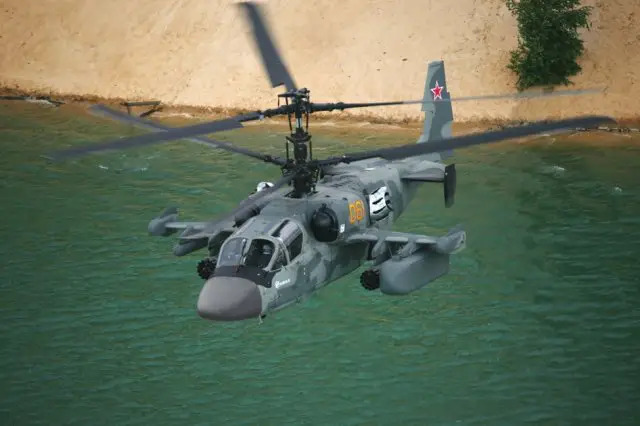 Helicopters are often named the workhorses of modern war. They transport troops and various cargoes, evacuate wounded personnel, conduct air support and reconnaissance, etc. Russia`s Rosoboronexport company (a subsidiary of the Rostec state corporation) offers a wide range of modern helicopters that meet the strictest requirements to this type of military hardware.
 -
Russian Helicopters promotes full range of rotary-wing platforms for foreign market - Part 1
Russian Helicopters promotes full range of rotary-wing platforms for foreign market - Part 1 Helicopters are often named the workhorses of modern war. They transport troops and various cargoes, evacuate wounded personnel, conduct air support and reconnaissance, etc. Russia`s Rosoboronexport company (a subsidiary of the Rostec state corporation) offers a wide range of modern helicopters that meet the strictest requirements to this type of military hardware. -
Air Recognition's Top Stories of 2016
Air Recognition's Top Stories of 2016 As 2016 comes to an end, here is an overview of the top ten defense aerospace stories we published this year, based on the number of readers for each story. As you can see, the use of combat helicopters in the war against terrorism and the maiden flight of Japan's X-2 demonstrator drew a lot of interest among Air Recognition readers. Some Russian and US advanced research programs were other topics that drew a lot of attention.
 -
Air Recognition's Top Stories of 2016
Air Recognition's Top Stories of 2016 As 2016 comes to an end, here is an overview of the top ten defense aerospace stories we published this year, based on the number of readers for each story. As you can see, the use of combat helicopters in the war against terrorism and the maiden flight of Japan's X-2 demonstrator drew a lot of interest among Air Recognition readers. Some Russian and US advanced research programs were other topics that drew a lot of attention. -
Air Recognition's Top Stories of 2016
Air Recognition's Top Stories of 2016 As 2016 comes to an end, here is an overview of the top ten defense aerospace stories we published this year, based on the number of readers for each story. As you can see, the use of combat helicopters in the war against terrorism and the maiden flight of Japan's X-2 demonstrator drew a lot of interest among Air Recognition readers. Some Russian and US advanced research programs were other topics that drew a lot of attention. -
French Air Force pilots get a feel of the C-130J airlifter at Ramstein air base
French Air Force pilots get a feel of the C-130J airlifter at Ramstein air base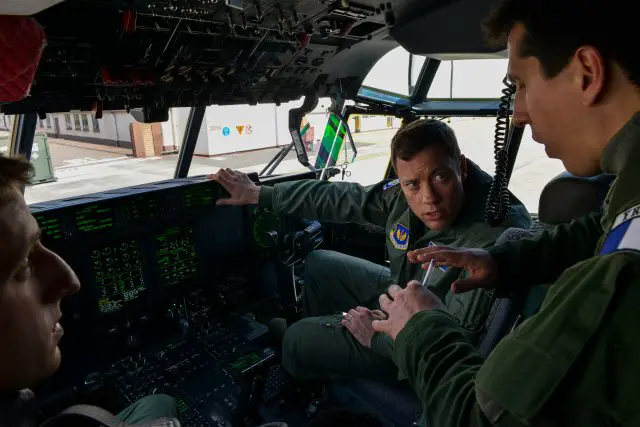 Representatives of the French Air Force visited with US Air Force airmen at the 37th Airlift Squadron, Ramstein air base, for a presentation on aircraft features and capabilities after recently purchasing several of their own C-130J Super Hercules and KC-130 Hercules, April 28.
 -
French Air Force pilots get a feel of the C-130J airlifter at Ramstein air base
French Air Force pilots get a feel of the C-130J airlifter at Ramstein air base Representatives of the French Air Force visited with US Air Force airmen at the 37th Airlift Squadron, Ramstein air base, for a presentation on aircraft features and capabilities after recently purchasing several of their own C-130J Super Hercules and KC-130 Hercules, April 28. -
French Air Force pilots get a feel of the C-130J airlifter at Ramstein air base
French Air Force pilots get a feel of the C-130J airlifter at Ramstein air base Representatives of the French Air Force visited with US Air Force airmen at the 37th Airlift Squadron, Ramstein air base, for a presentation on aircraft features and capabilities after recently purchasing several of their own C-130J Super Hercules and KC-130 Hercules, April 28. -
USAF's venerable KC-135 tanker supports KC-46A Pegasus testing program
USAF's venerable KC-135 tanker supports KC-46A Pegasus testing program Sixty-year-old KC-135 Stratotanker aerial refuelling aircraft from McConnell Air Force Base recently supported the new KC-46A Pegasus testing and evaluation missions in Washington, the US Air Force recently said on its website.
 -
USAF's venerable KC-135 tanker supports KC-46A Pegasus testing program
USAF's venerable KC-135 tanker supports KC-46A Pegasus testing program Sixty-year-old KC-135 Stratotanker aerial refuelling aircraft from McConnell Air Force Base recently supported the new KC-46A Pegasus testing and evaluation missions in Washington, the US Air Force recently said on its website.