






Breaking News






Germany unveils CA-1 “Europa” drone as NATO’s next-gen unmanned combat aircraft.
Germany has unveiled the CA-1 “Europa,” a next-generation unmanned combat drone developed with Helsing and Grob Aircraft. The system is designed to boost NATO airpower while reducing risks to pilots in contested battle zones.
German defense firm Helsing, in partnership with Grob Aircraft, revealed the CA-1 “Europa” unmanned combat aerial vehicle at Tussenhausen-Mattsies airfield this week. The scalable drone platform is built to deliver massed airpower for NATO while reducing risks to human pilots and increasing operational flexibility.
Follow Army Recognition on Google News at this link
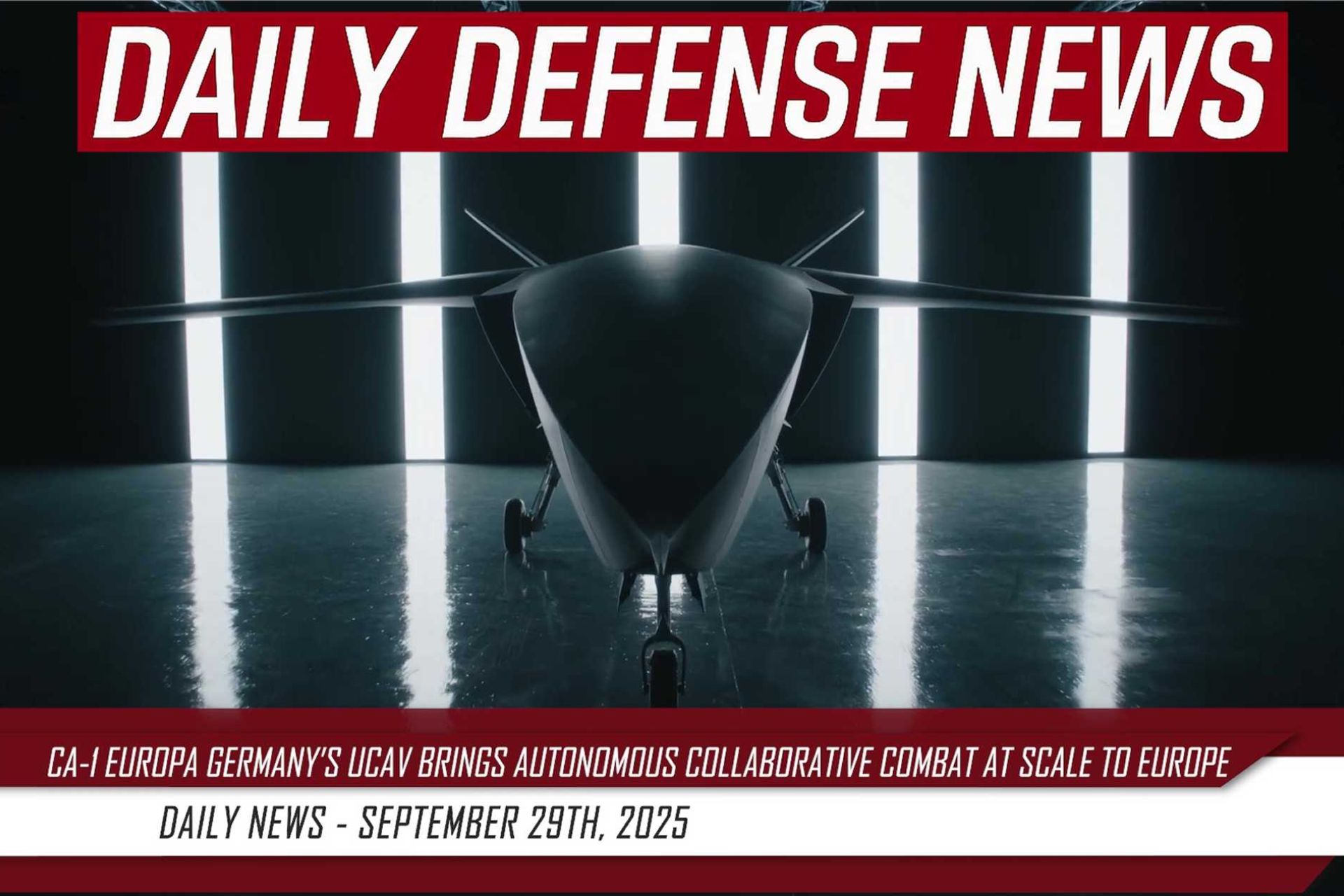
The CA-1 ‘Europa’ drone, developed by Helsing and Grob Aircraft, is designed to strengthen NATO’s airpower. (Picture source: Editing Army Recognition Group)
The CA‑1 is a medium-weight autonomous jet with internal payload bays, a modular architecture, and an AI-powered avionics suite capable of independent mission execution and manned-unmanned teaming. Designed for high subsonic performance, the UCAV is optimized for strike, electronic warfare, and ISR roles under a common airframe. The platform is positioned to support European air forces in a variety of roles including suppression of enemy air defenses (SEAD), escort, and collaborative reconnaissance operations. A key development goal is enabling deployment in swarms or in support of fifth- and sixth-generation fighters through advanced human-machine teaming protocols.
Crucially, the system is powered by Helsing’s proprietary “Centaur” autonomy stack, which integrates real-time tactical reasoning, threat prioritization, and dynamic mission re-tasking without the need for persistent human input. The company has also disclosed two additional AI modules—“Symphony” for fleet coordination and “Cirra” for onboard electronic warfare and deception operations—highlighting a multi-domain approach to UCAV autonomy.
Helsing states that CA‑1 is intended to be manufactured entirely within European supply chains, ensuring sovereign control over critical technologies and reinforcing the EU’s strategic autonomy in defense production. Initial production is planned at Grob’s facilities in Bavaria, with first flight expected before the end of 2027.
Though specific range, payload, and cost data remain undisclosed, company representatives claim the CA‑1 will be significantly more affordable than manned fighters while delivering high sortie rates and battlefield persistence. Operational deployment is expected within five years, pending testing and procurement by European air forces. Germany is seen as a likely first operator, though the system has also attracted attention from Scandinavian and Eastern European militaries.
The CA‑1 enters a growing international field of loyal wingman and autonomous strike drone programs, including the U.S. Air Force’s Collaborative Combat Aircraft (CCA) and Australia’s MQ‑28 Ghost Bat. However, CA‑1 stands out as the first dedicated European initiative to deliver scalable, combat-ready autonomy under local industrial control.
In the words of Helsing CEO Gundbert Scherf, “This is not a science experiment. We are building the future of airpower—faster, more flexibly, and with European values at its core.”
This announcement underscores the acceleration of Europe’s defense tech innovation in response to renewed geopolitical threats and represents a new phase in the development of operational unmanned systems designed not for ISR alone, but for high-intensity peer conflict scenarios.
Stay with Army Recognition for exclusive updates on CA‑1 development, partner involvement, flight test data, and procurement timelines as this UCAV reshapes the future of European aerial warfare.