






Breaking News






US new icebreaker Storis completes first Arctic patrol after tracking Chinese vessels.
The US Coast Guard cutter Storis (WAGB 21) has completed its first Arctic patrol following a 112-day deployment that included observation of Chinese research vessels near Alaska, as part of Operation Frontier Sentinel.
On October 4, 2025, the US Coast Guard announced that the medium polar icebreaker Storis returned to Seattle after completing a 112-day patrol in the Arctic region. The vessel operated under Operation Frontier Sentinel to monitor vessel activity, support navigation in seasonal ice, and maintain situational awareness along the northern maritime approaches. Coast Guard officials said the patrol included tracking several Chinese-flagged research vessels operating north of the Bering Strait, part of an increased international scientific and commercial presence in the area. The mission served as an initial operational assessment of Storis following its entry into service earlier this year.
Follow Army Recognition on Google News at this link
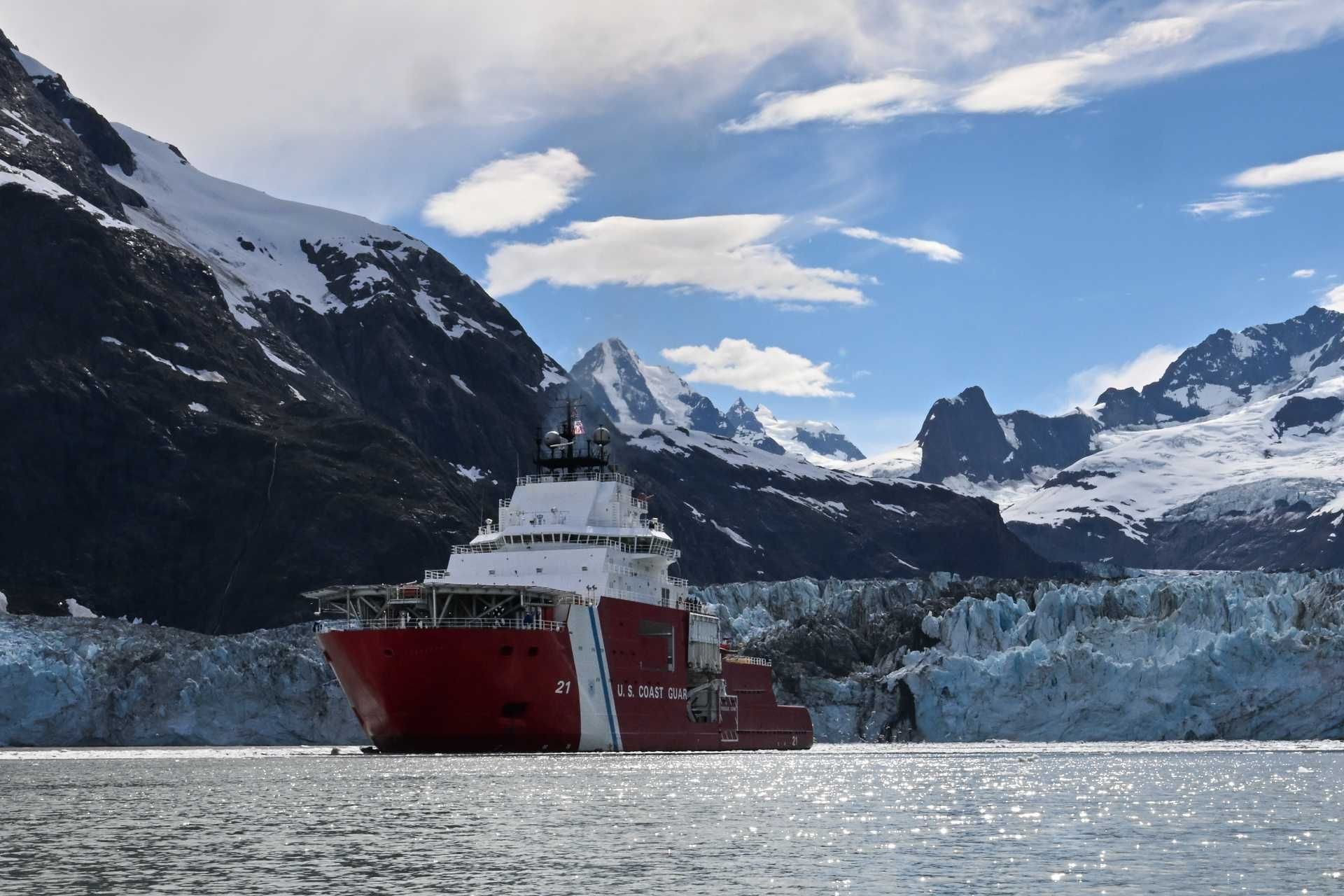
Before its acquisition by the US Coast Guard in 2024, the Storis, previously known as the Aiviq, participated in Arctic oil exploration support missions for Shell before 2015 and in Australian Antarctic Division supply and refueling activities between 2021 and 2023. (Picture source: US Coast Guard)
The U.S. Coast Guard Cutter Storis (WAGB 21), the service’s newest commissioned icebreaker, departed from Pascagoula, Mississippi, on June 1, 2025, transited the Panama Canal, and crossed the Pacific Ocean before operating north of the Bering Strait. The patrol was conducted under the Coast Guard Arctic District in support of Operation Frontier Sentinel to control, secure, and defend the northern U.S. border and maritime approaches. The cutter’s mission focused on monitoring foreign activity and maintaining maritime awareness in the Arctic, an area identified by the Coast Guard as a zone of strategic competition. During this deployment, Storis relieved Healy (WAGB 20) in the ice and monitored two Chinese-flagged research vessels, Jidi and Xue Long 2, while five China-affiliated research ships were active in the Arctic throughout the summer.
The Storis was originally built as the anchor-handling icebreaking supply vessel Aiviq in 2012 by Edison Chouest Offshore to support Shell’s offshore drilling operations in the Beaufort and Chukchi Seas. The 110-meter vessel was designed for towing, cargo handling, and icebreaking tasks in polar conditions and was classed ABS A3 for navigation in multi-year ice. Following Shell’s suspension of Arctic exploration, Aiviq was laid up before being chartered to support the Australian Antarctic Division’s Davis Station resupply missions during the 2021–2023 seasons. The Coast Guard purchased the vessel on December 20, 2024, for $125 million under a fixed-price agreement that included refit, certification, training, and spares. It was subsequently renamed Storis after the original USCGC Storis (WMEC-38), which served from 1942 to 2007 and was known for Arctic patrols, hydrographic surveys, and the 1957 circumnavigation of North America. The new Storis was commissioned in Juneau, Alaska, on August 10, 2025, marking the Coast Guard’s first acquisition of a polar icebreaker in more than 25 years.
Built to American Bureau of Shipping Ice Class A3 standards and Polar Class 3-equivalent performance, the Storis is 110 meters long, 24.4 meters wide, and draws 8.6 meters of water when fully loaded, with a displacement of approximately 12,892 gross tons and a deadweight of 4,129 tons. Propulsion is provided by four Caterpillar C280-12 diesel engines delivering a total of 16,240 kW through reduction gearboxes to two controllable-pitch propellers in nozzles, achieving a service speed of 15 knots (28 km/h) in open water and 5 knots (9 km/h) in one-meter-thick ice. Three bow thrusters and two stern thrusters provide dynamic positioning capability, supported by two high-lift rudders for maneuverability. The vessel includes a helideck, firefighting systems, and modern electronic navigation and radar suites. The standard crew complement is 28 with berthing for up to 64 personnel, operated by a hybrid team of US Coast Guard members and civilian mariners.
The 2025 Arctic deployment was the cutter’s first under U.S. command, operating alongside Healy and the medium endurance cutter Alex Haley near Dutch Harbor and along Russia’s Exclusive Economic Zone in the Bering and Chukchi Seas. The vessel’s presence supported continuous surveillance of maritime activity in a region that saw increased Chinese and Russian operations during the same period. The patrol also included helicopter flight operations, gunnery training, and community engagement, with port calls in six locations and more than 1,500 visitors hosted on board. The Coast Guard noted that the crew successfully established administrative and operational programs for the new cutter and achieved proficiency in key navigation and engineering systems earlier than anticipated.
Following its return to Seattle, Storis entered a six-week post-patrol training and maintenance phase that includes major training evolutions, system recapitalization, and a two-week underway segment with planned stops in Victoria, Canada. The vessel will remain temporarily berthed alongside the Coast Guard’s other polar icebreakers until infrastructure upgrades are completed at its permanent homeport in Juneau, Alaska. The Coast Guard stated that the cutter’s near-term role is to provide immediate operational capacity while bridging the period before the introduction of new heavy and medium icebreakers. The ship’s mission profile includes Arctic law enforcement, domain awareness, environmental protection, and maintaining navigation access in U.S. waters affected by seasonal ice. The Coast Guard emphasized that Storis’ continued integration into Arctic operations will be essential to sustaining presence until newer, purpose-built cutters enter service later this decade.
The US Coast Guard’s current polar fleet consists of three active icebreakers: the heavy icebreaker Polar Star (WAGB 10), the medium icebreaker Healy (WAGB 20), and Storis (WAGB 21). The service is pursuing an expanded fleet through construction of the Polar Security Cutter class at Bollinger Shipyards in Mississippi and future Arctic Security Cutters, with long-term plans to field up to eight or nine polar-capable vessels. Funding has been allocated through recent legislative packages, including the One Big Beautiful Bill Act, which provides $4.3 billion for Polar Security Cutters, $3.5 billion for Arctic Security Cutters, and $816 million for additional domestic icebreakers. Additionally, the Coast Guard describes its Arctic mission as central to U.S. national security and economic stability, combining law enforcement authority, military readiness, and maritime safety.
Written by Jérôme Brahy
Jérôme Brahy is a defense analyst and documentalist at Army Recognition. He specializes in naval modernization, aviation, drones, armored vehicles, and artillery, with a focus on strategic developments in the United States, China, Ukraine, Russia, Türkiye, and Belgium. His analyses go beyond the facts, providing context, identifying key actors, and explaining why defense news matters on a global scale.