










US and Japan Strengthen Submarine Coordination in Response to Indo Pacific Tensions.
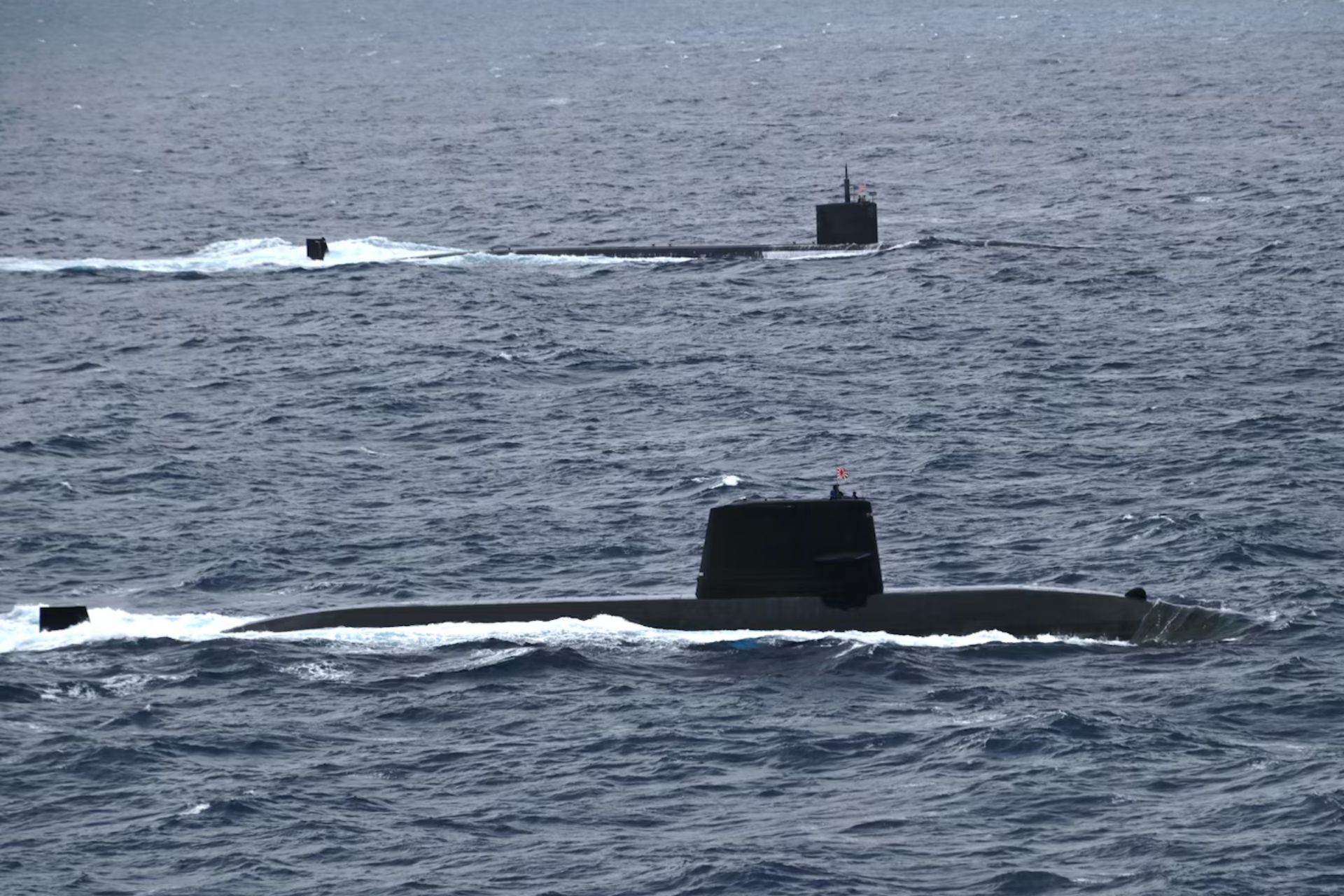
On July 12, 2025, in the heart of the Pacific Ocean, the US Navy’s Los Angeles-class fast attack submarine USS Santa Fe (SSN 763) conducted a bilateral exercise with a submarine from the Japan Maritime Self-Defense Force (JMSDF). The training, designated Submarine Exercise 25-1 (SUBEX 25-1), took place over two days off the coast of Yokosuka, Japan, a strategic area for undersea operations in the Asia-Pacific. This operational engagement once again demonstrated the close cooperation between the United States and Japan in submarine warfare and regional security.
Follow Army Recognition on Google News at this link

The main objective of SUBEX 25-1 was to enhance the joint submarine capabilities of both navies, focusing on interoperability and operational coordination on the high seas (Picture source: US DoD)
USS Santa Fe, homeported in San Diego, California, and assigned to Submarine Squadron 11, operated within the area of responsibility of the US 7th Fleet, the largest forward-deployed fleet of the US Navy. The deployment of this unit reflects the United States’ permanent presence in the Indo-Pacific region to maintain maritime stability and freedom of navigation, while regularly engaging with regional allies and partners. Submarine Group 7 (CSG 7), which commands advanced submarine forces, oversees these activities across the full spectrum of undersea warfare, from the Western Pacific to the Indian Ocean and the Arabian Sea.
The USS Santa Fe (SSN-763), commissioned in 1994, is a nuclear-powered fast attack submarine still in active service with the US Navy. It measures 110.3 meters in length, with a submerged displacement of nearly 7,000 tons. Powered by an S6G nuclear reactor with a D2W highly enriched uranium core, it is capable of speeds exceeding 20 knots while submerged and offers virtually unlimited endurance, constrained only by logistical and crew needs. Based at Naval Base Point Loma, the USS Santa Fe is designed for submarine warfare, intelligence operations, and power projection through precision strikes. Its crew consists of 12 officers and 98 enlisted personnel.
In terms of armament, the submarine is equipped with four 533 mm torpedo tubes capable of launching Mk48 ADCAP heavy torpedoes designed to engage both surface ships and submarines. It also carries Tomahawk Block 3 cruise missiles with a range exceeding 1,700 nautical miles for land-attack missions, as well as Harpoon anti-ship missiles with a 70 nautical mile range. The Santa Fe is also capable of deploying Mk67 and Mk60 Captor naval mines. Its detection systems include the BSY-1/BQQ-10 passive sonar and the WLR-8 radar receiver, providing advanced surveillance and electronic warfare capabilities necessary for operating in contested environments.
The main objective of SUBEX 25-1 was to enhance the joint submarine capabilities of both navies, focusing on interoperability and operational coordination on the high seas. The exercise allowed US and Japanese crews to maneuver together and refine their mutual understanding of tactics and procedures in complex undersea environments. This cooperation is part of a series of regular activities aimed at strengthening strategic ties and ensuring a credible collective defense in the region.
At the conclusion of the exercise, Rear Admiral Lincoln Reifsteck, commander of Submarine Group 7, emphasized the importance of the partnership between the United States and Japan, describing the connection with the Japanese submarine force as significant. He noted that this exercise is one among dozens of operations planned or underway between the two nations. He also reaffirmed the shared commitment of US and Japanese submarine forces to contribute to a common vision of peace and prosperity in the Indo-Pacific through deeper integration of their capabilities.
The US and Japanese navies continue their daily cooperation to improve interoperability. This dynamic reflects a reciprocal commitment to regional security and stability, grounded in shared values and strategic understanding. The proliferation of such bilateral exercises reinforces mutual defense capacities and preparedness against potential threats in a geopolitical context marked by rising tensions in the Asia-Pacific.
SUBEX 25-1 illustrates the shared intent of the United States and Japan to strengthen their skills and synergies in the undersea domain. The engagement of USS Santa Fe alongside the JMSDF demonstrates the ongoing cooperation between the two allies and their determination to uphold maritime security in the region in support of an open and stable international order.