
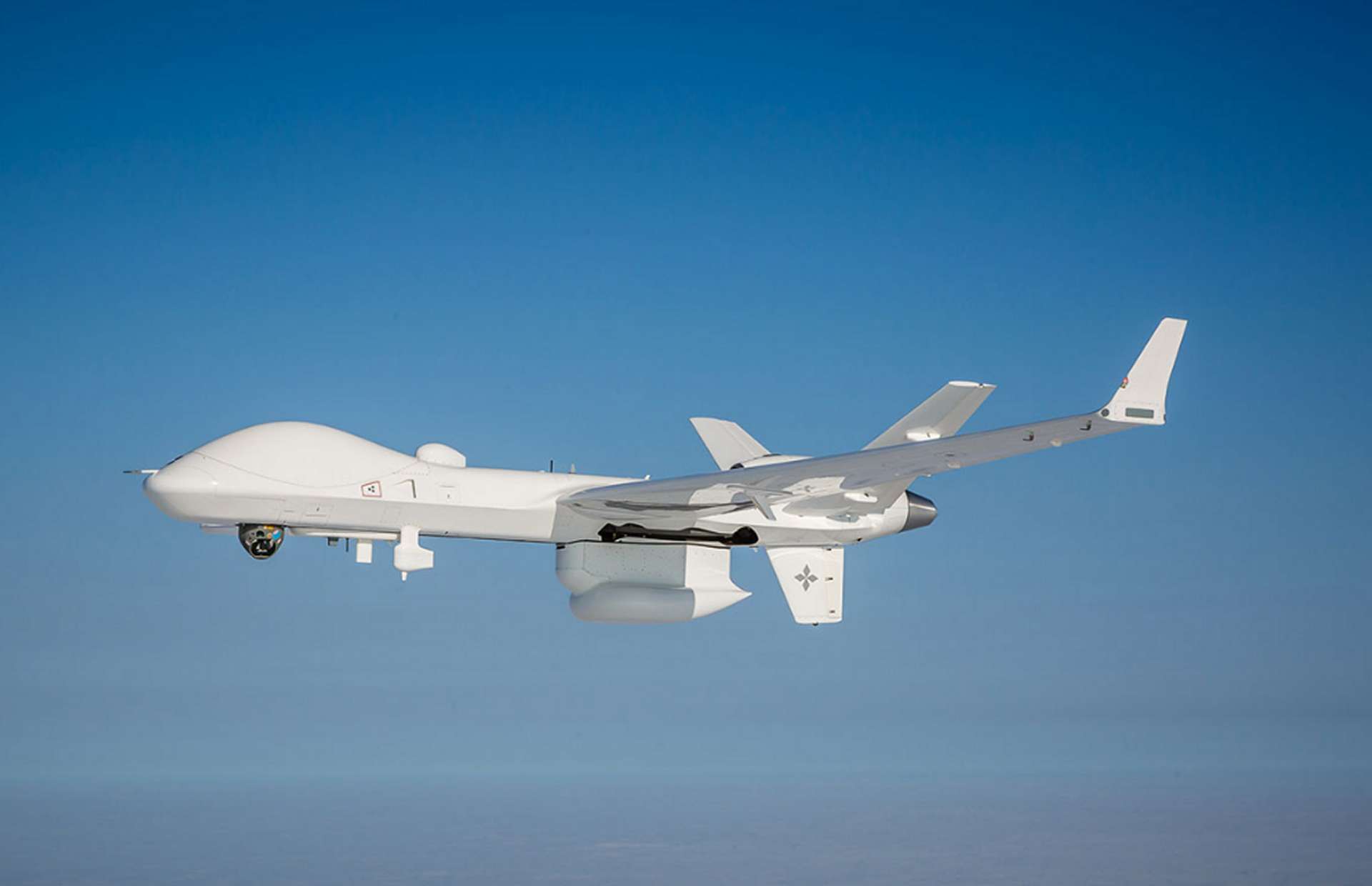










U.S. drones help Japan patrol the thousands of islands too vast for constant human watch.
Japan’s move to bring US-made drones into frontline air policing was reported by the Japan News on September 15, 2025, citing Japan’s defence ministry sources. The plan is to use long-endurance MQ-9B SeaGuardian unmanned aircraft to watch the approaches where unidentified aircraft and vessels routinely probe, and cut the punishing number of fighter scrambles that have worn down aircrews and airframes over the past decade. The SeaGuardian is a medium-altitude platform designed for persistent intelligence, surveillance and reconnaissance. It carries a multi-mode maritime radar, electro-optical and infrared sensors, and maritime identification receivers. Reports suggest operational testing focused on intrusions will begin next year. It will give Japan a new way to manage the daily grind of vigilance in the East China Sea and beyond.
Follow Army Recognition on Google News at this link
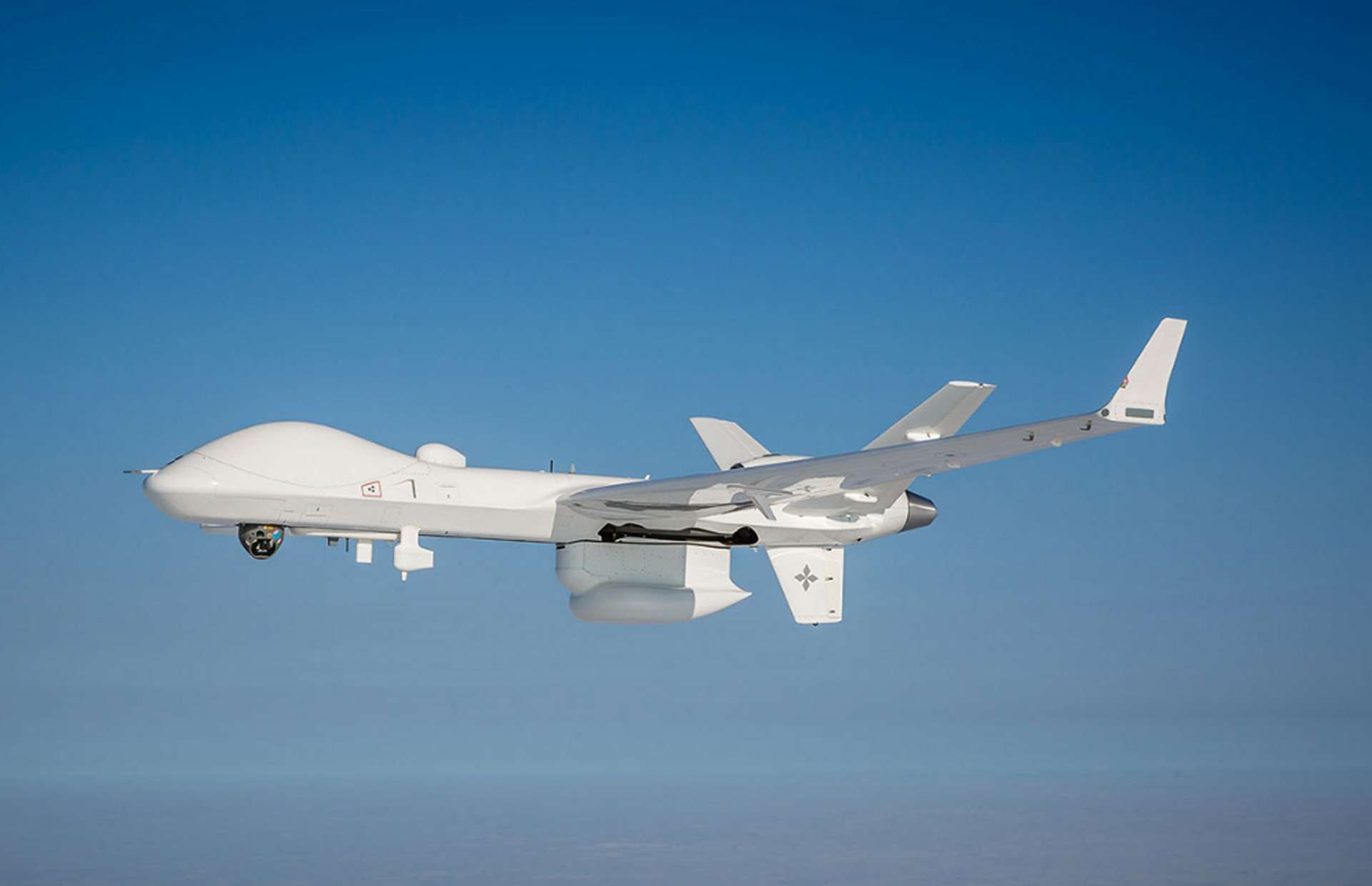
The MQ-9B SeaGuardian can stay airborne for more than 30 hours, using advanced sensors to track ships and aircraft and provide Japan with continuous surveillance across its vast maritime approaches (Picture source: General Atomics Aeronautical Systems).
The MQ-9B is built for endurance and integration. The air vehicle is satellite-linked and certified to work in civilian airspace with a detect-and-avoid suite, which matters because Japanese patrol routes criss-cross busy commercial corridors. Typical endurance is more than 30 hours depending on configuration, and industry messaging has pushed endurance figures closer to the 40-hour mark for certain mission fits. That makes the platform fundamentally different from a crewed patrol aircraft that must cycle crews and recover to base. The sensor fit is modular, with a maritime radar which provides wide-area surface search and weather penetration, the EO/IR turret to handle identification and track quality at range, and Automatic Identification System receivers to help fuse a coherent picture of shipping against what the radar is seeing. The result is a drone that can loiter at a sensible altitude, hold tracks, and feed a continuous stream of cues to command posts and, when needed, to interceptors.
Japan is not starting from zero with this airframe. The Maritime Self-Defense Force has already trialed the SeaGuardian, and Japanese authorities have moved from contractor-operated demonstrations to procurement planning for a fleet measured in the dozens over the coming years. The Coast Guard has also been flying the type from northern bases and has pushed patrols down toward the Senkaku area, which gives Tokyo practical experience with basing, airspace coordination and data dissemination. Introducing a new unmanned aircraft into a national air picture is not just about buying the drone: it is about certifying procedures, proving the detect-and-avoid system with air traffic control, and wiring the feeds into the joint operations center so the picture is usable by pilots, sailors and ground commanders under pressure.
A single drone orbit can sit astride an approach for a day and a night, watching contacts that would otherwise force multiple launches of fighters or patrol planes. When an aerial object approaches the Air Defense Identification Zone or a sensitive maritime boundary, the drone can classify, maintain track and pass vectors to crewed assets that launch only when there is a genuine need to intercept. That reduces cost, saves fatigue hours on fighter fleets and, just as important, it facilitates command timelines. Sensors on the MQ-9B also enable cross-domain work. A surface contact that looks routine in daylight can be held through weather and darkness. If the contact switches off its transponder or splits formation, the track continuity is still there. The drone’s communications suite supports data-linking into joint networks, so the picture is shared quickly.
Chinese aircraft and ships are more present to the south and Russian flights remain active to the north. Fighter scrambles cost fuel, maintenance cycles and people. Tokyo has already tightened rules around drone incursions and signaled a willingness to take down unmanned aircraft violating airspace. Bringing the SeaGuardian into routine patrols offers a measured response that fits Japan’s recent defense reforms: more sensors, more networking, and a clearer threshold for when to lift crewed jets. It also aligns with Japan’s maritime focus: the East China Sea is crowded, the line between coast guard, maritime militia and navy vessels is often blurred, and the ability to hold a persistent look across that seam is useful. For allies, the signal is that Japan is buying mass in ISR rather than chasing every intrusion with a fast jet. For competitors, it means being tracked earlier and longer, with fewer gaps to exploit.
Written by Evan Lerouvillois, Defense Analyst, Army Recognition Group.
Evan studied International Relations, and quickly specialized in defense and security. He is particularly interested in the influence of the defense sector on global geopolitics, and analyzes how technological innovations in defense, arms export contracts, and military strategies influence the international geopolitical scene.