






Breaking News






Malaysian Scorpène-class submarine fires Black Shark torpedo for first time in South China Sea.
According to information published by the Malaysian National News Agency on July 29, 2025, the submarine KD Tun Abdul Razak has successfully conducted its first live firing of a Black Shark heavyweight torpedo during the naval exercise TAMING SARI 23/25. The firing took place on July 29 in the South China Sea. The exercise also featured coordinated missile launches by the surface combatants KD Lekiu and KD Lekir, which successfully employed Exocet MM40 anti-ship missiles in synchronized strike scenarios.
Follow Army Recognition on Google News at this link
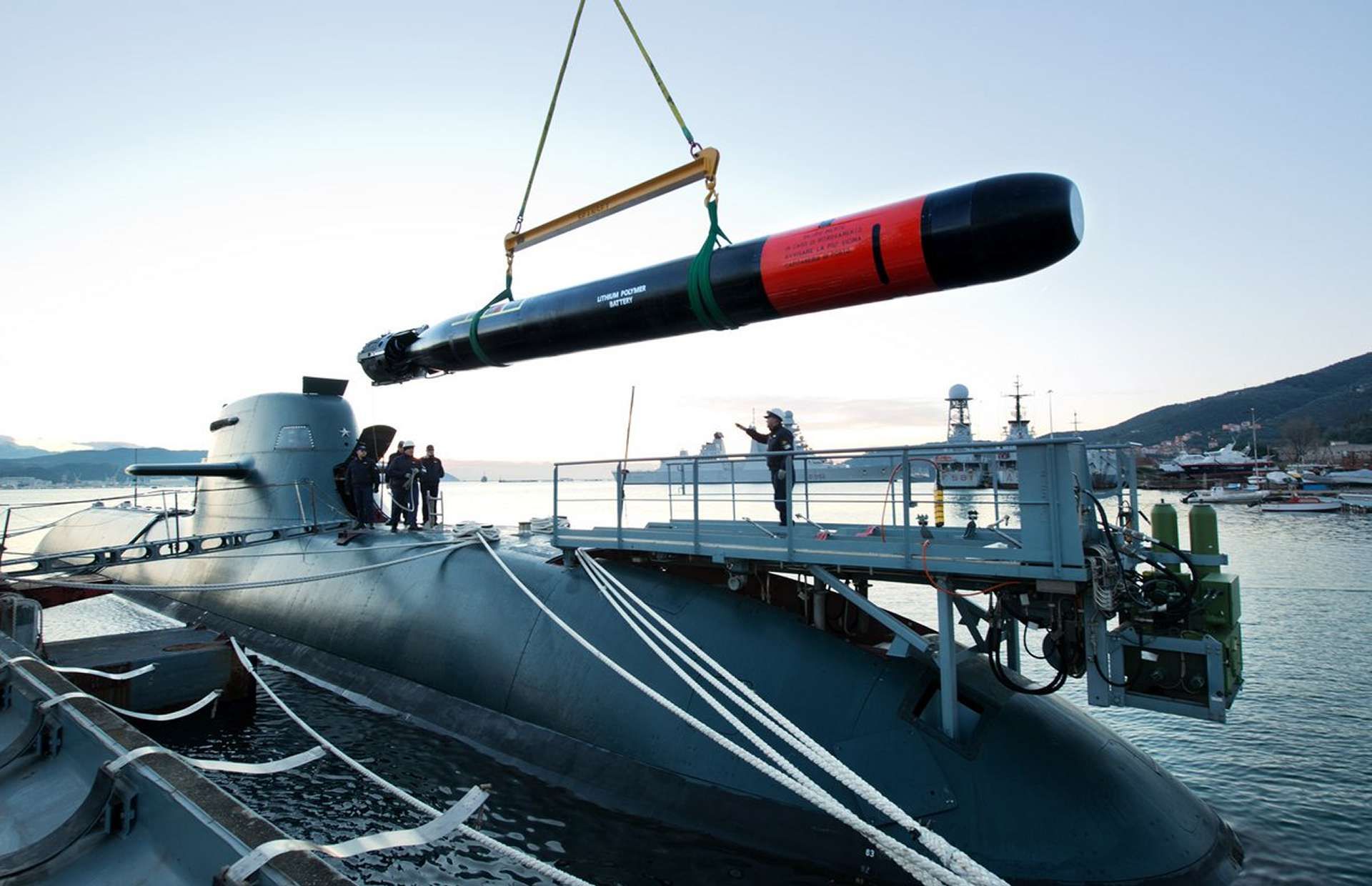
Black Shark torpedo can strike targets up to 50 km away at 93 km/h with fiber-optic guidance, while the Exocet MM40 anti-ship missile offers a 70 km range and sea-skimming flight for precision strikes against enemy vessels (Picture source: Leonardo).
TAMING SARI 23/25, held from July 8 to 31, was executed from the Royal Malaysian Navy’s key bases in Lumut and Kota Kinabalu, running in parallel with the tri-service exercise KERISMAS 28/25. Together, the drills involved the Navy, Army, Air Force, and Maritime Law Enforcement Agency, creating a joint framework designed to stress-test interoperability and readiness against conventional maritime threats. The maneuvers were staged in Malaysia’s exclusive economic zone at a time of heightened regional friction in the South China Sea, further underlining the strategic weight of the event.
KD Tun Abdul Razak, a Perdana Menteri-class submarine derived from the Franco-Spanish Scorpène design, is a 1,550-ton diesel-electric attack submarine measuring 67.5 meters in length with a beam of 6.2 meters. It is powered by four diesel generators and a 2,900 kW electric motor, giving it a maximum submerged speed of 20 knots and a range exceeding 6,500 nautical miles. The boat can remain submerged for extended periods using advanced stealth features such as acoustic dampening and a hydrodynamic hull form that reduces sonar signature. Its combat system, SUBTICS, integrates sensors, sonar, navigation, and weapon control, allowing the crew to simultaneously track multiple surface and underwater targets.
The Exocet MM40 Block II missile, deployed from KD Lekiu and KD Lekir during the exercise, is a sea-skimming anti-ship missile with a range of 70 kilometers and a 165-kilogram high-explosive fragmentation warhead. Guided by an inertial system with terminal active radar homing, the missile is designed for precision strike against enemy vessels in cluttered coastal environments, making it particularly relevant in Southeast Asian littoral waters. Together with the submarine-launched Black Shark, this mix of torpedo and missile systems creates a layered strike capability that can deny hostile fleets access to Malaysia’s maritime zones.
Tactically, the Black Shark torpedo provides the Royal Malaysian Navy with a stealthy, close-range strike option against enemy submarines and surface ships. Its fiber-optic guidance link allows real-time control from the submarine, giving commanders the flexibility to adjust attack profiles against evasive targets. When combined with Exocet missile salvos launched by surface combatants, Malaysia achieves a two-pronged deterrence posture, using submarines to silently approach and neutralize threats while surface ships project firepower at longer ranges. This synergy enhances survivability in contested waters, complicating adversary planning and raising the cost of any potential maritime incursion.
Geopolitically, the timing of this exercise underscores Malaysia’s need to strengthen its maritime deterrent amid mounting pressure in the South China Sea. China’s expanded naval patrols, artificial island militarization, and assertive enforcement of its territorial claims have heightened tensions across the region. Malaysia, while pursuing diplomatic channels, has faced repeated intrusions into its exclusive economic zone by Chinese coast guard and fishing fleets. The successful torpedo and missile firings serve not only as an operational benchmark but also as a strategic signal that Kuala Lumpur intends to safeguard its maritime sovereignty, protect vital sea lanes, and contribute to regional security alongside ASEAN partners and external defense stakeholders.
This successful live firing demonstrates Malaysia’s commitment to advancing its undersea strike proficiency and validates years of investment under the Navy’s 15-to-5 fleet transformation plan. Supported by a USD 240 million five-year maintenance contract with BHIC Submarine Engineering Services, Kuala Lumpur is consolidating its ability to maintain a credible submarine force, ensuring sea control and safeguarding freedom of navigation in one of the world’s most contested maritime domains.