






Breaking News






Japon FFM Frigates Gain Palfinger Slipway Systems for Unmanned Operations.
On September 3, 2025, Palfinger Marine announced the signing of a new contract to supply slipway systems for the future multirole FFM-class frigates of the Japan Maritime Self-Defense Force. This decision continues the cooperation between the Austrian company and Tokyo, following the successful integration of this technology on the Mogami-class frigates currently in service.
Follow Army Recognition on Google News at this link
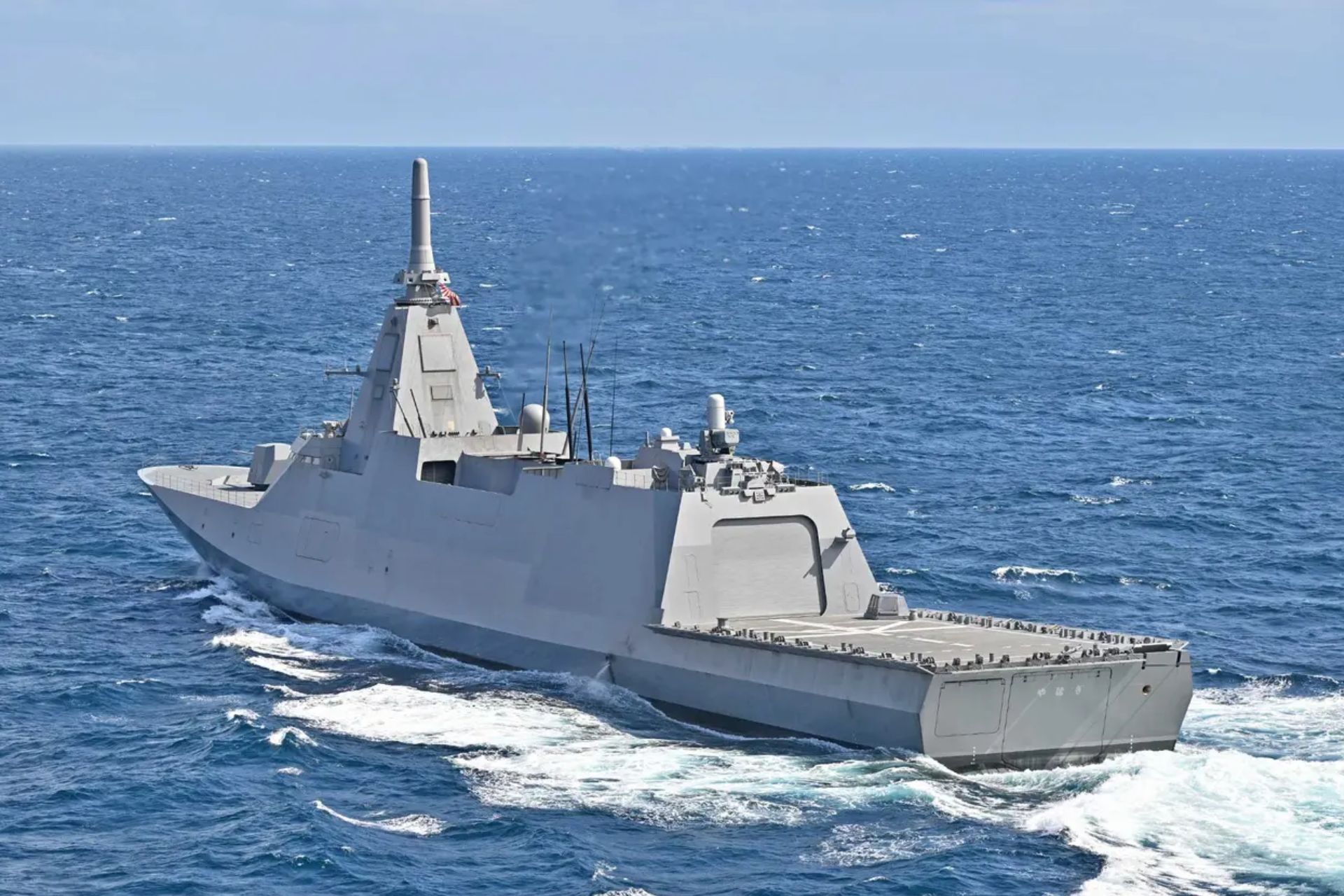
The FFM program, which succeeds the Mogami class, reflects Japan’s objective to expand its naval capabilities with larger ships better suited for contemporary missions. (Picture source: Japan MoD)
The FFM class represents the new generation of multimission frigates developed by Mitsubishi Heavy Industries for the Japan Maritime Self-Defense Force. These ships will be larger than their predecessors, measuring around 142 meters in length and 17.4 meters in width, with a full load displacement of approximately 6,200 tons. Powered by a CODAG configuration combining a Rolls-Royce MT30 gas turbine and diesel engines, they are expected to reach speeds of more than 30 knots. Their armament will include a 127 mm main gun, an expanded vertical launching system with about 32 cells, a SeaRAM close-in weapon system, anti-ship missiles, and torpedo launchers. The design will also incorporate an advanced phased-array radar integrated into a stealth-optimized superstructure.
The FFM program reflects Japan’s objective to strengthen its naval capabilities with ships better suited for contemporary missions. While visually similar to the Mogami class, these new frigates represent a clear evolution in size, firepower, and operational concept. According to the current schedule, five units are planned for construction between 2027 and 2036, with Mitsubishi Heavy Industries as the prime contractor. This new design combines continuity with technological advancements, addressing both current and future operational requirements of the Japanese fleet.
At the center of this new contract is the Palfinger Slipway System (PSS), a technology adapted to the specifications of the FFM frigates. This includes the Stern Launch and Recovery System (Stern-LARS), developed to facilitate the deployment and recovery of unmanned surface vehicles and boats for naval, governmental, and coast guard missions. The system eliminates reliance on traditional lifting methods, reduces crew risks, and allows single-operator use, while improving both speed and comfort during maritime operations. According to Palfinger, these features will enhance efficiency and safety in demanding environments.
In an official statement, Torstein Svane, key account manager for Palfinger Marine’s governmental, navy, and coast guard segment, described this new cooperation as an important step in continuing the partnership with Japan. For Palfinger, the agreement demonstrates the growing role of automated launch and recovery systems in naval shipbuilding programs.
The integration of Palfinger’s slipway systems into the future FFM-class frigates represents a technological advancement that builds on previous experience while adapting to the structural and operational changes of the new design. This decision underscores Japan’s intent to optimize safety, versatility, and responsiveness in its next generation of frigates, ensuring their relevance in a strategic regional context where maritime superiority remains essential.